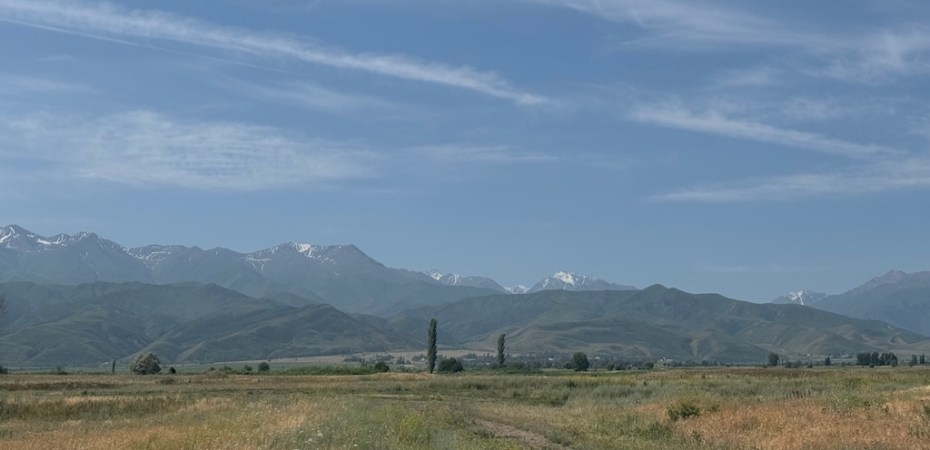
During our tour of the “5 Stans” of Central Asia in June, we spent a good chunk of 2 days in Kyrgyzstan. On the first day, we visited the capital, Bishkek, and on the second day, we left the city to see the Burana Tower, explore nearby ancient ruins, and watch a yurt construction demo, before we flew to Uzbekistan. Kyrgyzstan is a relatively emerging destination; many of its visitors are folks from nearby countries looking to spend time in the mountains. Still, it was interesting to briefly see an entirely new culture.
Arrival from Kazakhstan
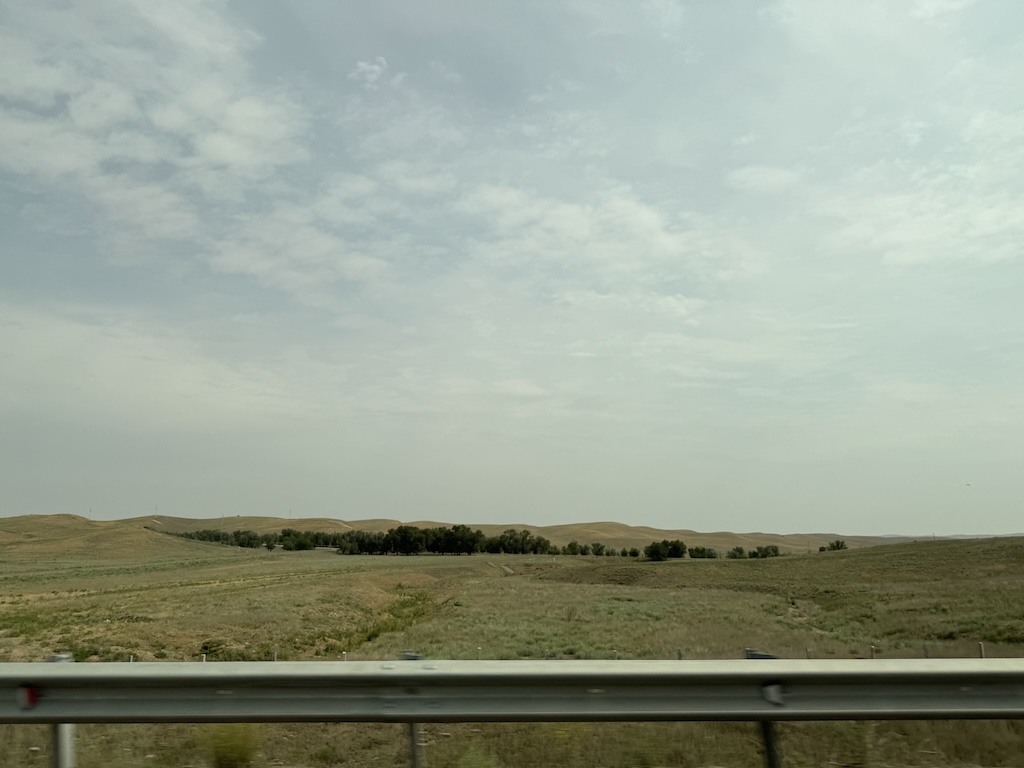
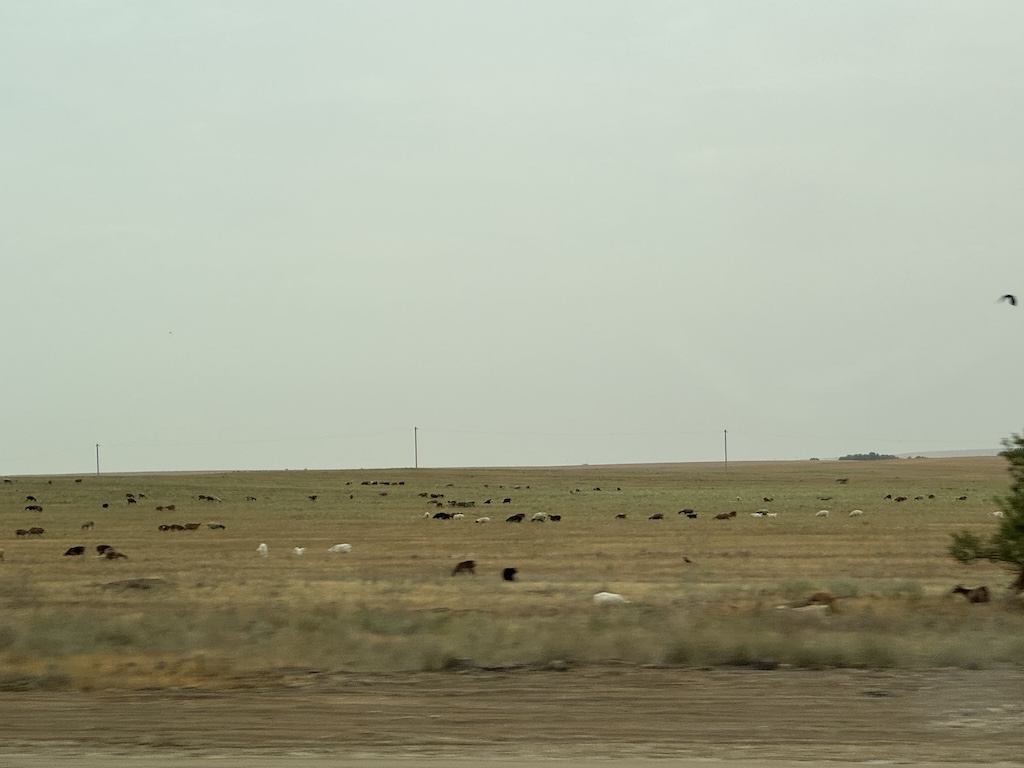
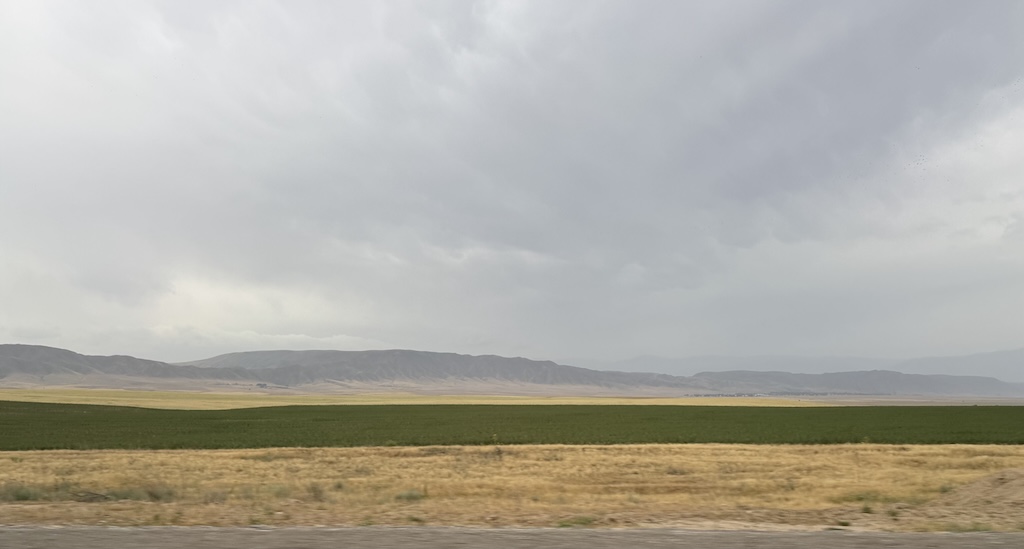
Waking up in Almaty, Kazakhstan, we met our driver in the hotel lobby at 8am, who would take us to the Kyrgyz border. The actual drive to the border area was roughly 3.5 hours. As we drove on the highway, the view in places reminded me a bit of the Central Valley of California, with different produce or livestock, irrigated by water from the nearby mountains.
As with the rest of the land borders on the trip, we walked across on foot. Crossing by foot is far less time consuming than taking a vehicle through. My memory is that it took roughly 20 minutes. Along with a different driver and guide on the other side to pick us up, there was a different local language (though Russian is widely understood) and a different currency. And a different time zone (+1 hour).
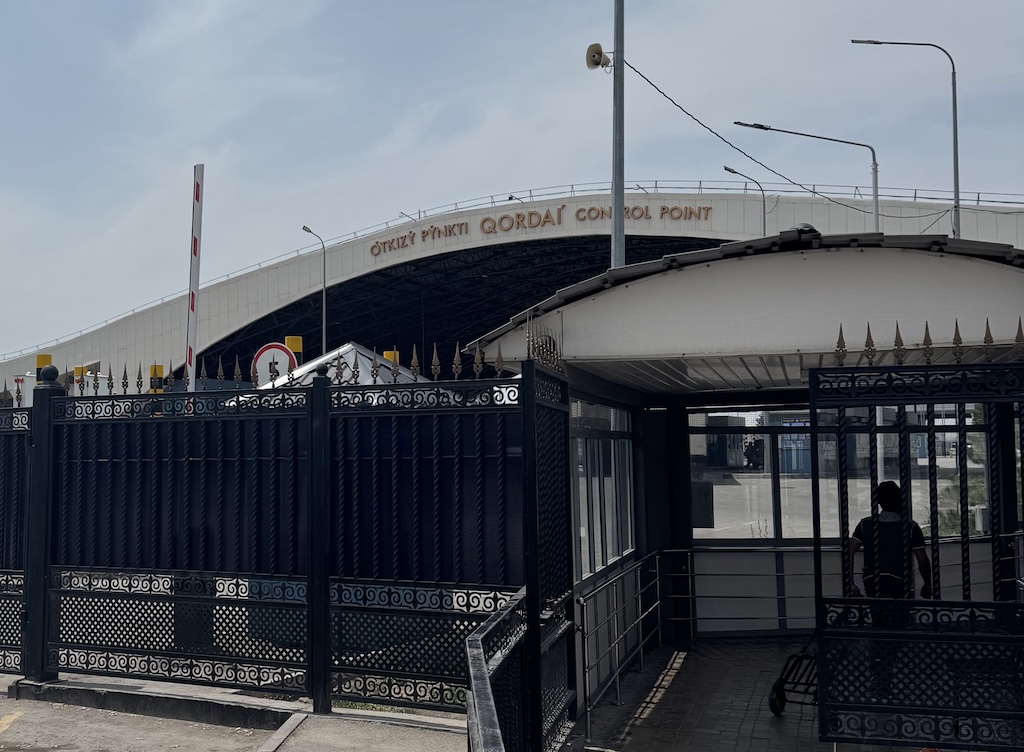
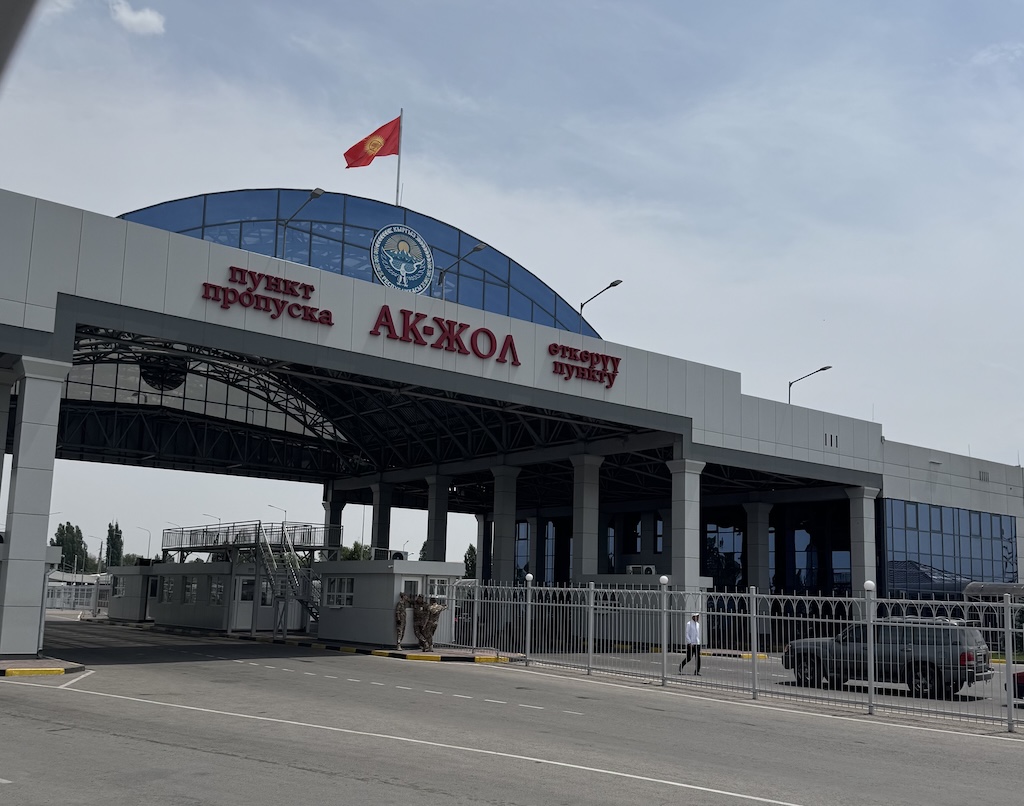
In borders in this region, the bare minimum is showing one’s passport to 5 officials (once to check that you should be allowed into the fenced border zone; once to get a Kazakh exit stamp; once to double-check that your paperwork is set and to let you out the heavy gate to “no man’s land”; once to get the Kyrgyz entrance stamp; and once to verify that your paperwork is in order and let you out another heavy gate). Both sides usually x-ray your luggage as well. By the entrance and exit, there may be a burly guy with a money clip offering to change money, and touts offering taxi rides or sim cards.
In any case, we made it through the border by 1pm Kyrgyz time, and met our guide in the other side. After pleasantries, we got in a car, and made our way to the nearby capital, Bishkek. There was a lot of construction happening on the roads into the city. Roads in general were rougher in Kyrgyzstan; it doesn’t have the oil wealth that Kazakhstan has.
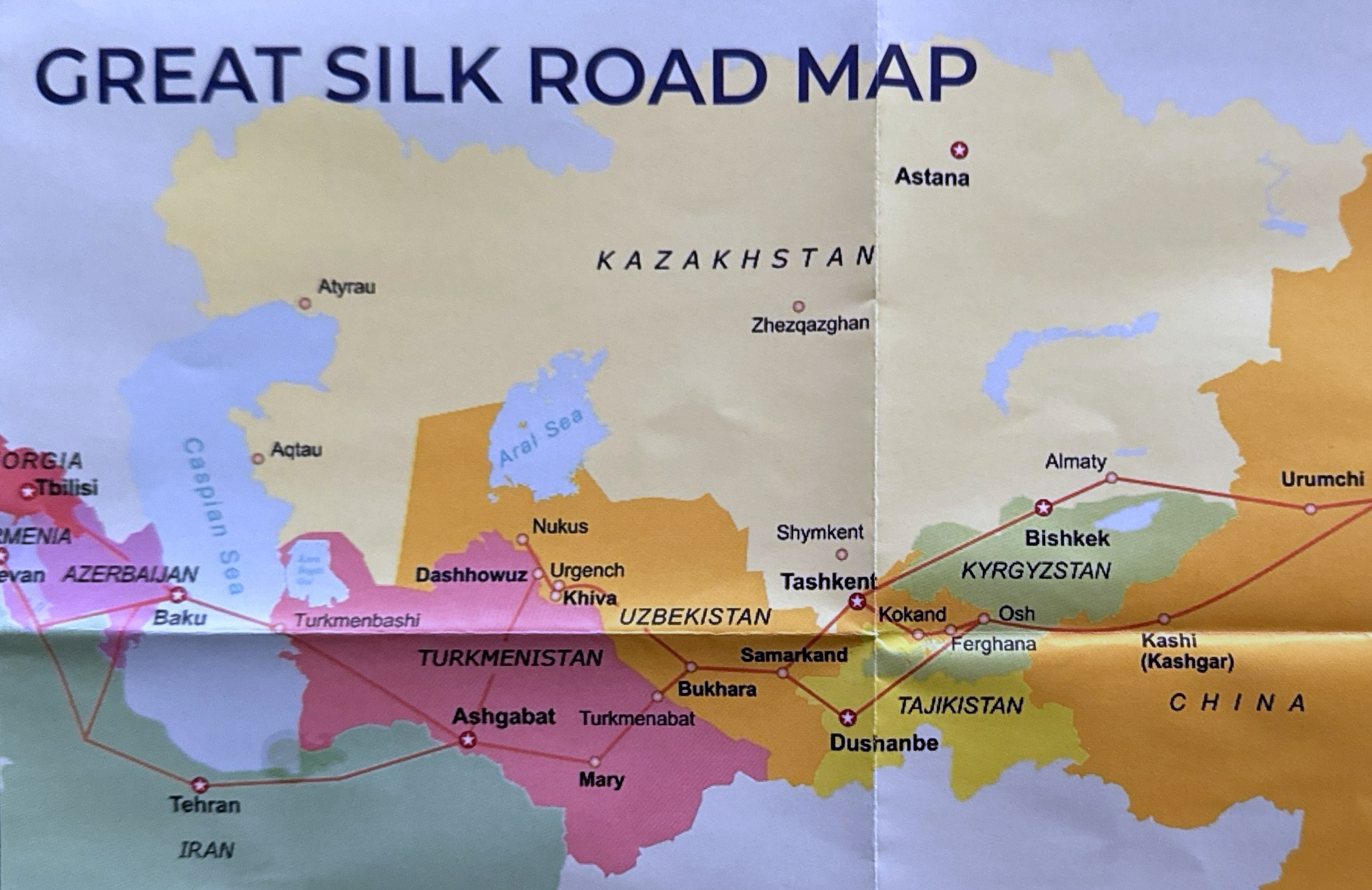
One of the main roads through the capital was called “Silk Road” in Kyrgyz, and was part of the ancient Silk Road. Scanned maps don’t always work well, but our guide handed us a folded paper map which shows Bishkek on one of the main Ancient Silk Road paths.
Arriving in Bishkek at 1:30pm and checking into our hotel, we then went with our guide to get some lunch at a cafe before starting a walking tour of the city center.
Bishkek Walking Tour
Bishkek was interesting in that significant numbers of its vintage 1970’s and 80’s Soviet architecture is still up in their full retro glory. Some other former Soviet Central Asian capitals have replaced many of their Soviet era buildings (particularly Ashgabat, but even Tashkent), but this is less the case in Kyrgyzstan.
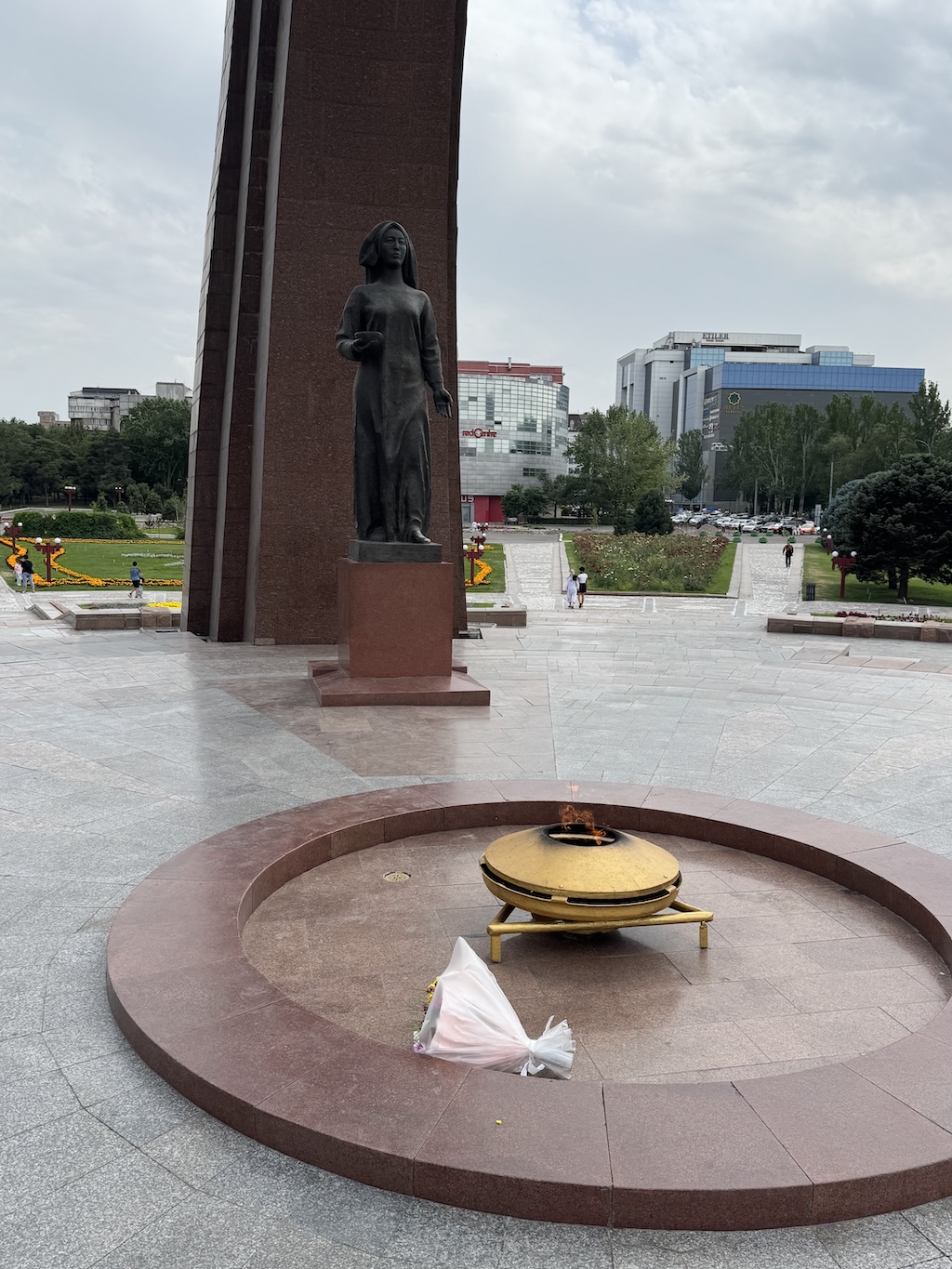
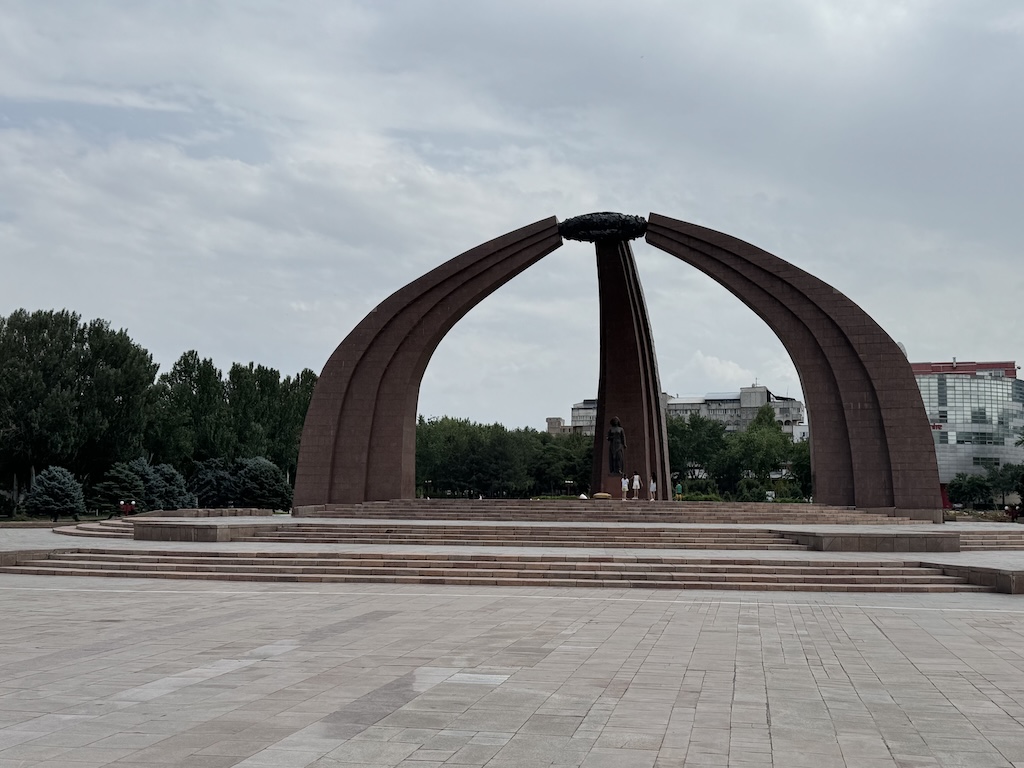
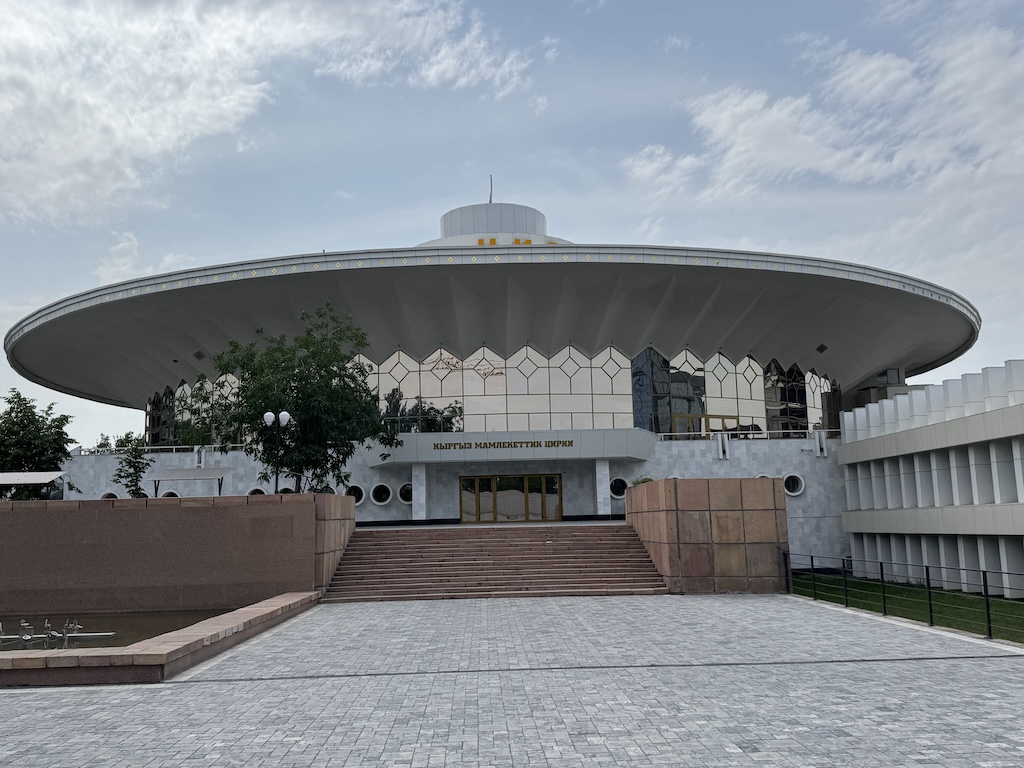
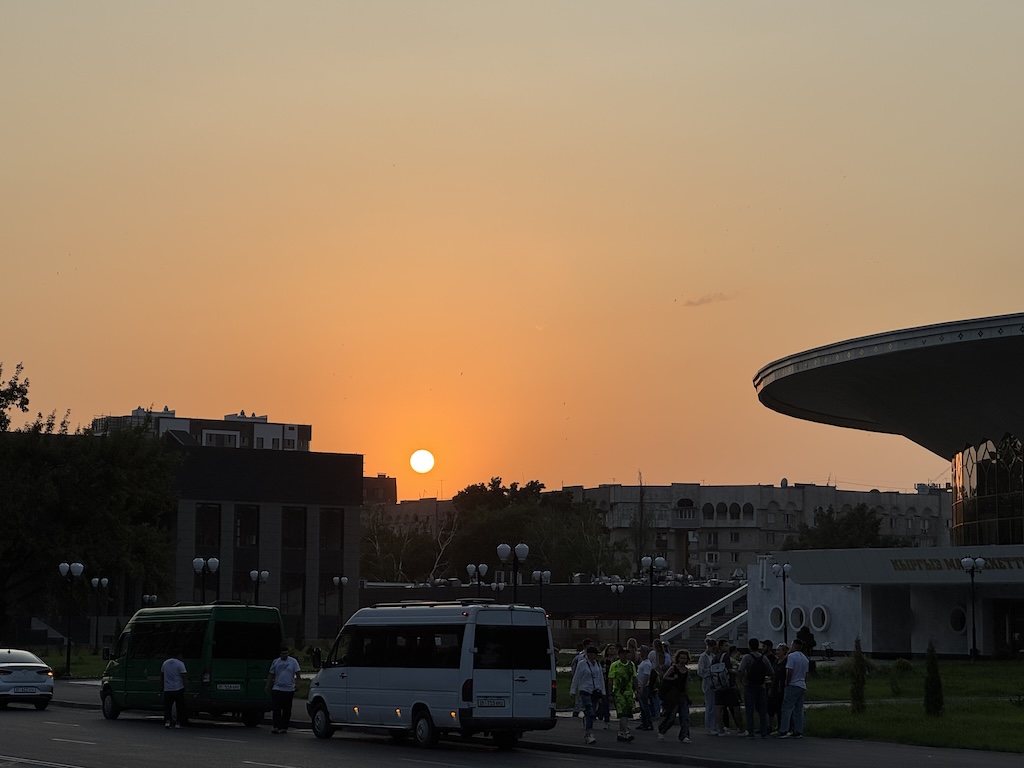
Our first stop, after walking by the round state circus building (below bottom), was the Victory Square monument, built in 1985 to commemorate the 40th anniversary of WWII ending, with its eternal flame, and symbolic mother hoping for the soldier sons to come back home.
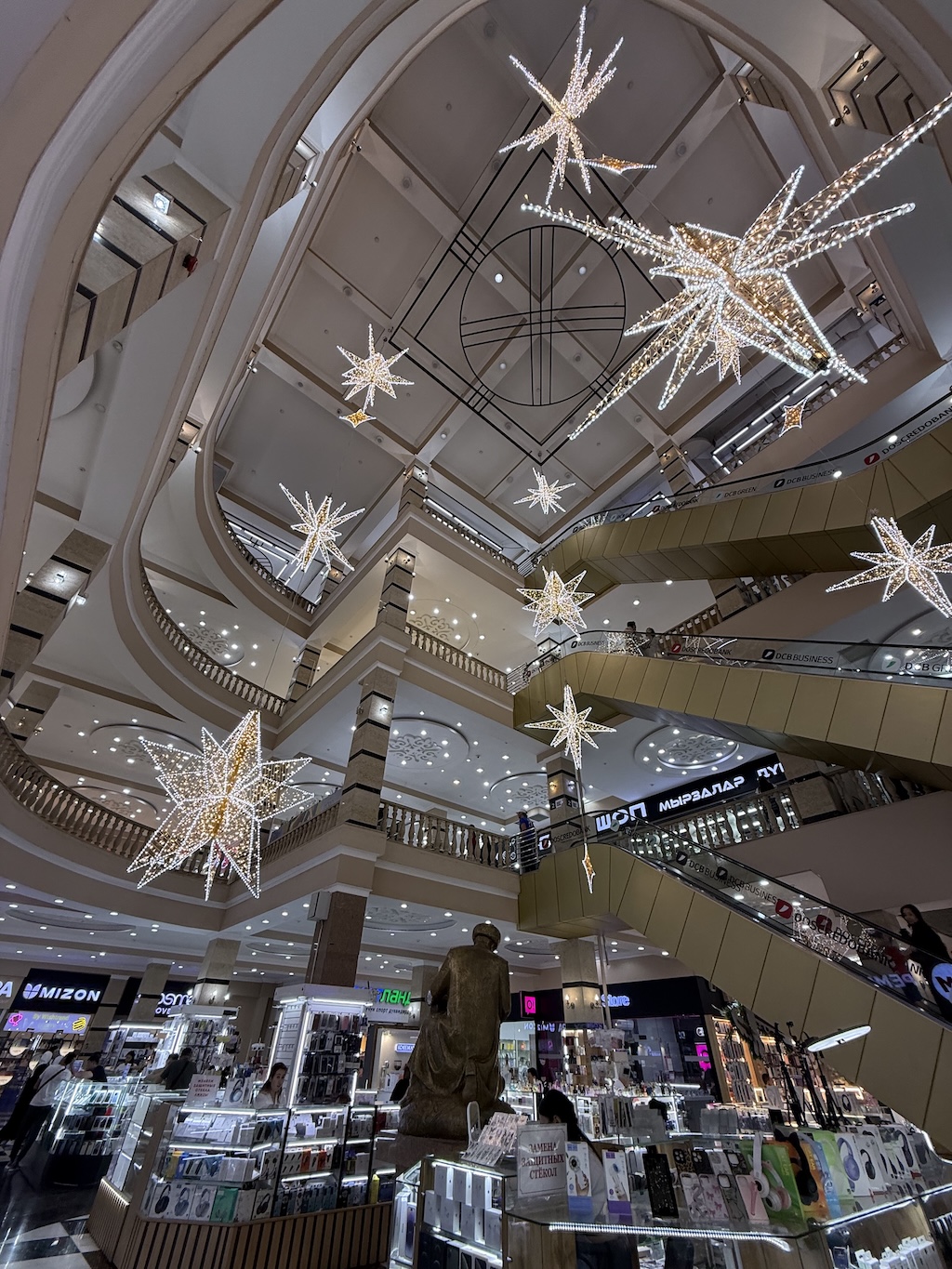
Next we walked by a more modern shopping area, where we later got dinner that evening (not everything is preserved Soviet architecture).
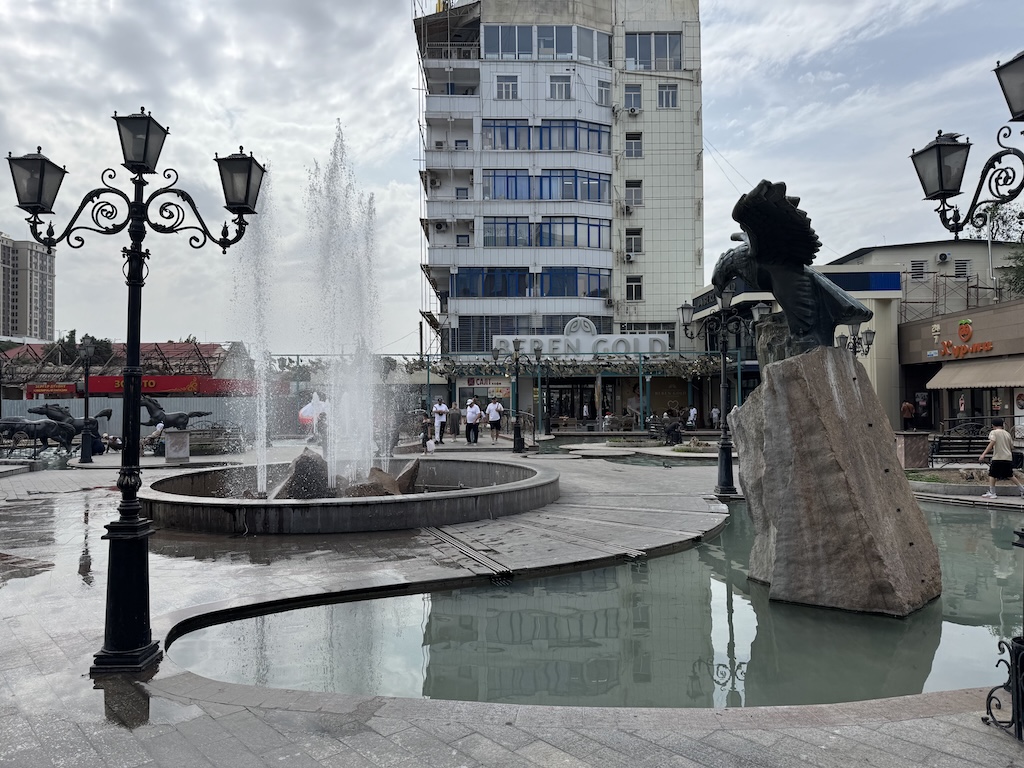
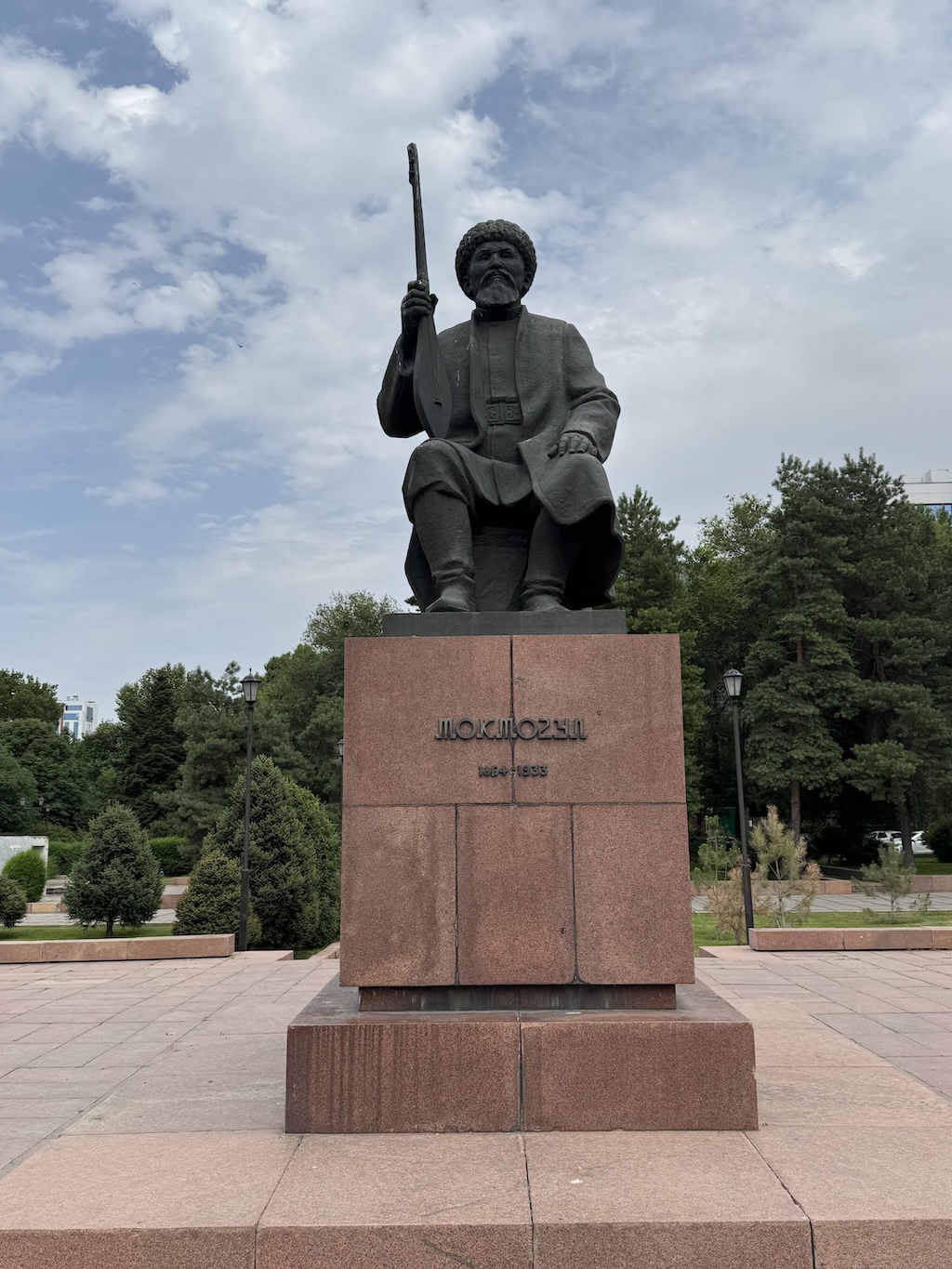
From there, we walked by the Soviet-built ballet theater and some other park areas, on the way to the art museum.
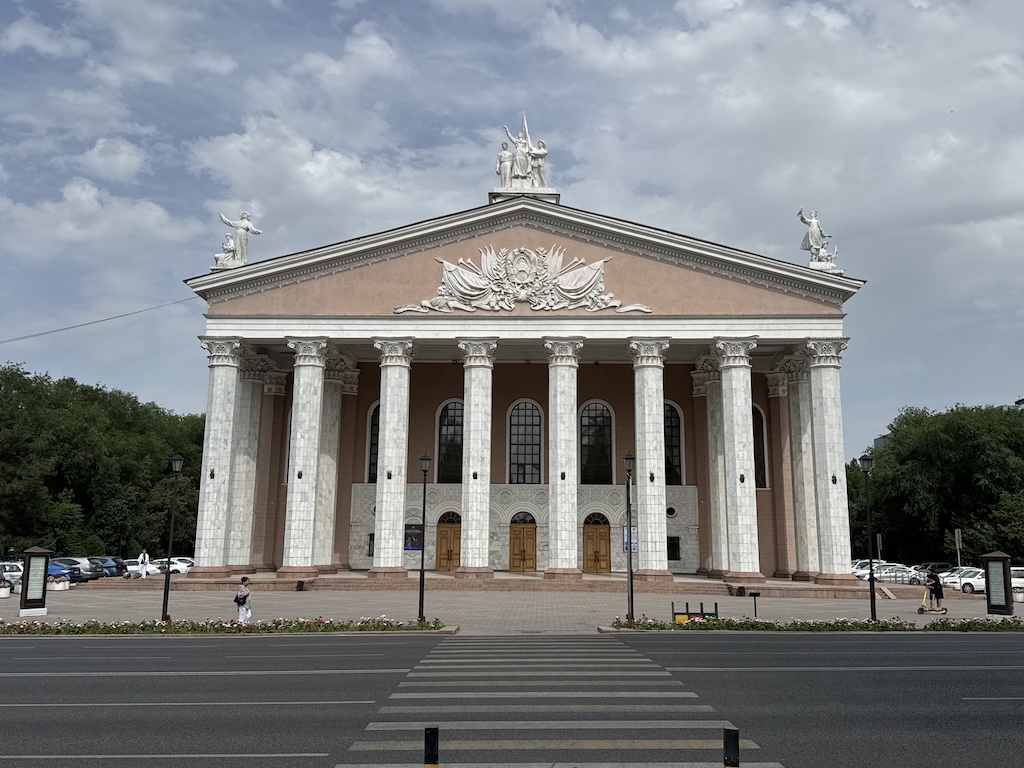
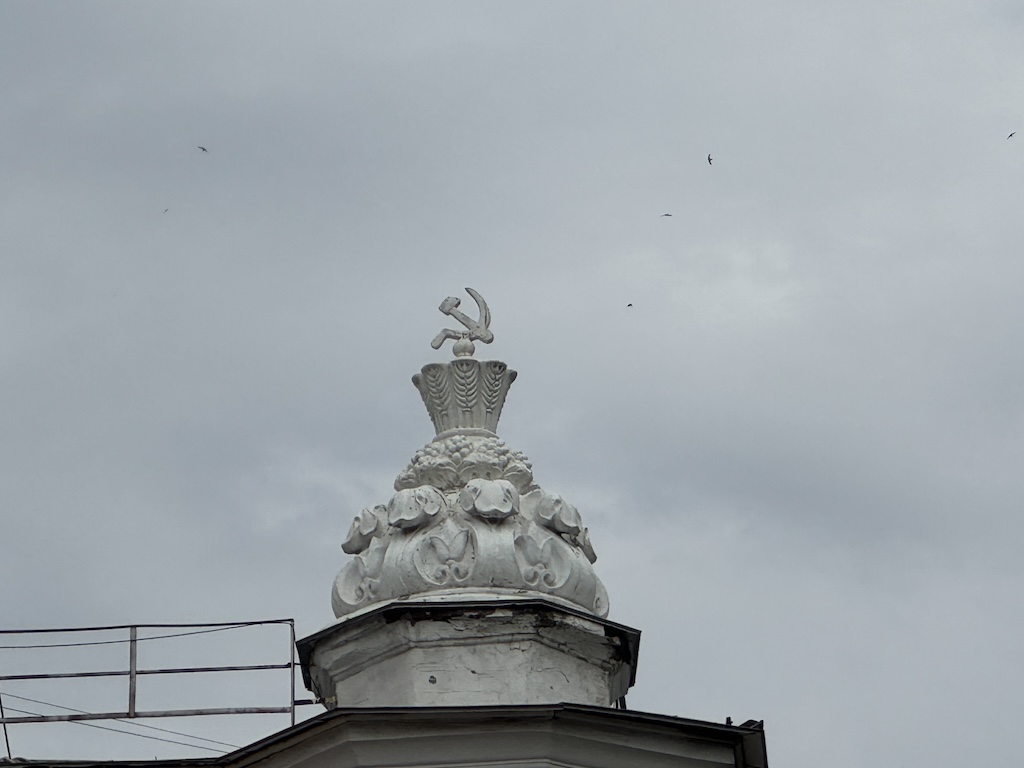
We went into the National Museum of Fine Arts. The architecture of the museum felt super retro Soviet modern. There was some art about the Kyrgyz people. But the Soviet era section was interesting in that paintings portrayed factories even smokestacks as futuristic means of production and prosperity.
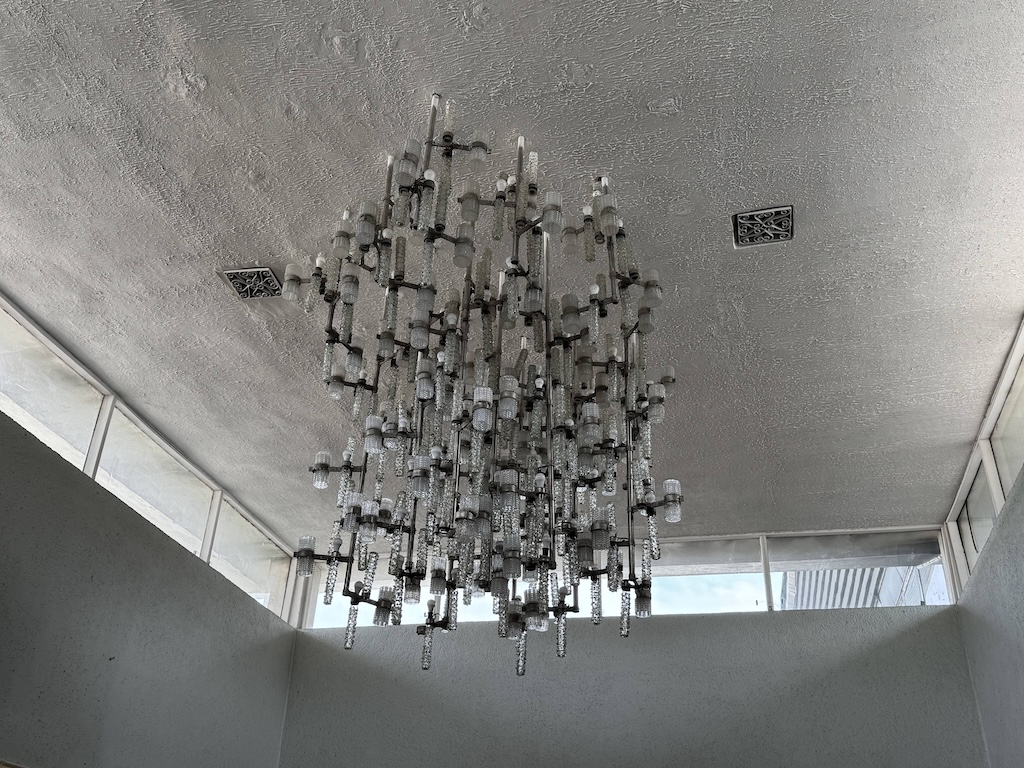
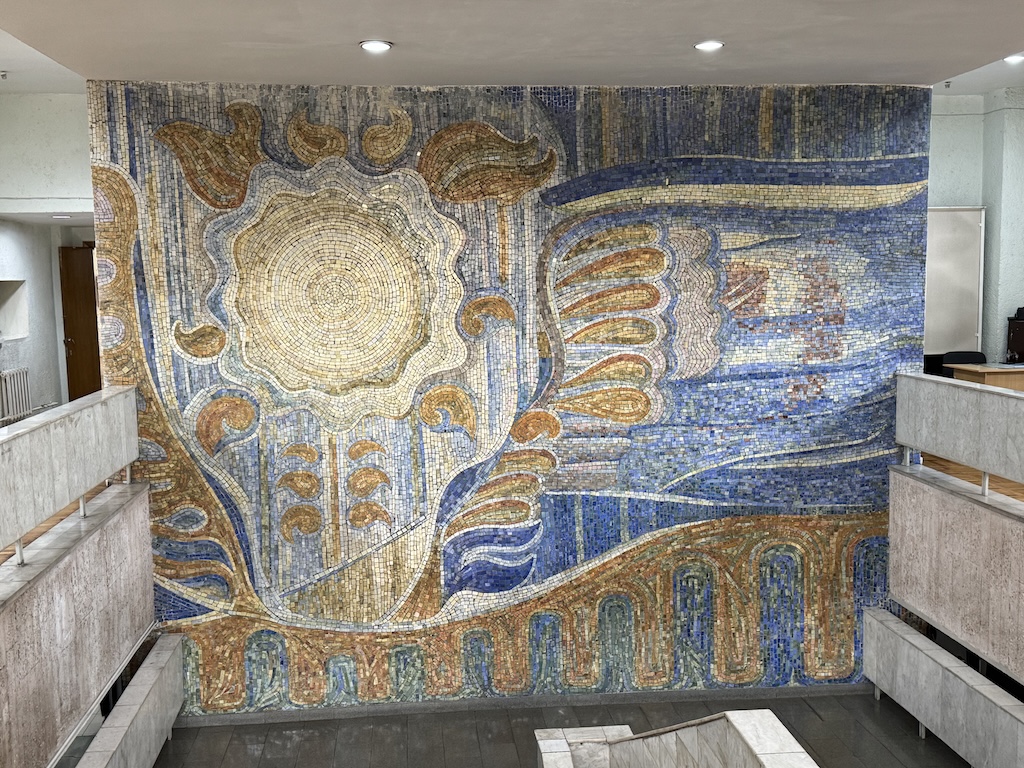
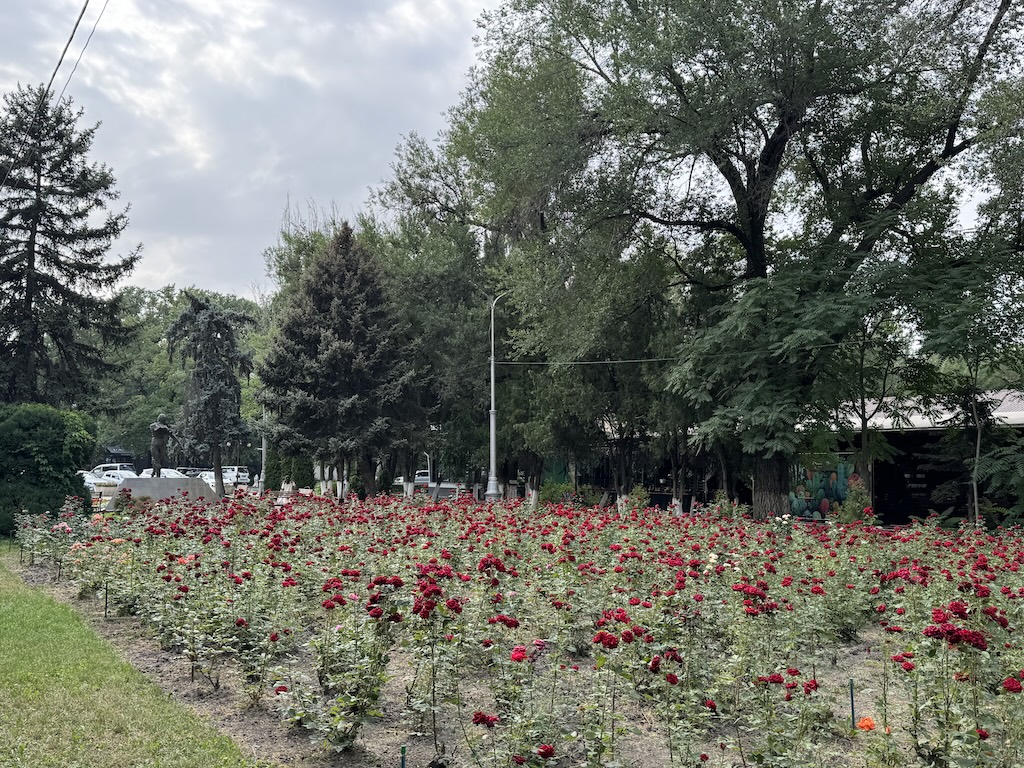
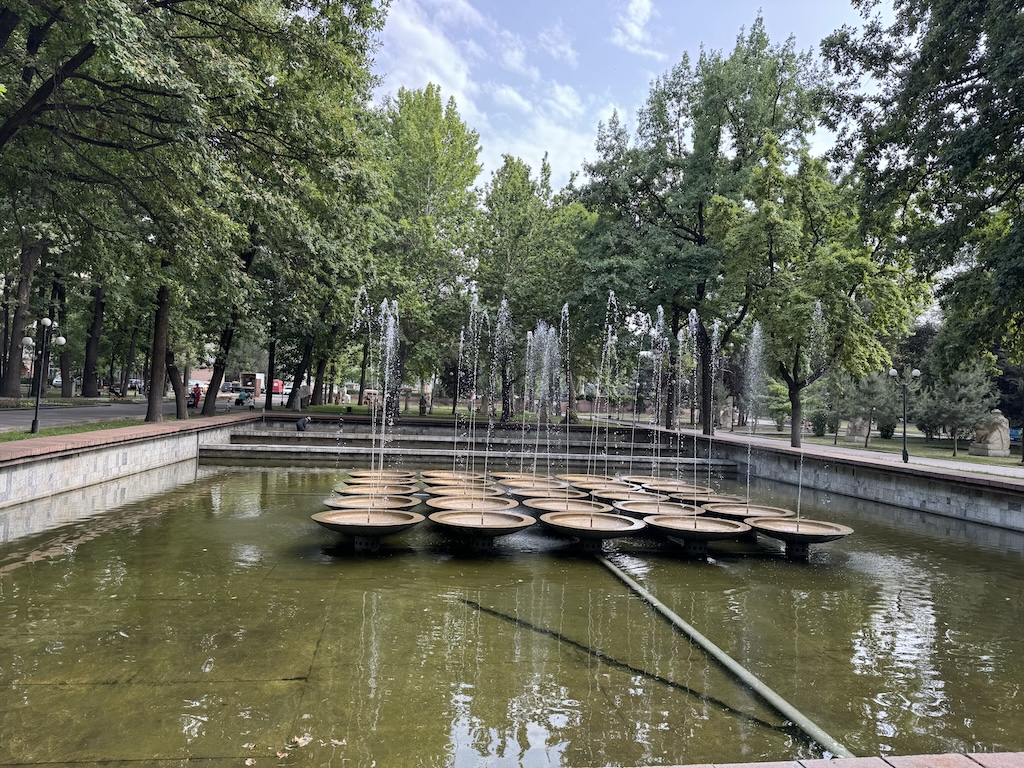
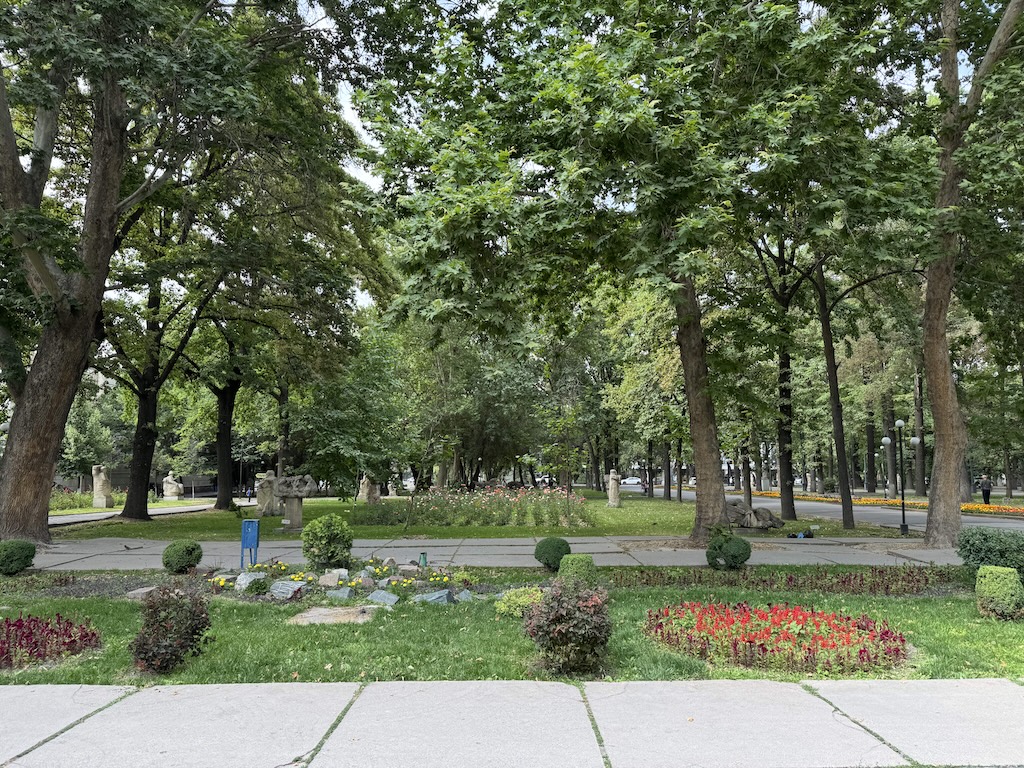
After the museum visit, we wandered in the neighboring Oak Park, which was pleasant, with its a Soviet-era park feel. We got some ice cream from a vendor in the park; I expected mine to be chocolate from the look of the package, but it ended up being a form of sweetened milk in the inside, which worked as well.
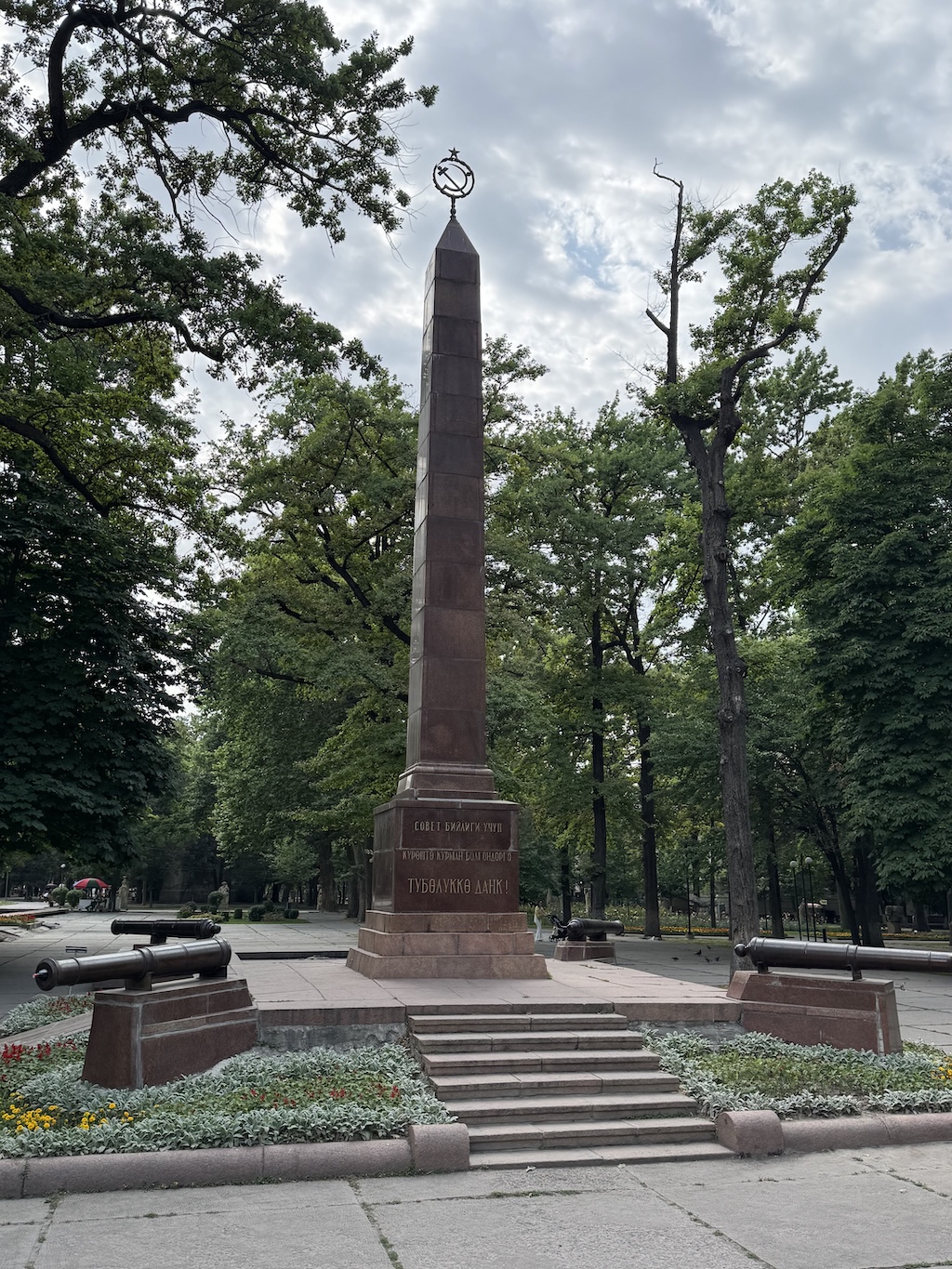
From there, we made our way to nearby Ala-Too Square, which is a big central square in Bishkek. In Soviet times, it was called Lenin Square, with a big statue of Lenin. It was removed post-independence, and eventually replaced with a statue of Manas in 2011.
The Epic of Manas, as we learned, was an enormous 1000-year-old epic poem of over 500,000 lines, like the Shakespeare of Kyrgyz culture. Our guide noted that Kyrgyz universities require a class on Manas as a graduation requirement, which not everybody is excited about.
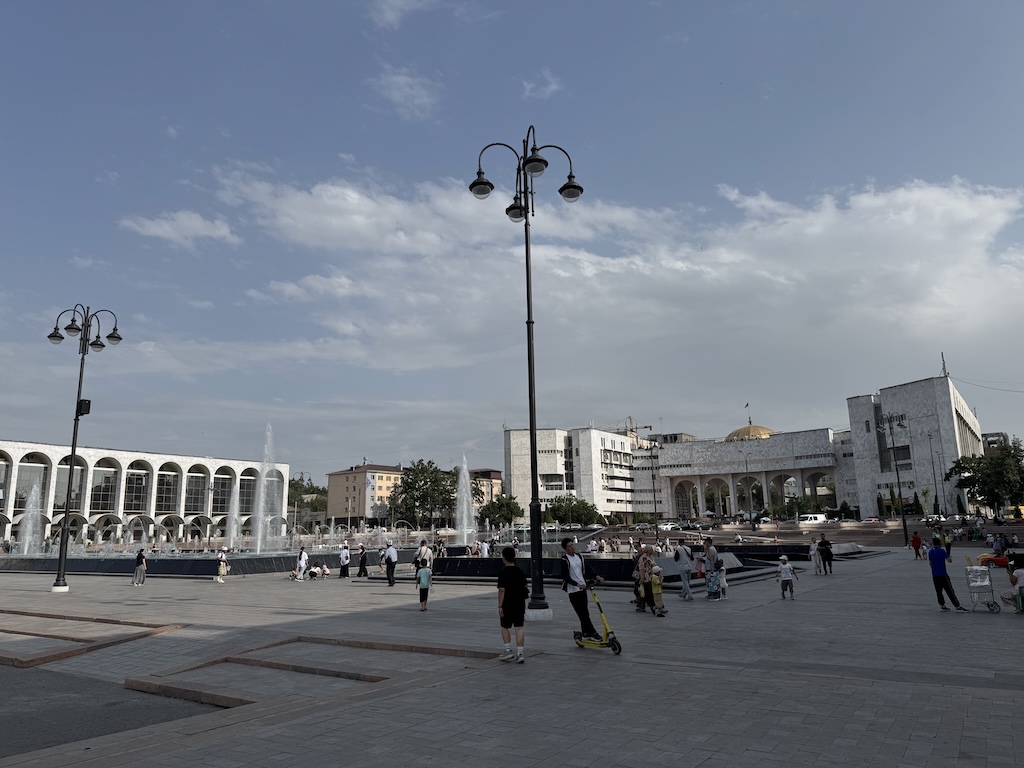
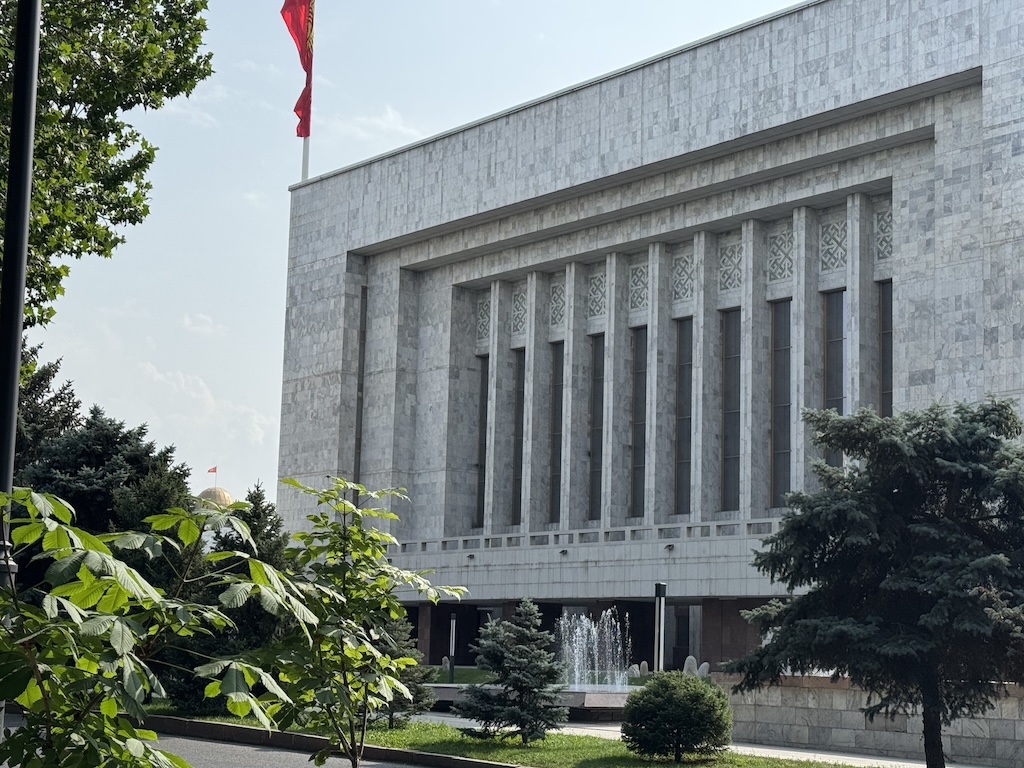
Our driver drove us a bit from the Ala-Too Square area to the area by the City Hall and Philharmonic Square, which had good views, as well as more Soviet architecture.
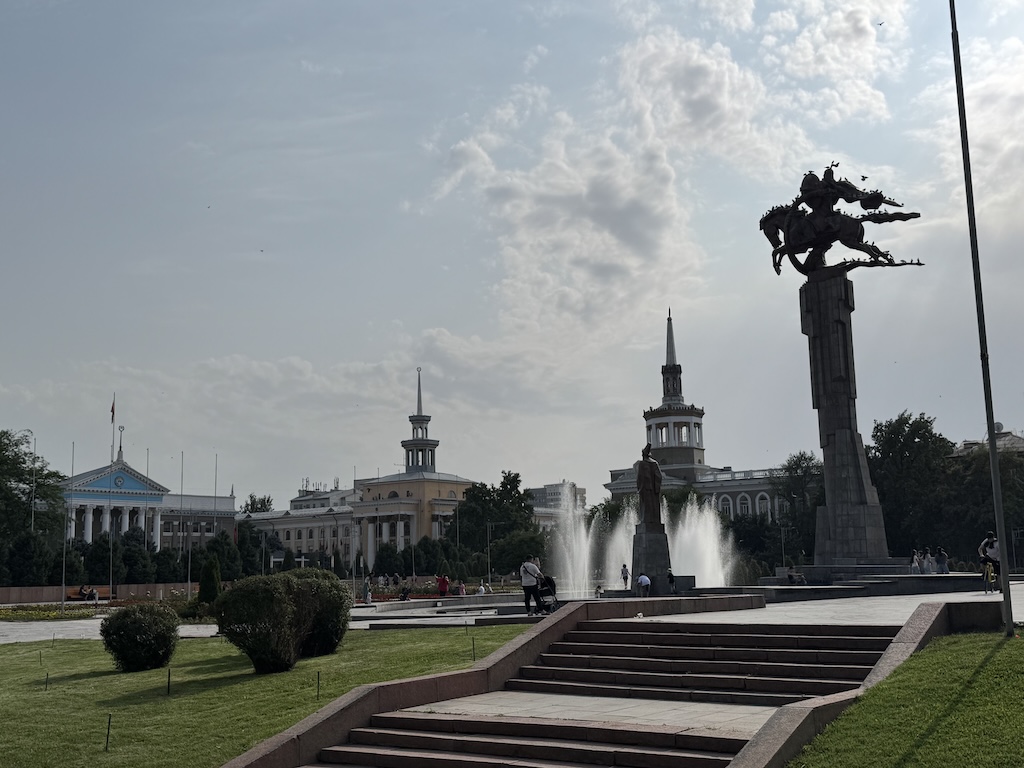
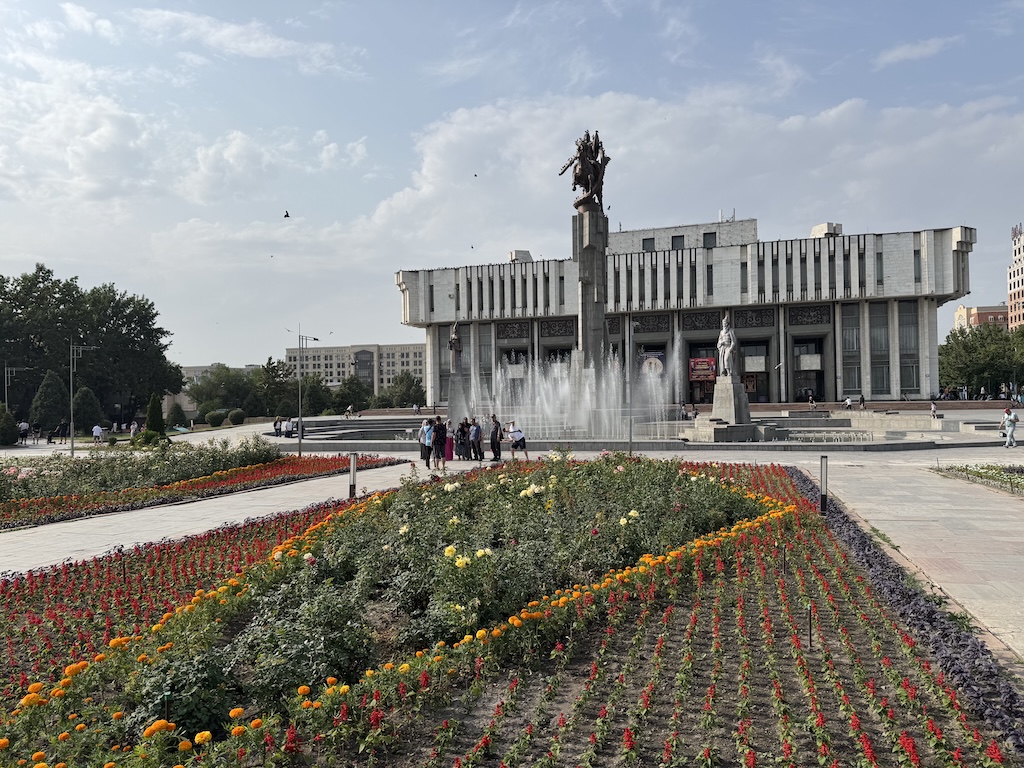
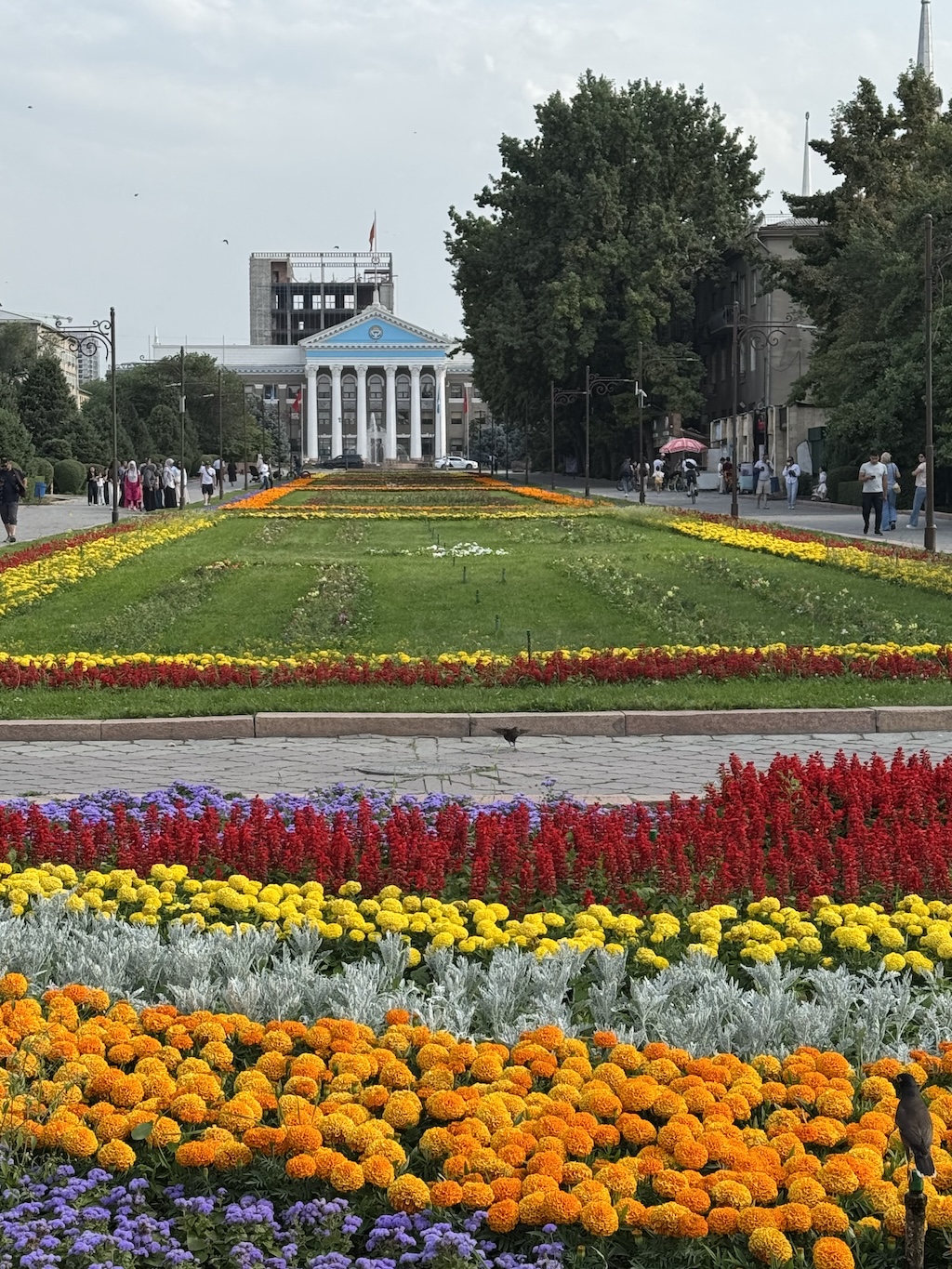
To be fair, there were some fairly modern architecture nearby too, it was an interesting mix.
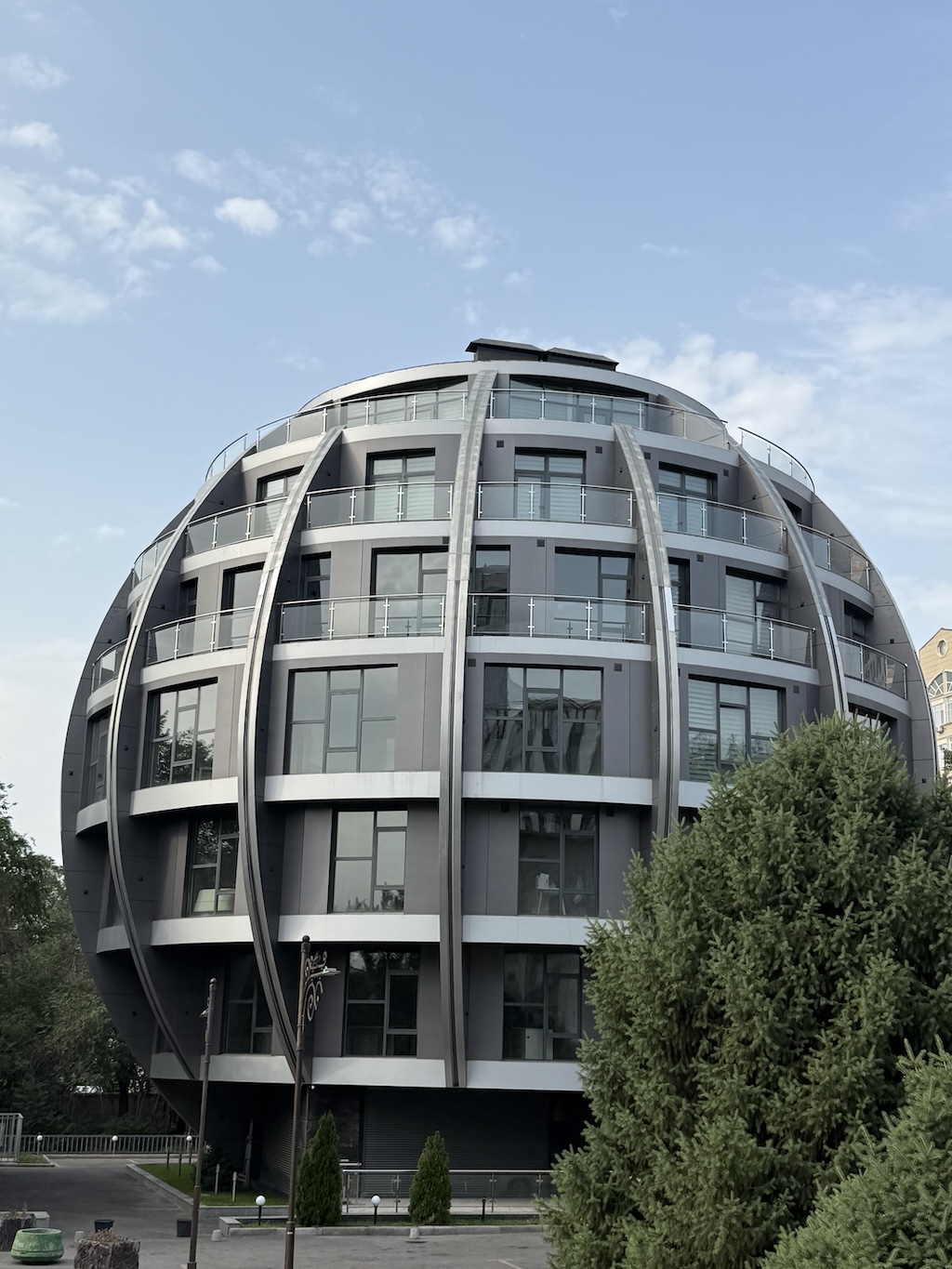
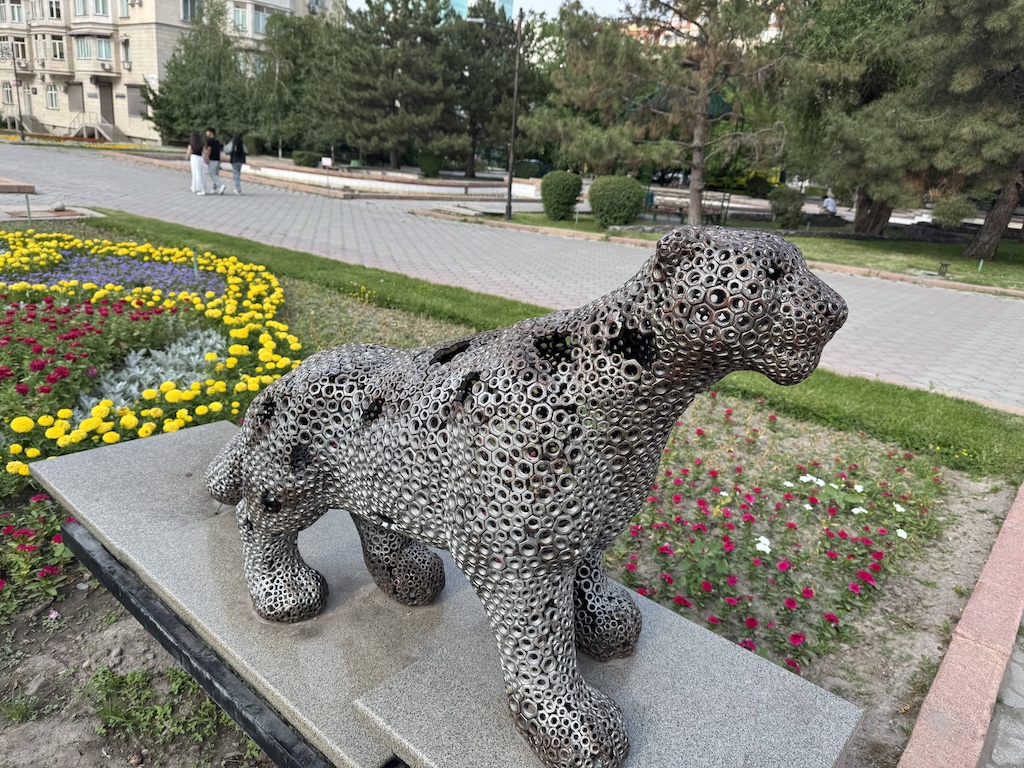
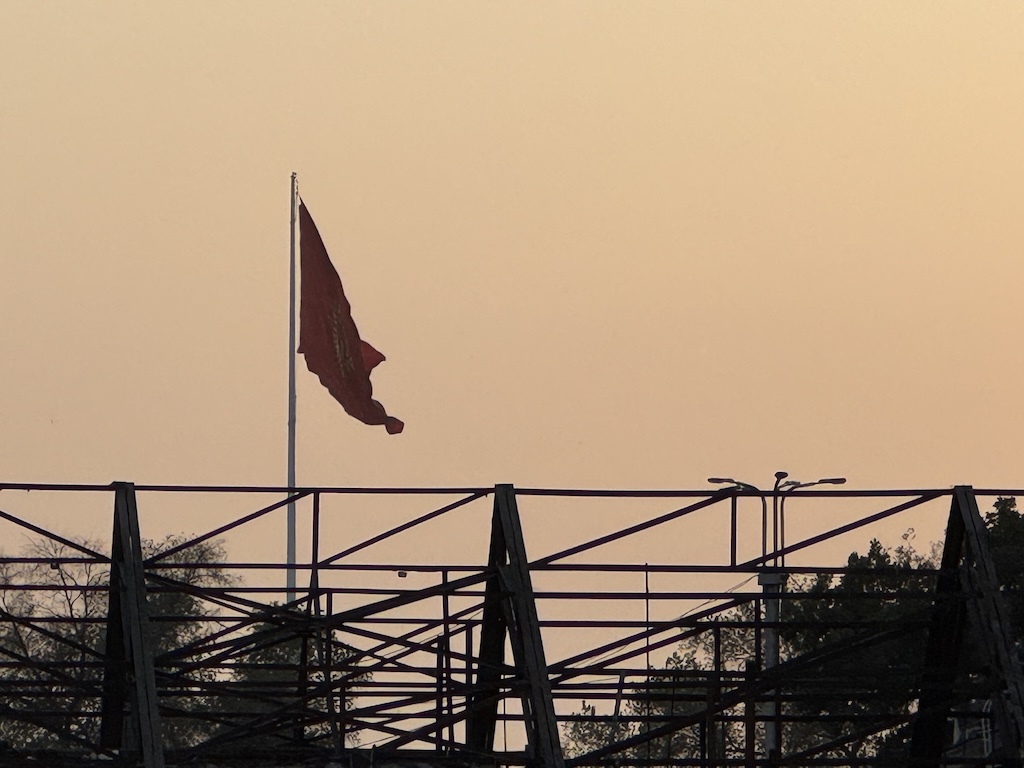
Eventually, our guide and driver dropped us off at our hotel, and we took a walk to get some dinner at a nearby shopping area. The city has a huge flag in Ala-Too Square that you can see from much of the city, we found it was a reasonable way to orient ourselves at times.
Day 2: To the Burana Tower
The next morning, we checked out of our hotel and were driven east of the city towards the Burana tower. Our guide told us that the schedule had to be padded since the recent (2025) road construction made traffic somewhat unpredictable – we ended up being somewhat early for the Burana Tower in the morning, but had very heavy traffic to the airport that afternoon.
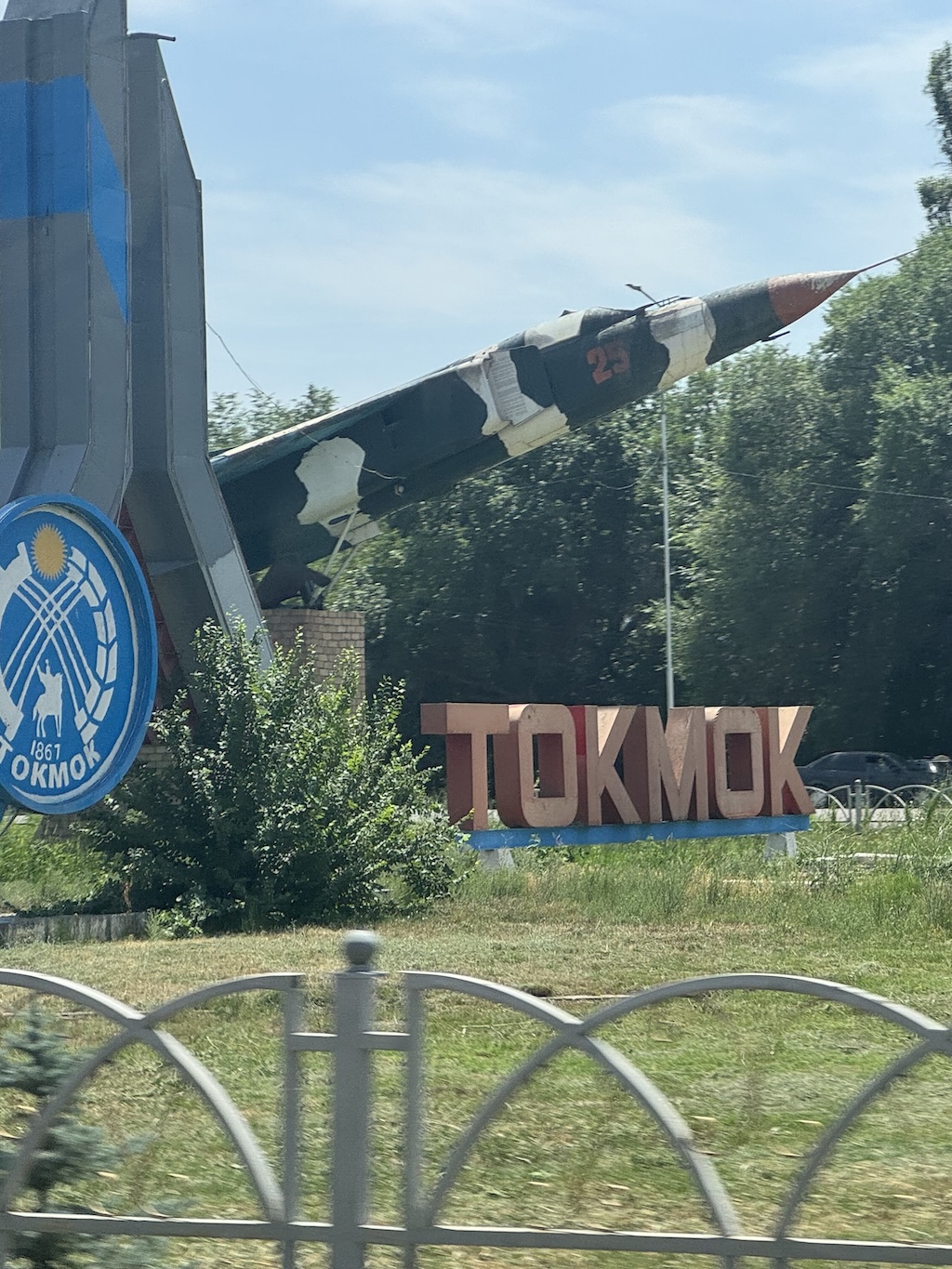
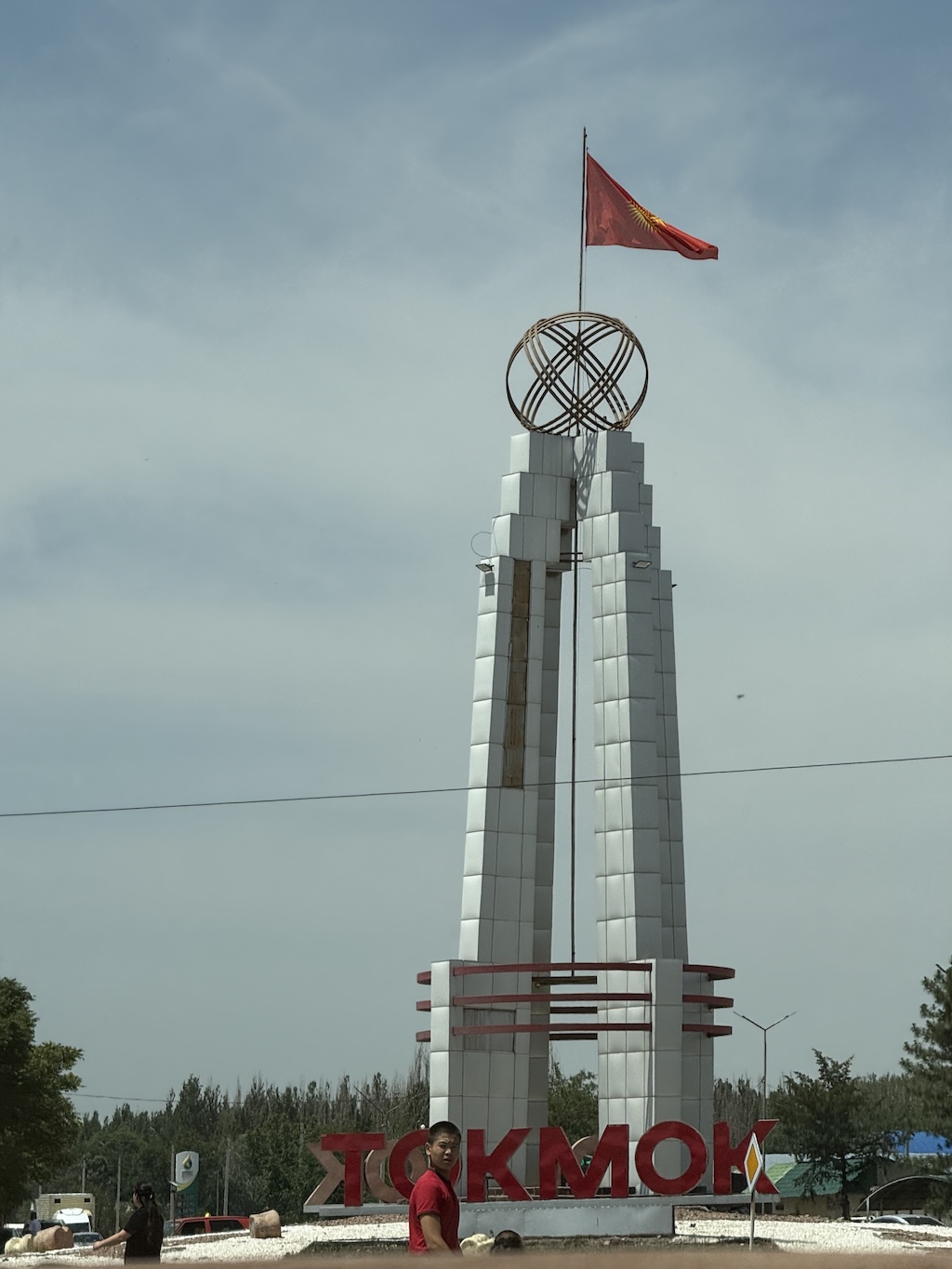
Along the way, our guide pointed out Tokmok, which during Soviet times had an air force training facility. Perhaps a Soviet “Top Gun?” There is still a model of a Soviet MiG on display by the city sign.
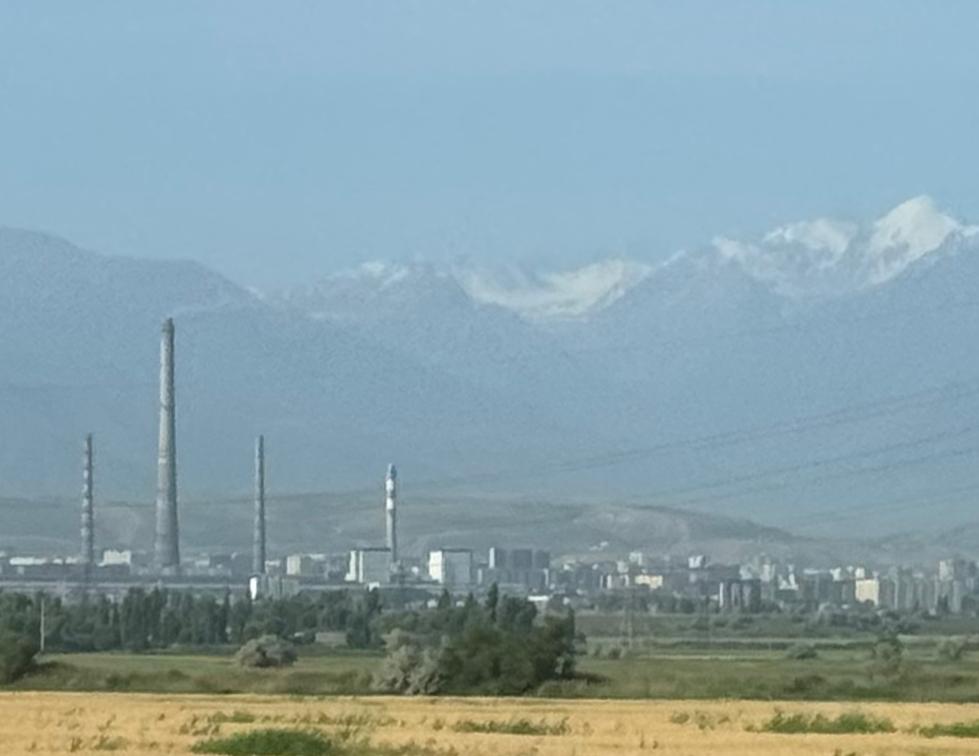
On another note, just down the road from Bishkek was a vintage Soviet coal plant, smoke and all. And then a cement factory. And then a metallurgical refining plant. The Soviets loved their heavy industry. The air quality had been hazy in Bishkek, but got quite a bit better as we headed away from the city. The background mountains became more visible.
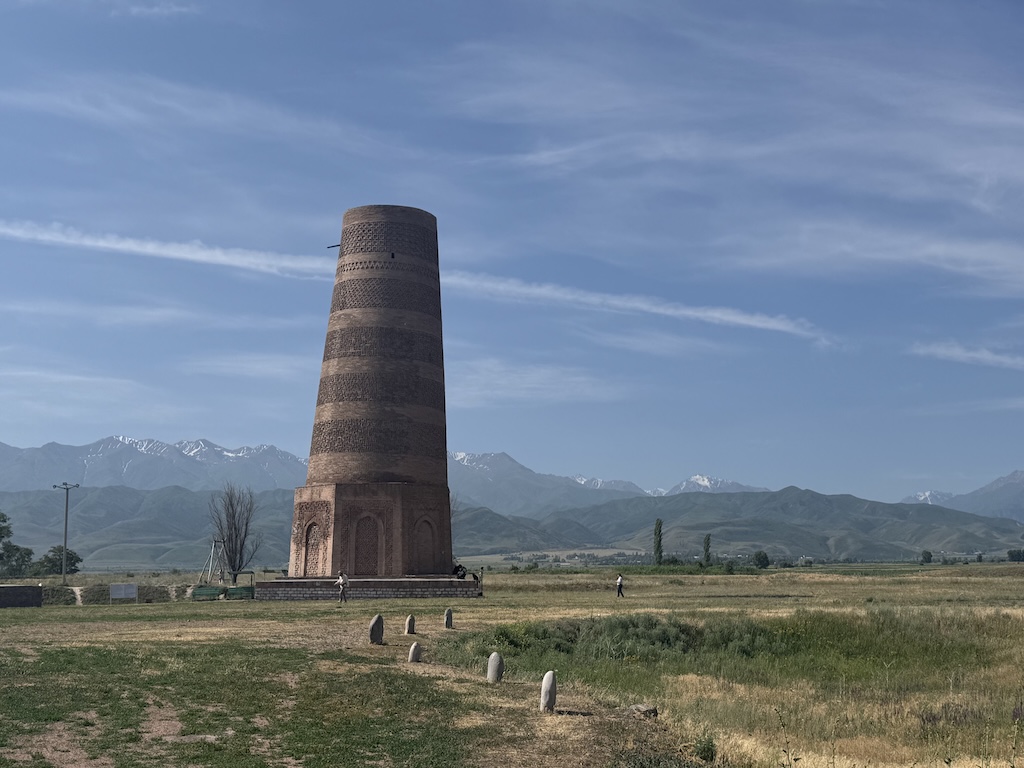
The Burana Tower was an old minaret which had been 45m (148 ft) tall, as part of the ruins of the ancient city of Balasagun in the 11th century. It had been damaged by earthquakes centuries ago, reducing its height, and was restored some in the 1970’s.
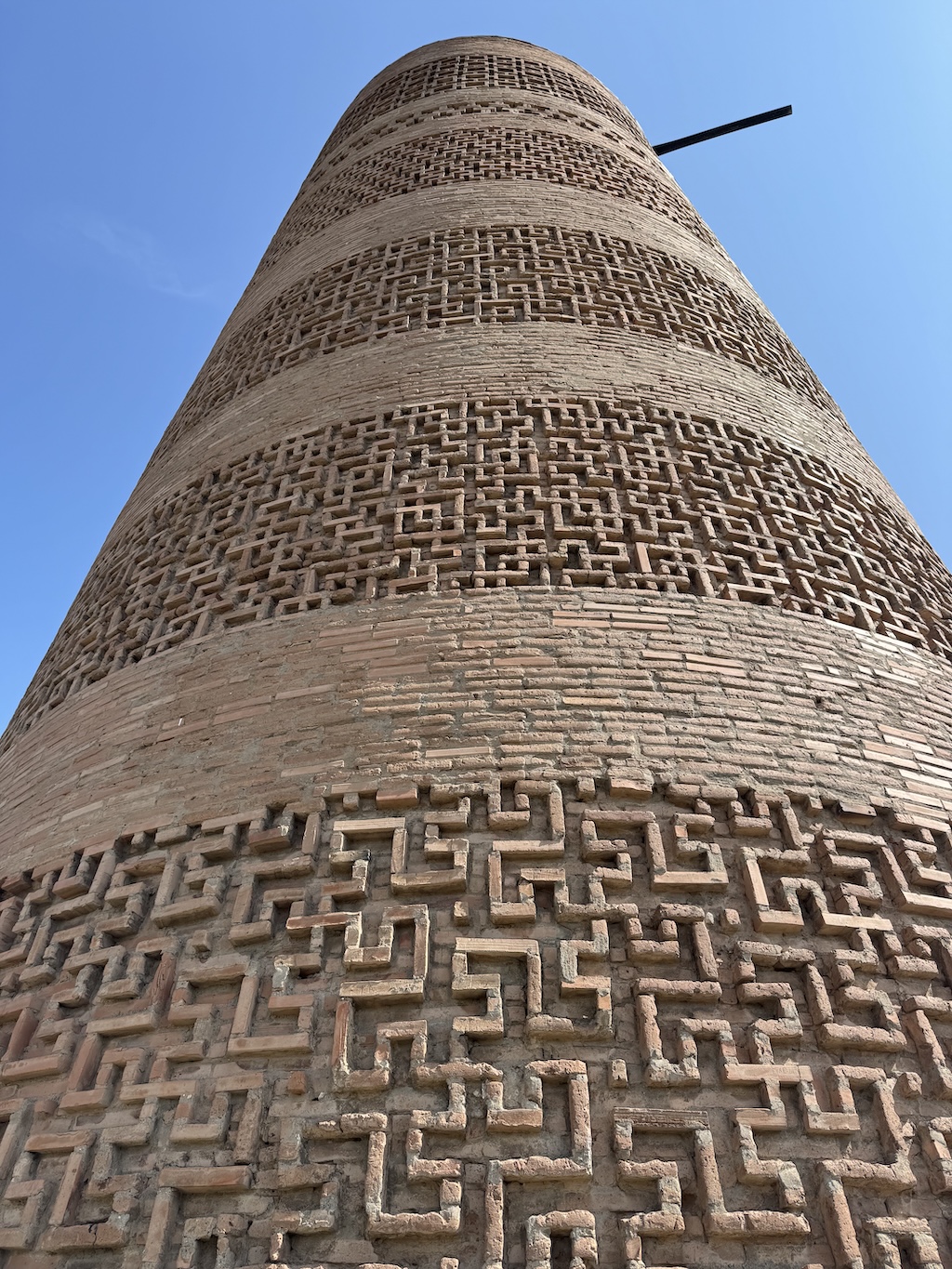
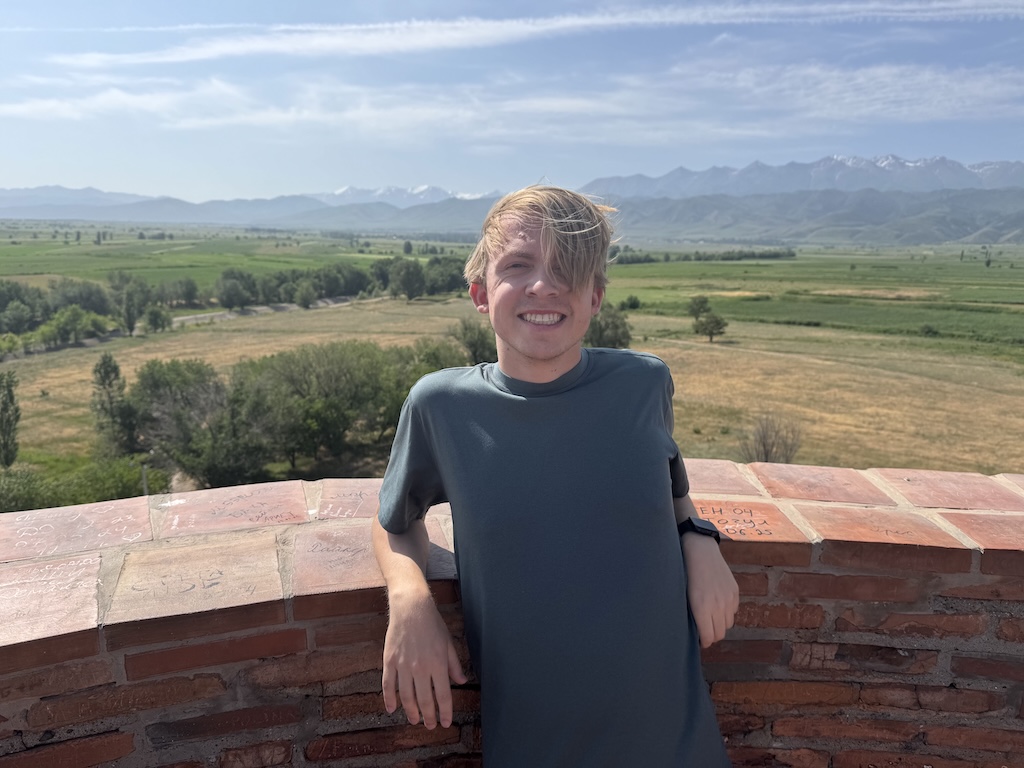
Our guide asked us if we wanted to climb the tower, and James was interested. She didn’t seem particularly eager to climb it, and as we started climbing, I better understood why. It was more like climbing a windy, narrow ladder with both one’s arms and legs. And climbing back down was also on the scary side – definitely not possible for set of folks to be going both up and down at once. In any case, it was a nice view up there. After we got down, a school group climbed it, and filmed themselves with a drone.
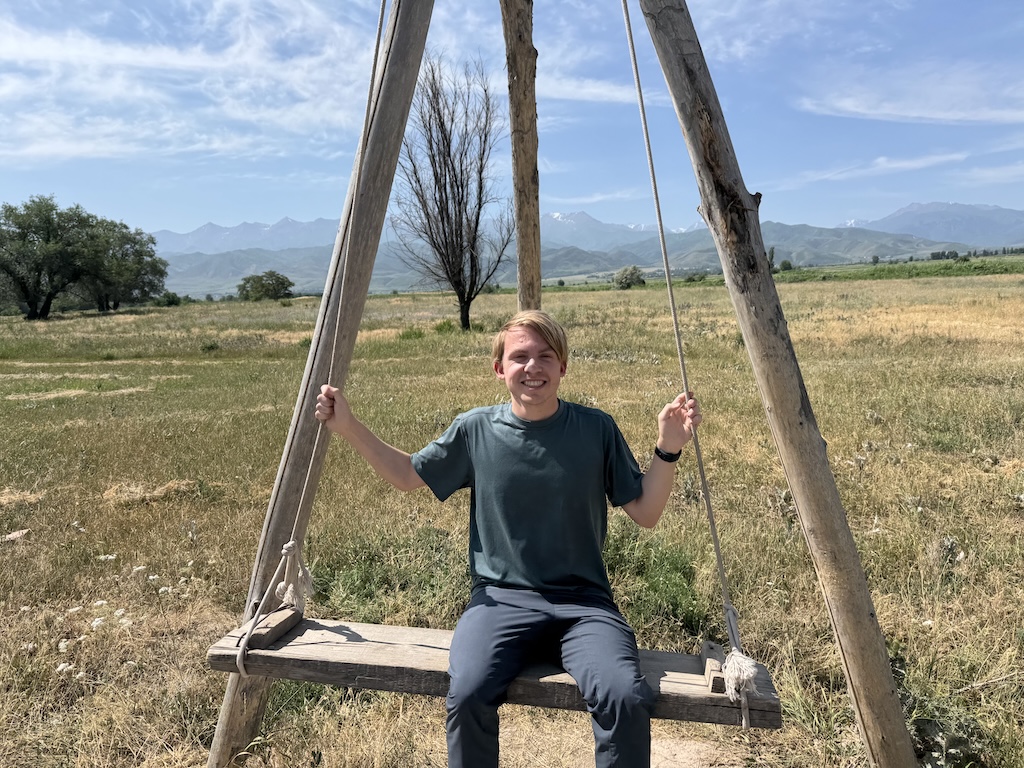
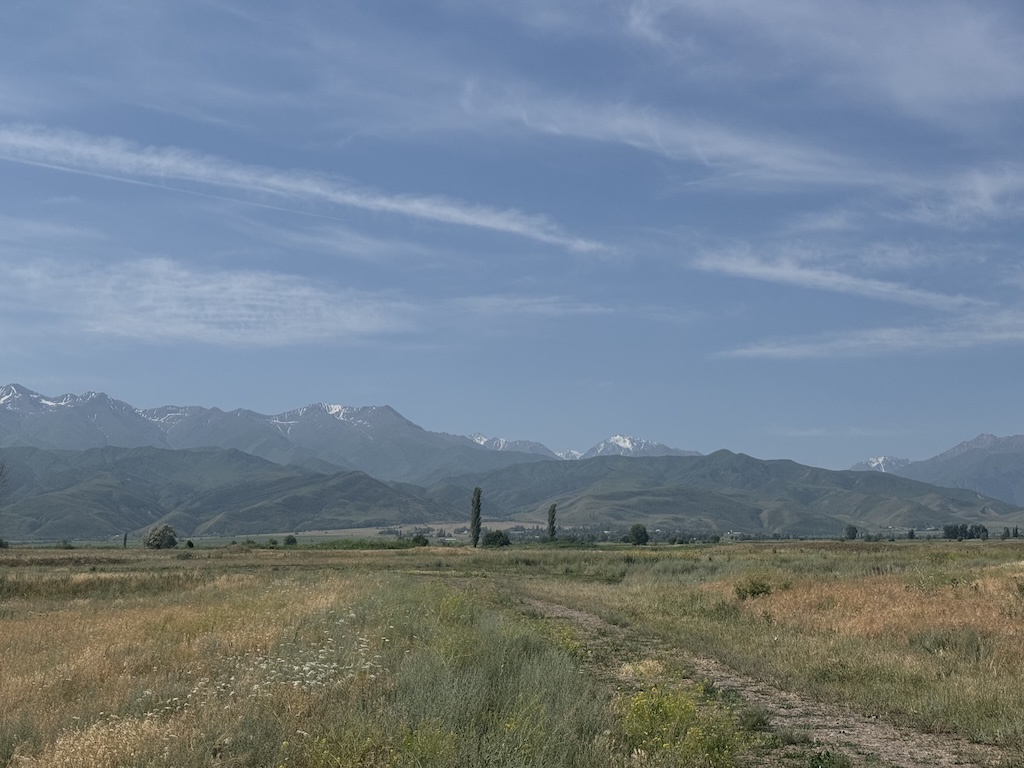
In the area, we also explored the ruins of the ancient city, and saw a small museum. From the mountain views, I see why folks from nearby countries might come to Kyrgyzstan for the mountain scenery.

Yurt Making and Lunch
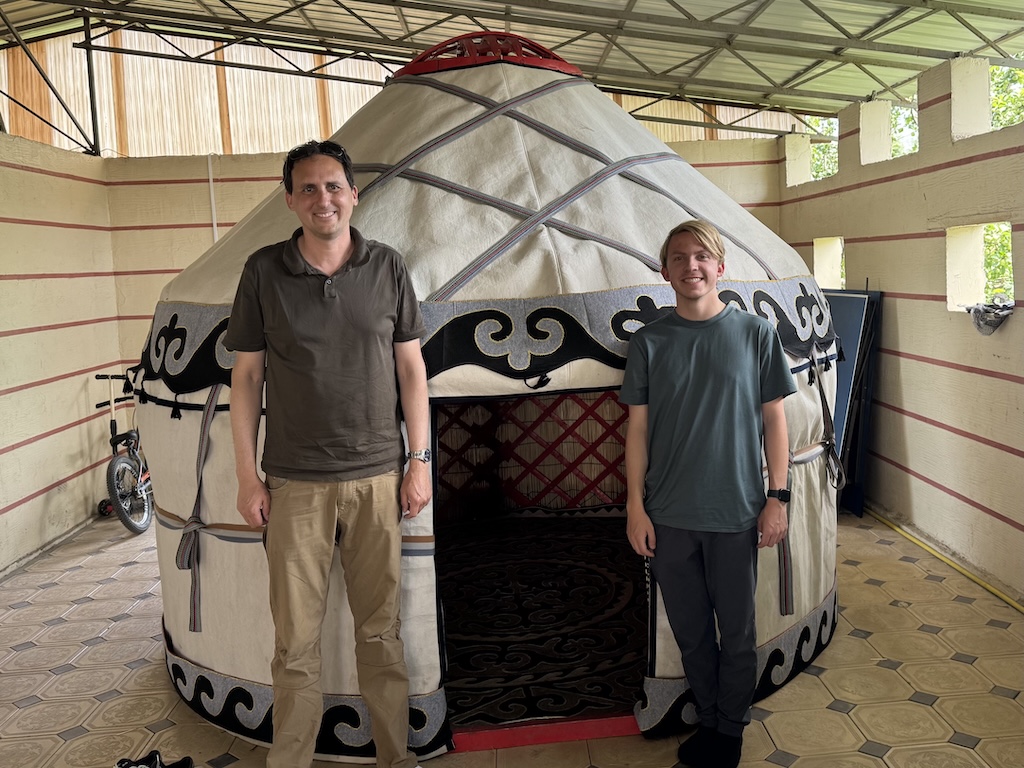
I suspect that from an itinerary planning standpoint, it made sense for us to find an activity, so we were scheduled for a yurt making demonstration. Still, it was interesting.
Previously, I didn’t fully appreciated how portable yurts were designed to be. Effectively, these nomadic people needed a way to be able to transport their homes on horses, and set up their village where it made sense. The buildings effectively folded up and could be reassembled in an hour or two, and similarly torn down quickly. They gave us a demonstration with a very small yurt, but a regular one would be large enough for 5-15 people.
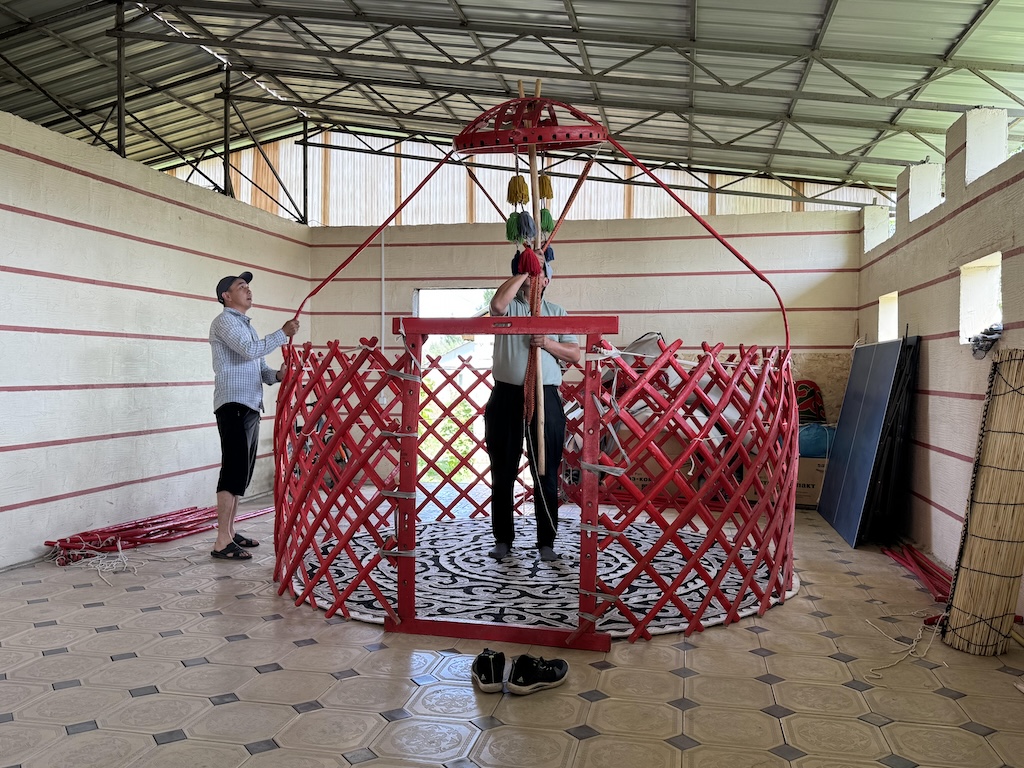
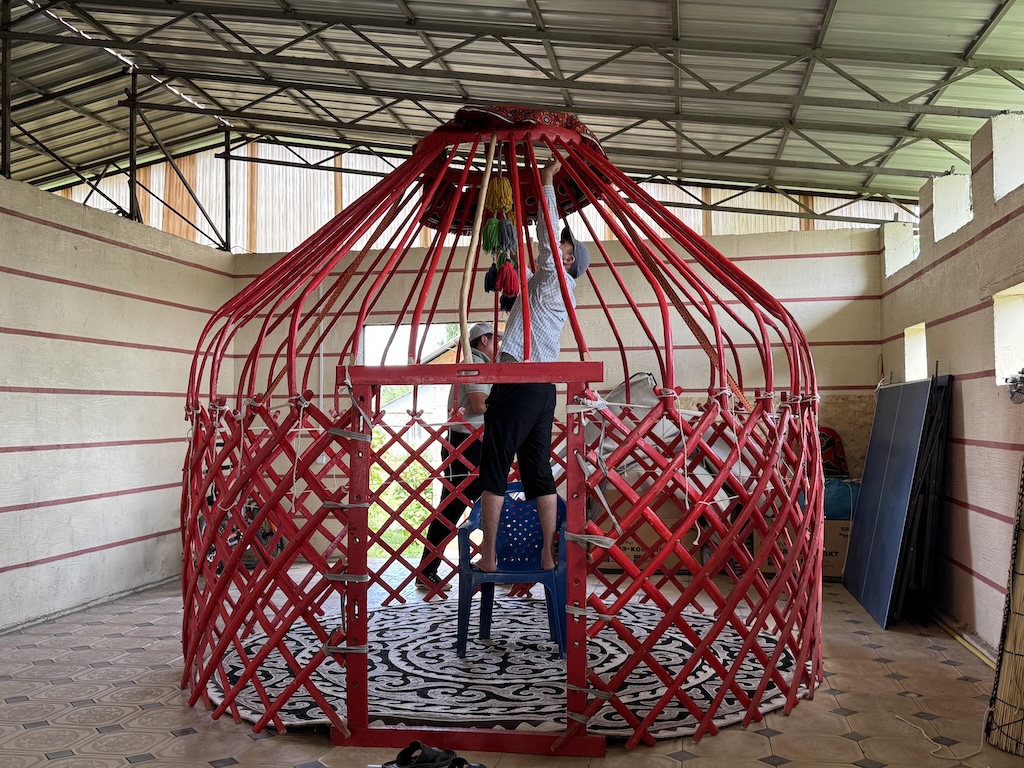
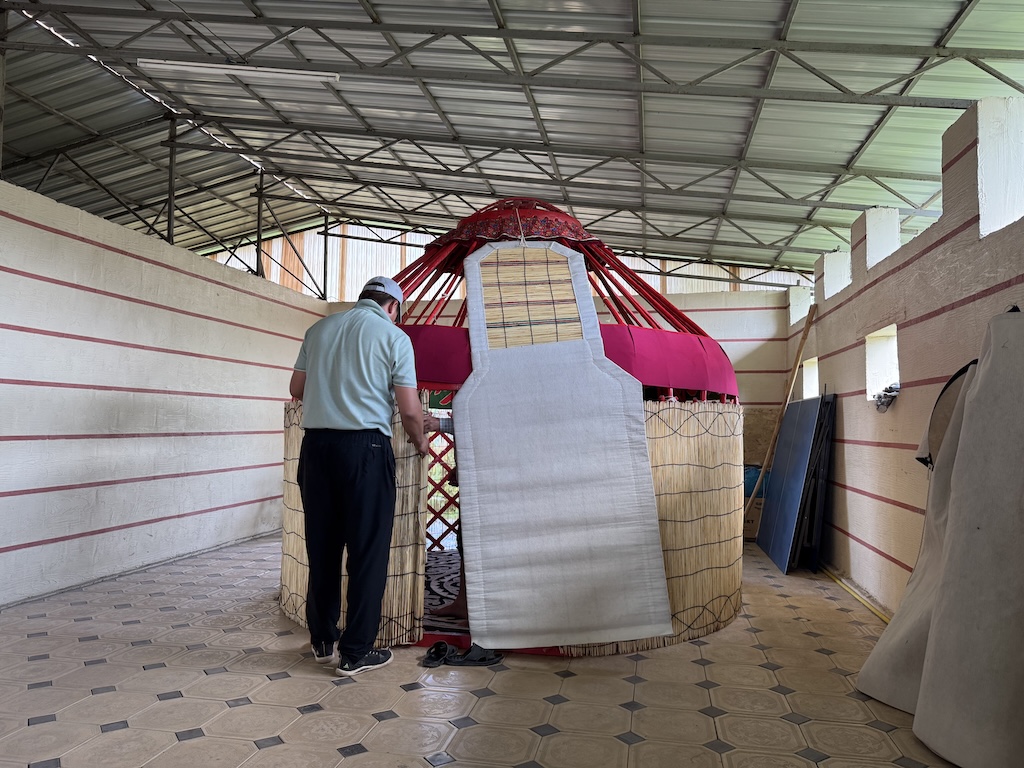
The wood frame is a lattice designed to fold compactly. The sections are expanded and locked into place, with ropes securing the sections together. There is a ceiling apparatus and sides that are made from a fairly warm and waterproof wool felt material.
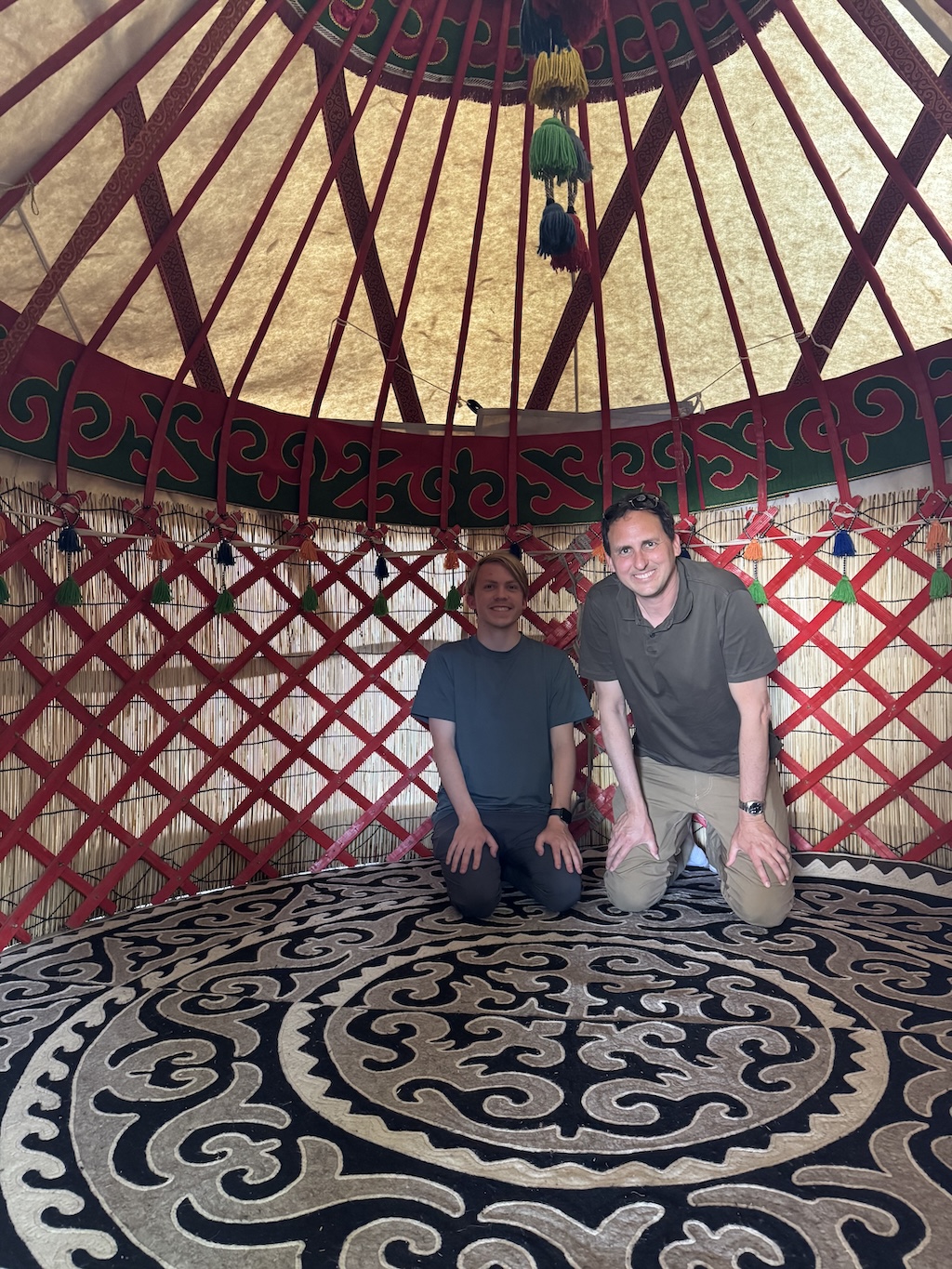
Meanwhile, it seemed like a Kyrgyz cooking class was going on in a neighboring room, though we ended up being served a nice lunch. The apricots were particularly nice, and the regional dishes were similar to what we had in Kazakhstan.
At some point, it was time for us to start the drive back to Bishkek for our late afternoon flight. The traffic was much slower on the way back, glad that we didn’t leave much later. At that point, we flew to Tashkent, Uzbekistan, from where we were going to start our next part of the journey.
More From Our Blog
Keep reading our travel blog for more adventures in Central Asia:



 Adventures of the 4 JLs