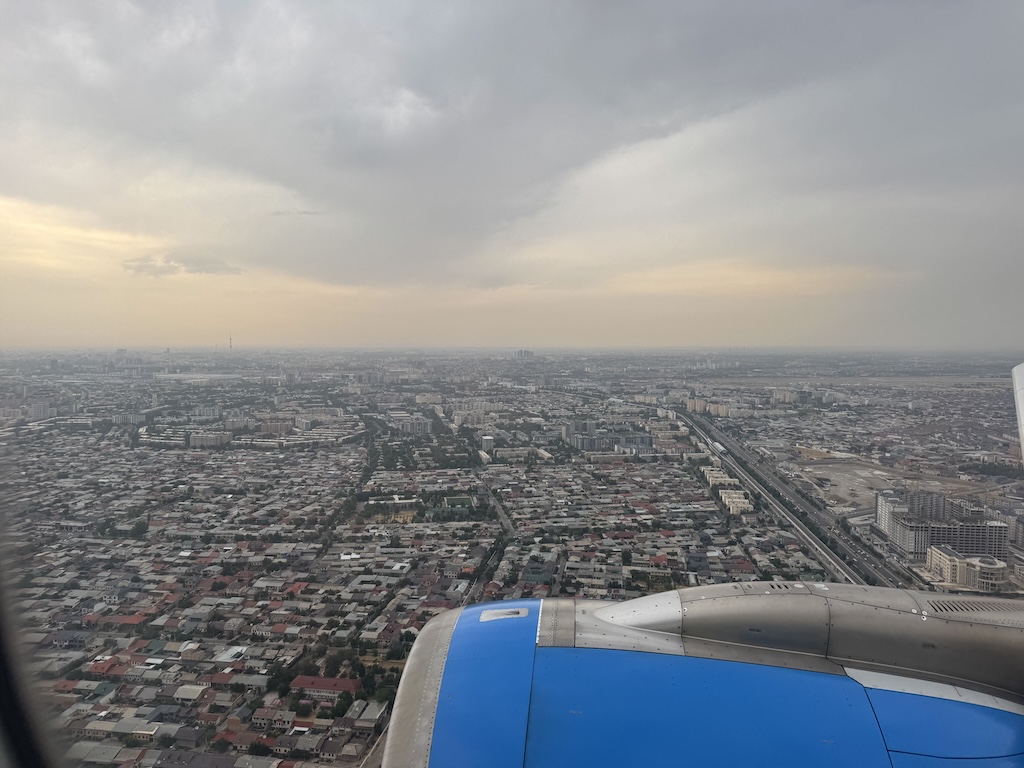
After leaving Kyrgyzstan, as part of our “5 Stans” Central Asia trip in June, our evening flight arrived in Tashkent, the capital of Uzbekistan. As the largest city in Central Asia, it’s a gateway to the Silk Road with 2,200 years of history.
Being picked up from the airport in a new Chinese electric SUV and being whisked past glass buildings and bustling restaurants to our hotel, Tashkent felt fairly modern. Unlike our previous stop in Kyrgyzstan, there weren’t nearly as many vintage Soviet buildings or as much Cyrillic writing on signs (Uzbek uses the Latin alphabet). But, we would see the next day that Tashkent also has significant ancient sites that are distinct from its modern parts.
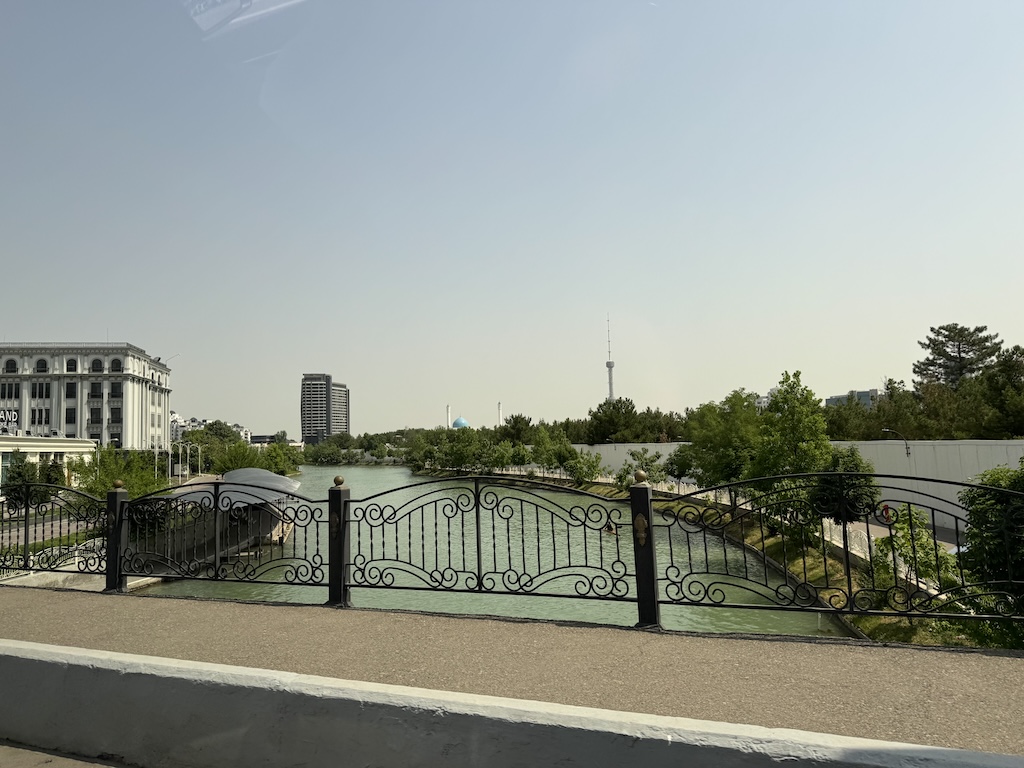
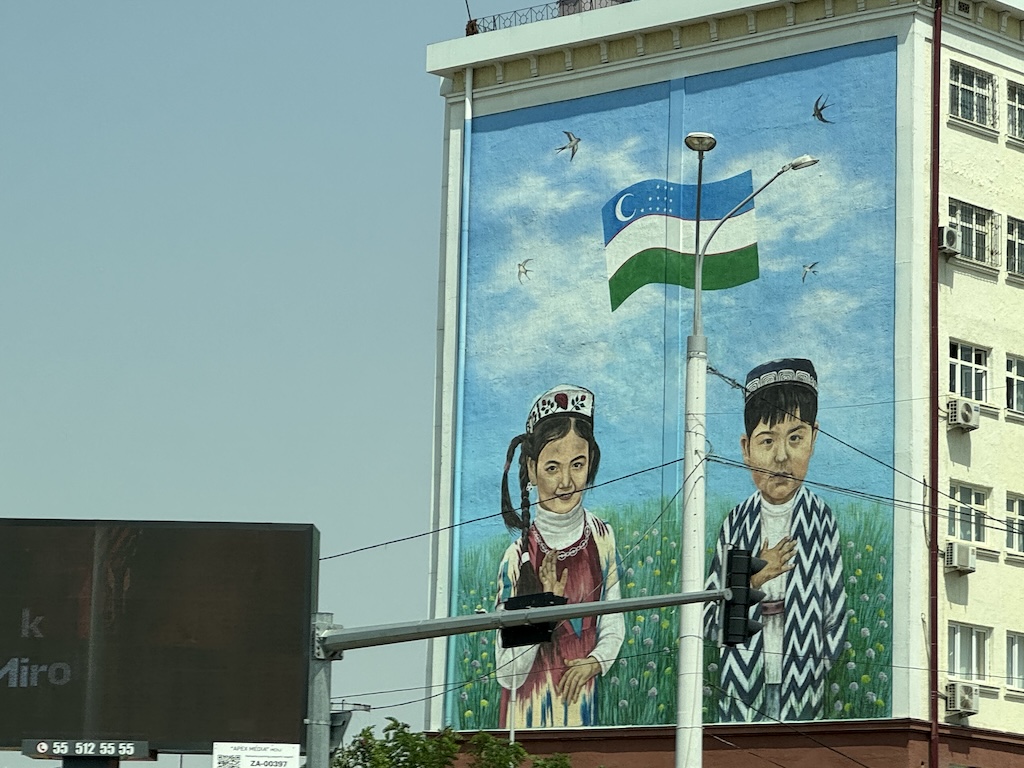
While we normally are fairly independent travelers, the fast paced logistics of this trip meant that we used a tour company and had a guide for our day visit to Tashkent. Having arrived the evening before by plane, our day tour started the next morning. Later that evening, we continued on to a high speed train on to Samarkand.
Old City
Our guide picked us up at 10am, and we went from our hotel towards the Old City. Along the way, we noticed that the majority of cars in Uzbekistan are ironically Chevys because GM apparently built a large factory in the country. We also learned that there had been a huge earthquake in Tashkent in 1966, which destroyed most of the buildings at the time, with the Soviets using their resources rebuild it as a model city.
Our first destination was the Hazrati Imam complex. In that area, there is a huge new mosque under construction (2025), as well as some older mosques, madrassas (religious schools), and minarets. They’re all good examples of Islamic architecture, though will probably be more impressive when the new mosque is completed.
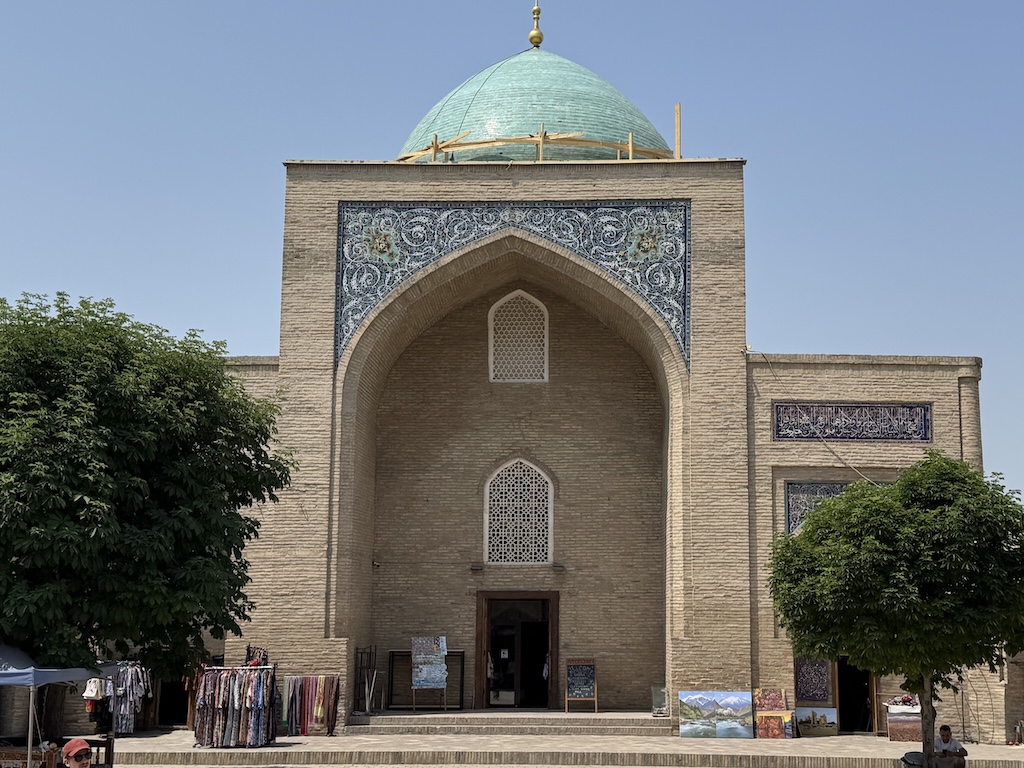
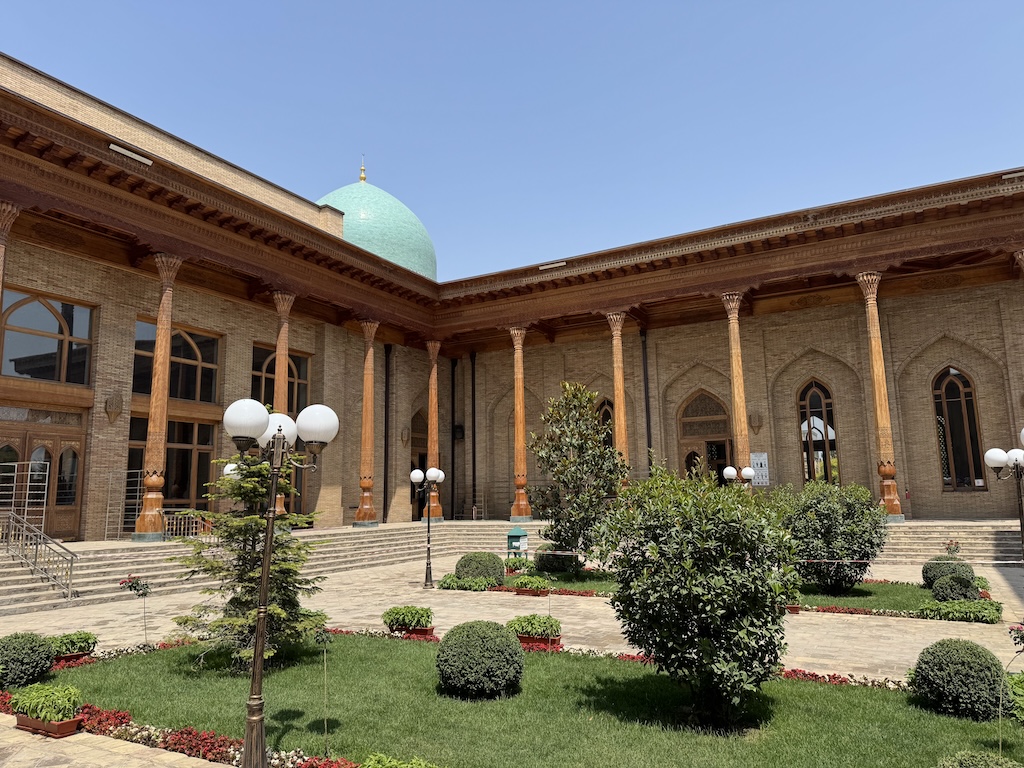
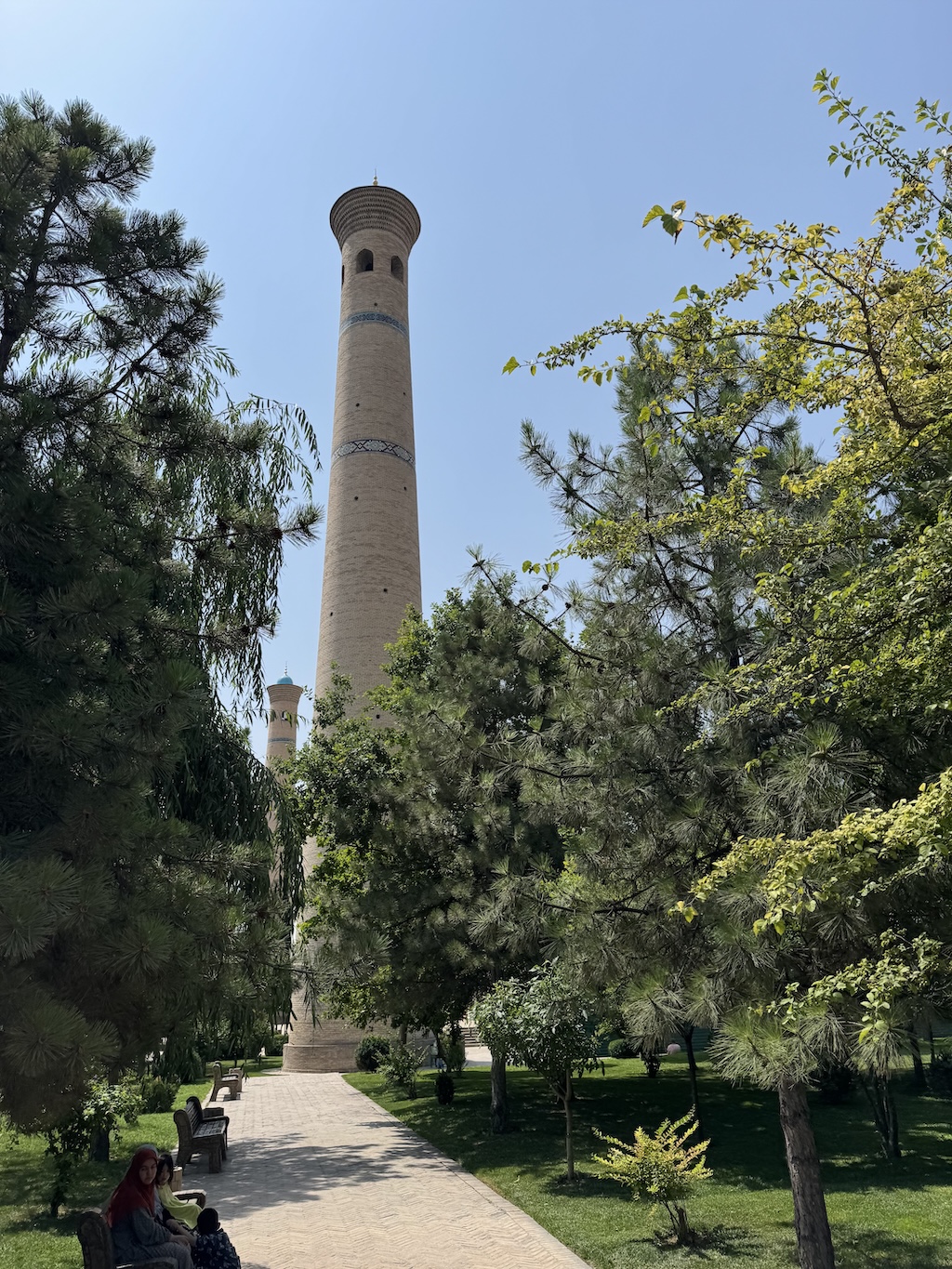
We went into a museum on that site with the Caliph Usman Koran on display, which is an early copy of the Koran from the 8th or 9th century on deerskin. The museum also had copies of the Koran in many other languages.
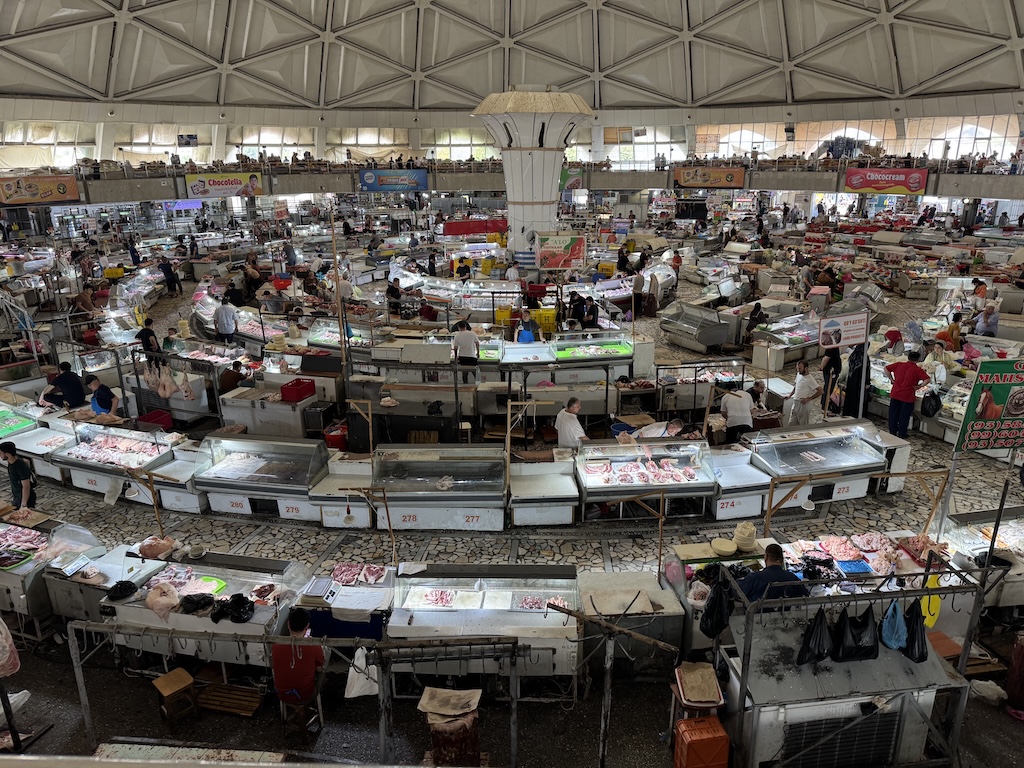
From there, we went to the bazaar, which is the largest in Central Asia, and has been at this same location for 1,000+ years. Our guide explained the the main building was rebuilt by the Soviets in the 1970’s after the earthquake, though it sprawls across many adjacent buildings.
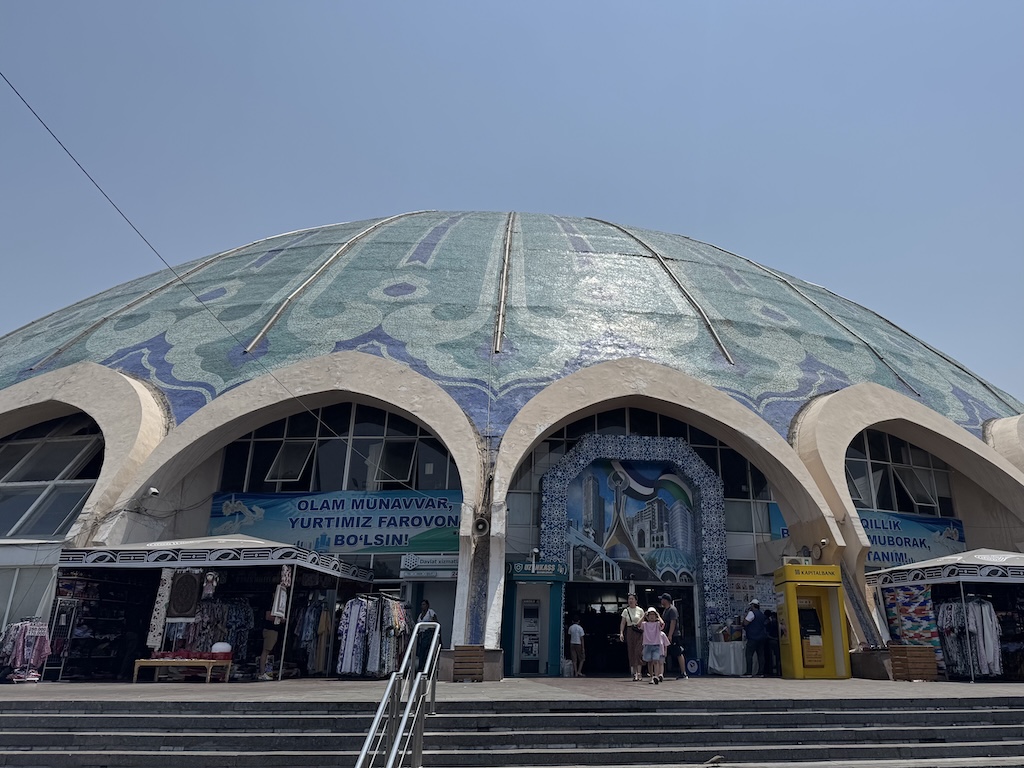
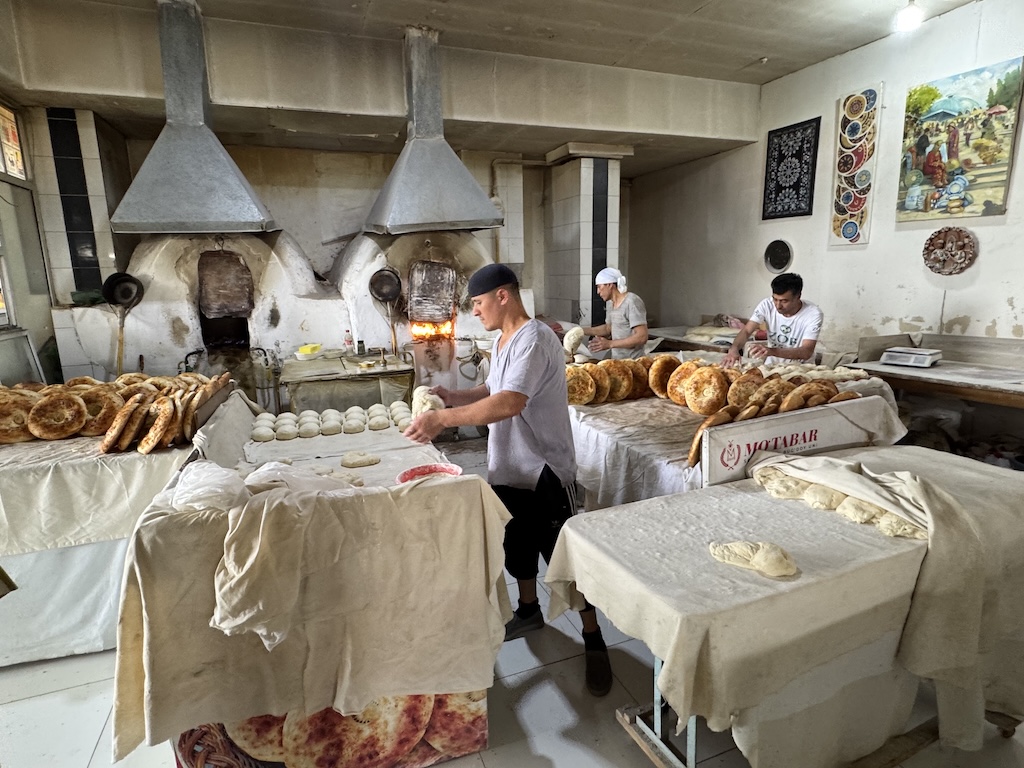
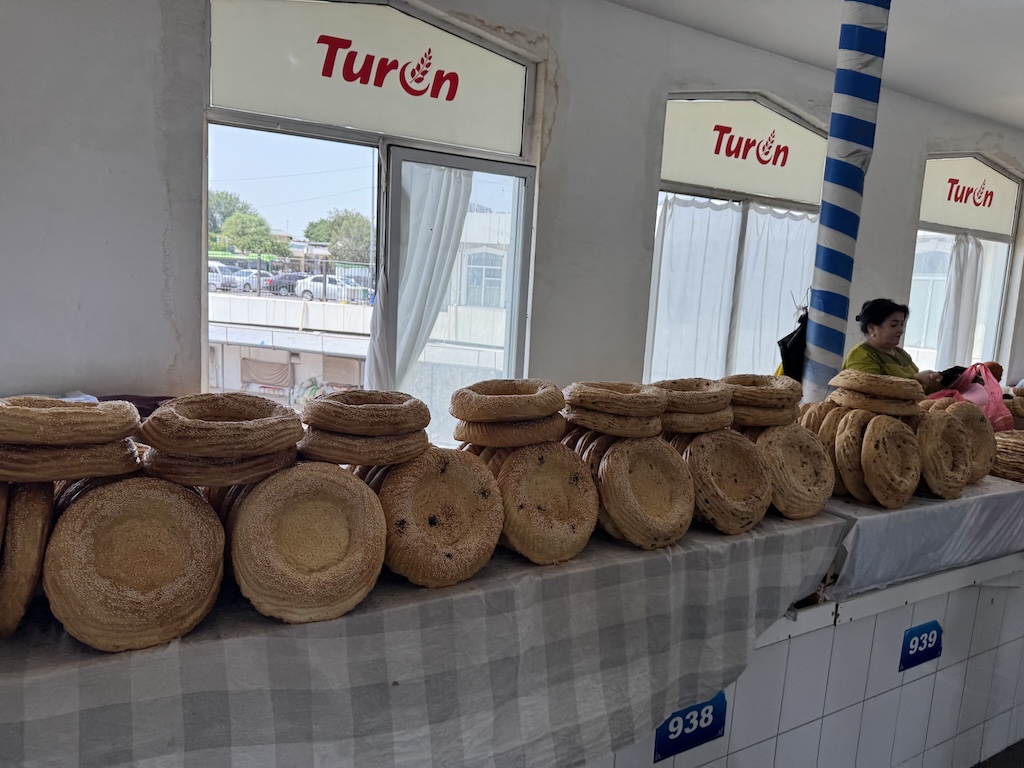
As we wandered past the spice section of the bazaar, we saw the bakery section, which looked and smelled great. They use an age-old process of baking the round loaves on the sides of a brick oven. We bought a small round loaf fresh from the oven, and it was fantastic (albeit quite hot). Vendors were roaming the market, selling these bread.
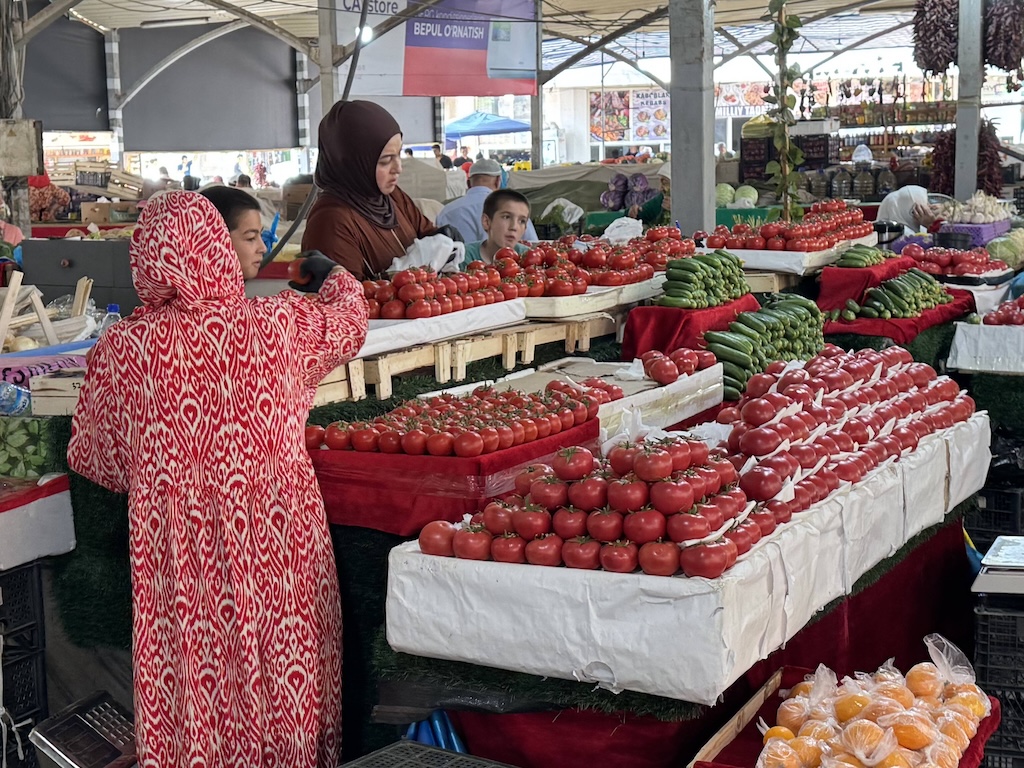
The fruit and vegetables, particularly the tomatoes and apricots, looked very fresh. One thing that I found interesting is that the main cooking oil is sunflower seed oil, though cotton seed oil is also common. Olive oil is only imported and considered quite expensive.
Museum of Applied Arts
From there, we drove towards the State Museum of Applied Arts. Before going in, we popped into a cafe around the corner for a light lunch/snack to keep us going.
Prior to being a museum, the building itself used to be the palace of a Russian diplomat in the late 1800’s, and was quite ornately decorated. If you look at the fireplaces in the picture, one is topped by an onion dome roof (symbolizing Russia) and the other Islamic dome, symbolizing the two worlds of the Russians and Uzbeks coming together.
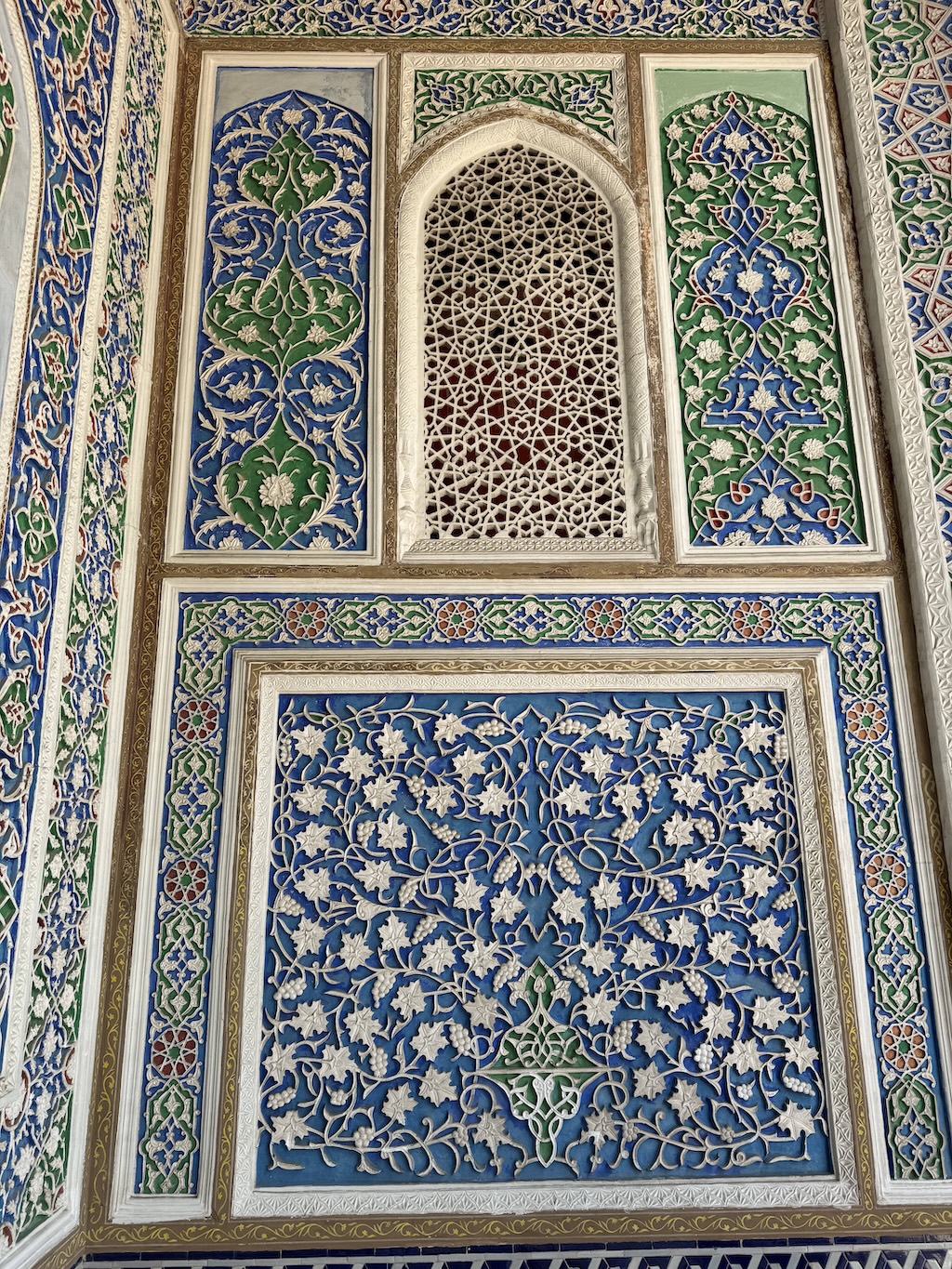
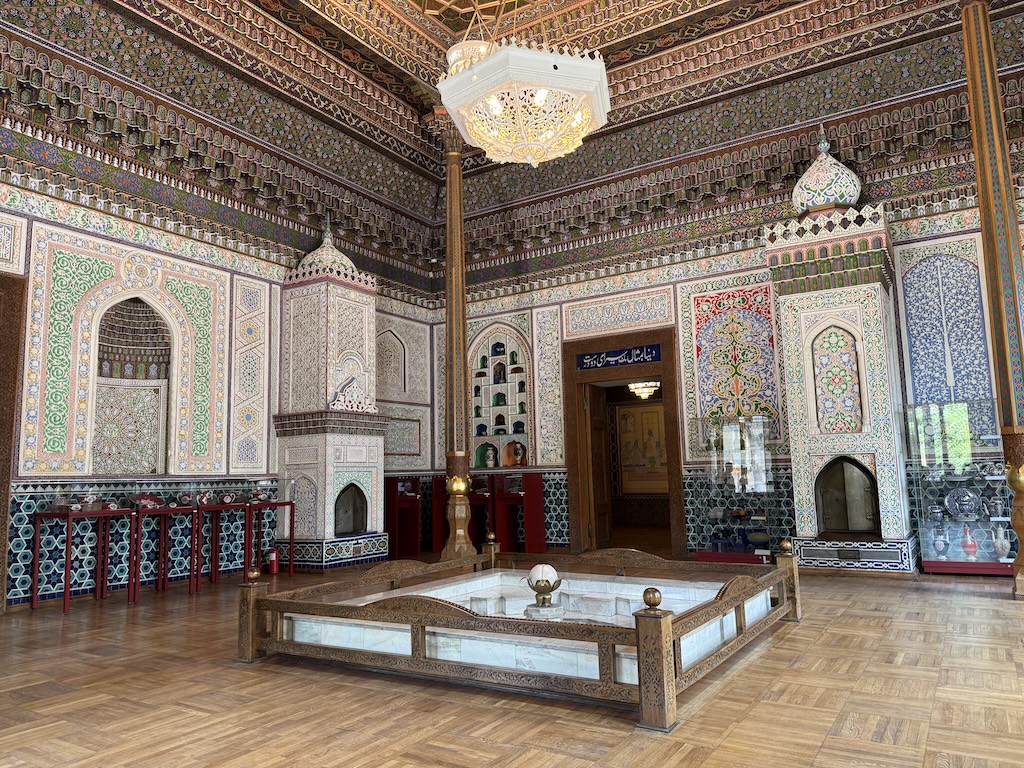
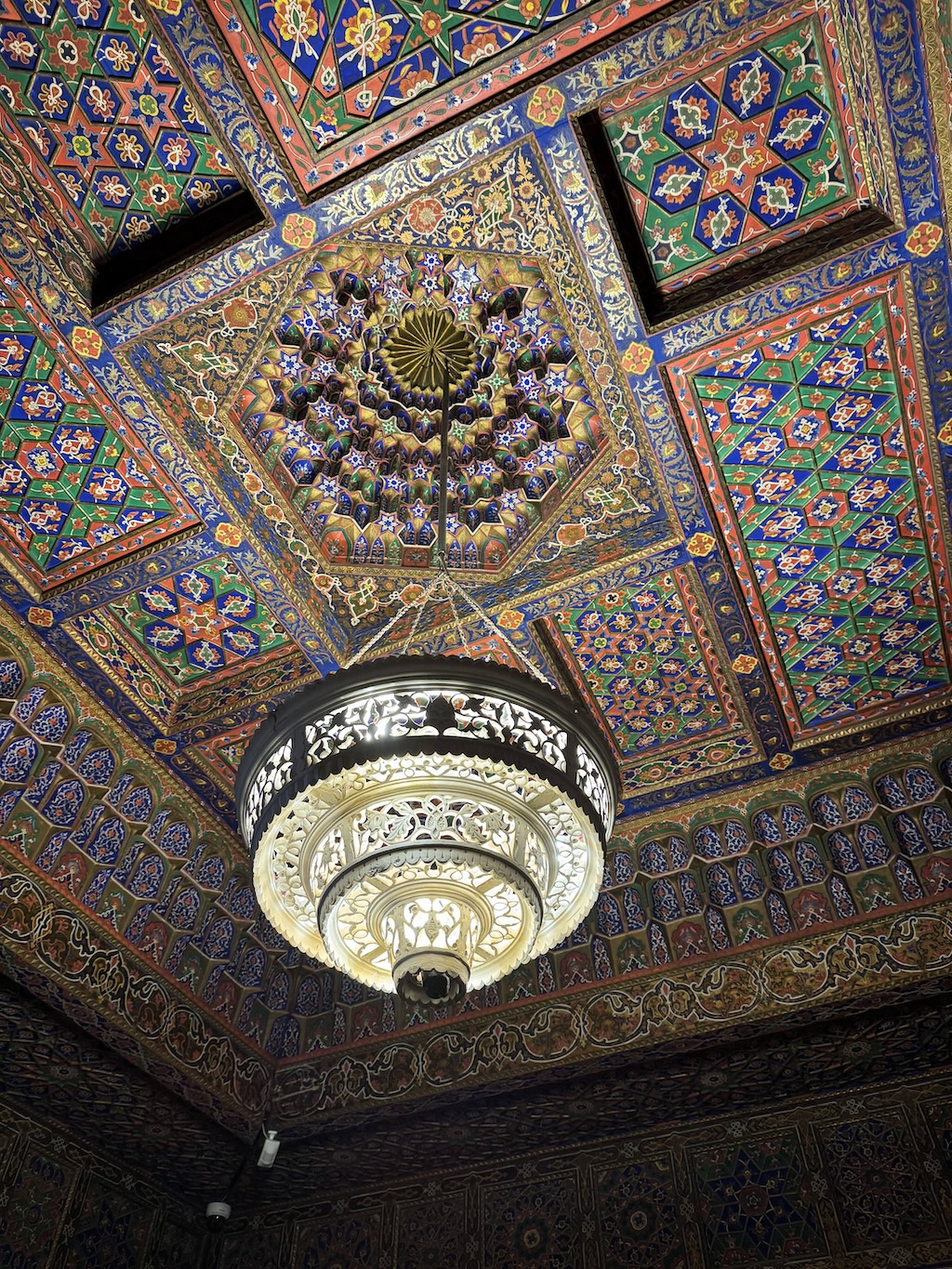
In addition to the ornate wood carvings, the museum had many carpet and garment weavings on display. We saw some swords towards the end as well. The museum was a good display of the regional arts.
Amir Timur Square
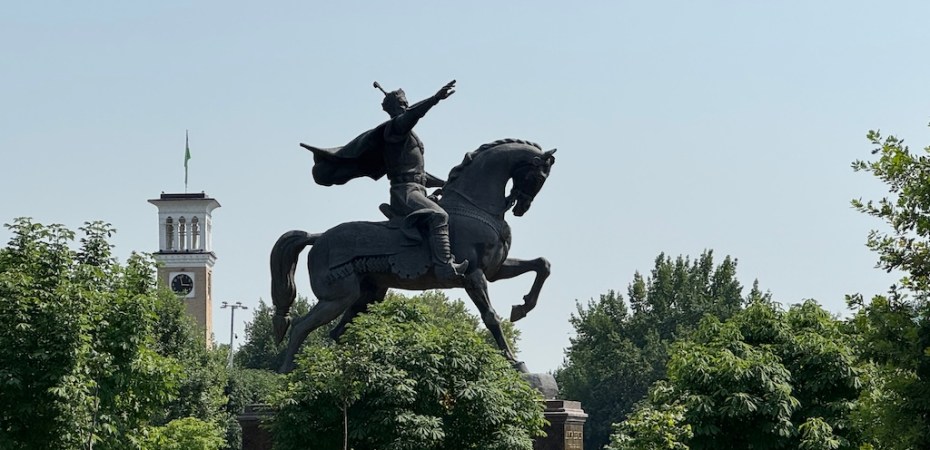
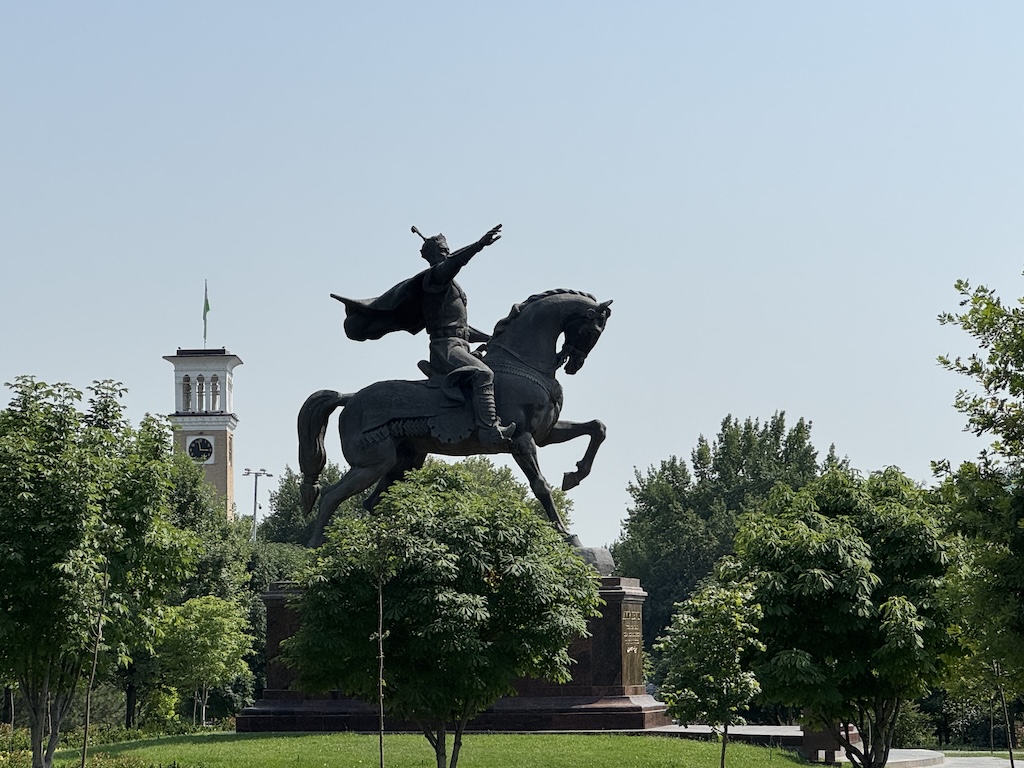
From there, we got in the car to Timur Square. It’s a major park/square, which has in the middle a huge statue of the local 14th century emperor Timur, who defeated the Mongols and built an empire. In Soviet times, it had statues of Marx and Stalin, but after independence in the 1990’s, Timur was a logical replacement.
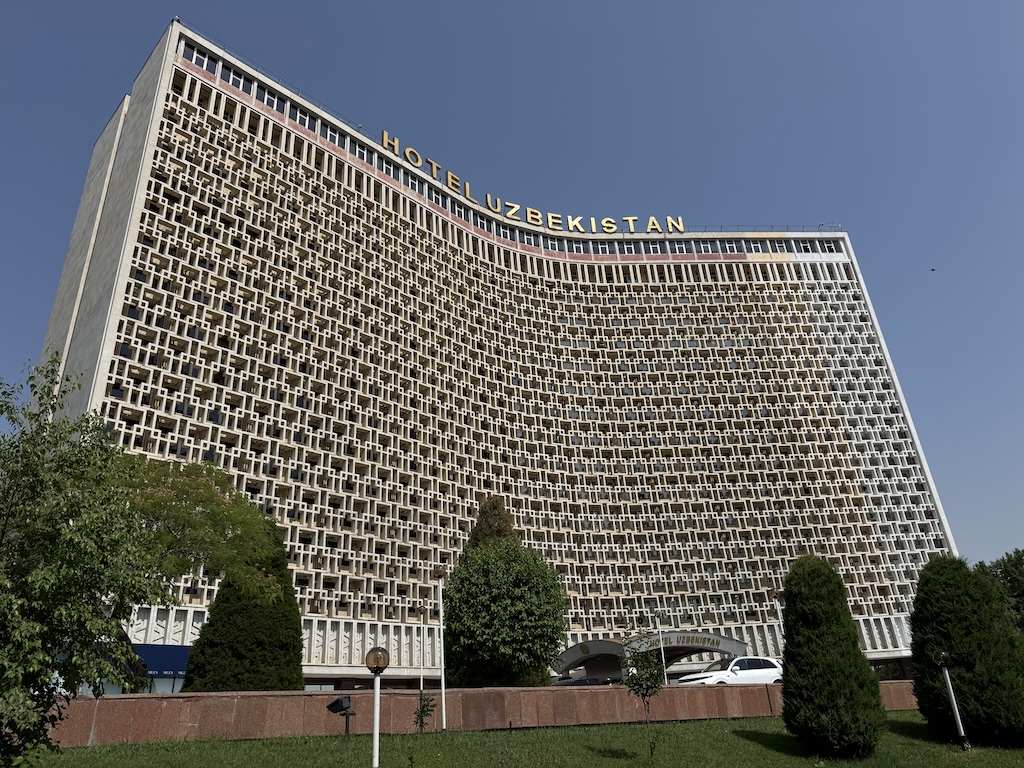
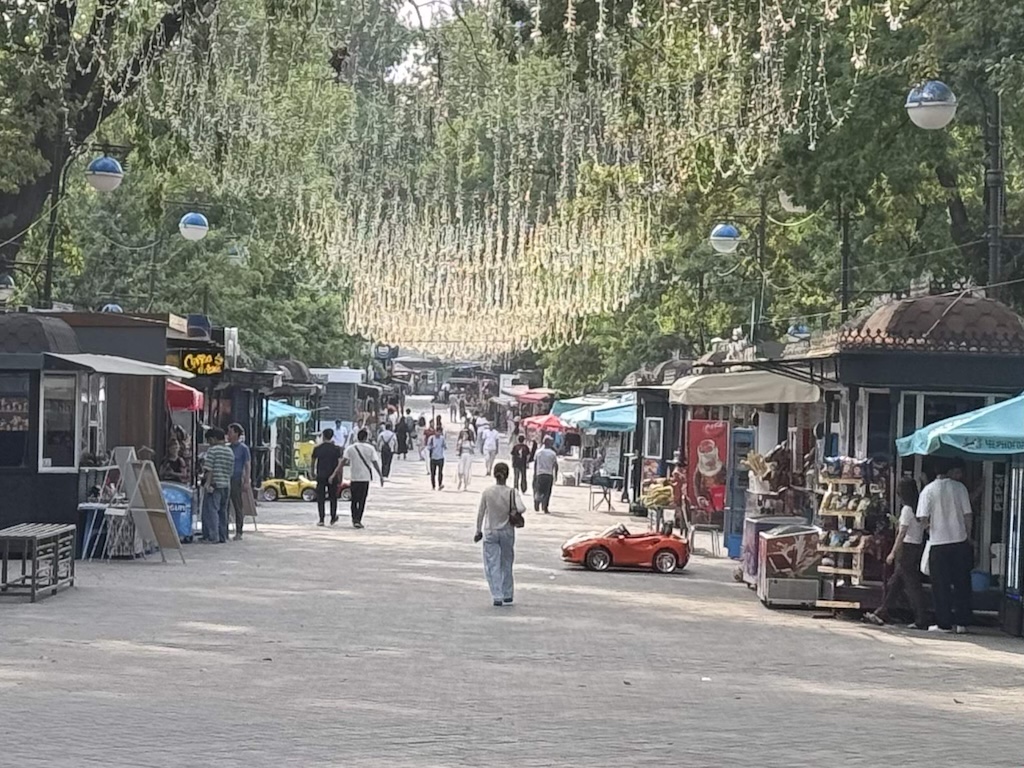
One of the iconic examples of Soviet architecture in Tashkent is the old Hotel Uzbekistan, built in the 1970’s, also next to the square. On the other side of the square is Sailgokh Street (nicknamed “Broadway”), which is a pedestrian street with lots of different shops, next to a large greenway. “Broadway” Street goes for a while towards the Independence Square.
After walking around here with our guide, it was 3pm, and our guided portion of the tour was complete. We said goodbye to our guide, and had free time until 6:30, at which point our driver was to meet us to go to the train station.
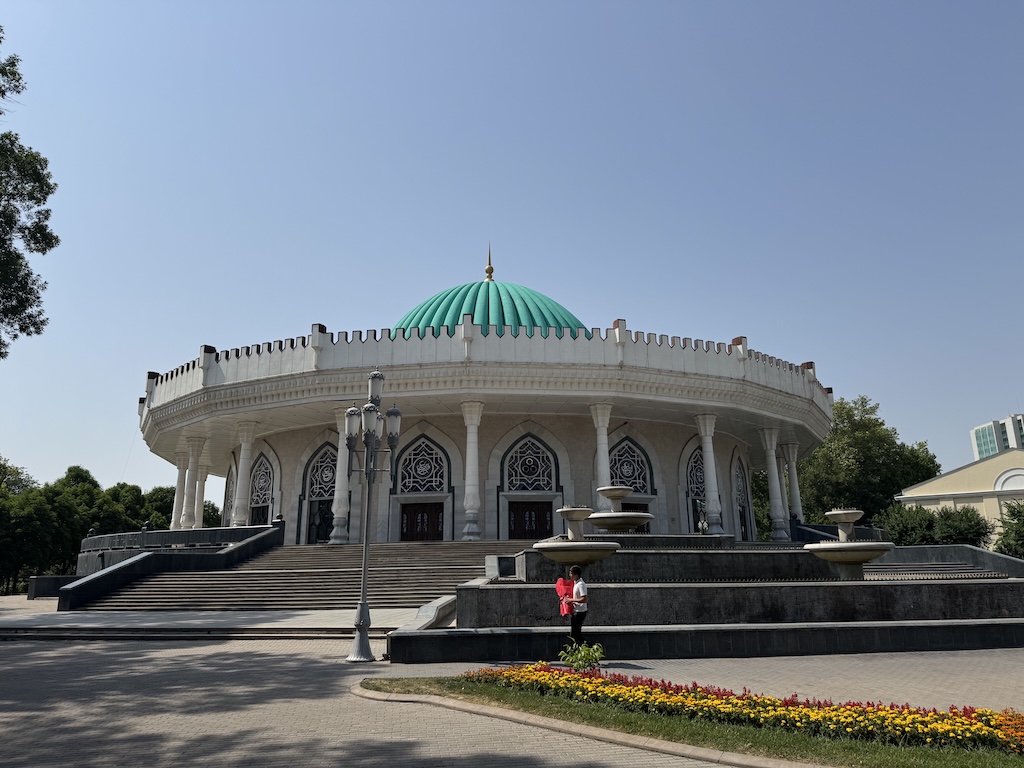
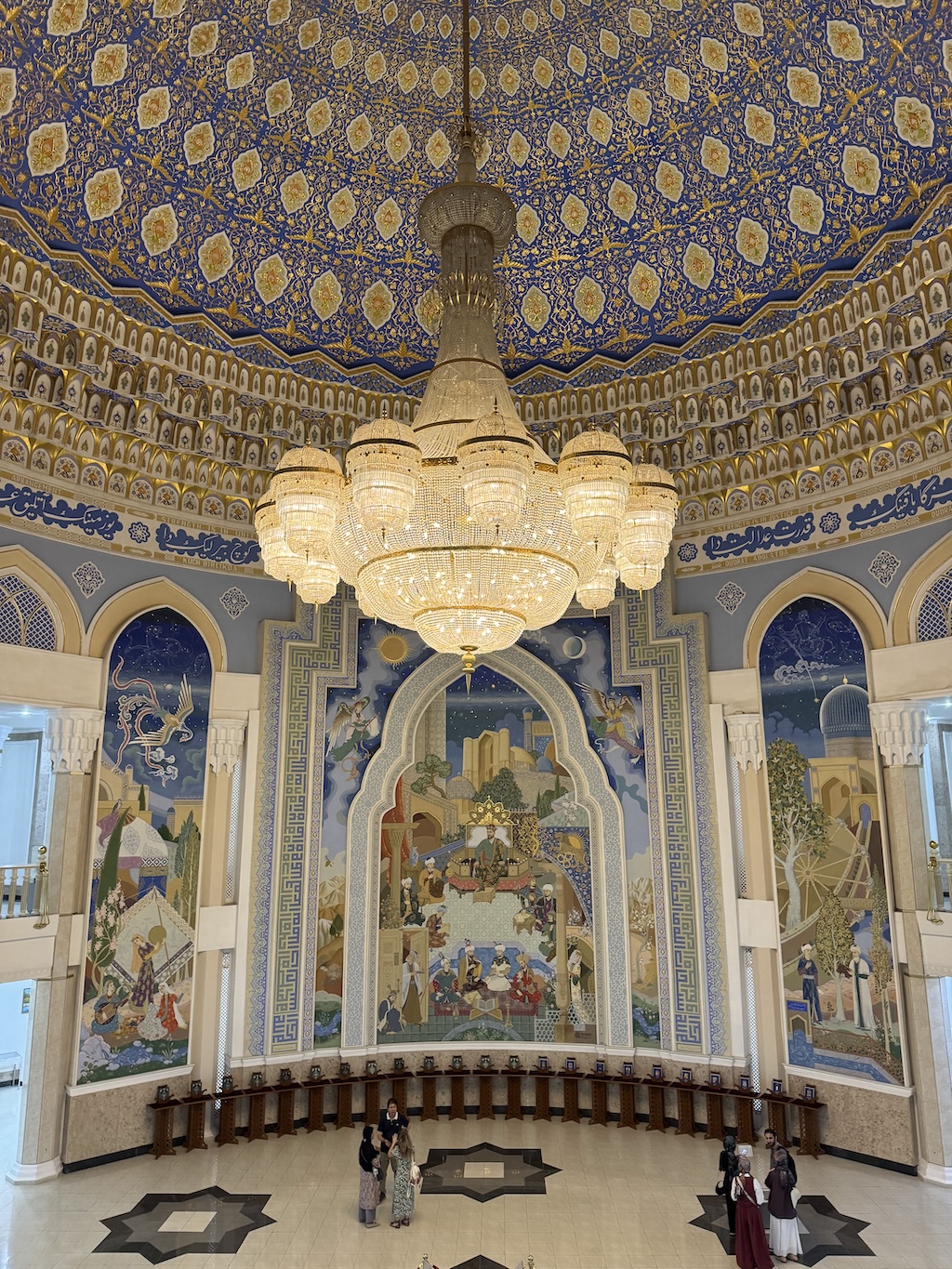
We went to a suggested nearby restaurant for a late lunch, and then we wandered around Amir Timur Square for some time, including the nearby shops. Just off the square, we went to the State Museum of the Temurids, which was quite worth visiting.
Soon enough, it was time to go to the train station. Our driver met us at the agreed-upon Hotel Uzbekistan (recognizable landmarks are nice!) and took us there. We picked up a few snacks at the station, which had a vintage Soviet feel, but then got onto the very modern high speed train to Samarkand. With only a two hour ride, we got there reasonably quickly.
We enjoyed our time in Tashkent, though given our interest in the Silk Road, we found Samarkand and Khiva to be even more interesting.
More From Our Blog
Keep reading our travel blog for more adventures in Central Asia:




 Adventures of the 4 JLs