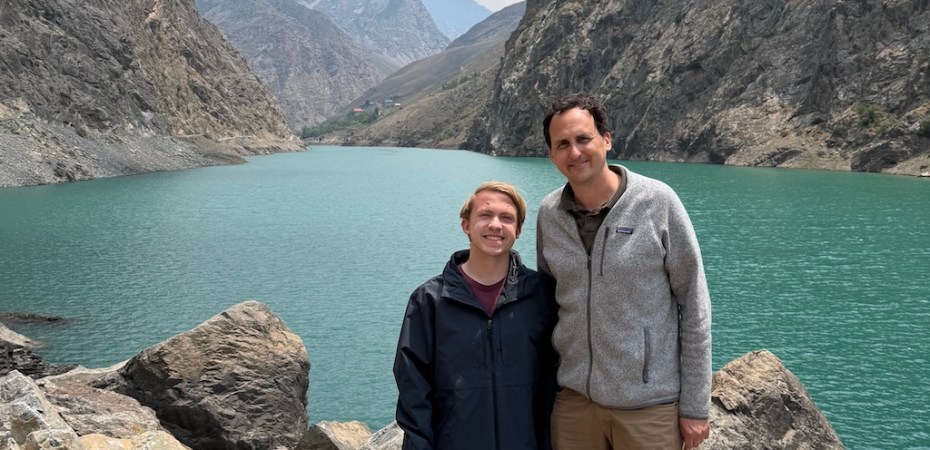
As part of our tour of the “5 Stans” in Central Asia last June, we spent much of 2 days in Tajikistan, exploring parts of this mountainous post-Soviet country. With a population of about 10 million, Tajikistan is typically visited by ecotourists or adventure tourists exploring its mountains, as well as folks interested in its ancient Silk Road history.
Overview and Crossing In
We entered and exited Tajikistan by land from neighboring Uzbekistan, mostly staying in the norther corner. On the first day, we focused on seeing the Seven Lakes area in the mountains, and the second day we focused on Panjakent and the Zarafshan Valley, including seeing some 5,500 year old ruins.
Logistically, we had a guide with us. The seemed to be the case for most people we saw touring – perhaps some of the hikers were independent, though a driver would be needed to get out to the mountains. Prices were fairly reasonable; Tajikistan’s per capita GDP is less than half of India’s.
The first day, we left our Samarkand (Uzbekistan) hotel at 9am and were driven roughly an hour to the border zone. After crossing the border on foot, which took about 20 minutes, we were picked up on the other side by our new Tajik driver and guide.
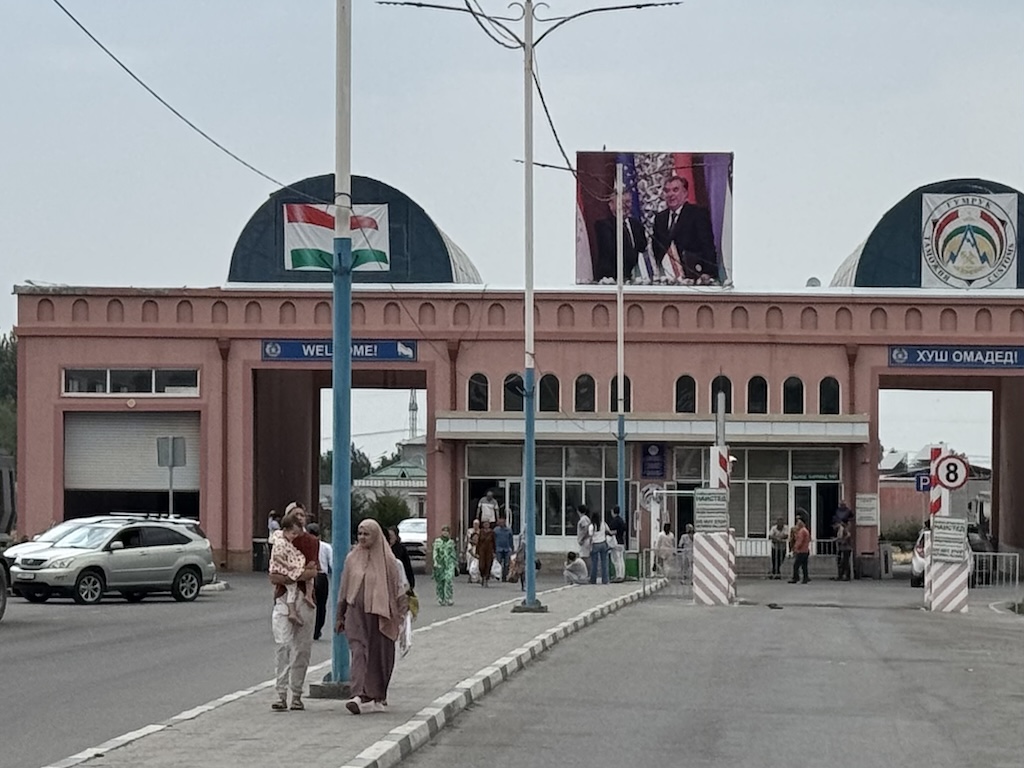
Panjakent is the main city (50,000) just on the Tajik side of the border. We would see more of it the following day, but we made a quick pit stop there before driving through on our way towards the mountains. Our main plan for the day was going into the Seven Lakes region of Tajikistan, which is a series of lakes in the mountains.
Mountains and Seven Lakes
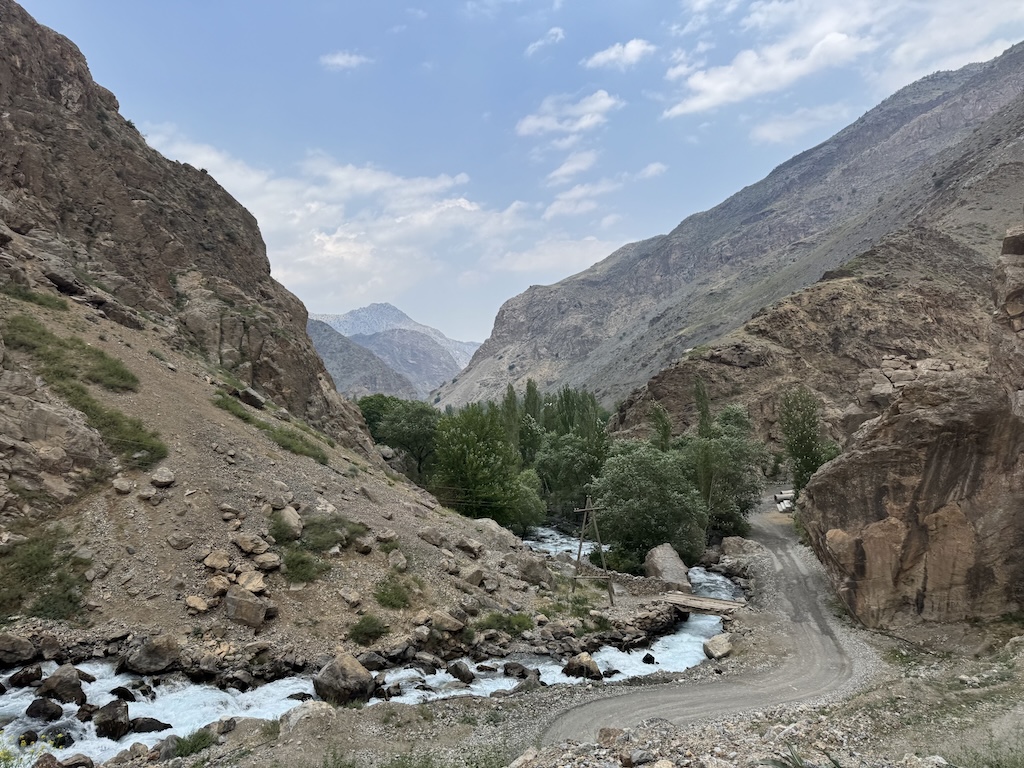
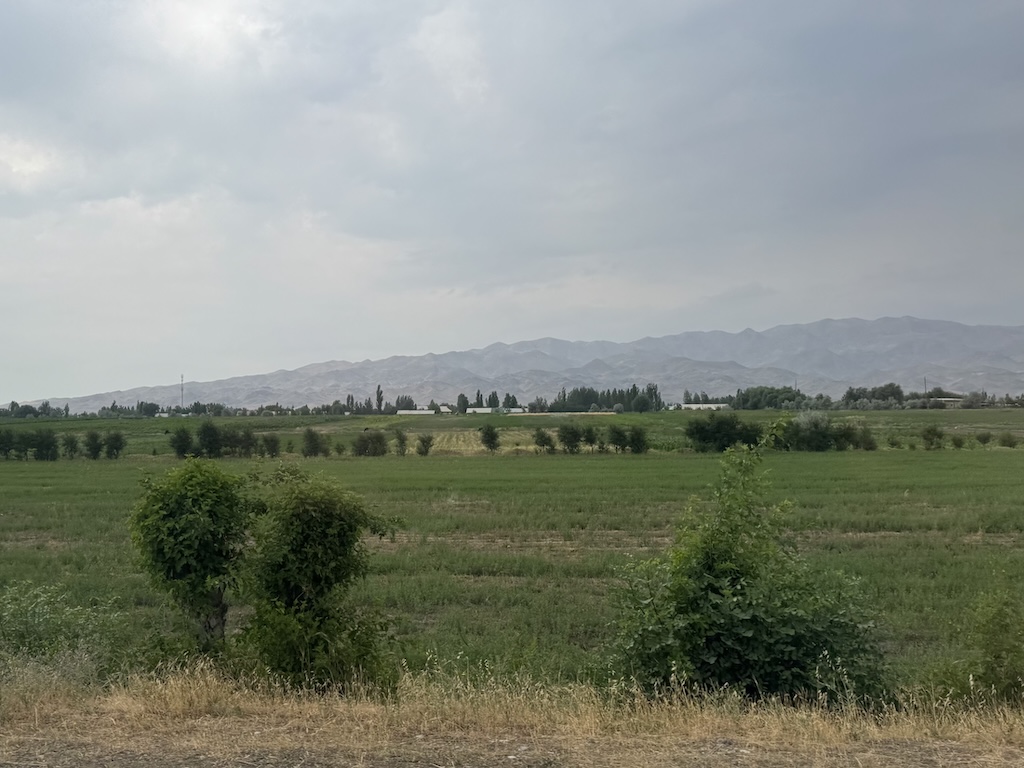
Driving further into the country, we saw the massive mountains as well as the river systems which irrigate the nearby region. We also saw some mining operations, which have been going on since Soviet times, but are now apparently run by Chinese companies.
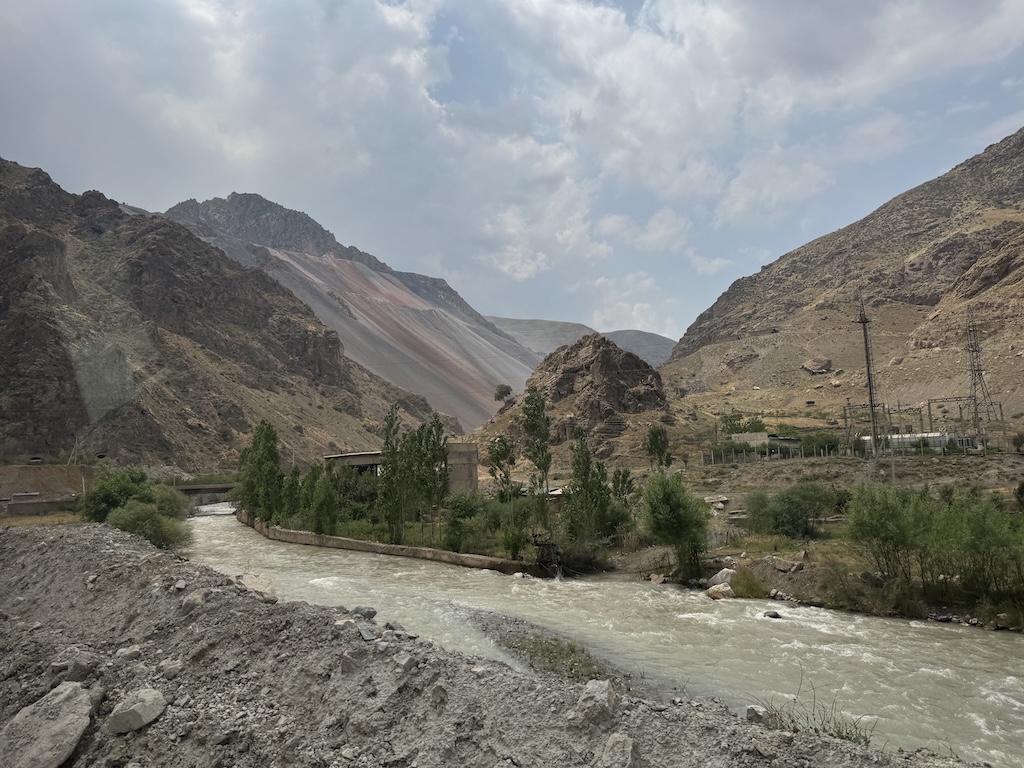
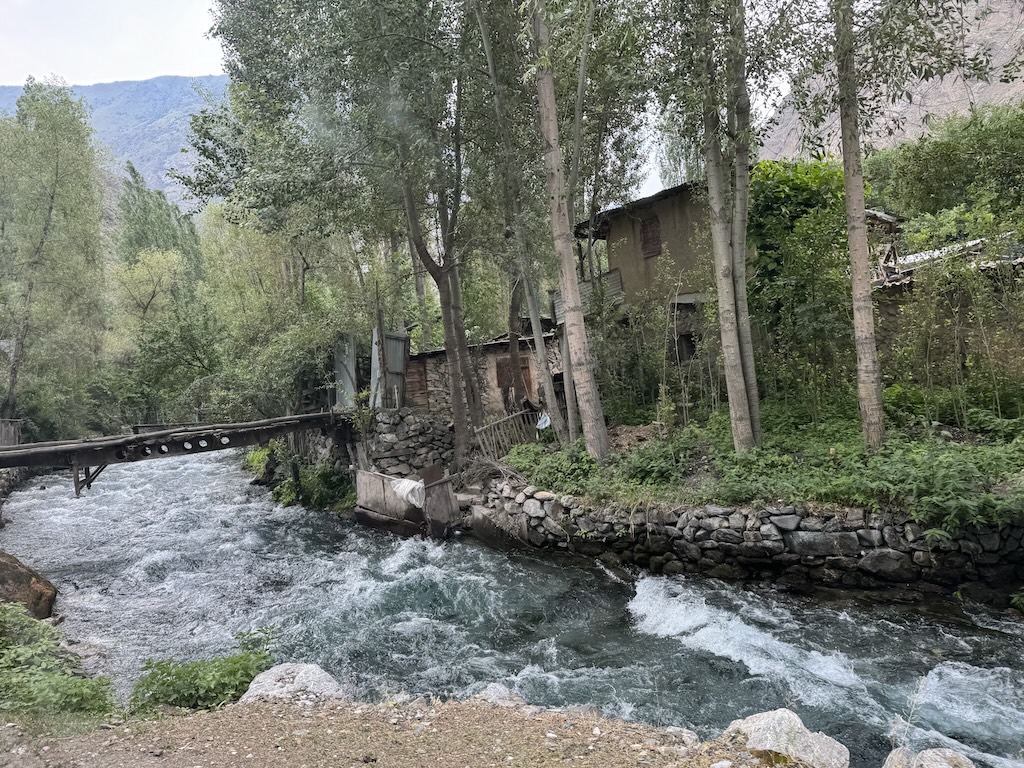
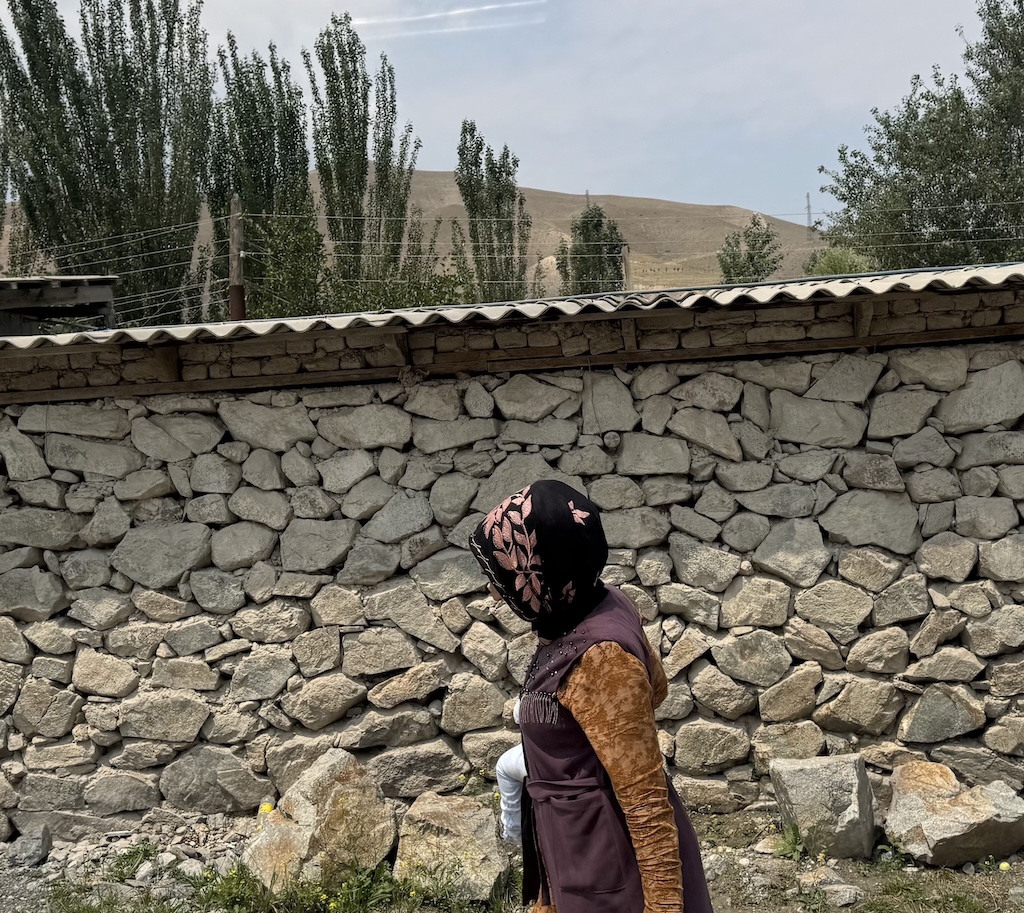
Overall, the area was quite nice. It was interesting seeing the villagers – some who literally lived in mud huts – in their traditional clothing. There were boys herding goats, children waving, old men looking about, and kids playing. It was an interesting glimpse into a traditional way of life. (Of the photos we had, I didn’t feel comfortable posting most for privacy reasons).
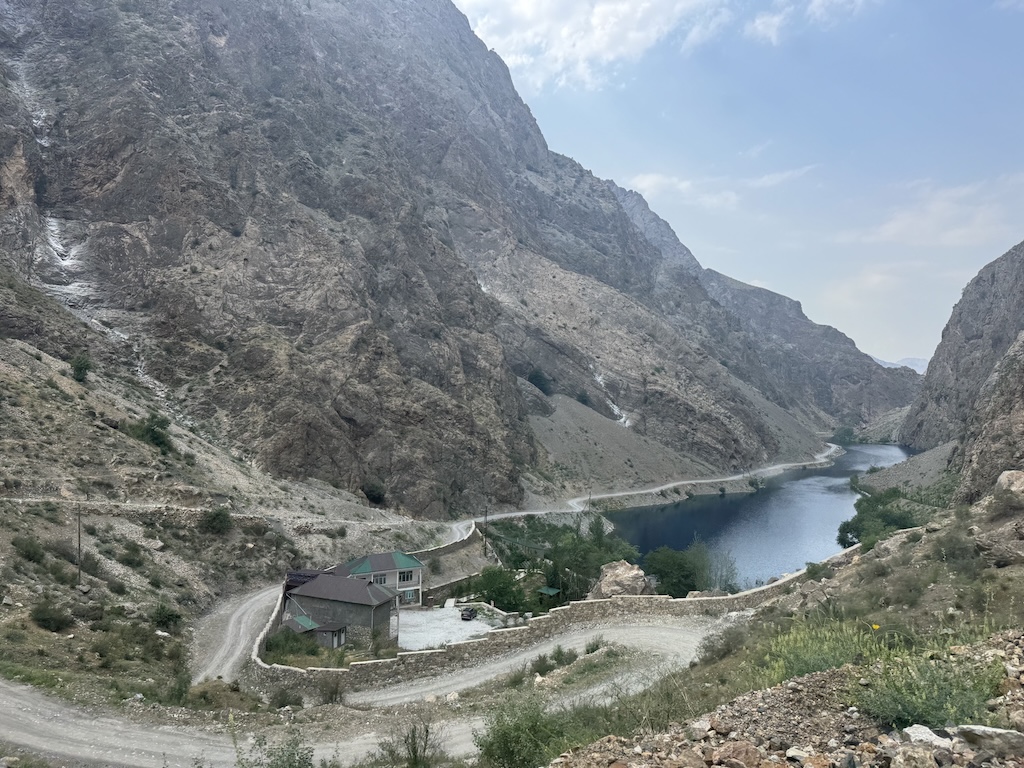
Conveying feeling of nature is tricky in a blog post. Here are a few shots on the way up, passing by the various lakes:
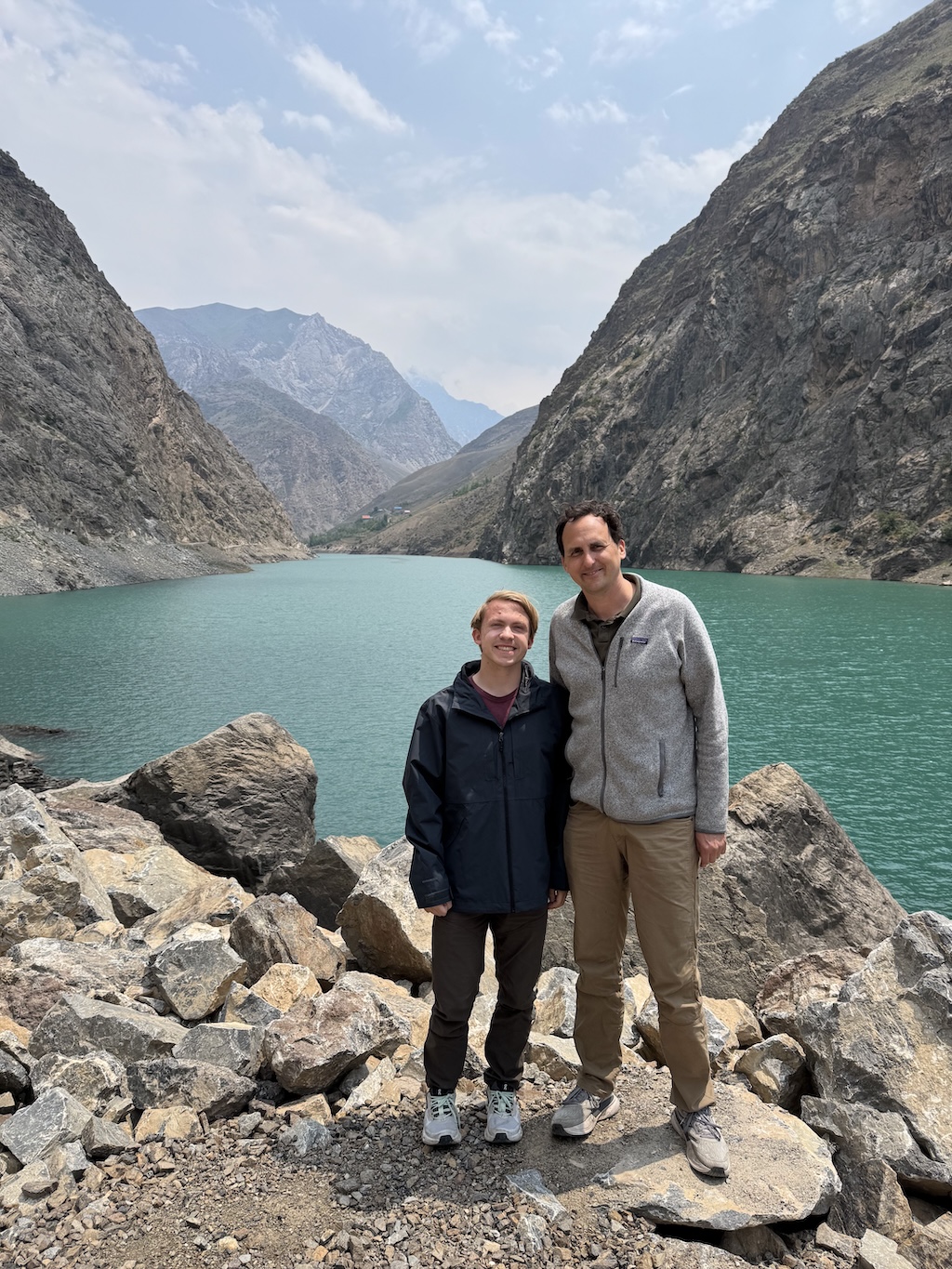
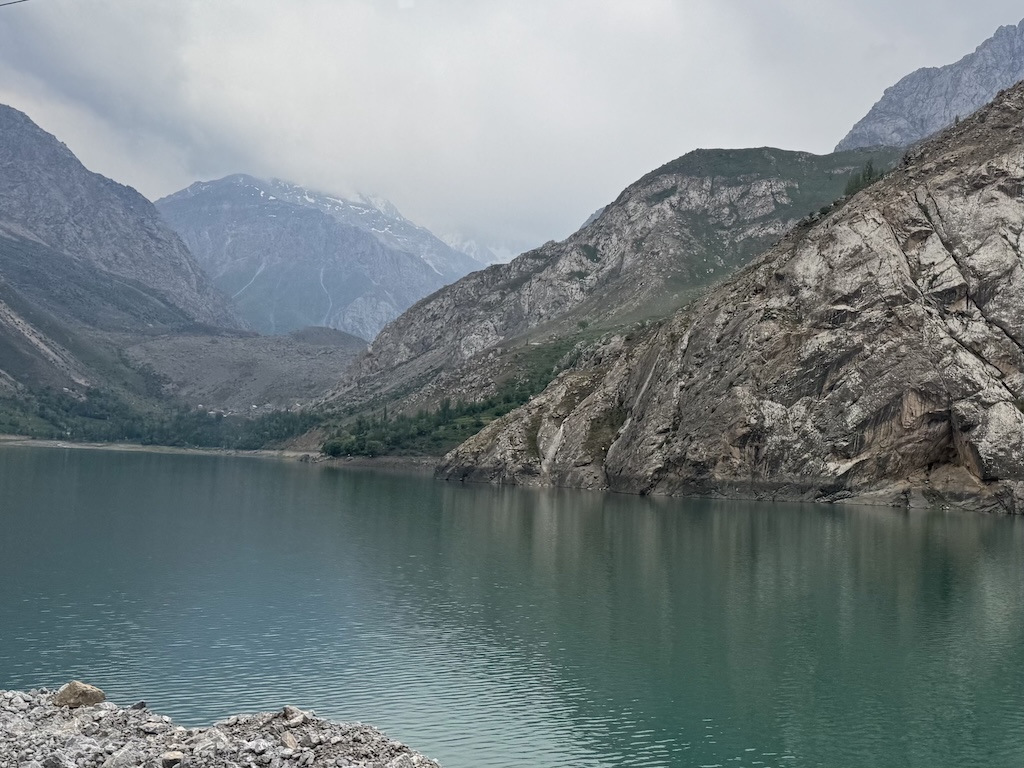
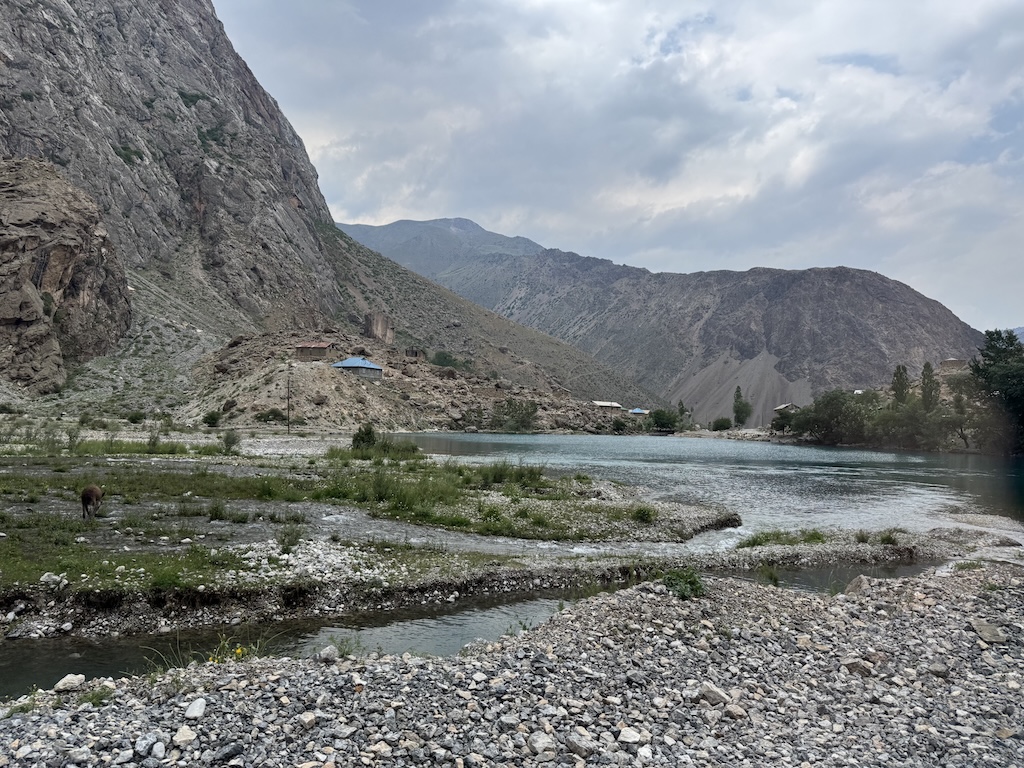
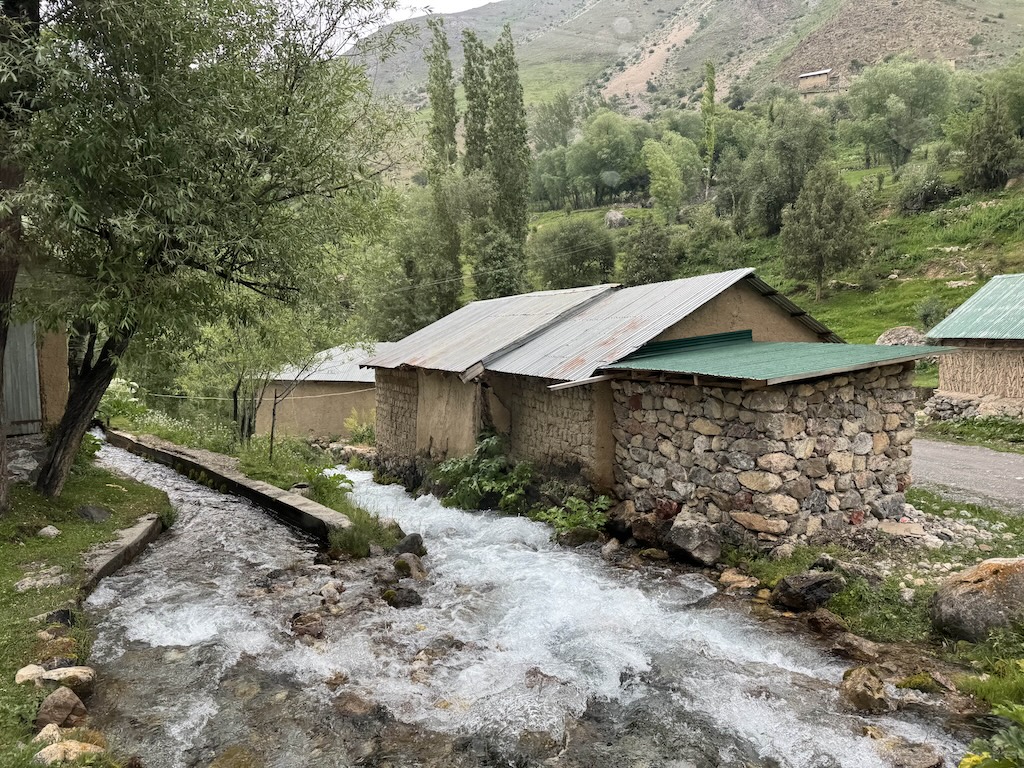
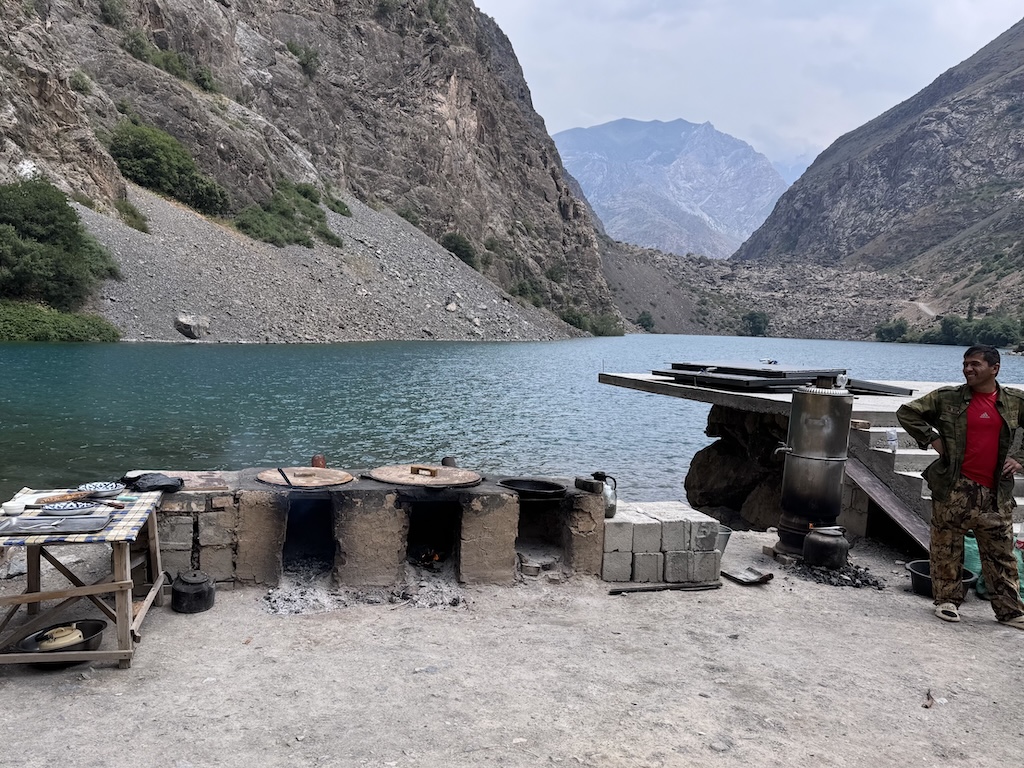
For lunch, we ate under a glamping-type tent by a lake where they have some cooking facilities. The staff made the regional Plov (slow cooked rice and meat) dish in the cooking area. There is a small hotel under construction there, and our guide was hopeful that on completion, this would encourage more tourism. But generally, the tourist infrastructure is on the sparse side in the region.
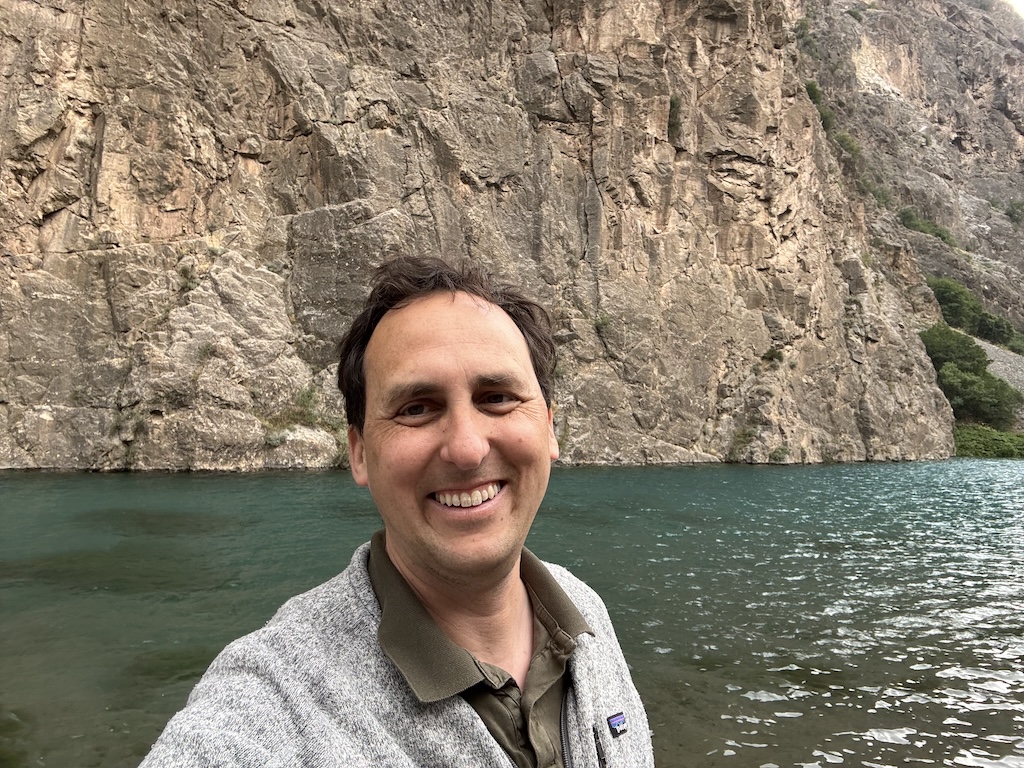
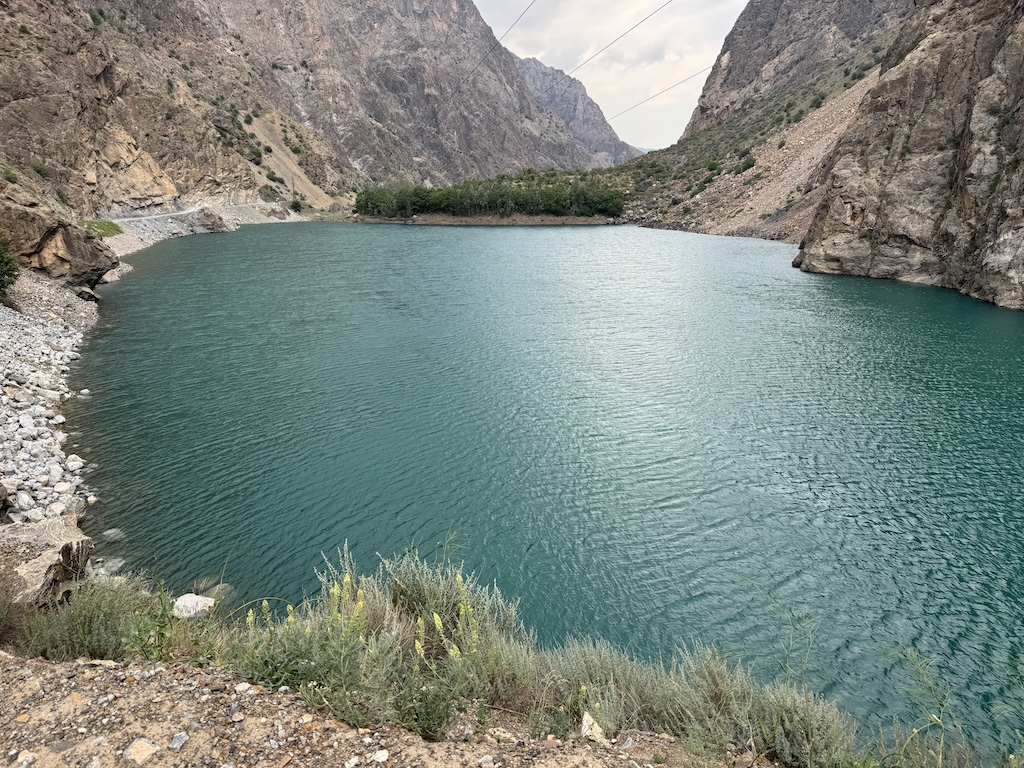
The dirt mountain roads were quite something. Honestly, they were very rough. And narrow, where passing vehicles could at times be very tricky (see the picture below). No guardrails, hair pin turns, and steep drops off the cliffs. Our driver was quite skilled.
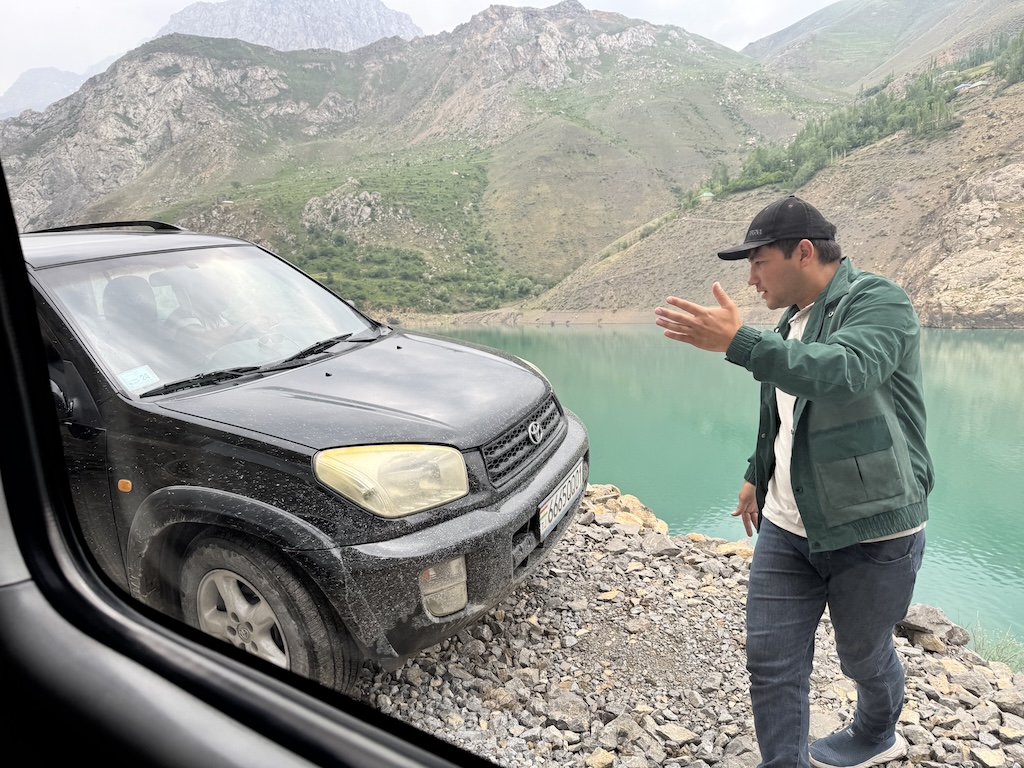
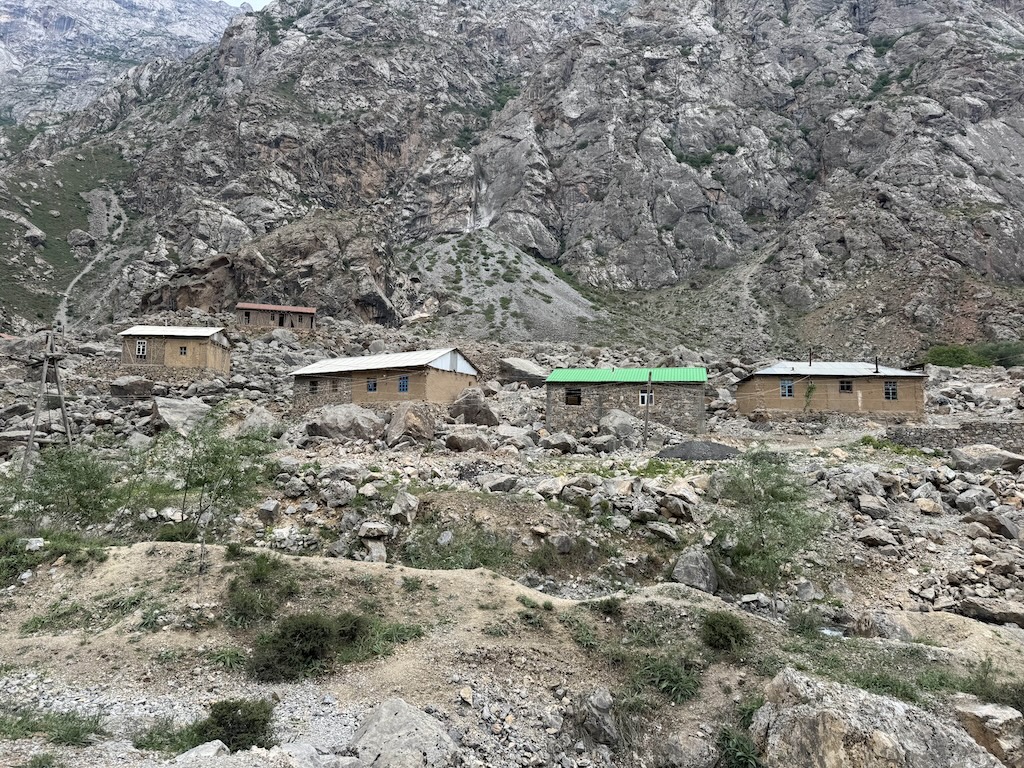
Eventually, we made it to the top. It was a nice trip up! Between the 6th and 7th lake in particular, we saw some hikers going between the two lakes. We saw some adventure tourists, e.g. a motorcycle with Swiss plates.
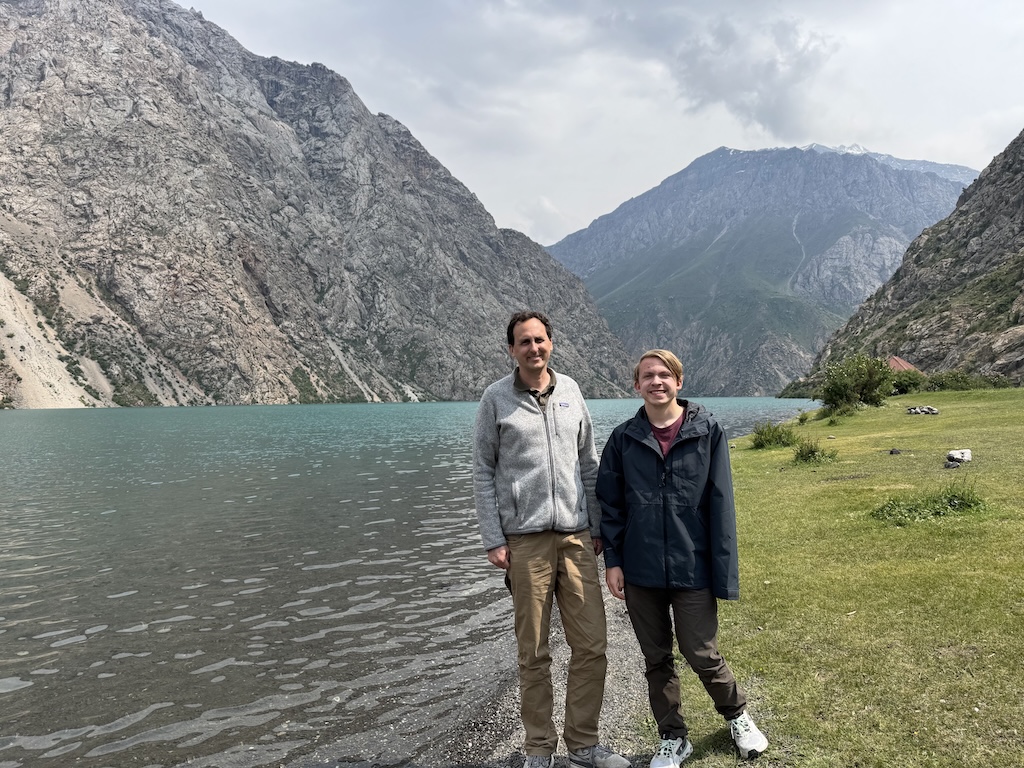
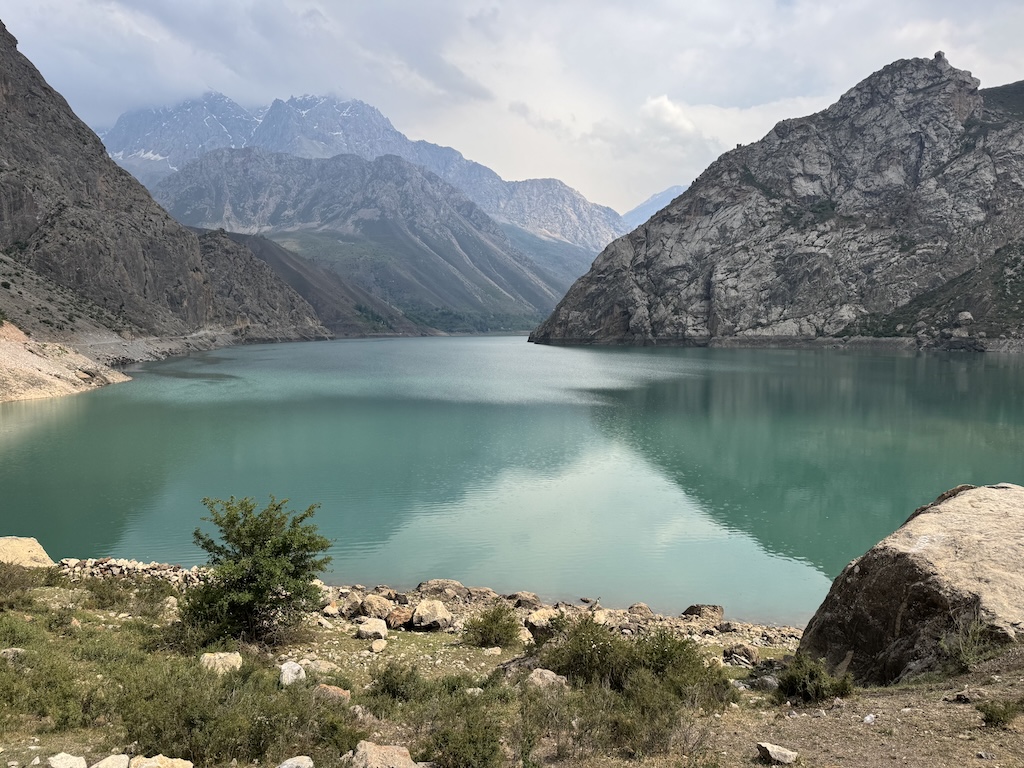
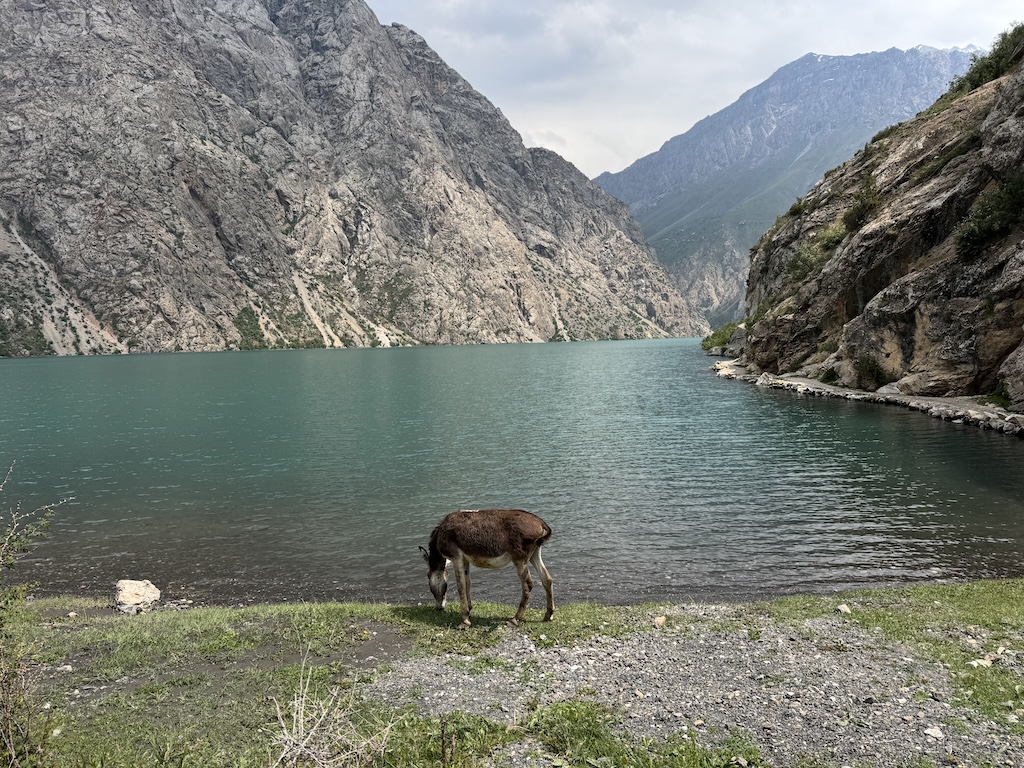
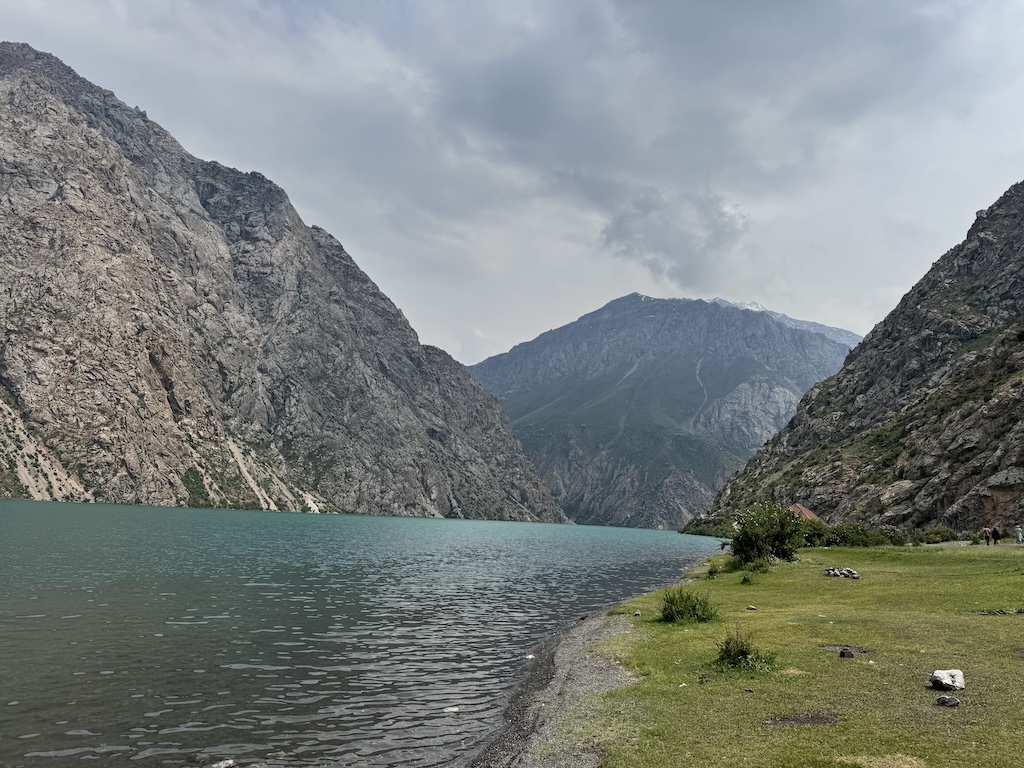
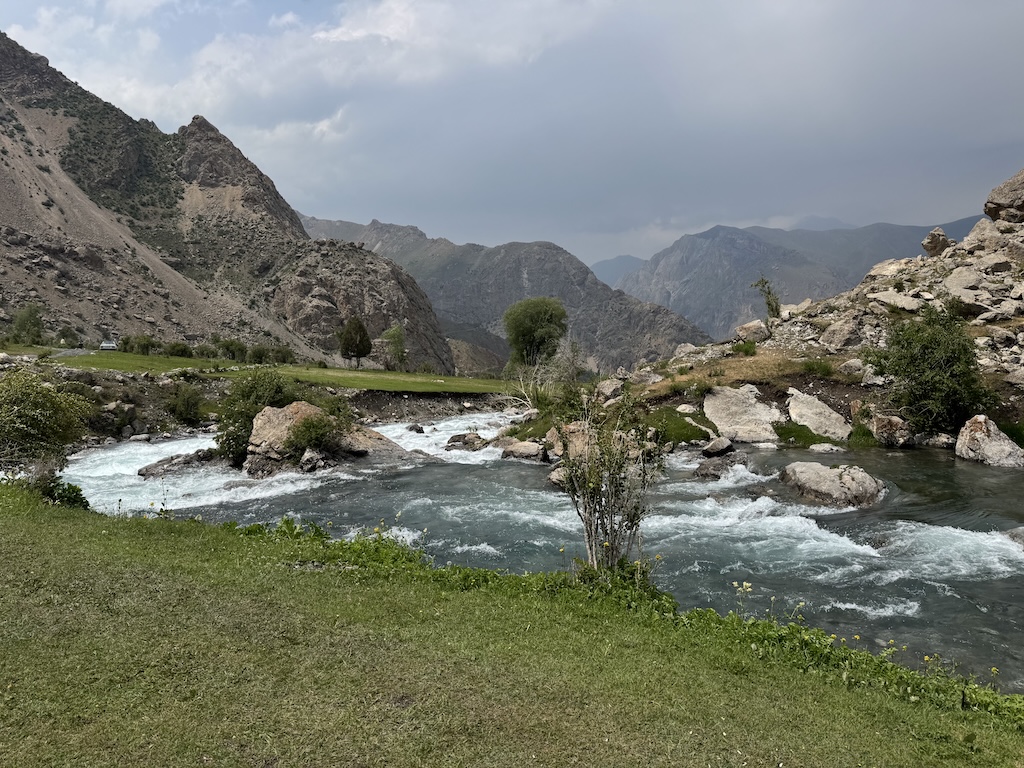
It was becoming mid-afternoon, and we had to start our way back. At this point, we were given the option of either doing a rural homestay in the mountains, or going all the way back to Panjakent and staying at a nice hotel in that city.
In theory, it would have been more adventurous and broadening to do the rural homestay, but this was a point at which our desire for creature comforts kicked in. If the road hadn’t been so rough, we might have done the homestay on a mountain farm. But really, we both wanted that bumpy road home down the mountain to be done, and to stay in the nice city hotel, so chose the more comfortable option, and headed on our way back.
The trip back was just as scenic as the ride up, and we got to our hotel, and had a lovely dinner downstairs.
Around Panjakent
With its ample water from the mountains, the area around Panjakent has been settled for a long time. On our second day, our first stop was to see some ruins of Ancient Panjakent, on the edge of the modern city. It has 2600 year old ruins, though they’re largely restored mud structures. From the ruins, was a nice view of the surrounding valley and city.
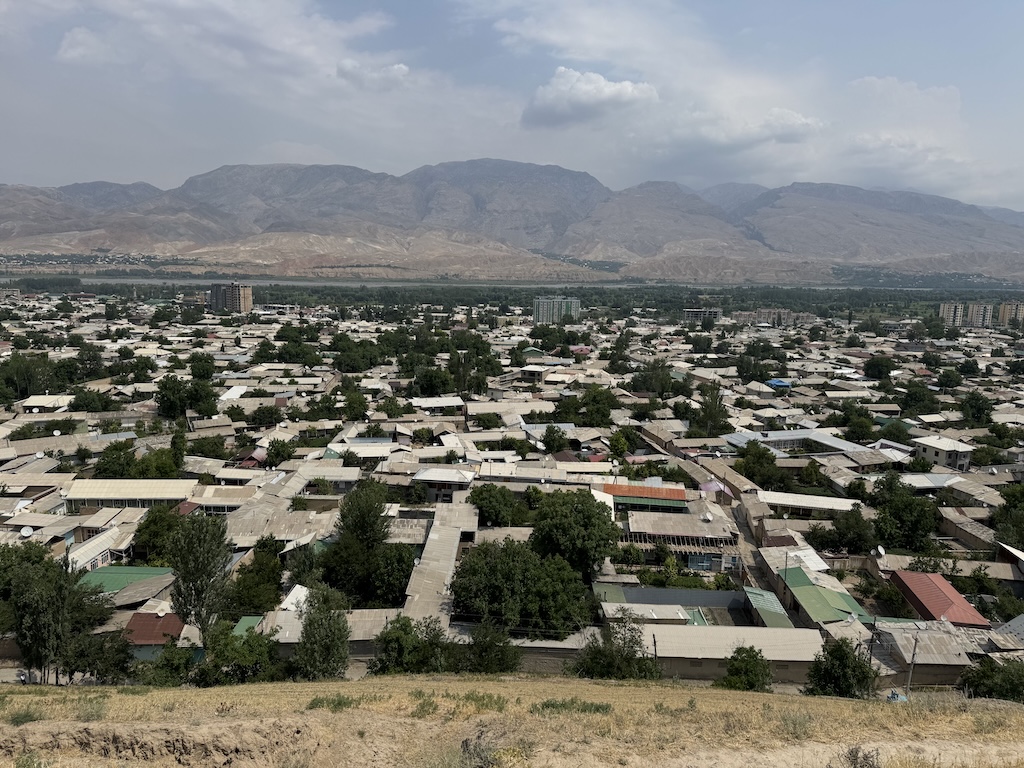
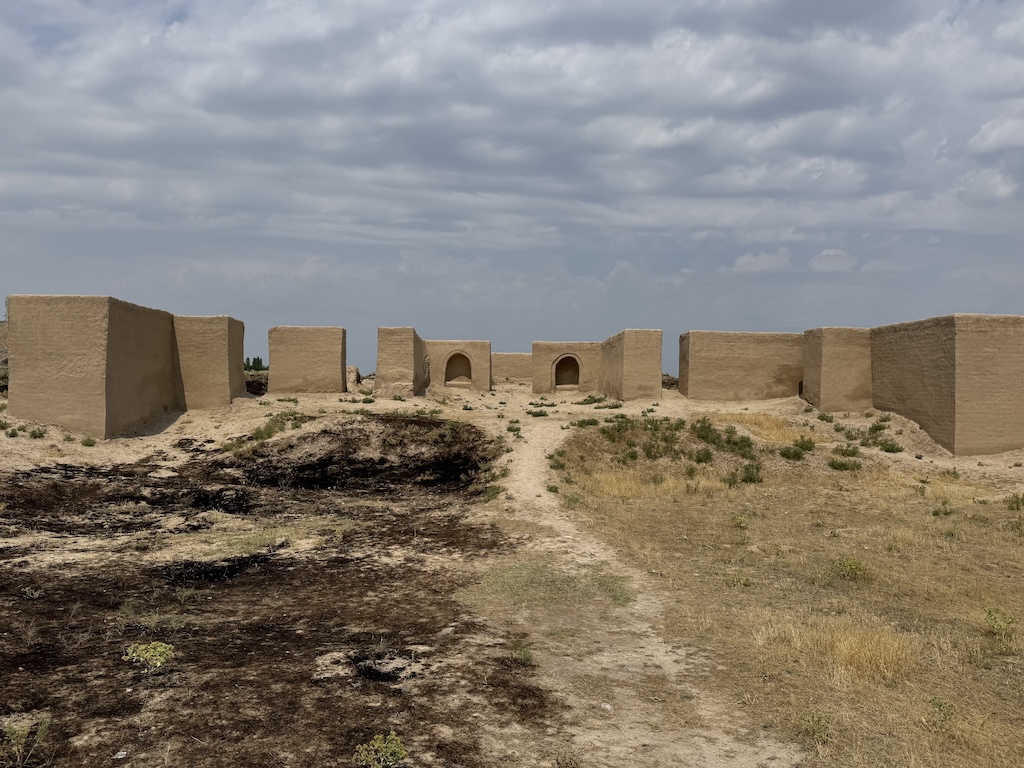
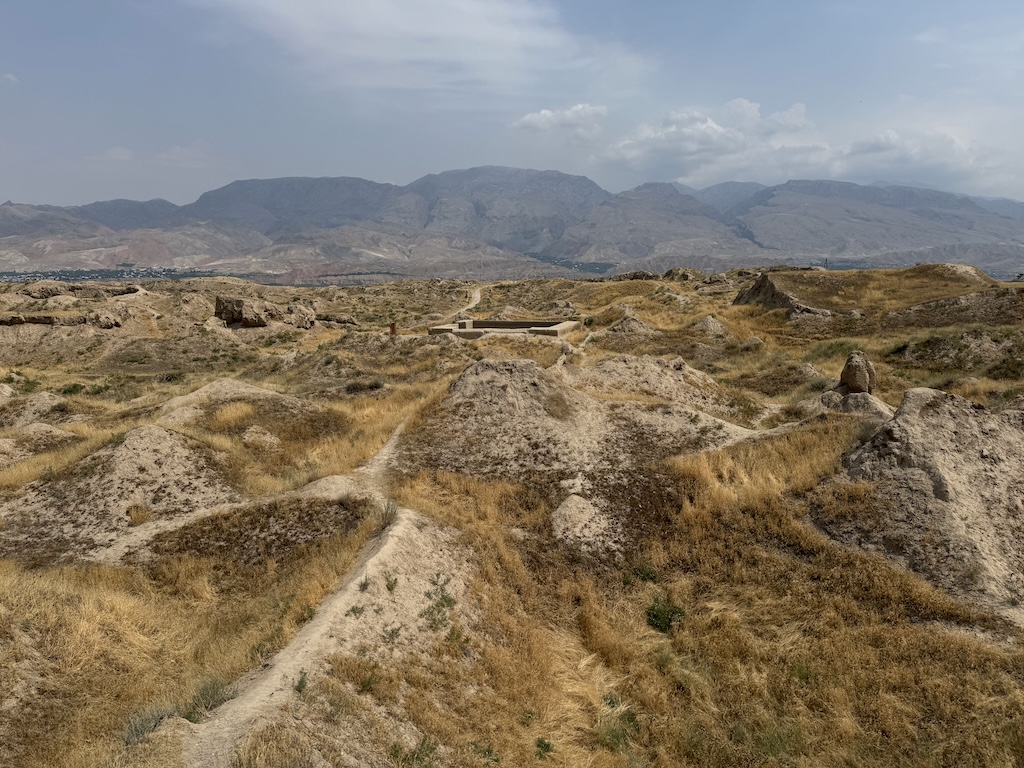
All the while, they told us the local history, how the culture had been shaped by the Silk Road, by the Zoroastrians, the Buddhists, and the Arabs who all left their mark. Ancient folks like Alexander the Great, Xerxes, and Cyrus the Great counted this as part of their large empires.
After finishing the ruins, we were taken into the city center, where they showed us some of the main cultural sites. The first location was the city’s main mosque.
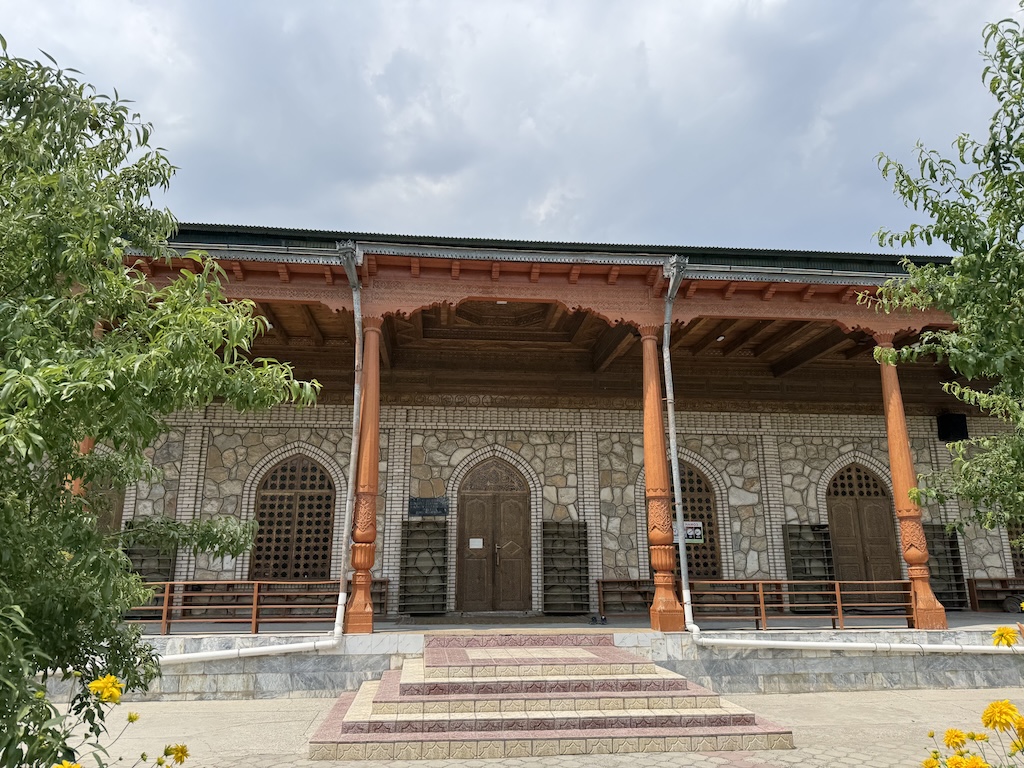
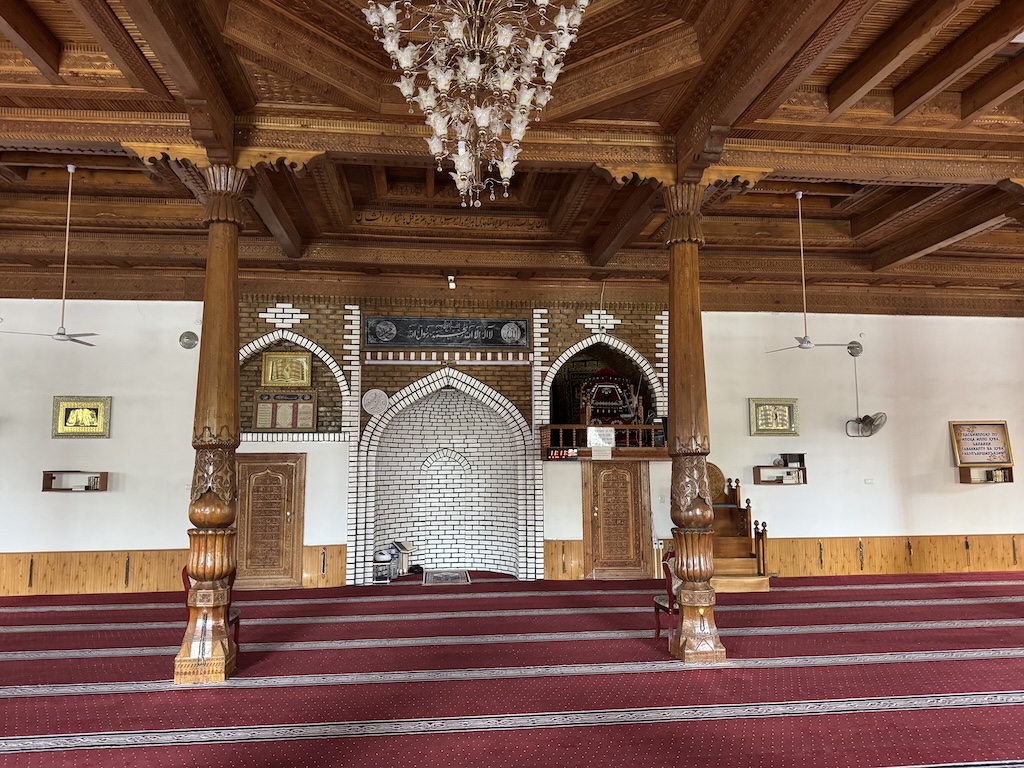
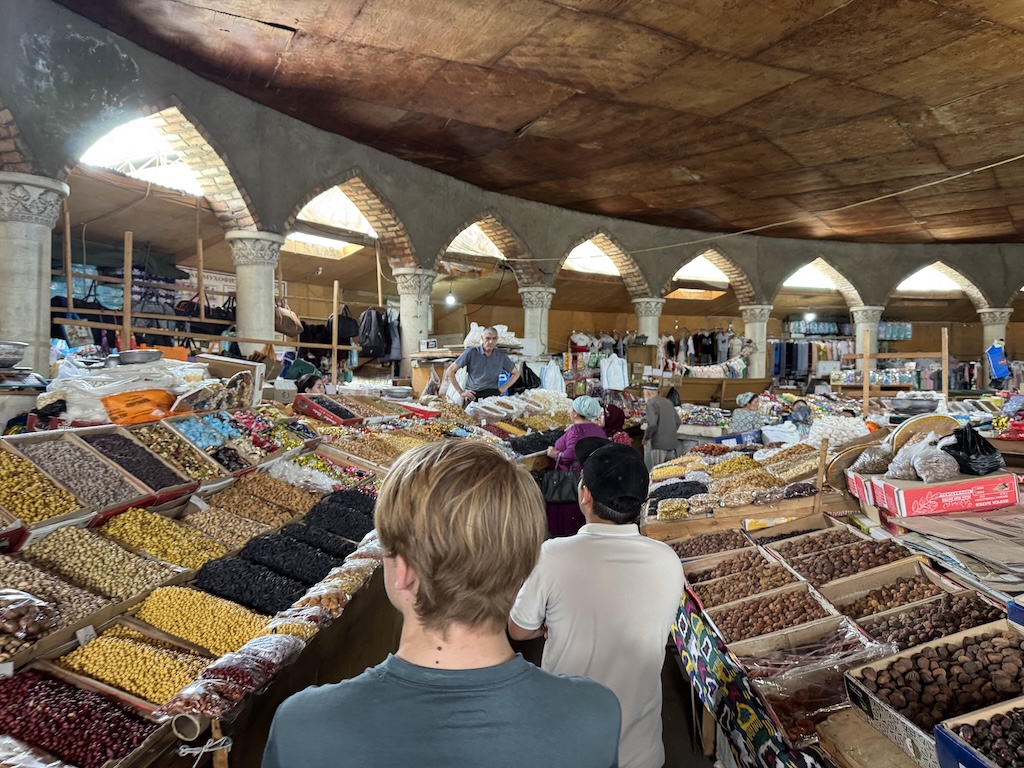
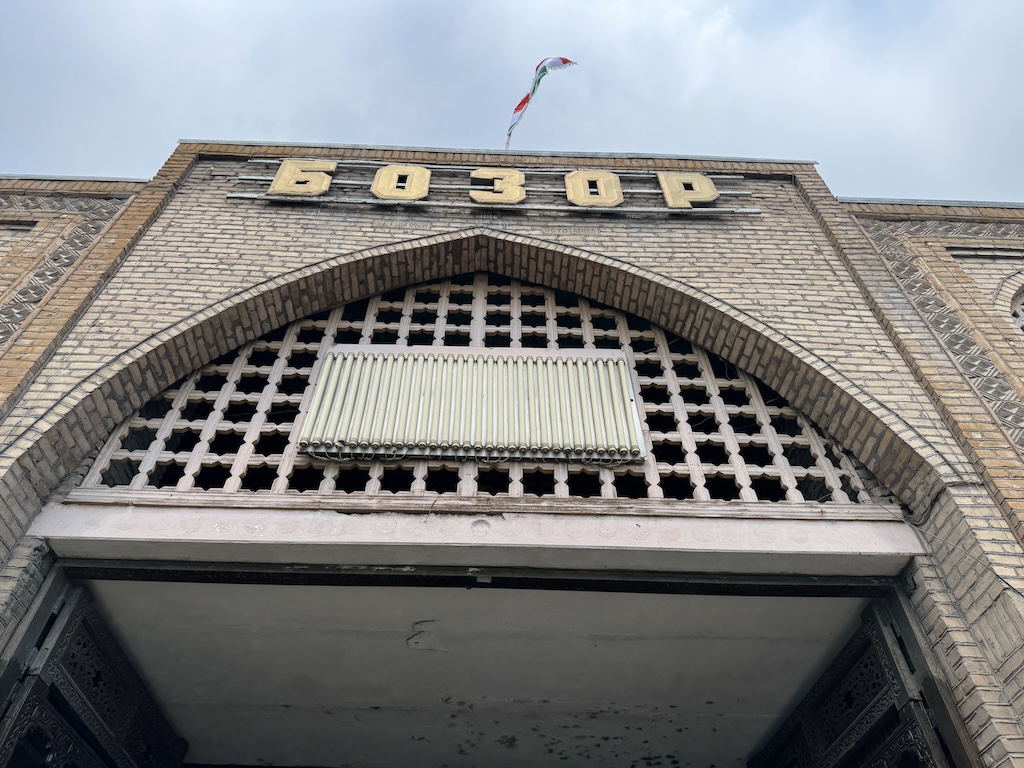
After that, we were taken the the bazaar, which was effectively just across the street. Observing the sights, smells, and sounds of the local bazaar gives an interesting view into life in a place. The spices and produced seemed quite nice, even if they weren’t practical for us to haul home. Our guide was greeting and shaking hands with a number of his friends as we walked through and showed us around; it felt a lot less sterile than the typical grocery store at home.
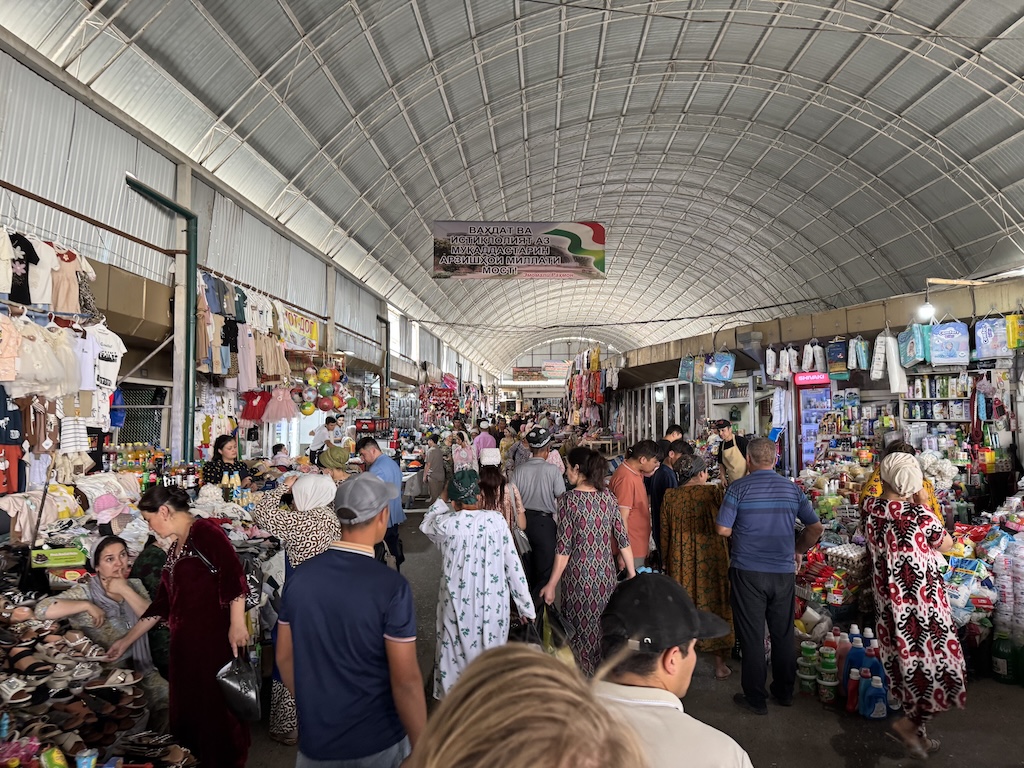
At that point, we hopped in our car and went to get lunch at a restaurant down the street, where we had the typical regional Plov and Manti dishes.
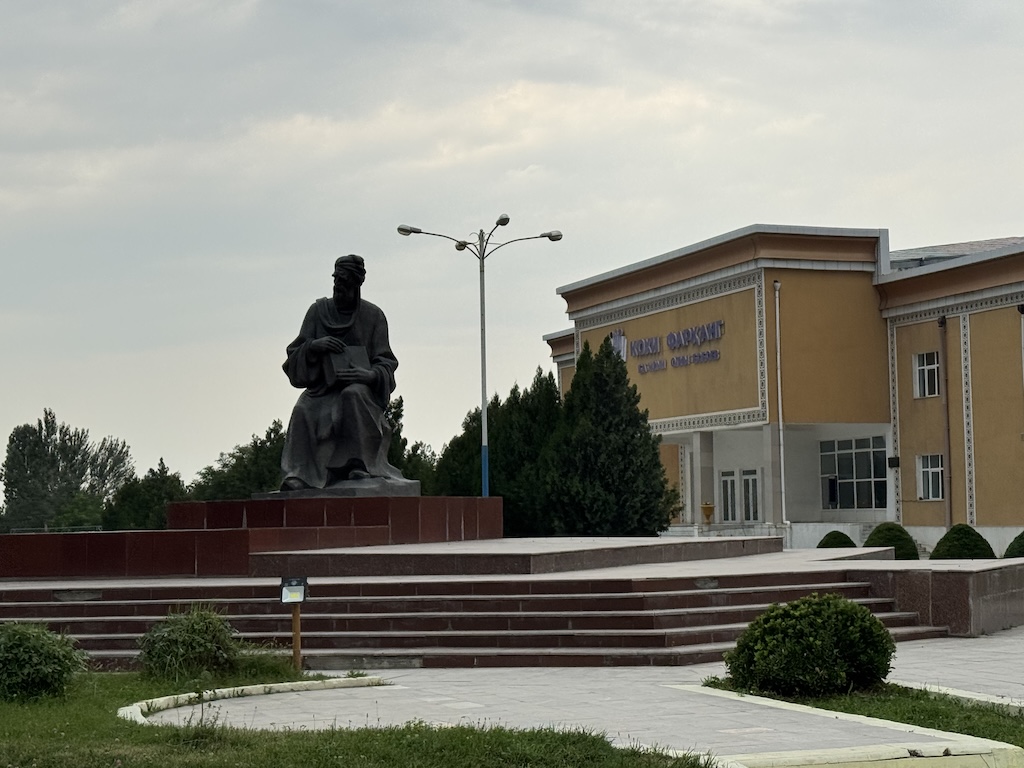
We then went to a museum on the way out of town, where we saw some local ancient artifacts. We were reminded that the best excavated artifacts were often hauled away; during Soviet times, this was typically to the Hermitage Museum in St Petersburg.
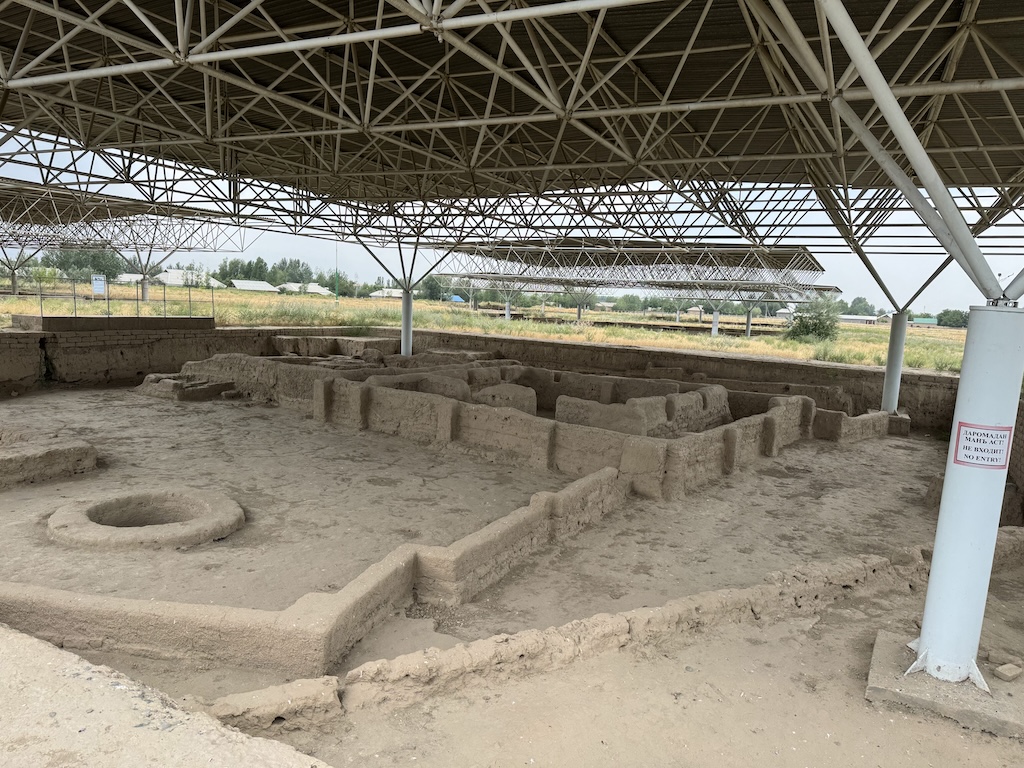
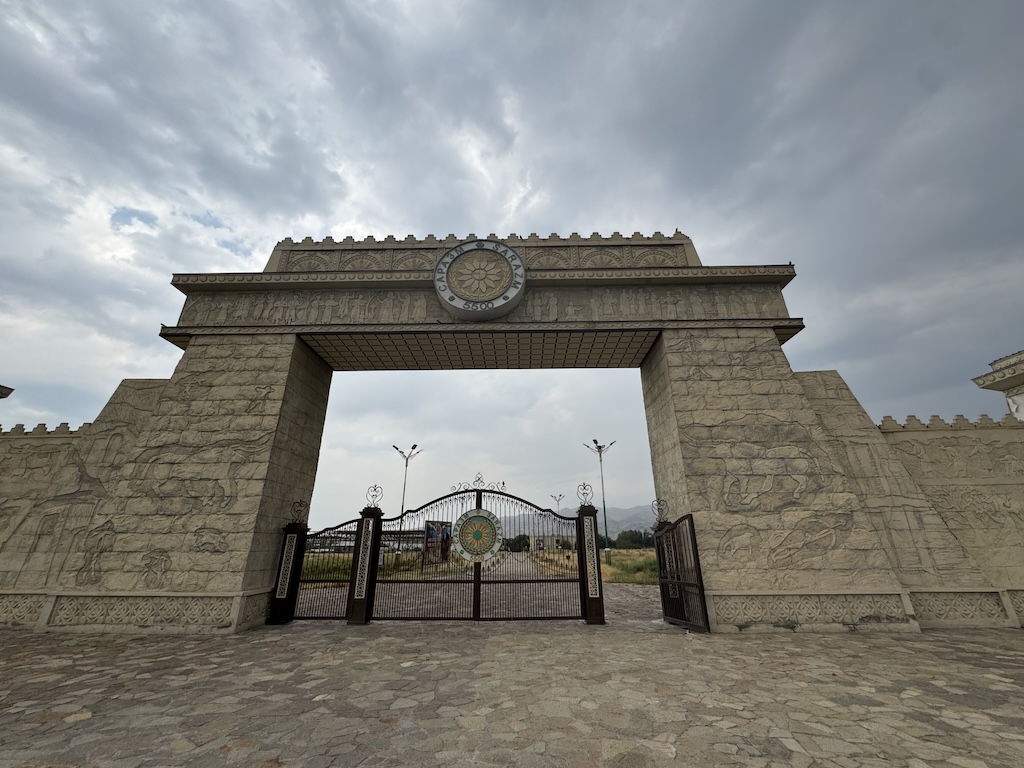
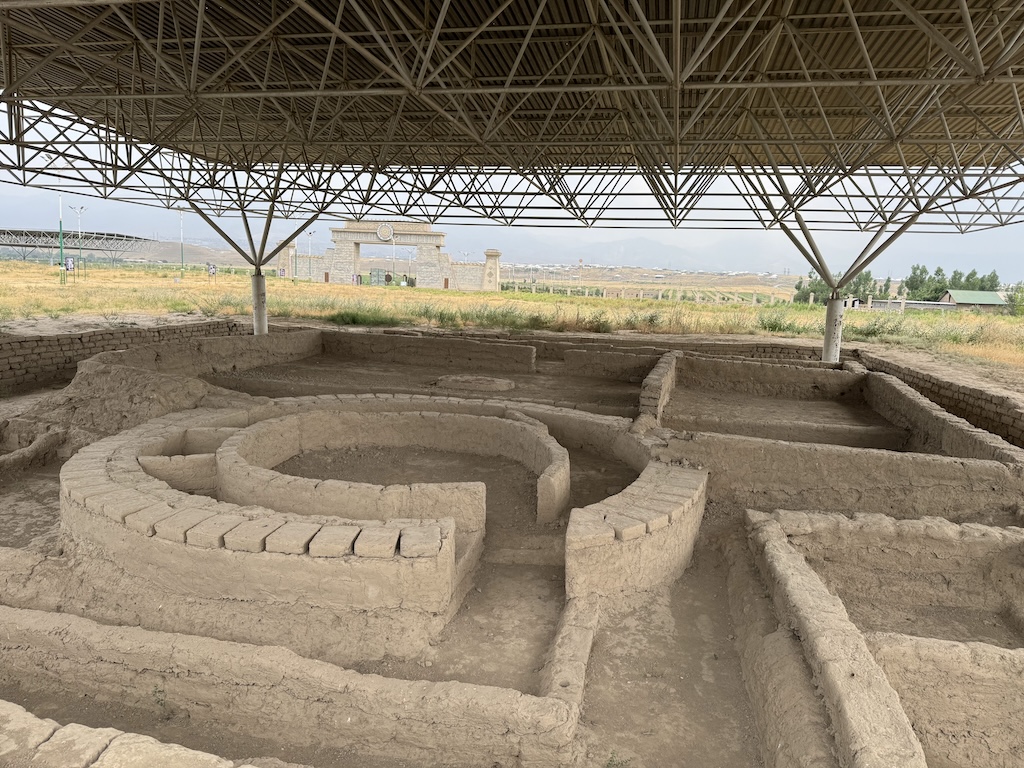
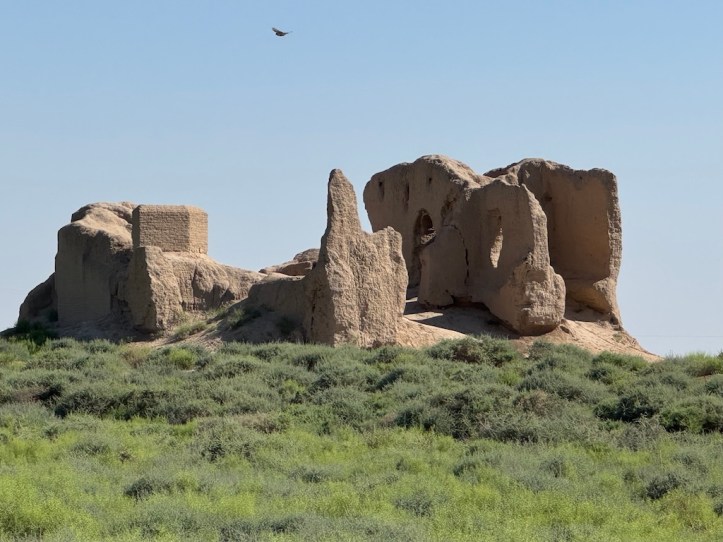
Right outside of town, was the Sarazm historic site, which was a 5,500 year old archeological site. The ruins were covered and protect them from the rain, and also restored somewhat.
At that point, it was late in the afternoon, and about time for our visit to wind down. We were not too far from the border crossing, so we were driven there. At that point, we said our goodbyes, and crossed on foot to meet our driver on the other side.
We are glad that we had our brief visit to Tajikistan. The mountains were nice, and gave an interesting glimpse into a way of mountain village life that probably hasn’t changed that much in generations. I would have preferred less rough mountain roads, though perhaps the isolation from these roads has helped preserve their local culture? And also for that matter, it’s fascinating to discover an area that’s been settled for 5,500 years, which has rarely crossed our radar.
More From Our Blog
Keep reading our travel blog for more adventures in Central Asia:



 Adventures of the 4 JLs