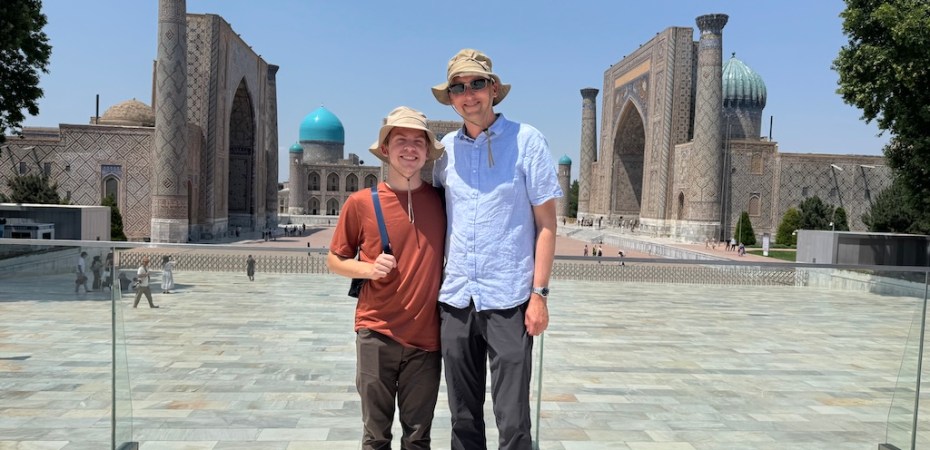
During our tour of the “5 Stans” of the Central Asia in June, our day in Samarkand was one of our favorites. Labeled by UNESCO a “Crossroad of Cultures,” it is a unique cultural capital, full of interesting architecture, and one of the oldest continuously-inhabited cities in the world.
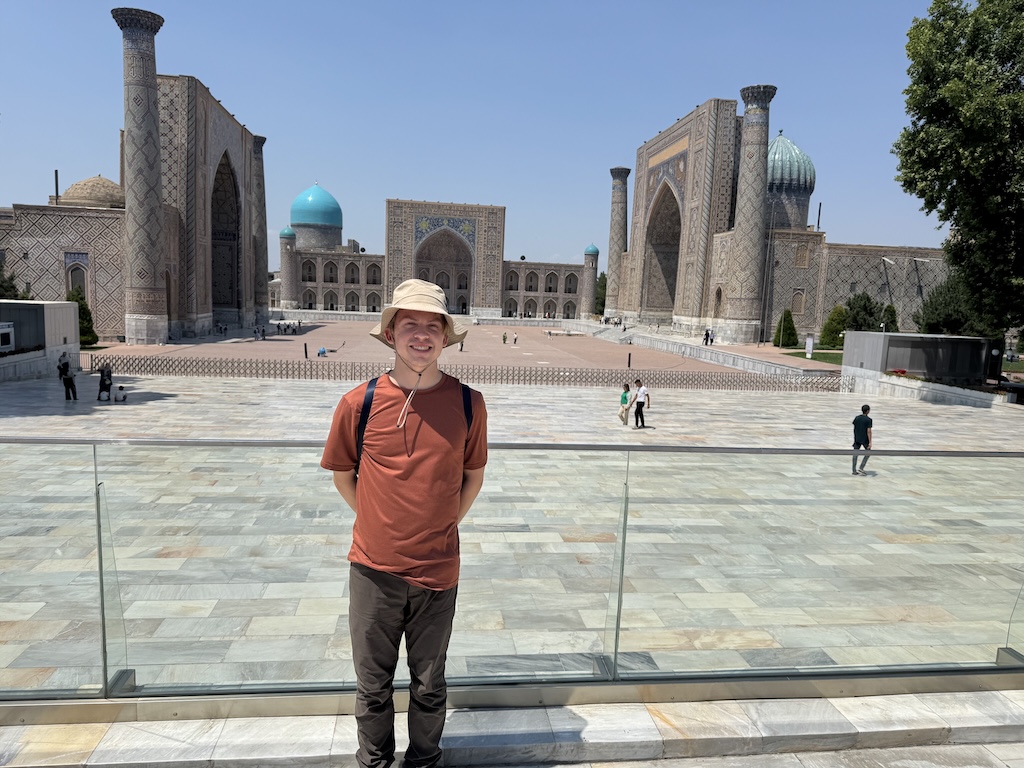


Roughly 2600 years old, Samarkand has been controlled over the centuries by the likes of the Alexander the Great, Cyrus the Great, the Persians, the Arabs, the Mongols (Genghis Kahn), Timur, the Russians/Soviets, and many more. As part of the ancient Silk Road, it has had a myriad of influences.
While we typically travel independently, like much of the rest of this trip, we had a guide for the day in Samarkand, which help us better understand its long history. We originally reached Samarkand by a 2 hour train ride from Tashkent, but did a 2-day side trip to Tajikistan before exploring Samarkand. Our day started at 9am, and we had a train to Bukhara that evening.
Traditional Paper and Oil Making
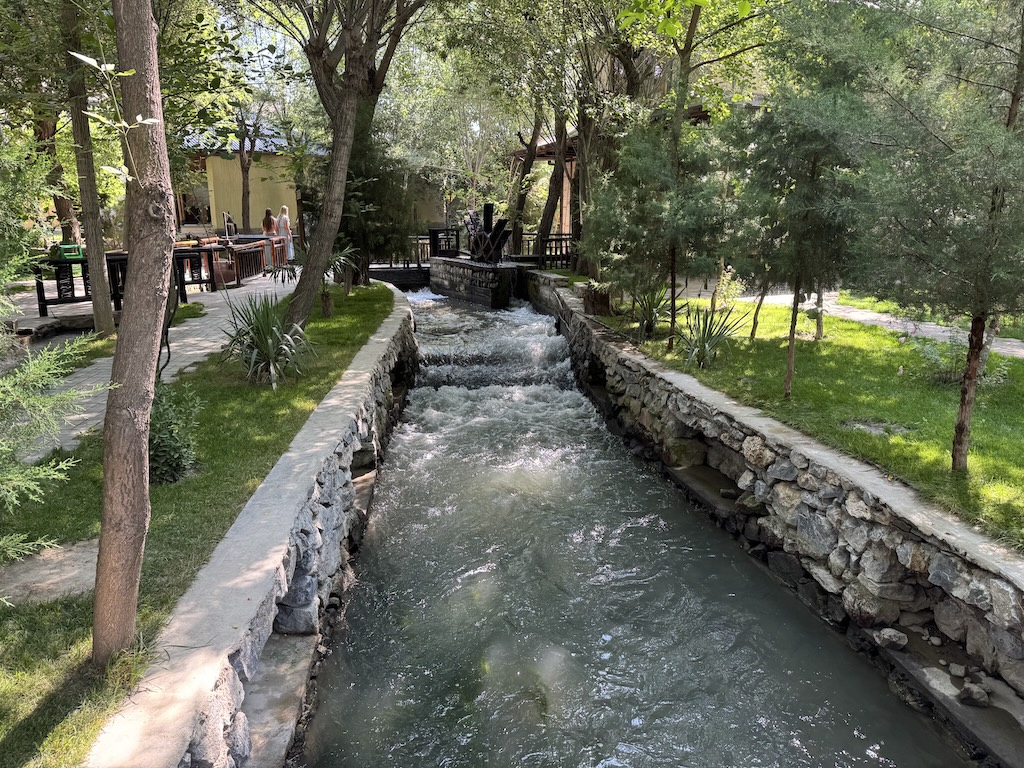
Our first stop of the day was just outside the city in the Konigil village, at the Meros Paper Mill. In that village, there are several places trying to replicate the ancient ways of production from the area.
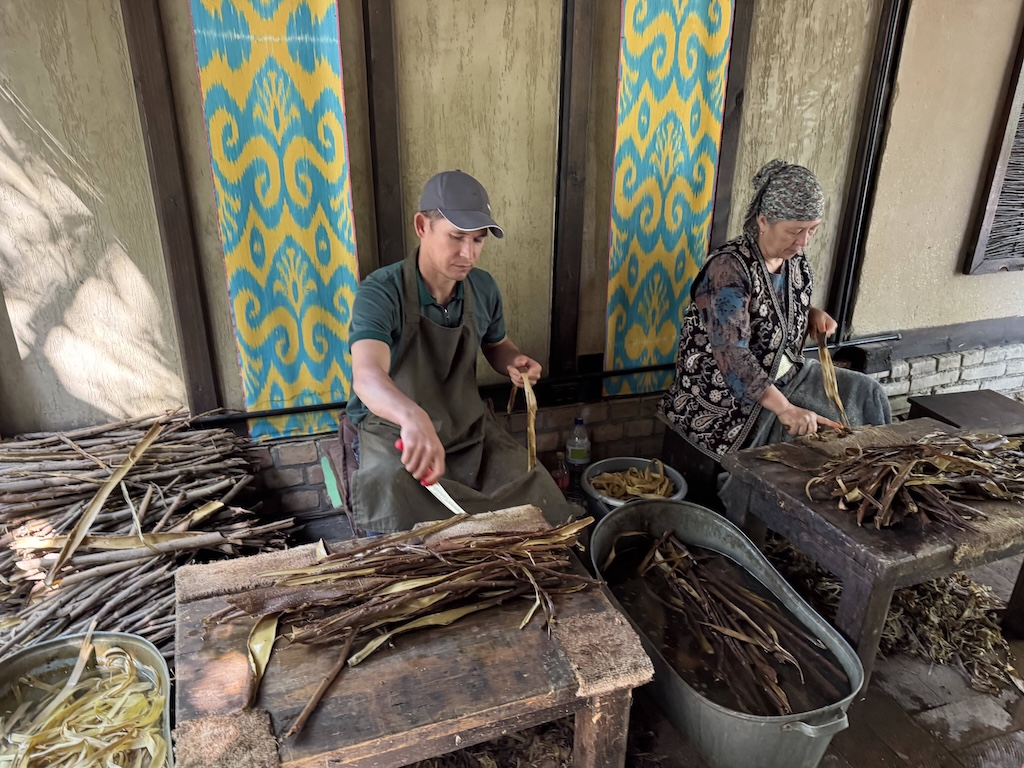
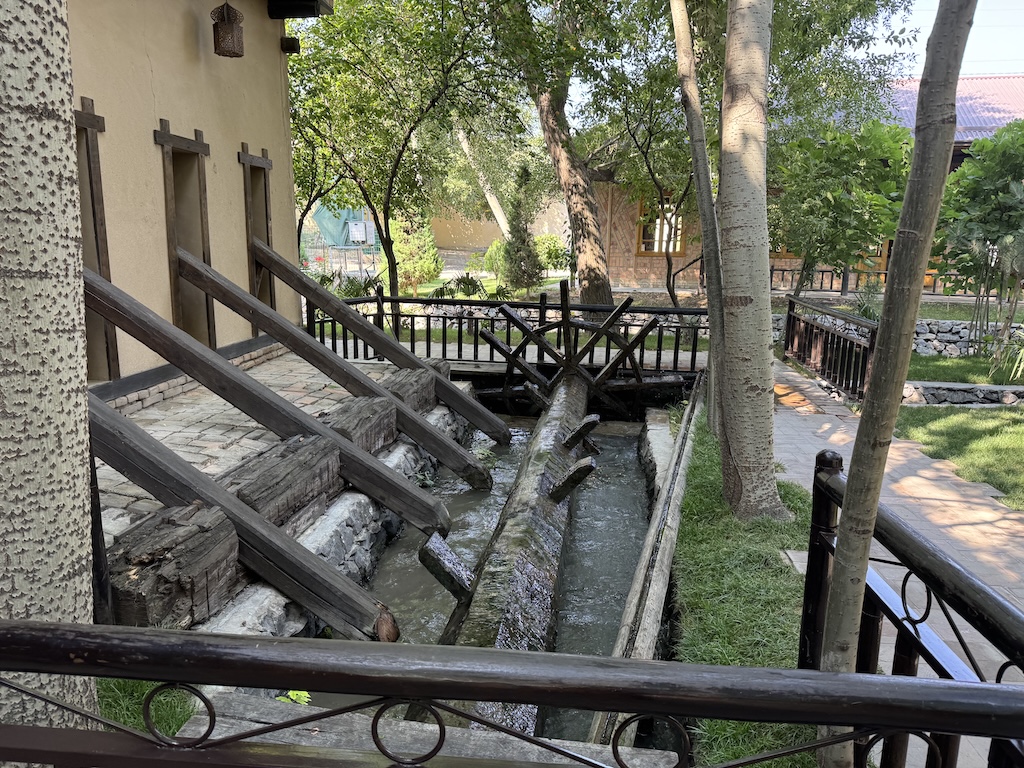
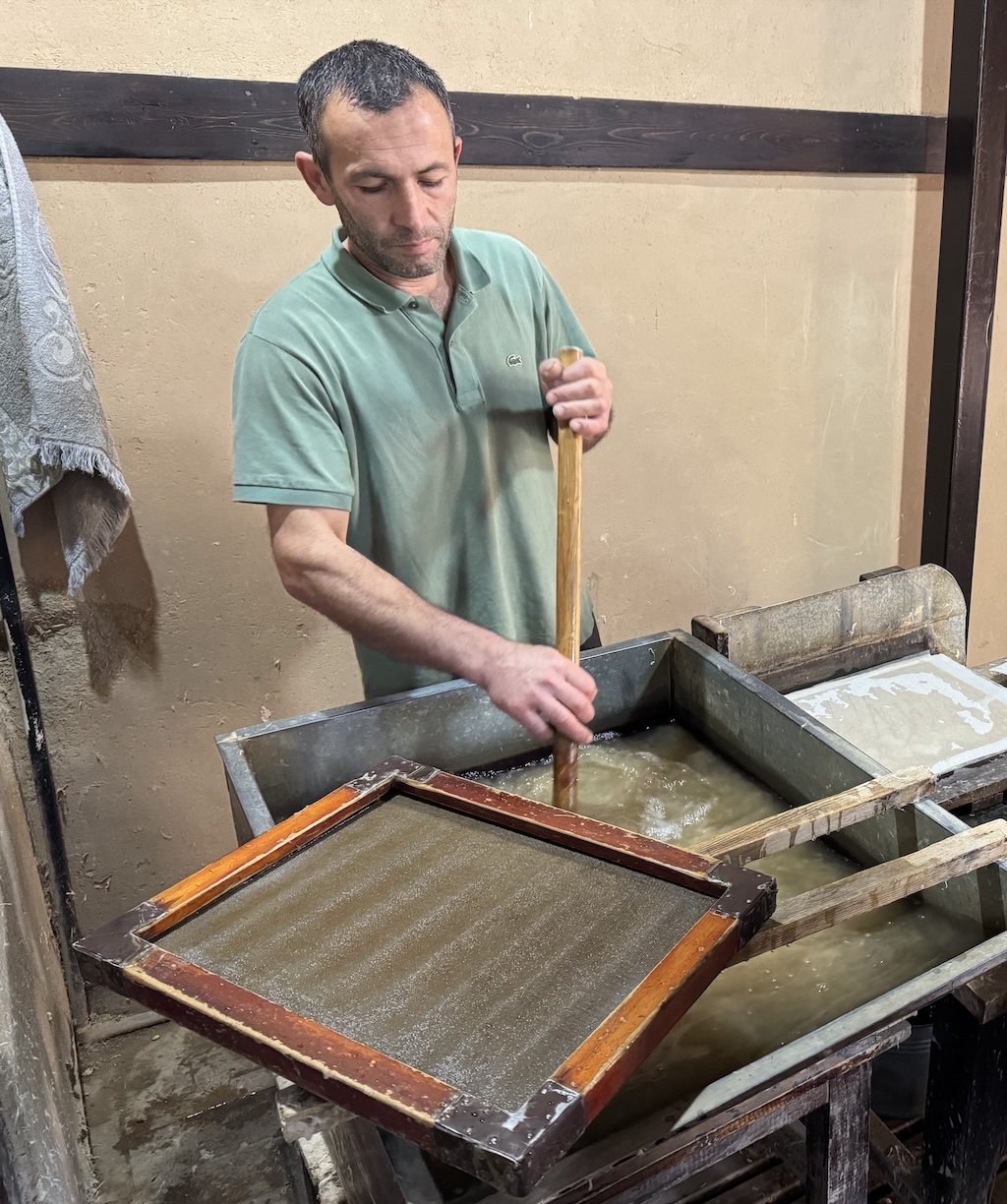
We first went to a place where they made forms of paper – they boiled mulberry tree bark, using water power from the river to mash it up, strained it, and let it be dried and pressed. It was interesting to see in person. We bought a small journal make in that manner in the shop at the end.
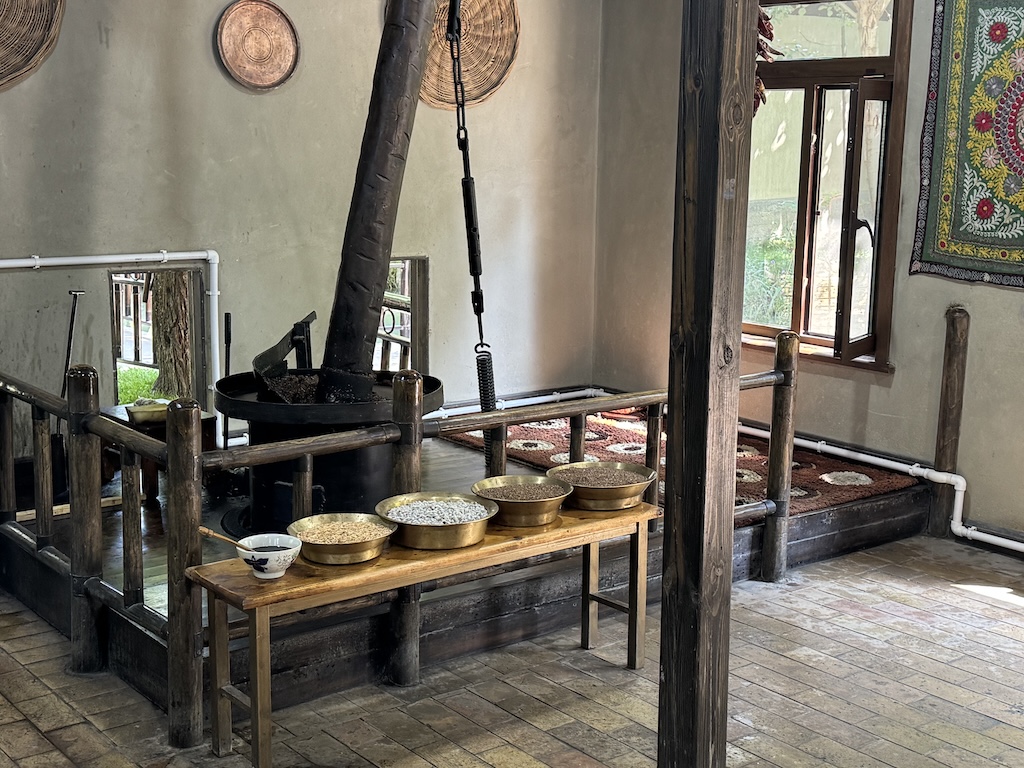
As we kept wandering the grounds, there was a place that made the cooking oil from the various seeds by water power. We also went to a neighboring traditional bakery. Overall, it was a fun stop and start to the day.
Shakhi Zinda Necropolis
At that point, we headed back towards the city, and went to the Shakhi Zinda Necropolis.
The collection of tombs and buildings here are from the 14-15th centuries, the burial place of royals and nobles, and a great example of Islamic architecture. They’re super photogenic, and even better in person. There were other tourists there, though not a huge crowd, and many of us enjoying trying to capture it on camera.
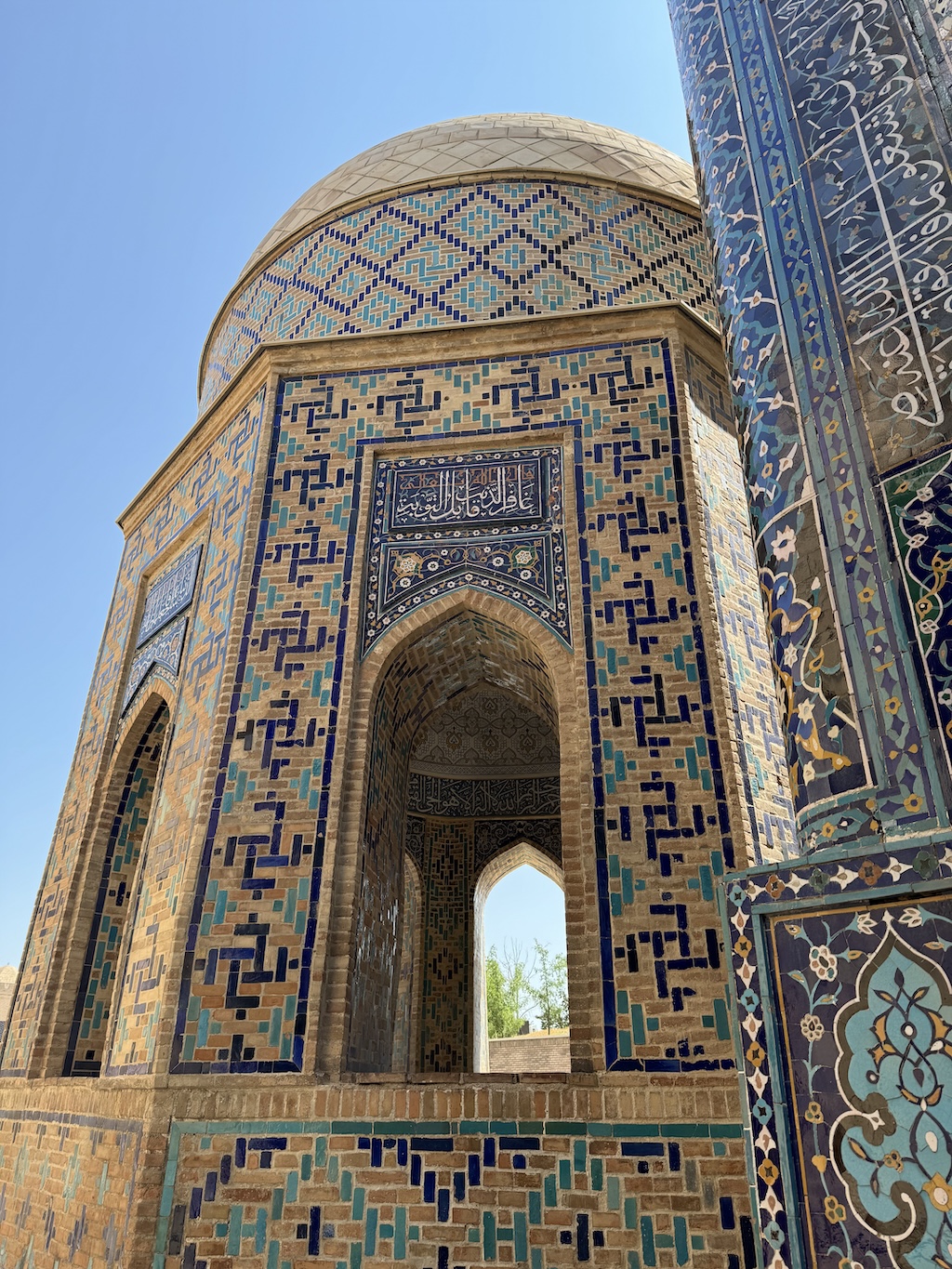
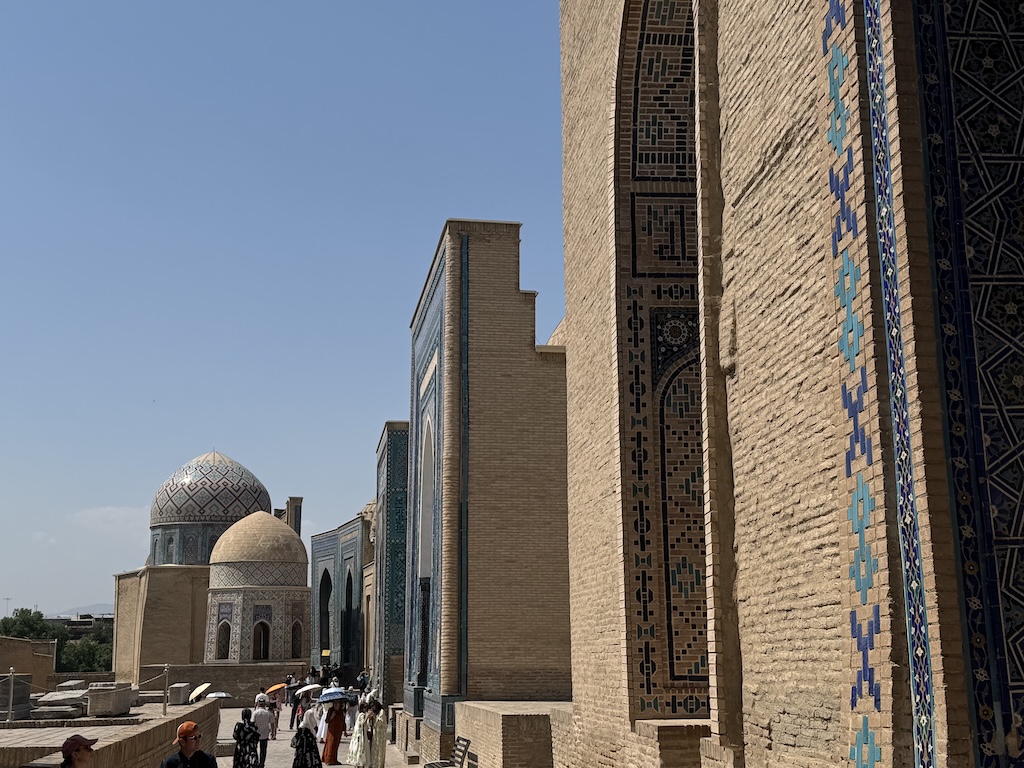
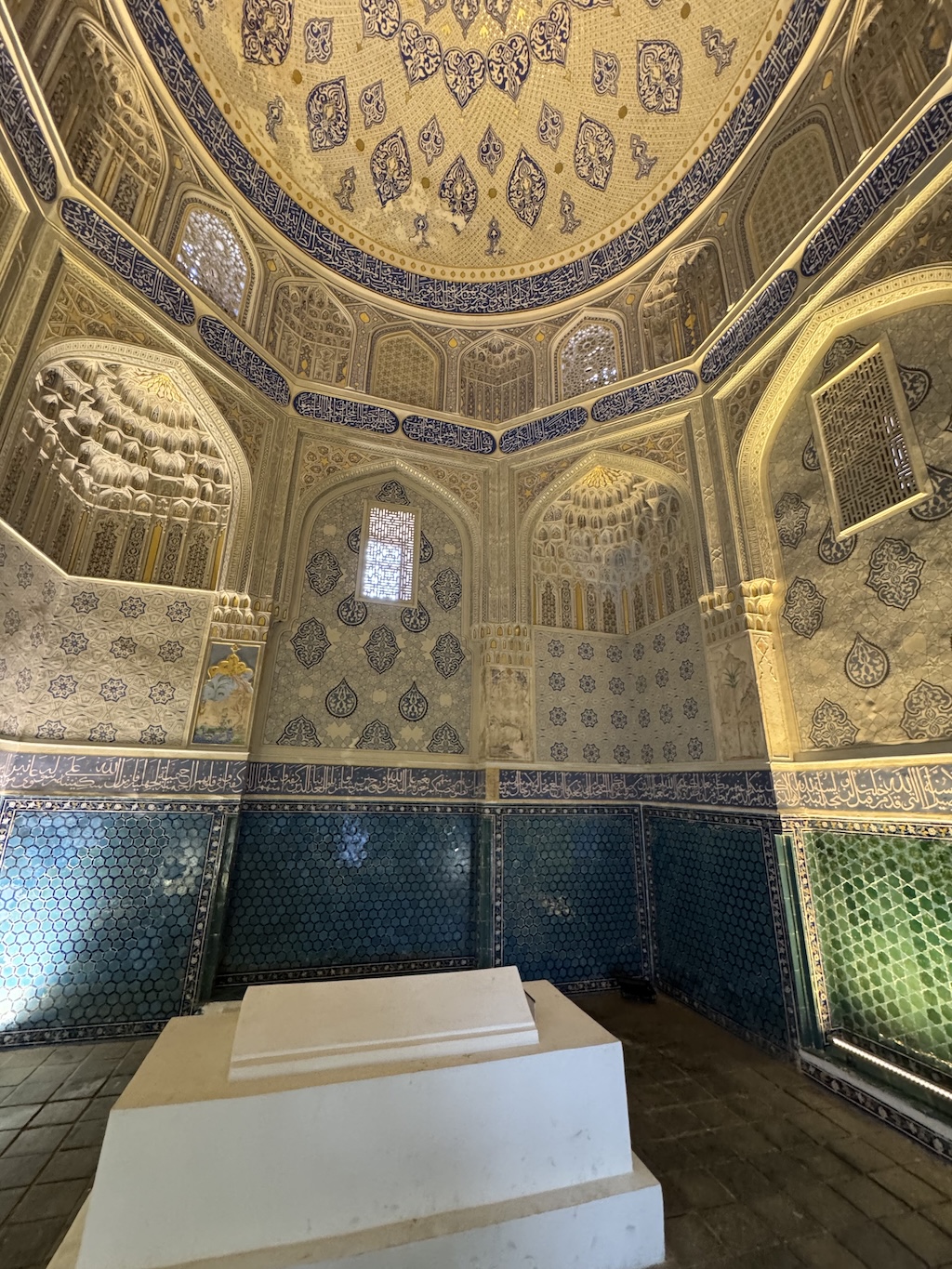
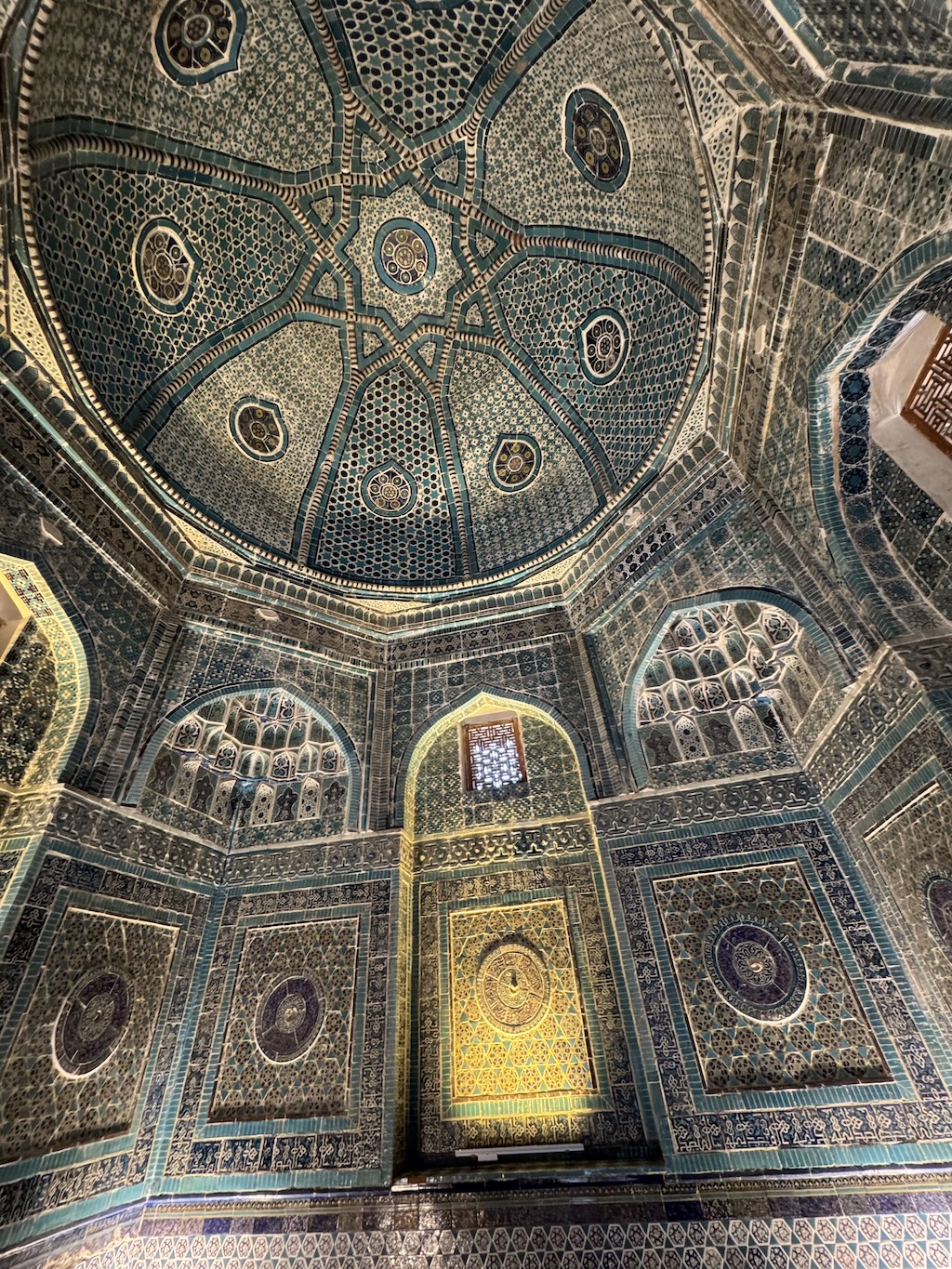
Our guide filled us in with some helpful historic information, and showed us interesting architectural details of the buildings, contrasting the Persian and Arabic inscriptions on the tiles. Additionally, there was a neighboring Jewish cemetery; I had no idea that the area would have had a significant Jewish population. Nice stop.
Bibi-Khanym Mosque Area
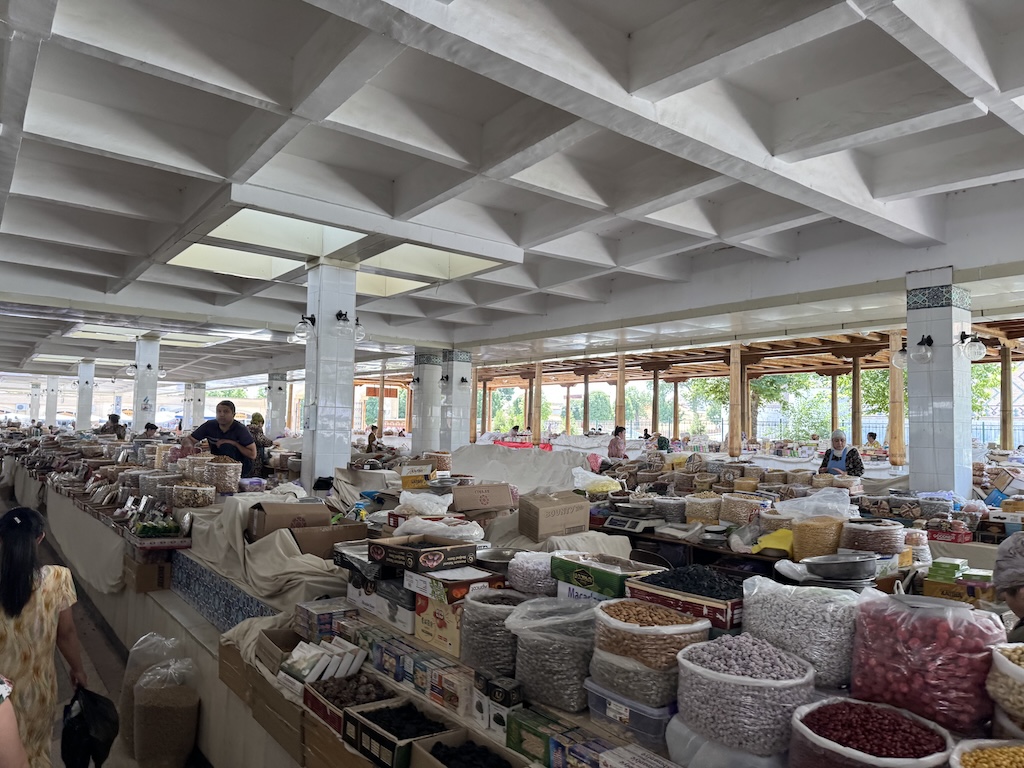
Then we went to the nearby Bibi-Khanym Mosque area, and the neighboring bazaar. We took fewer pictures here, but enjoyed the stop and the pedestrian shopping area. We also picked up a few small souvenirs for home, and had lunch at a cafe.
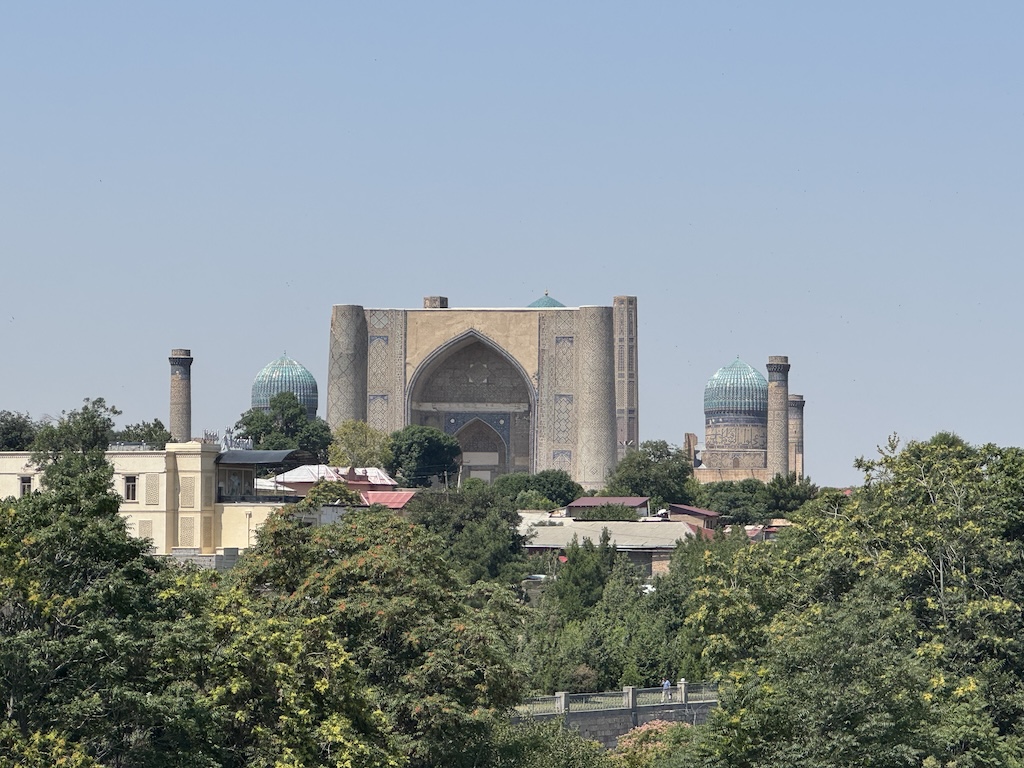
Gur-Emir Mausoleum
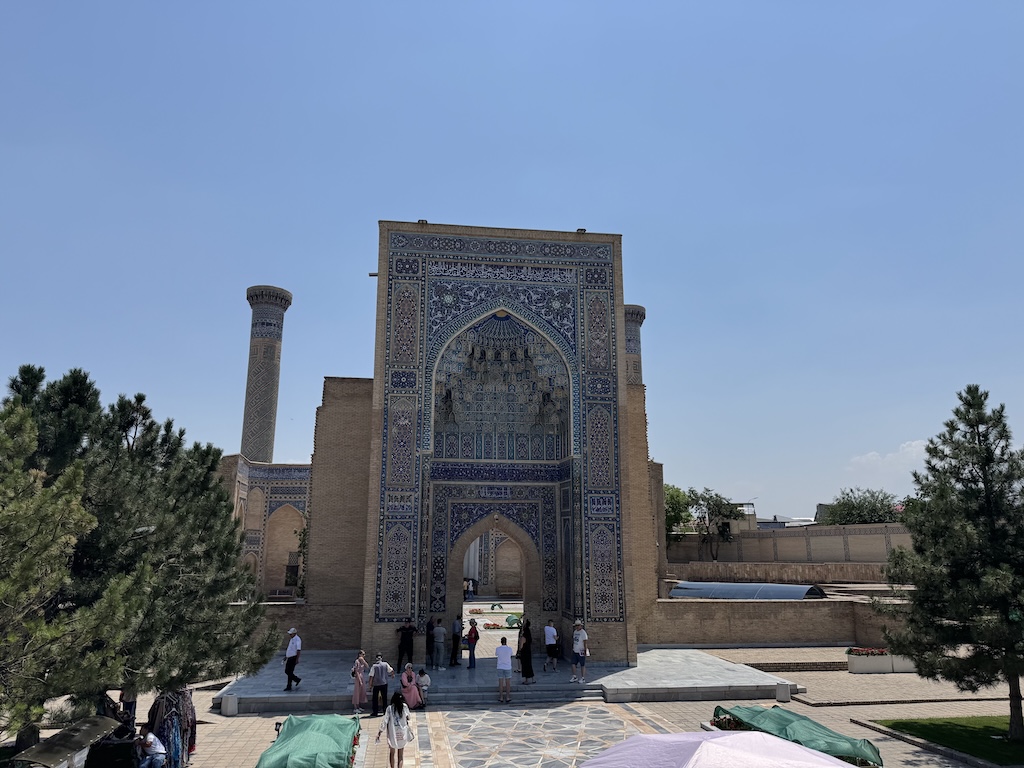
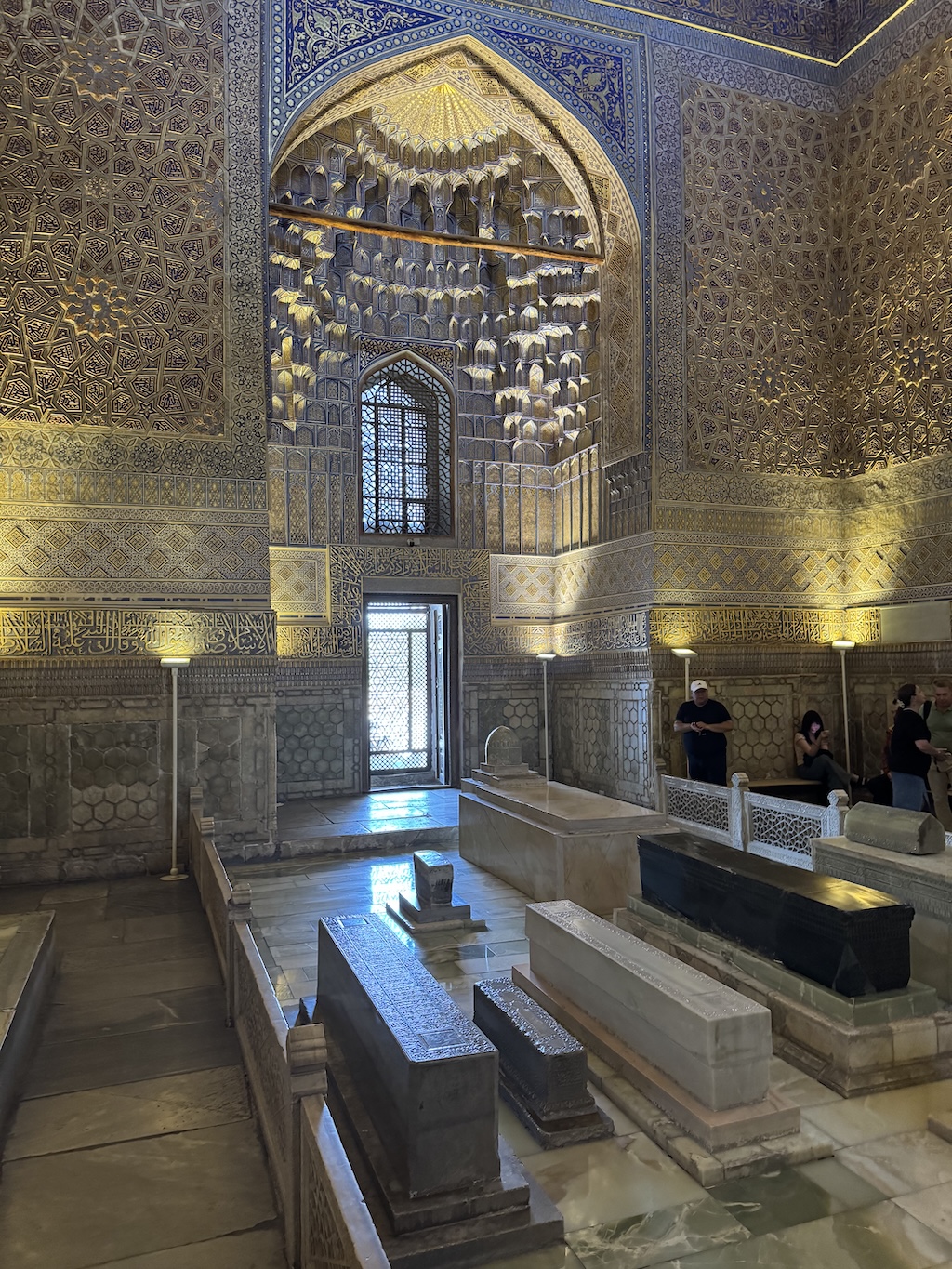
From here we went to the Gur-Emi Mausolem, where the local emperor Timur was buried, as well as his sons, grandsons, and teacher.
Timur was a leader whom we heard quite a bit about in Uzbekistan; he was a local emperor who wrestled control of the area from the Mongols in the 14th century, and expanded his Timurid Empure to include modern-day Iran, Afghanistan, Uzbekistan, Kazakhstan, as well as parts of modern-day Turkey, Parkistan, and Northern India. As the tomb of a great home-grown emperor, it was suitably elaborate.

Registan Square
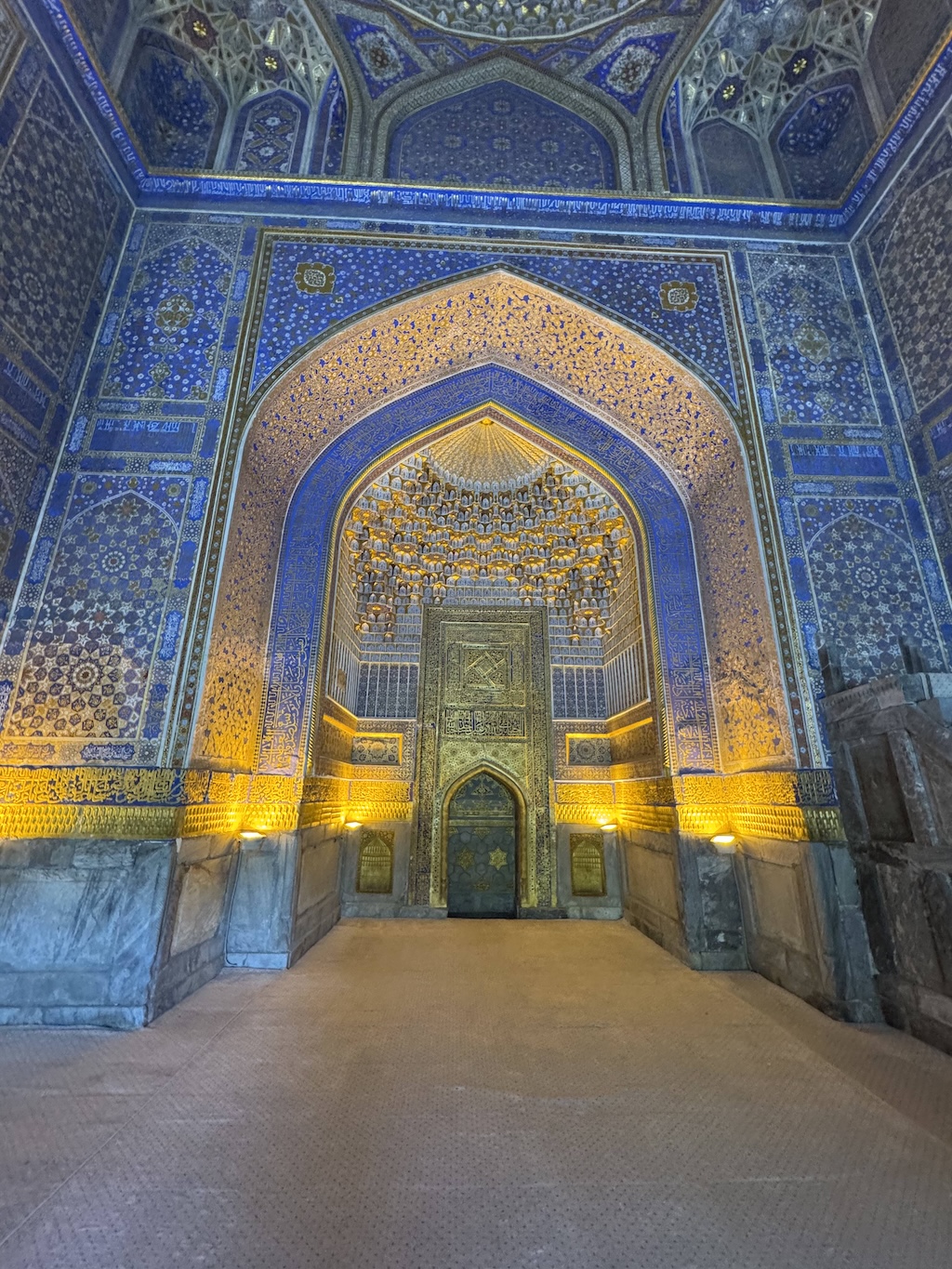
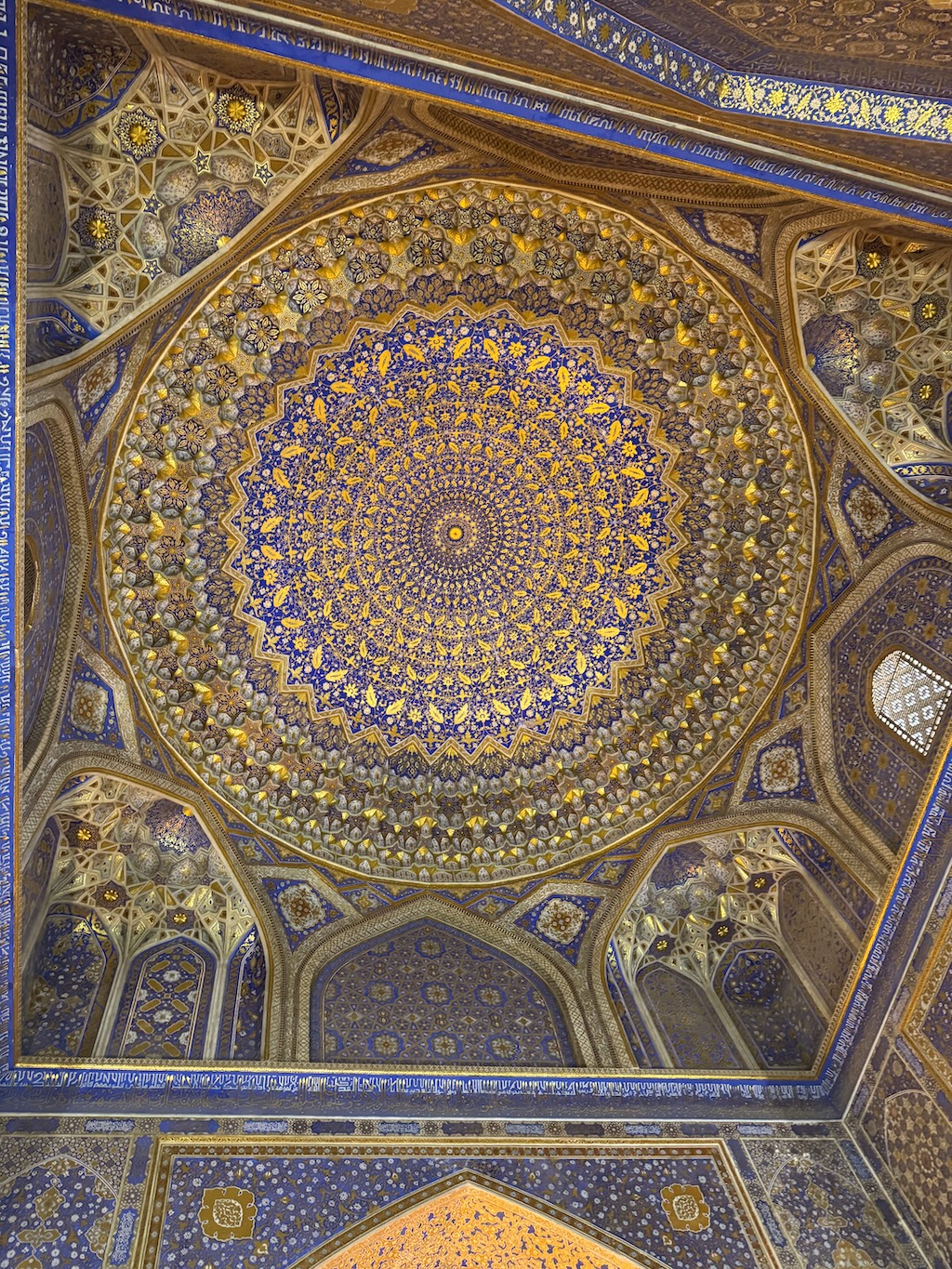
Perhaps the most-pictured site in Samarkand is the Registan Square area. We even saw local folks getting wedding photos taken there. This was the last of the main areas that we visited with our guide, and there was quite a bit to see.
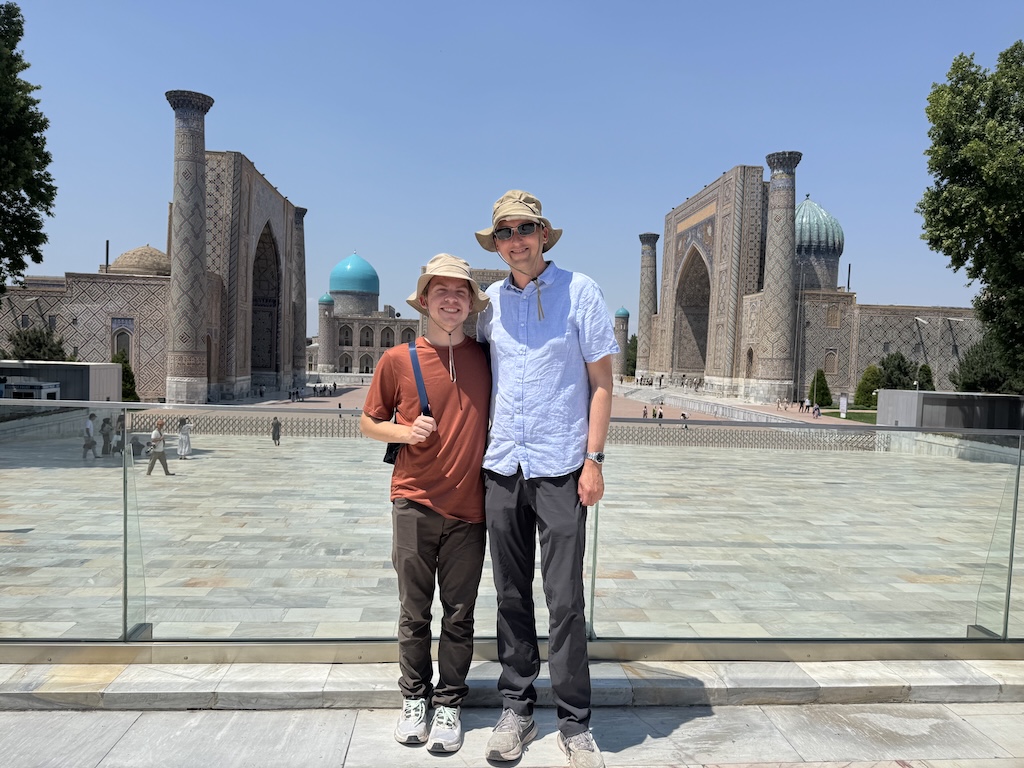
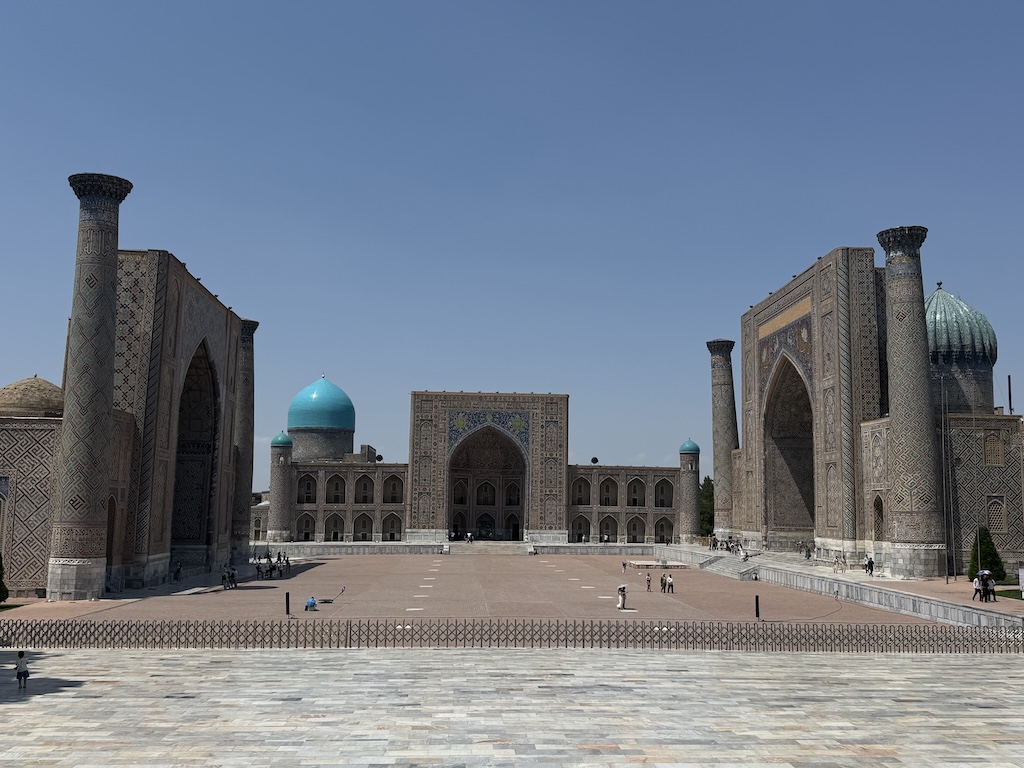
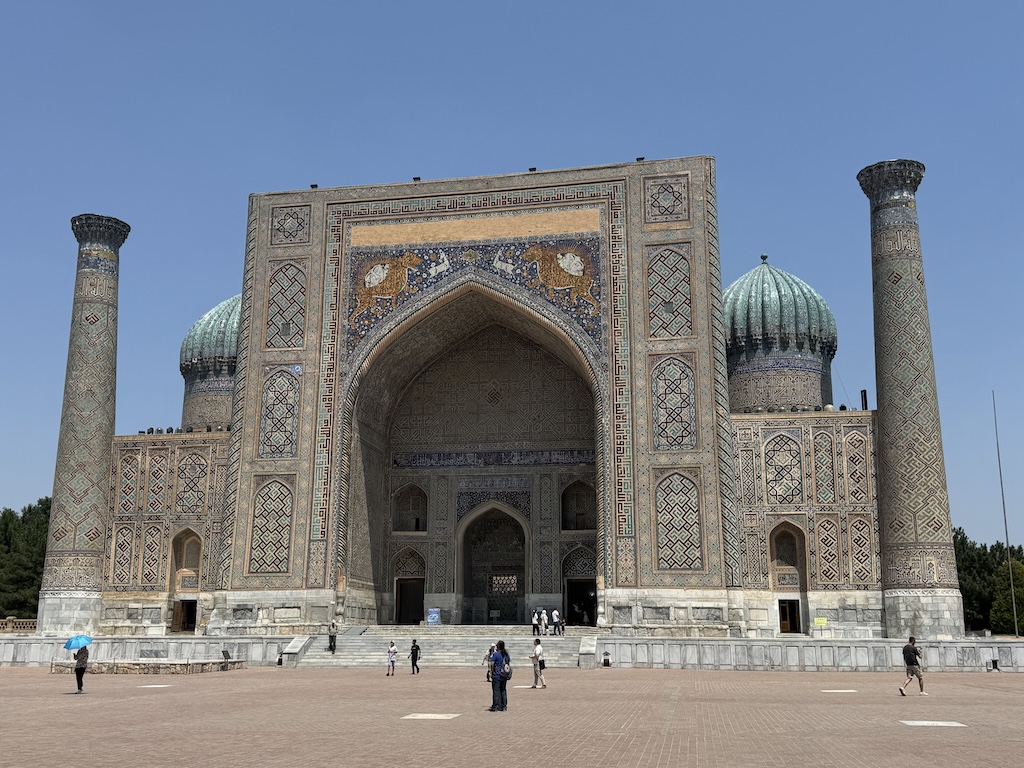
Registan was the city center during the Timurid Empire times, and is built around 3 large Madrassas, or Islamic schools. The guide and exhibits highlighted that these schools not only taught religion, but valued and taught fields like astronomy and math, as well as trades and music.
We heard a performance from a musician who had constructed different musical instruments, and saw different textiles and pottery for sale.
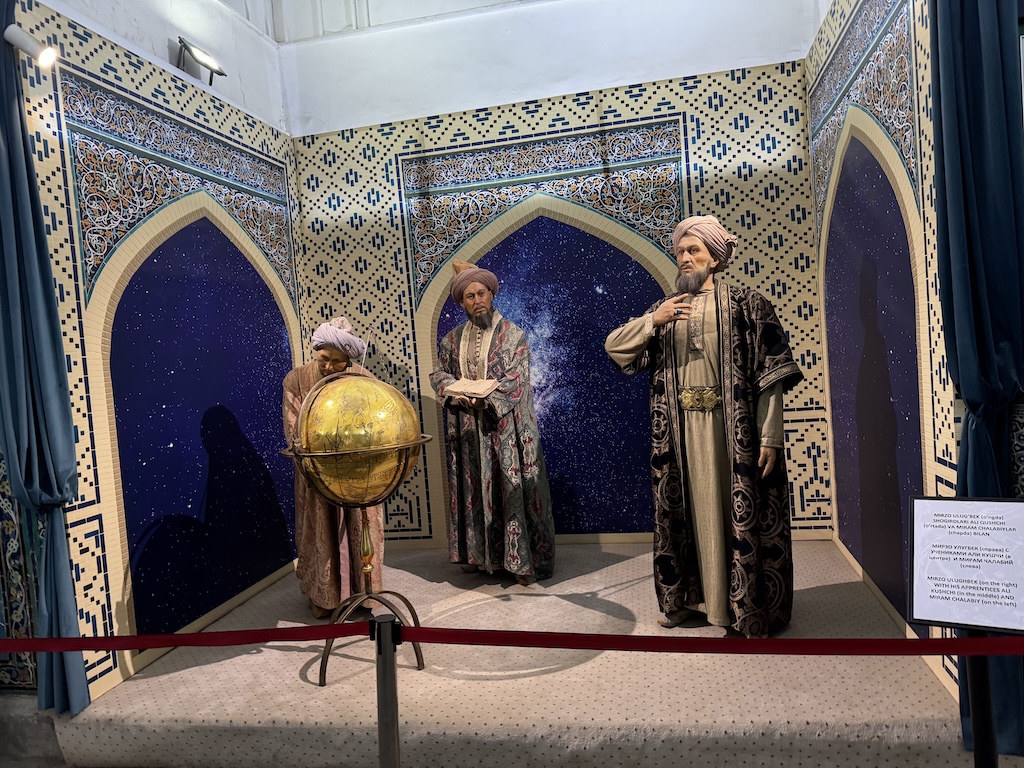

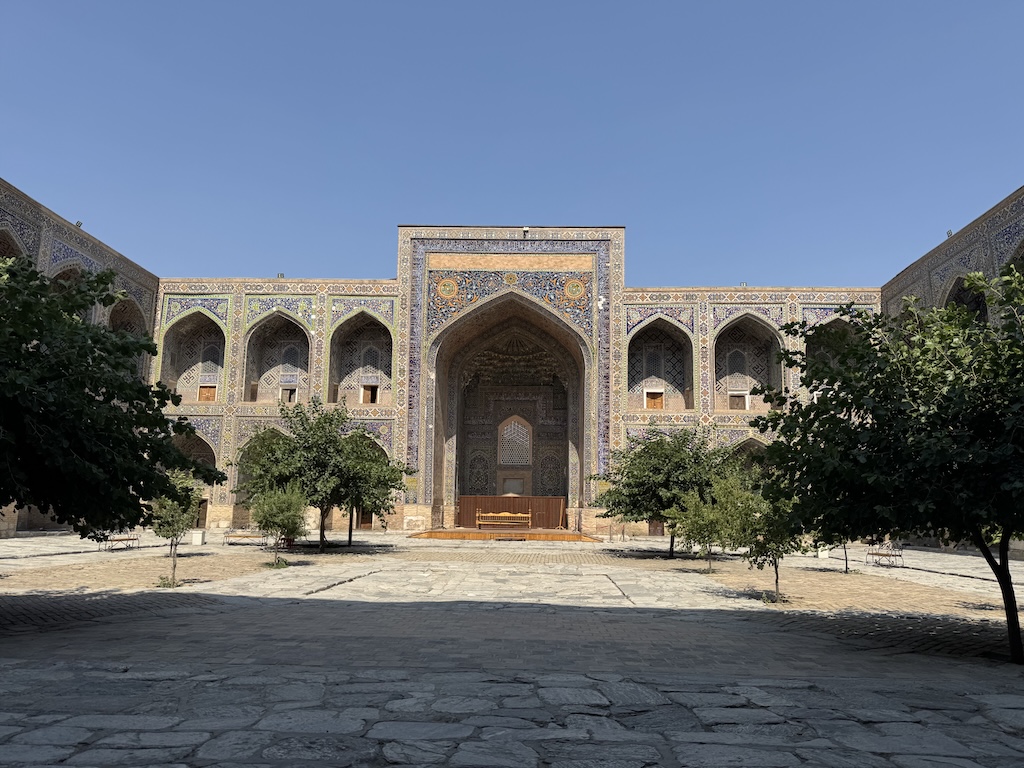
The building insides were quite elaborate! They were full of impressive geometric patterns (in Islamic art, depicting humans isn’t allowed).
Around town
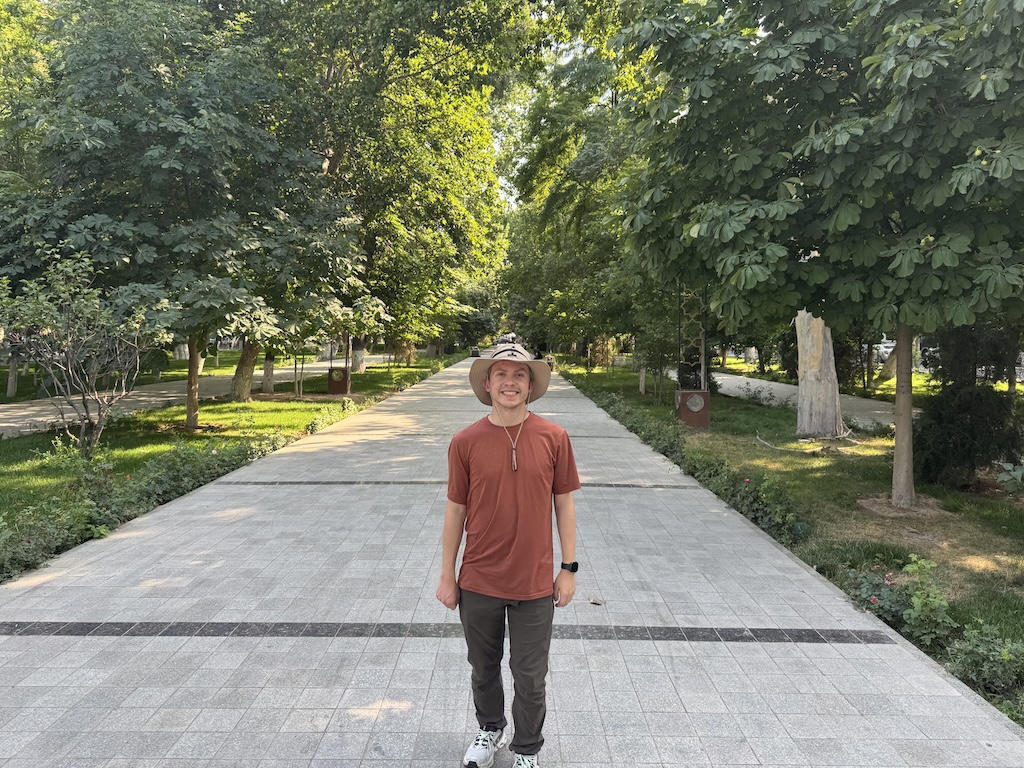
After that, it was maybe 3:30pm and our organized part of the tour was done. We had about 5 hours on our own before the driver met us to take us to the train station. That part was enjoyable as well. At first, we wandered the greenways near the Registan Square area.
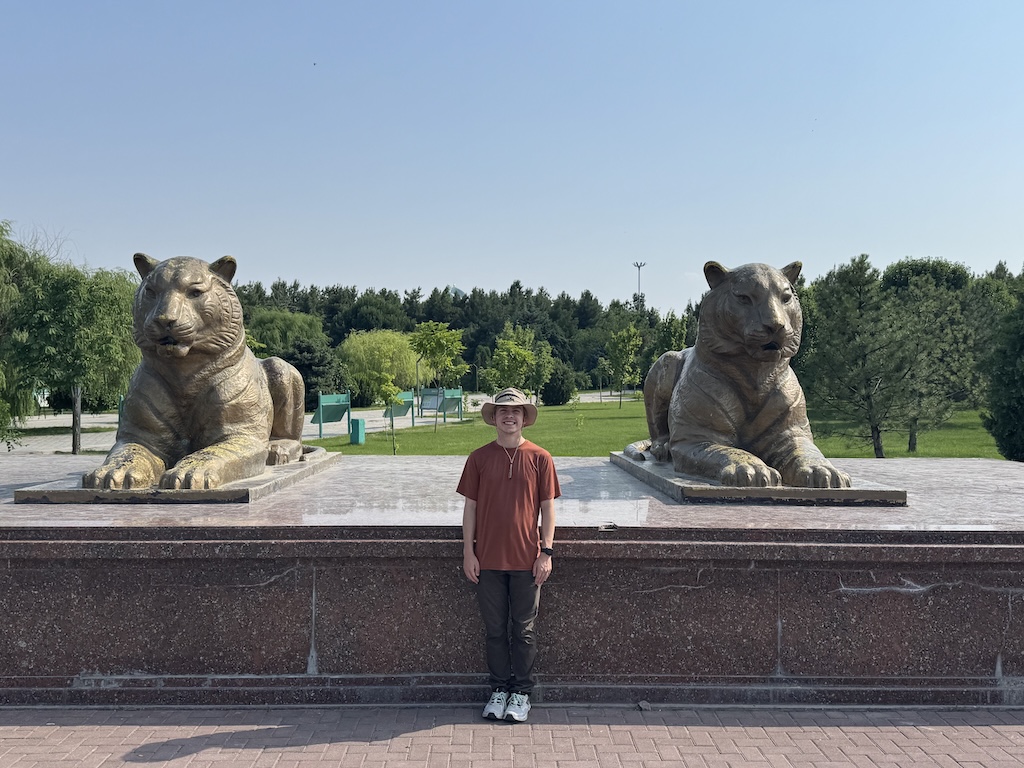
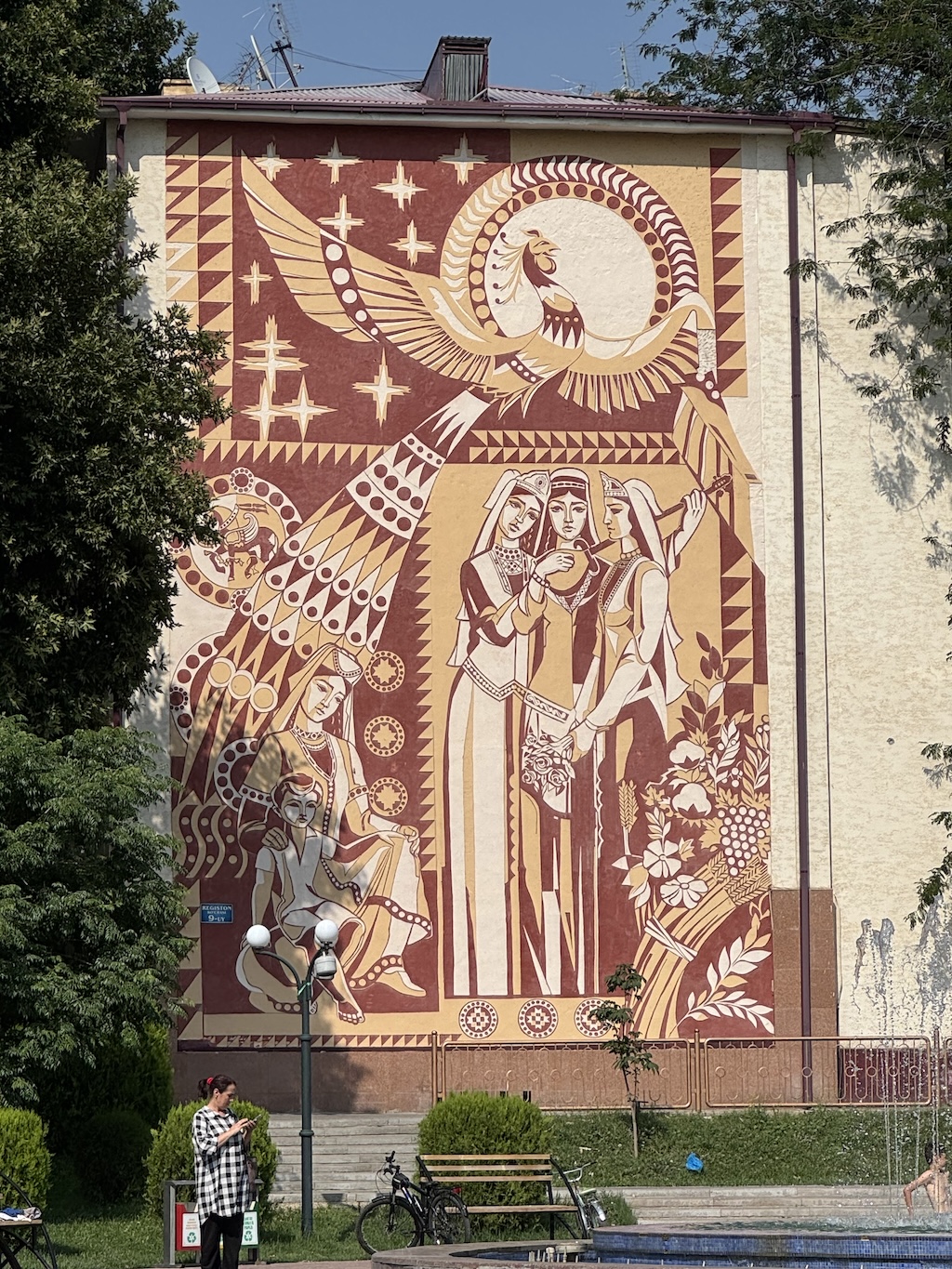
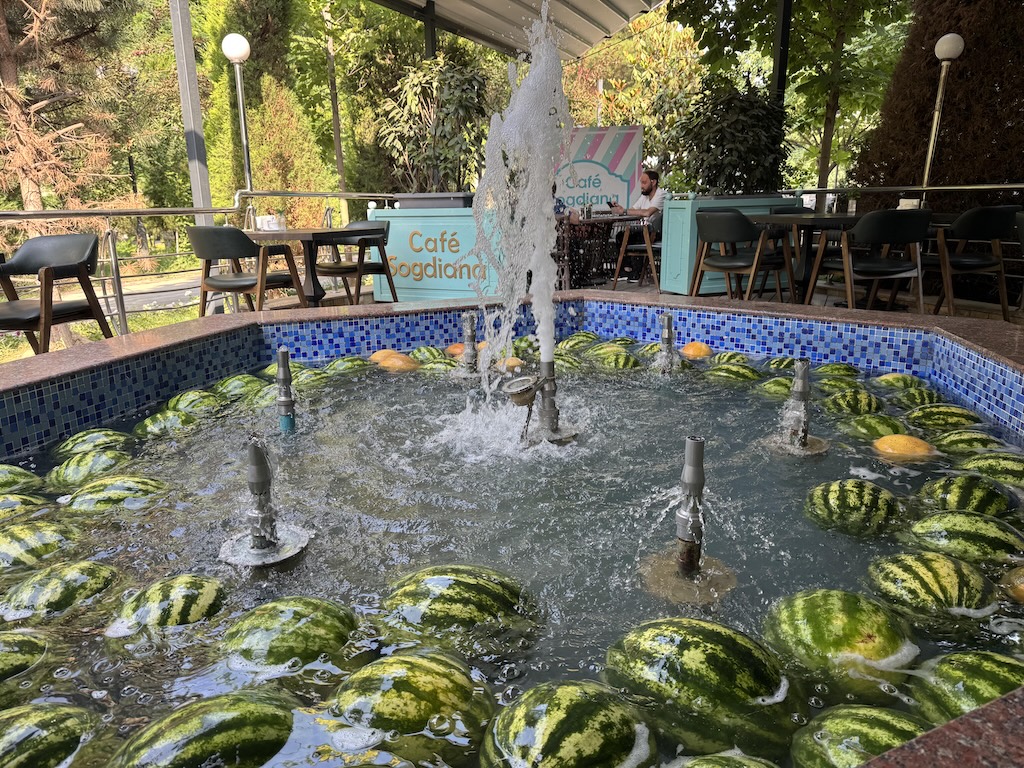
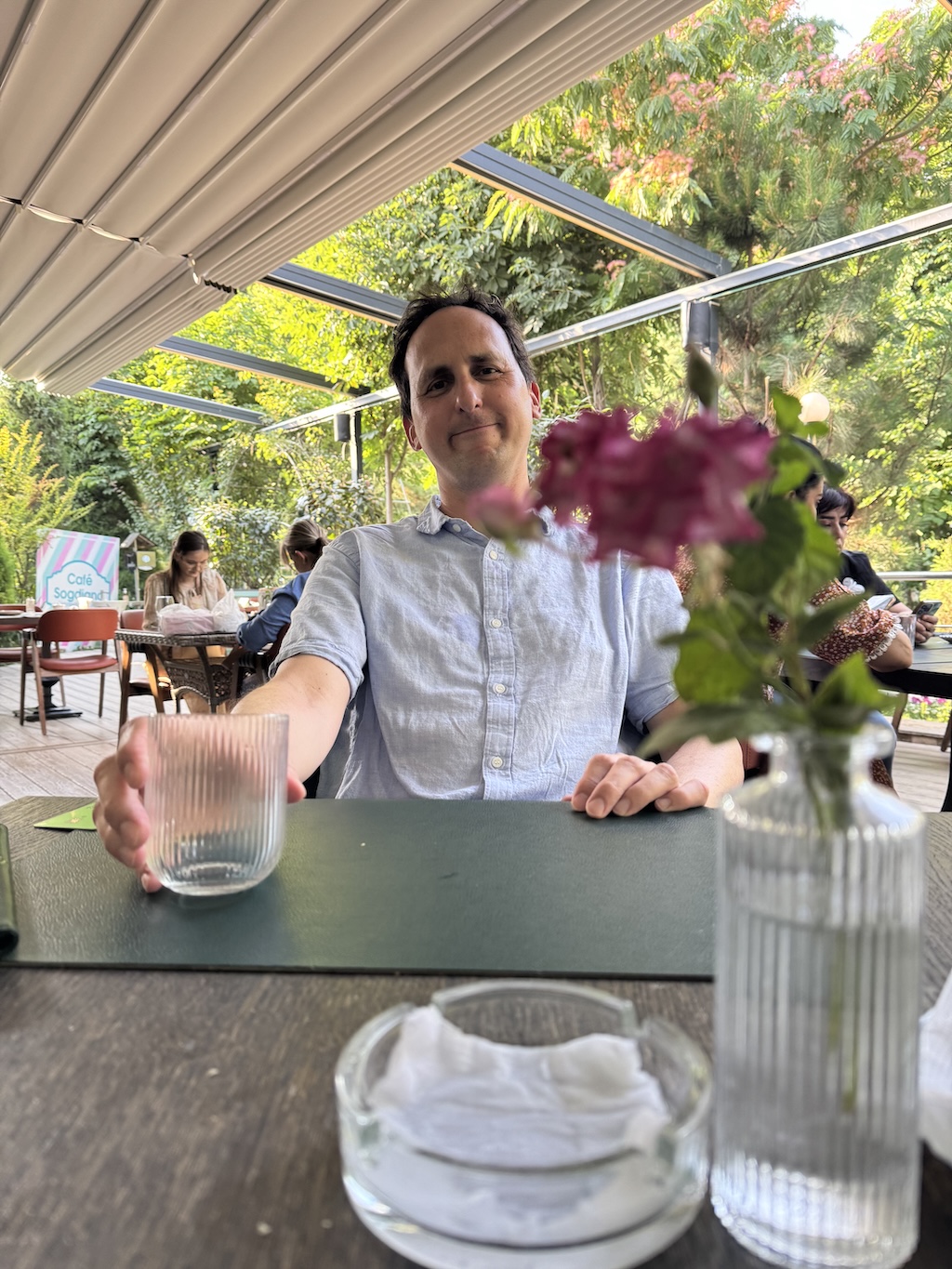
We found ourselves at the Central Park area of Samarkand, and had dinner at the Cafe Sogdiana there that our guide had recommended.

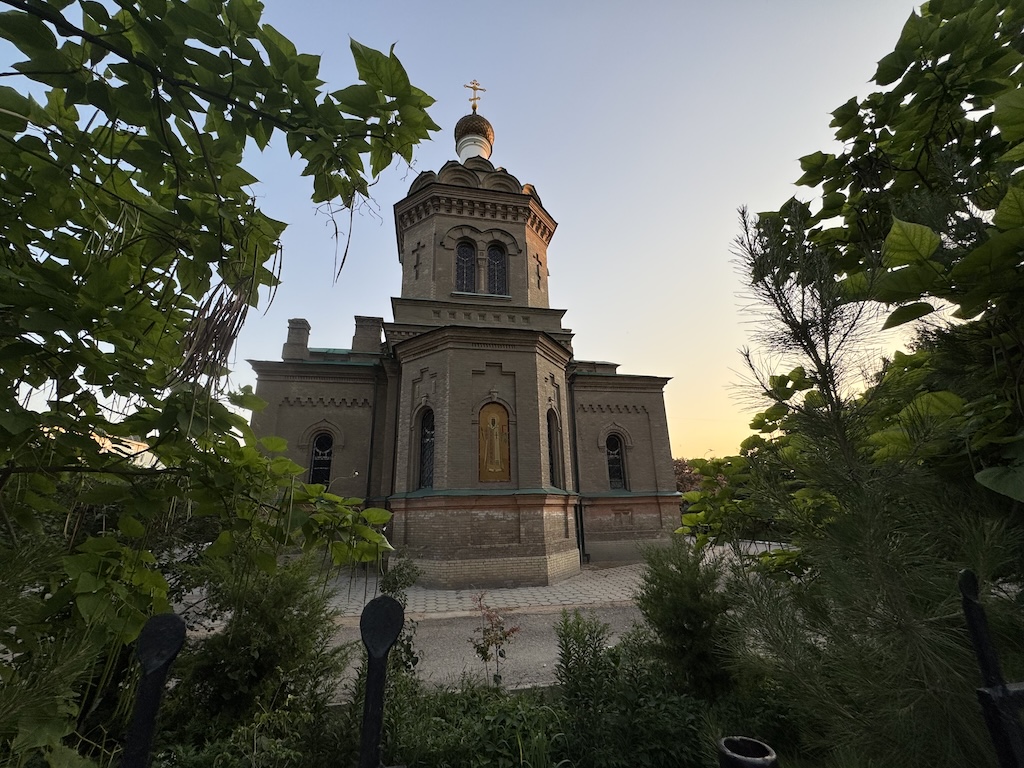
Additionally, as independent travelers at heart, we found ourselves wandering, finding things like this Orthodox Cathedral, and other places that we found nearby on Google Maps.
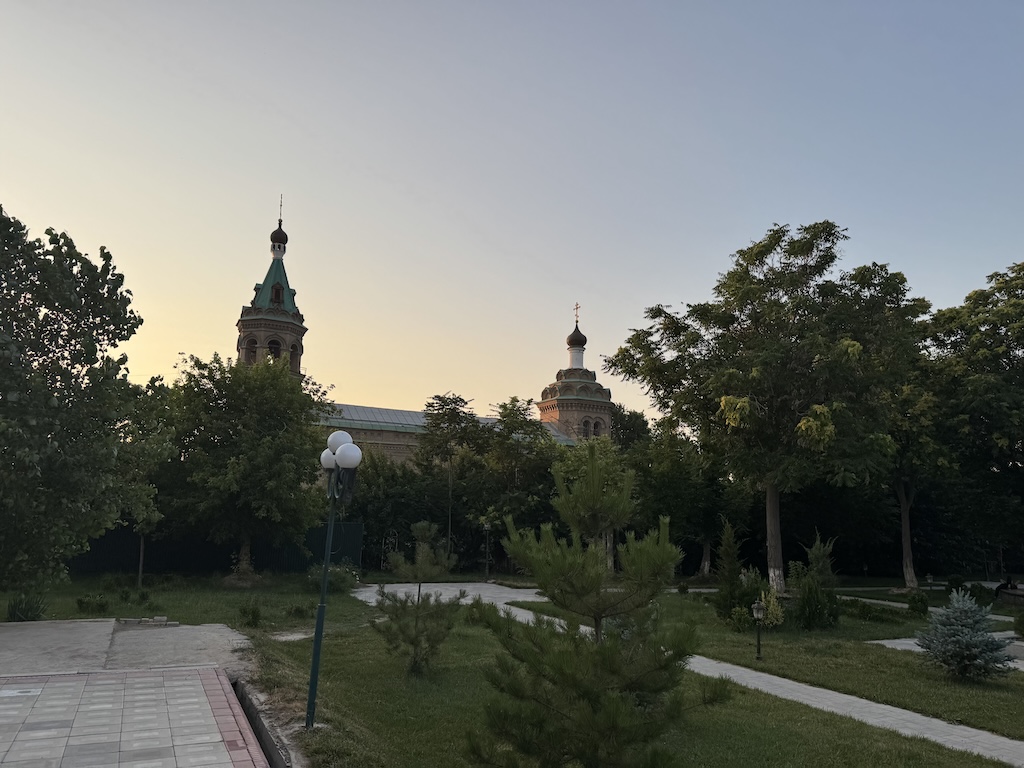
Soon enough, it was dusk, and our driver picked us up at the agreed-upon place. We were taken to the train station, where we had a roughly 2 hour high speed train ride to Buchara.
Overall, we really liked Samarkand; it’s full of cultural highlights and just plain enjoyed our time.
More From Our Blog
Keep reading our travel blog for more adventures in Central Asia:



 Adventures of the 4 JLs