Turkmenistan, which we saw as part of a larger trip to Central Asia, is one of the most unusual places that we’ve seen. It is a somewhat closed country with fairly small numbers of visitors; tourists are required to get a visa and be accompanied by a guide. With its capital full of large marble buildings funded by oil wealth, it’s been ruled by slightly eccentric leaders since independence in the 90’s, who have imposed rules like “all cars must be white or silver” or that “beards and public smoking are banned.”
Why did we visit Turkmenistan? My son wanted to tour the ancient Silk Road countries after graduating high school, and was particularly intrigued by the descriptions of the country, perhaps especially after hearing that it was hard to visit. I was concerned at first about its (cheeky) “North Korea of Central Asia” nickname, but realized quickly that the description isn’t particularly accurate, even if the country is relatively closed. It was a place we chose to see partly because it was quite different, a mix of ancient culture and a different modernity.
Preparation for Going
All tourists in 2025 need a Letter of Invitation issued by the government, which you can get in conjunction with a tour booked with a Turkmen tour agency. Our tour was with Owadan tours (not a sponsored link, but we enjoyed our experience with them).
The agency will apply for the Letter of Invitation for you, up to 90 days in advance of the visit. The visa questions were relatively brief compared with some visas for which I’ve applied (e.g. Russia, China), with some questions about occupation and education. I suspect professionals from the west (who are not, say, journalists) should largely be fine. There’s talk about an e-visa in the future, but for now the details are elusive.
Some other preparation:
- Bring crisp/clean $20 and $100 and perhaps $1 /$5 bills to exchange (including guide/driver tips), without any marks or rips. Don’t use ATMs or cards, since the official rate you get from cards is not great. There are rumored unofficial rates which are much better than the official rate, but apparently you can’t just casually go to the market and unofficially change money (we did this in Tajikistan and saw this in Uzbekistan – think of a big guy with a money clip).
- In our case, most of the expenses were already included in the tour, so we didn’t get into the currency conversion details. For the remaining items like souvenirs and snacks, our guide kept a running total in dollars for us (which was fine for 3 days in the country) with amounts that seemed reasonable, that we paid when we left.
- FYI- you’re not going to have much access to the internet. I never figured out how to get mobile data to work on my phone, even after figuring it out in the rest of Central Asia. From the hotel wifi, many foreign sites like news (e.g. CNN or BBC) and messaging (e.g. WhatsApp, Instagram) were blocked. But I could send email. There may be some niche VPNs that work, but our mass-market NordVPN was blocked.
One last-minute caveat: as we entered into Turkmenistan in June 2025, Iran and Israel were attacking each other. Since Turkmenistan’s capital is 25 miles from the Iranian border, this did not feel particularly wonderful. We did consider aborting this part of the trip, but realized that Turkmenistan has been officially neutral for 30 years, is at the US State Department’s safest travel advisory level, and is fairly moderate religiously. Plus, there are lots of big mountains between there and Tehran. Anyway…
Crossing into Turkmenistan
Crossing the border into Turkmenistan, even on foot, was somewhat lengthy and intense. Leaving Bukhara at 7am, it took about 1.5 hours to reach the border (getting us to the border at 8:30am), and nearly 2.5 hours to cross the border on foot (getting us through at 11am). This was even without too much waiting in line.
- I believe we had to show our passport at least 9 different times. (I did count 9 times when exiting a few days later, and felt like it was maybe once or twice more on the way in, but I could be wrong)
- We had to take 3 different shuttles within the border zone (“no man’s land”). The total distance was maybe 1-1.5 miles, and the shuttles were essentially required.
- At passport control, the officer called our licensed guide to come, who then met us and helped us complete the border crossing. No guide? You’re not crossing.
- Our guide (who we loved, btw!) was mostly with us until we left the country. We were left alone at the hotel, but the law is that the hotel holds our passports until we left.
- Our luggage had to be X-rayed twice (both the Uzbek and Turkmen sides)
- Paid $102/person in various tourist fees (plus $1/person for each shuttle ride)
- Covid test (yes, it’s 2025).
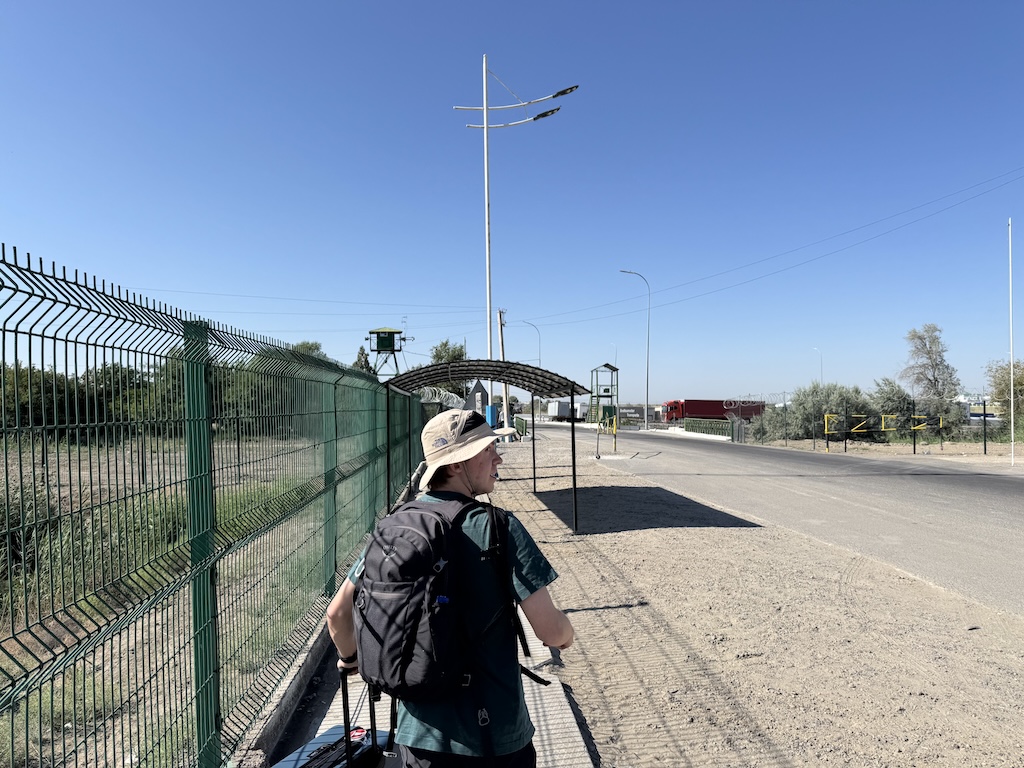
I’m not sure that we saw any other tourists in line, and it wasn’t even very crowded. Many of the crossers were probably either visiting friends/family and/or making some money by trading textiles, smokes, or alcohol across the border.
Ride to Merv/Mary
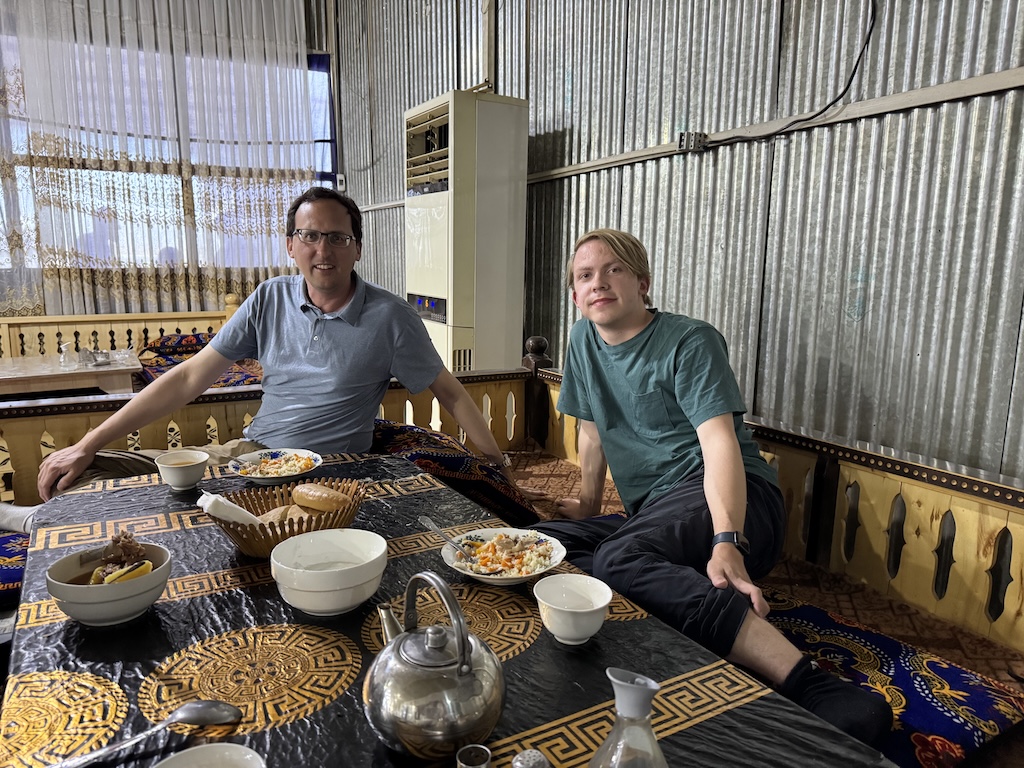
By 11am, we were in our car in Turkmenistan, and started driving through the desert to ancient Merv. By 1pm, we stopped for a late lunch, at the equivalent of a local rest stop restaurant. We had some tasty plov there. We were offered some fermented camel’s milk creme to dip our bread in, but having tried fermented horse milk a few days prior, we were not so adventurous. We also ran into some British tourists who were doing our itinerary, but in reverse.
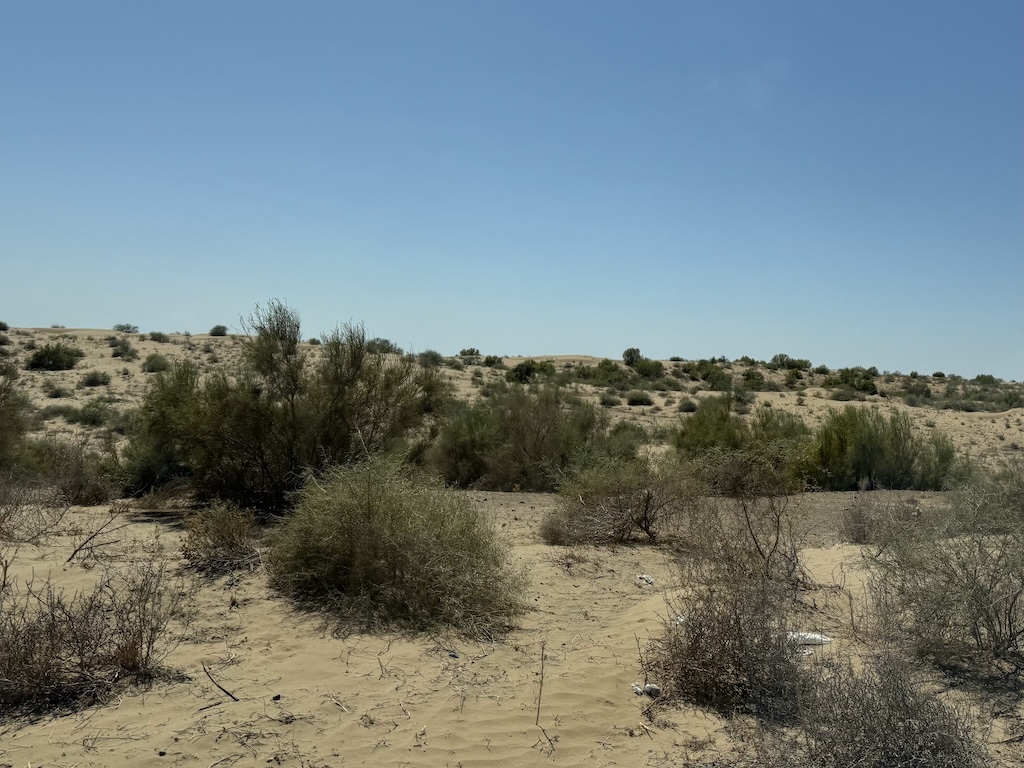
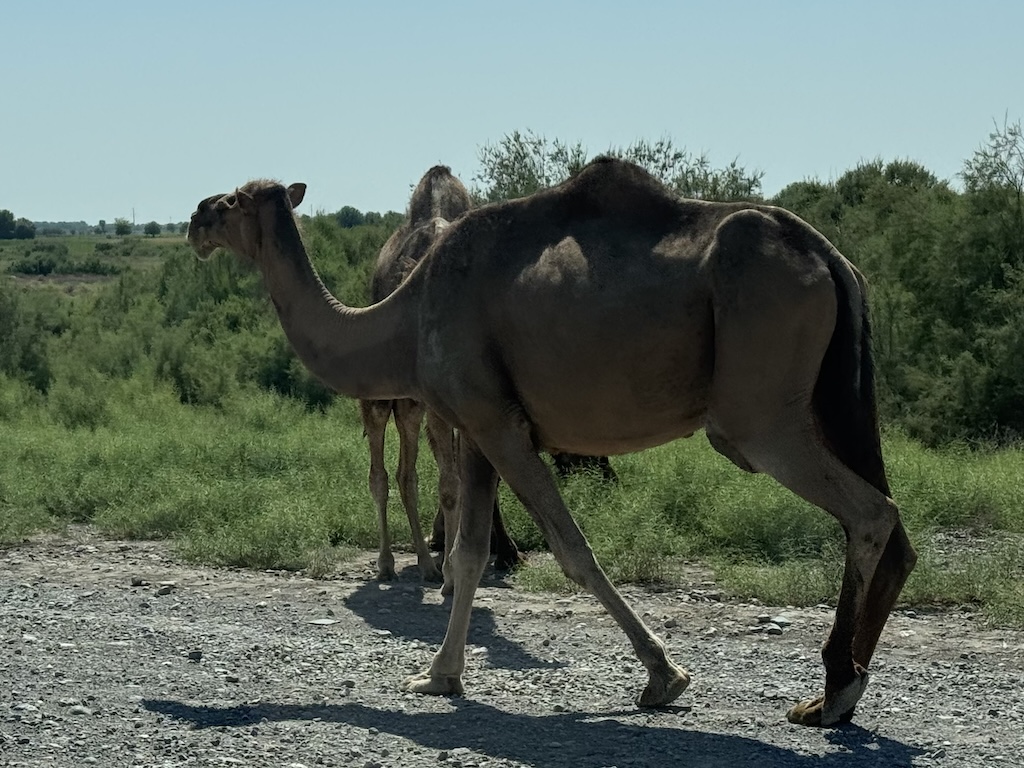
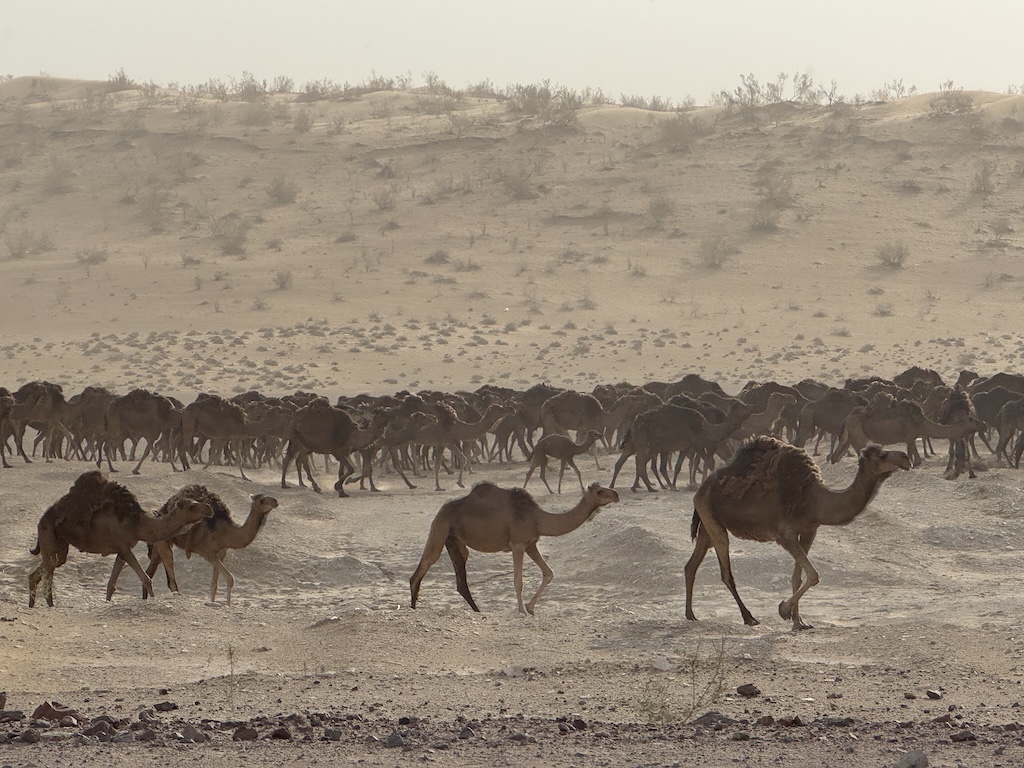
The surroundings on the drive reminded me somewhat of the Mojave desert in California. Turkmenistan has some very desert-y areas, but it also has some fertile agricultural areas that are watered with canal water from the mountains. Oil and gas power much of its present economy. The actual road was bumpy with lots of potholes, but our guide explained that there’s a new parallel highway under construction that they expect to be completed later in 2025.
Merv
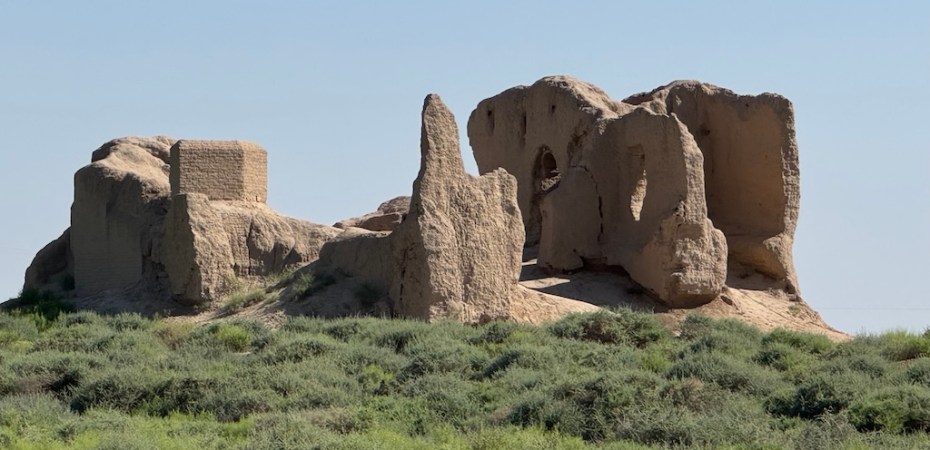
We made it to Ancient Merv at 4pm. Our guide explained that we would spend about 2 hours seeing the ruins there. The area was much nicer than I expected, I’m glad we visited. At the time, I’m sad to say we were more concerned about the heat (probably 40° C/100°), but they helped us by driving us from site to site in the area, giving us time to cool off in the air conditioned van between stops.
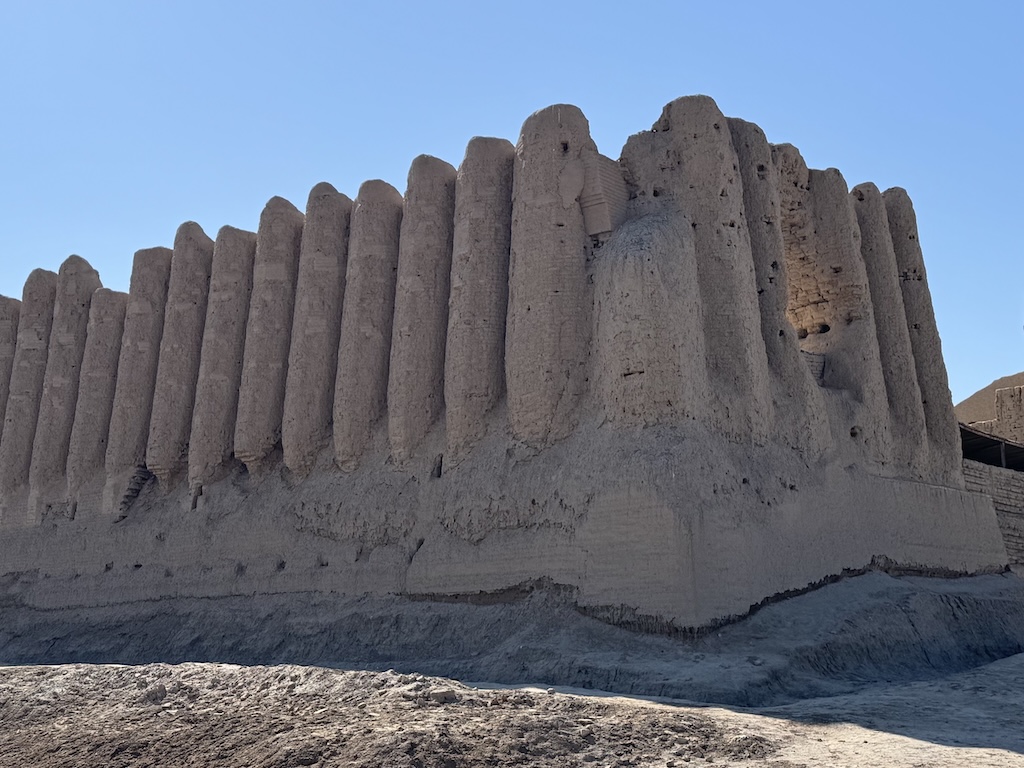
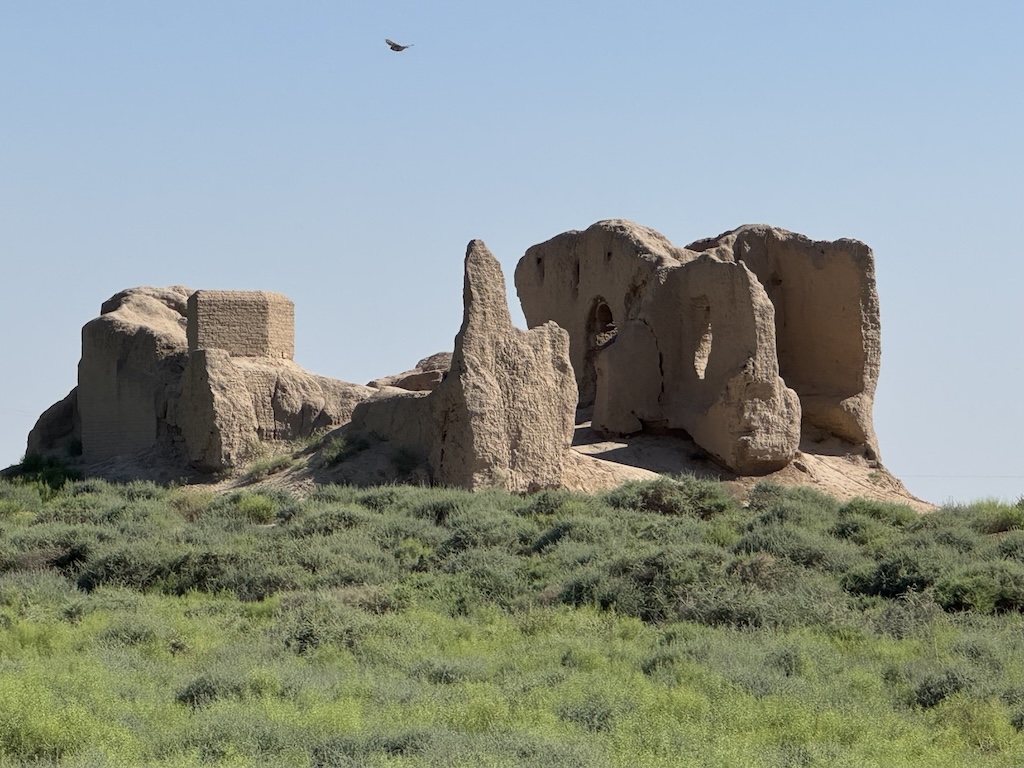
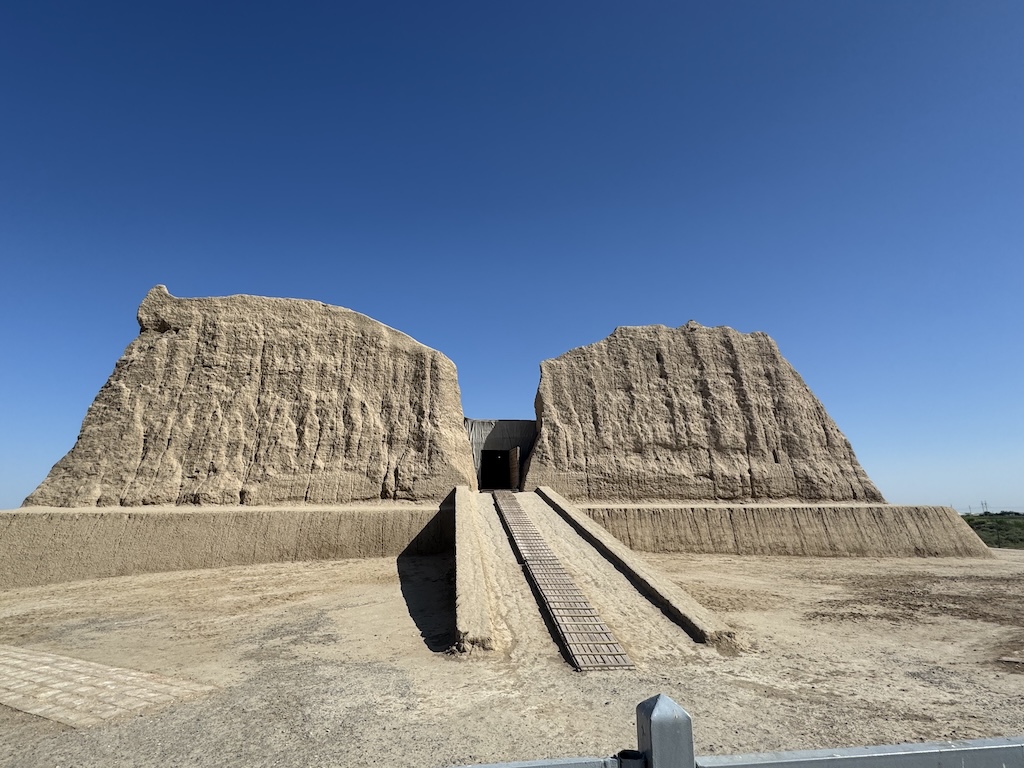
Merv’s mud brick buildings were similar in many ways to those in ancient Buchara, though they felt somewhat more extensive. The mausoleum was particularly ornate. There were some shrines, and apparently the area has been sacred to many groups (to Islam, to Zoroastrianism, and prior) for some time.
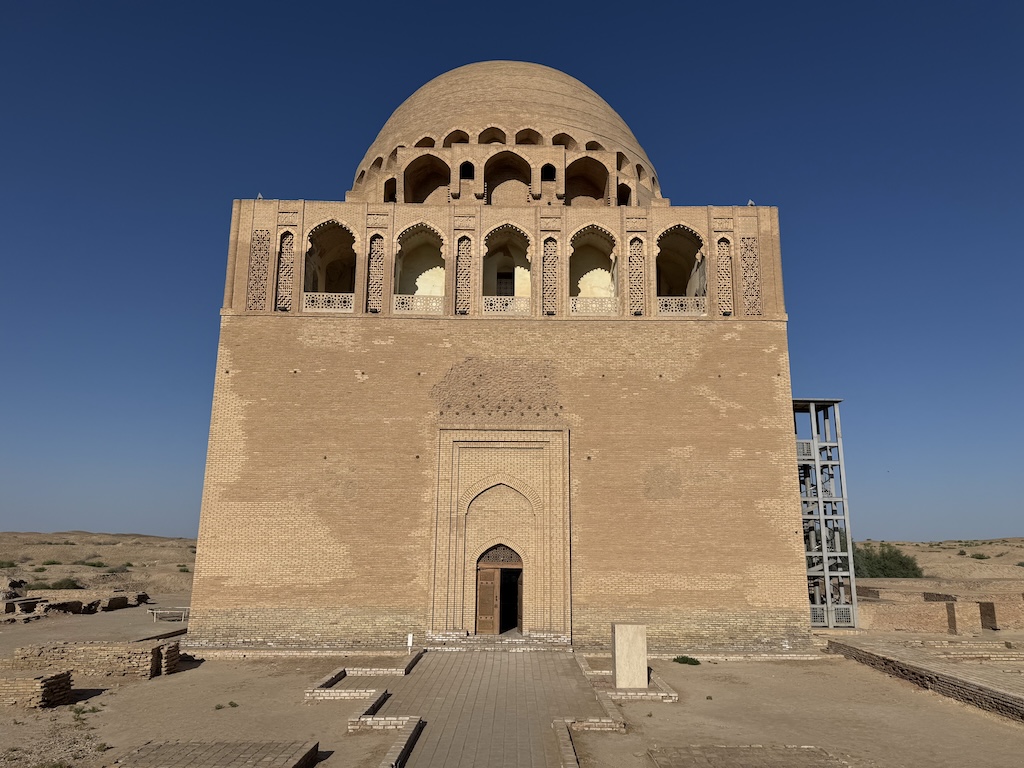
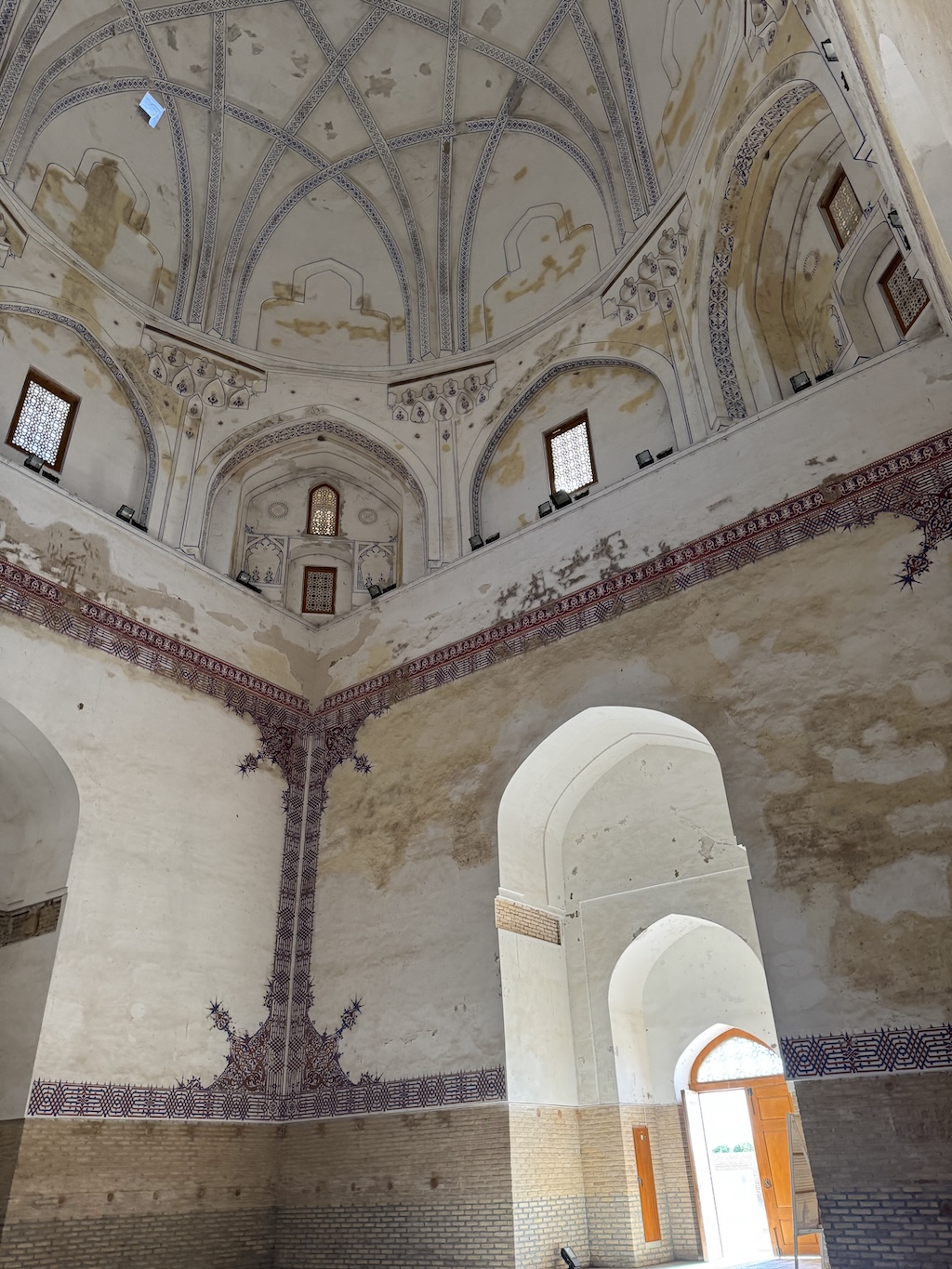
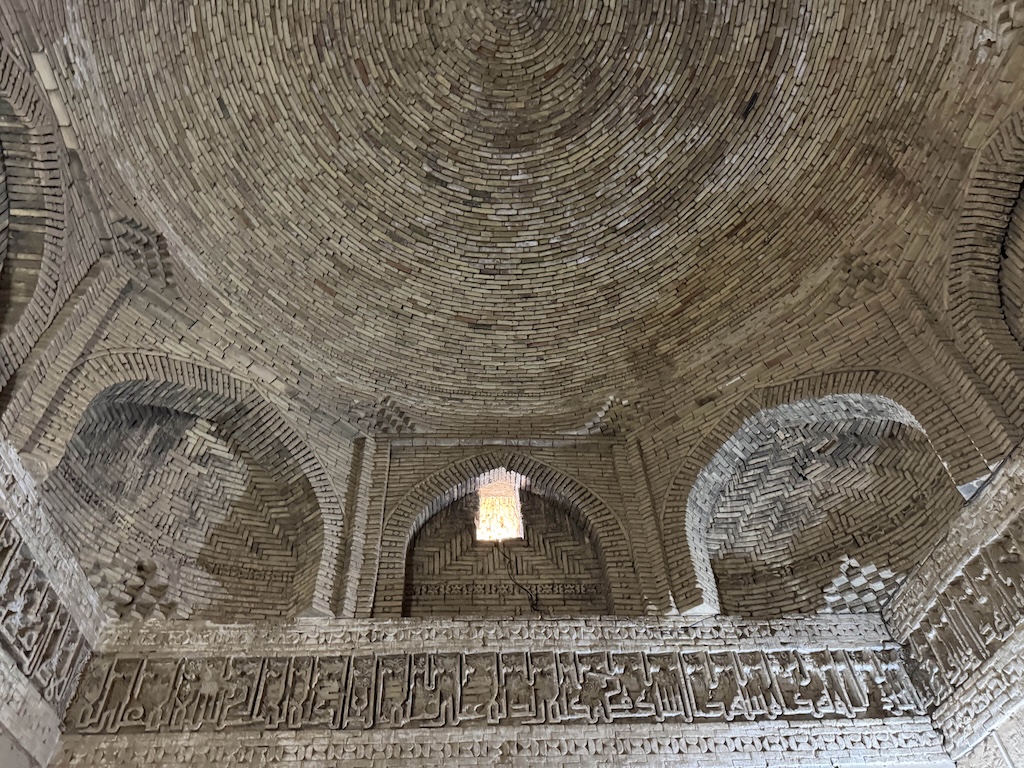
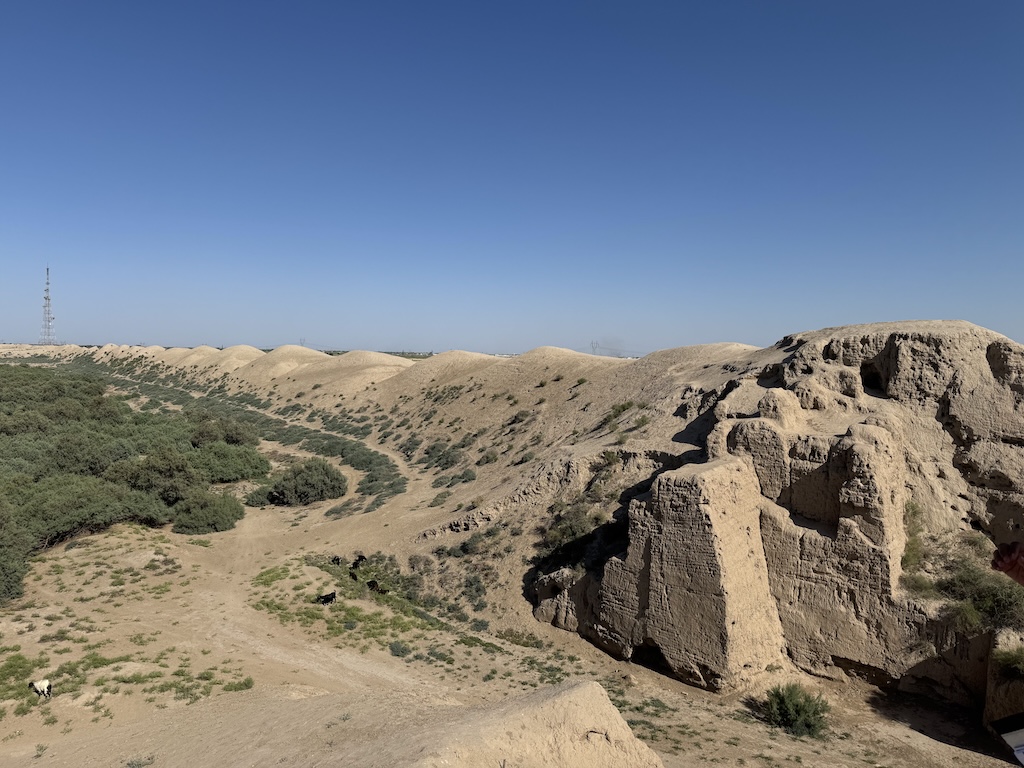
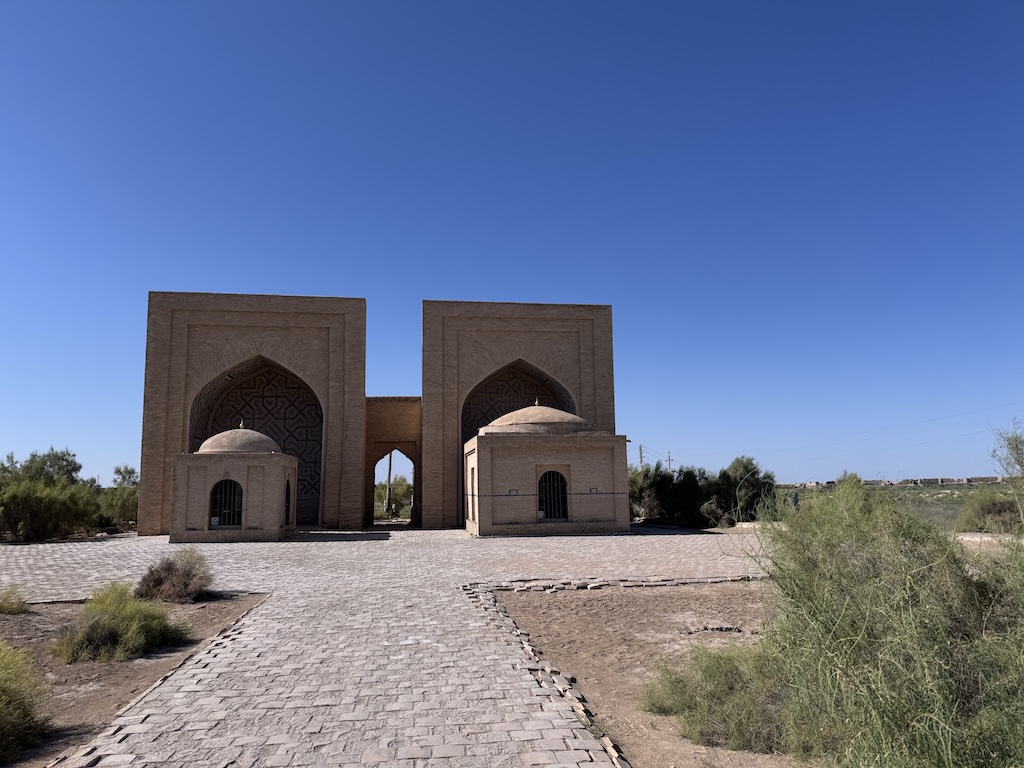
Per Wikipedia, Merv may have been the world’s largest city in the 12th and 13th century! It’s fascinating to observe ancient cities that once existed not so long ago and realize that we know nearly nothing about them in the west.
On to Ashgabat that night
After seeing Ancient Merv, it was perhaps 6:30pm, so we got some snacks for dinner – with our large late lunch, we weren’t particularly hungry for a full meal. We went on to the Merv/Mary airport, and checked in for a 9pm domestic hop to Ashgabat.
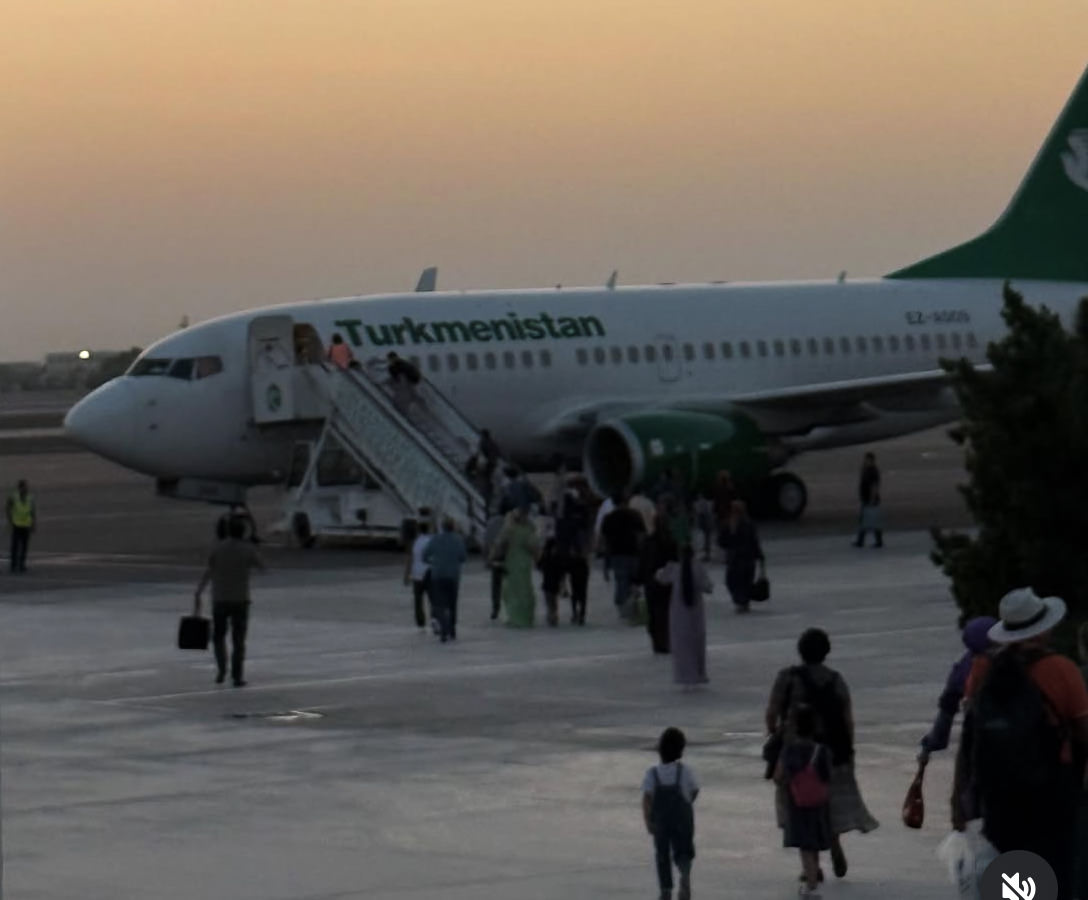
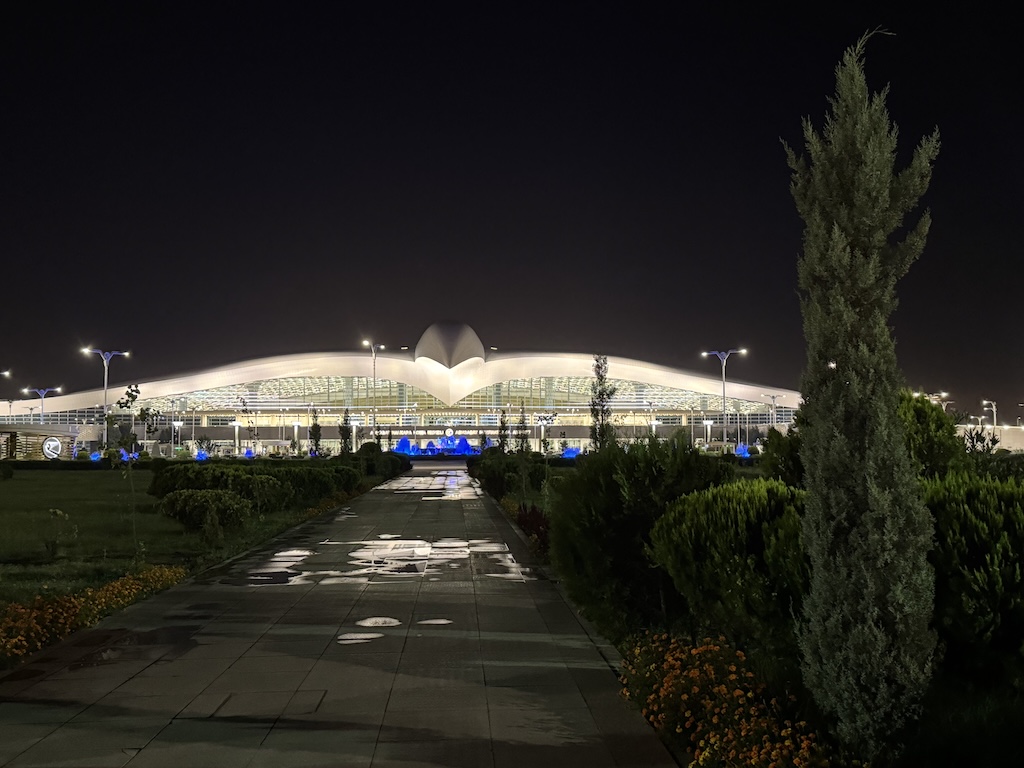
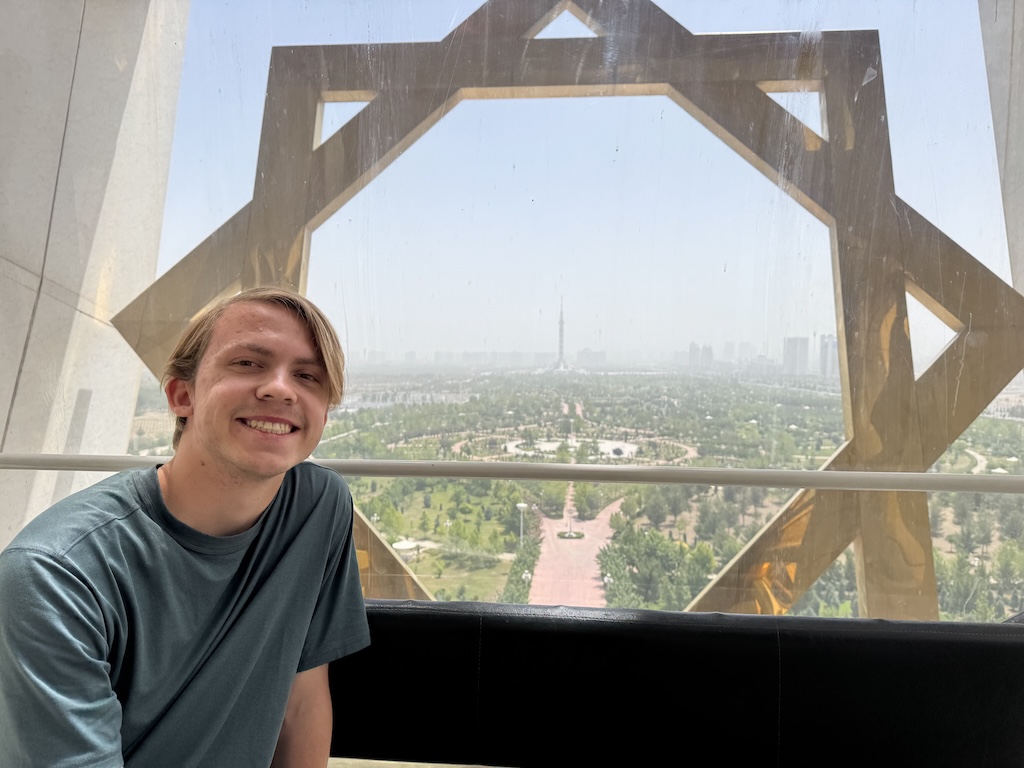
Ashgabat is the capital of Turkmenistan, and it’s full of showcase buildings and monuments, in many cases made of white marble. On paper, it is roughly a 4 hour drive from Mary/Merv. But with the amount of time that we spent in the car that day, it was somewhat more relaxing to instead take a short flight.
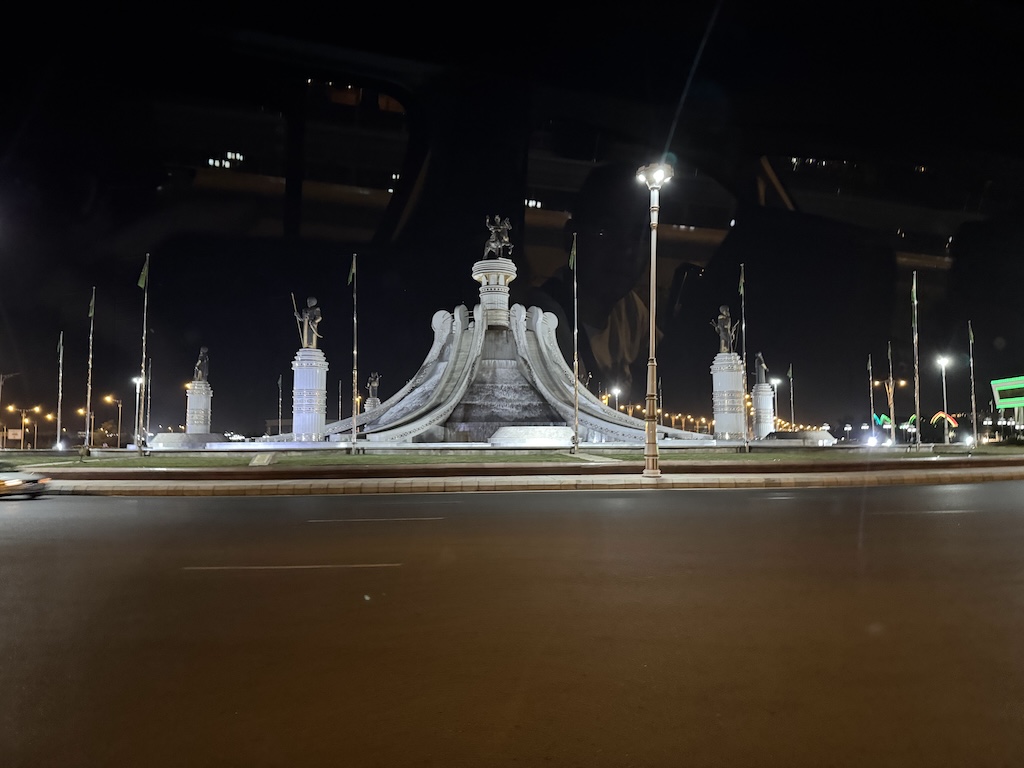
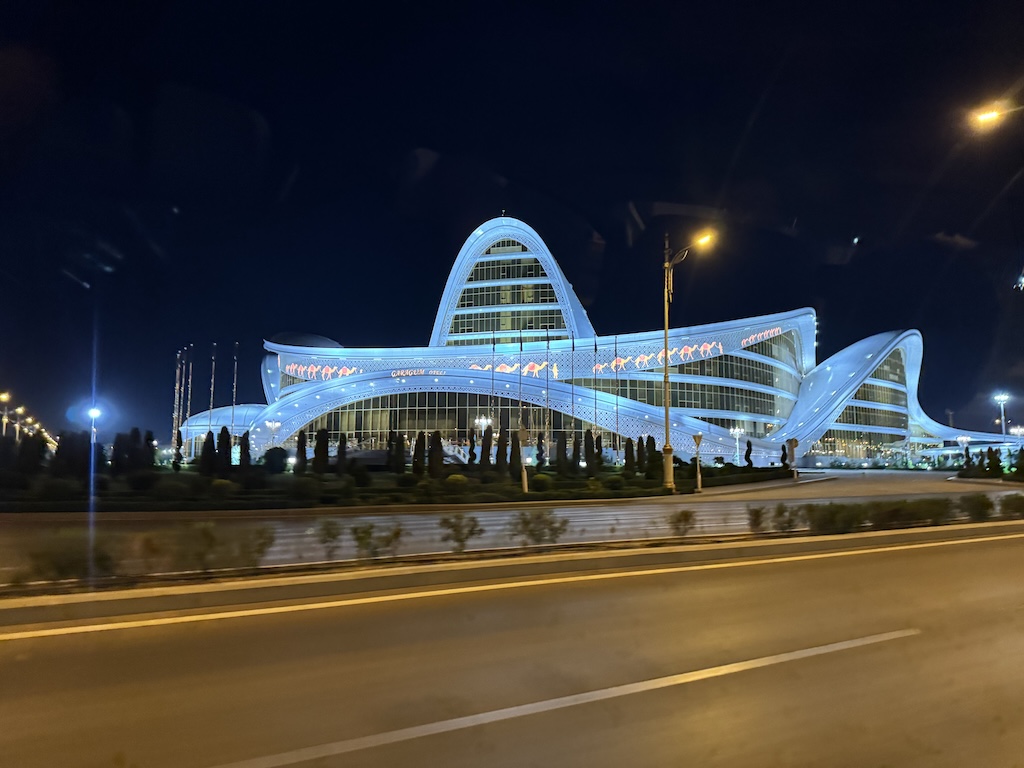
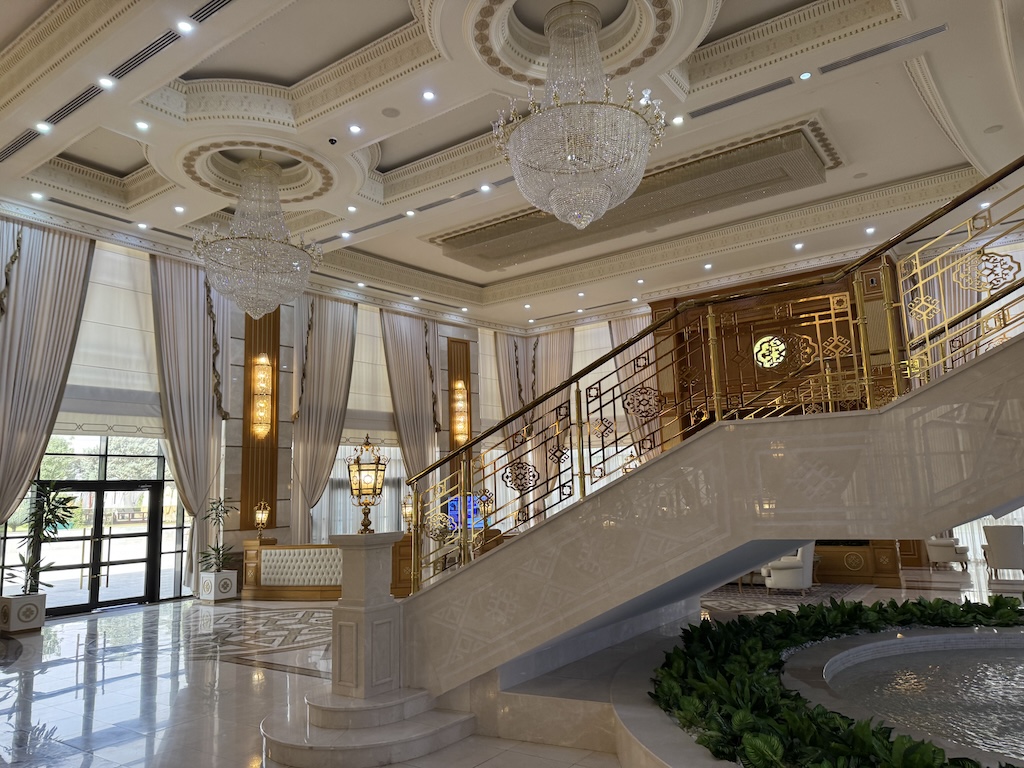
After we arrived in Ashgabat, our guide walked us to the car waiting for us, and got us to our hotel. Some of the buildings along the way were somewhat lit up and showy in this desert area, almost in a Las Vegas way (“Ash-Vegas” our guide joked). It was good to see, but we were quite tired after a long day, almost immediately falling asleep that night. It was a nice first day in Turkmenistan.
More From Our Blog
Keep reading our travel blog for more adventures in Central Asia:




 Adventures of the 4 JLs