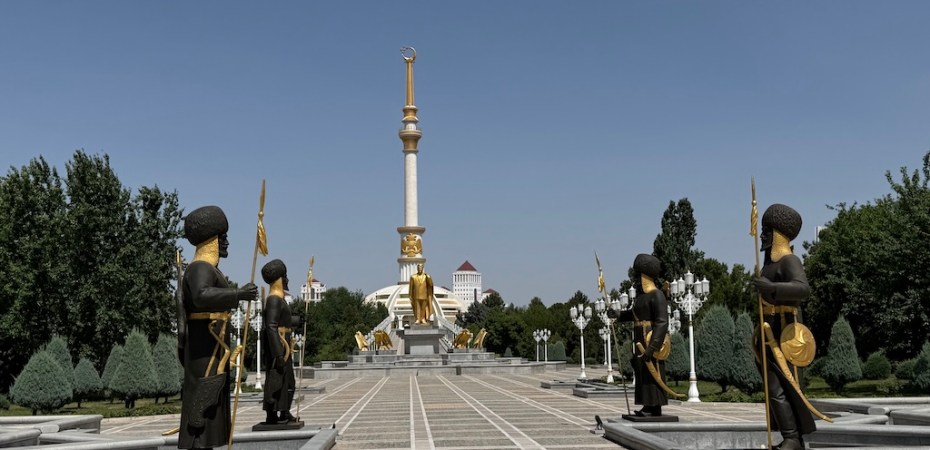
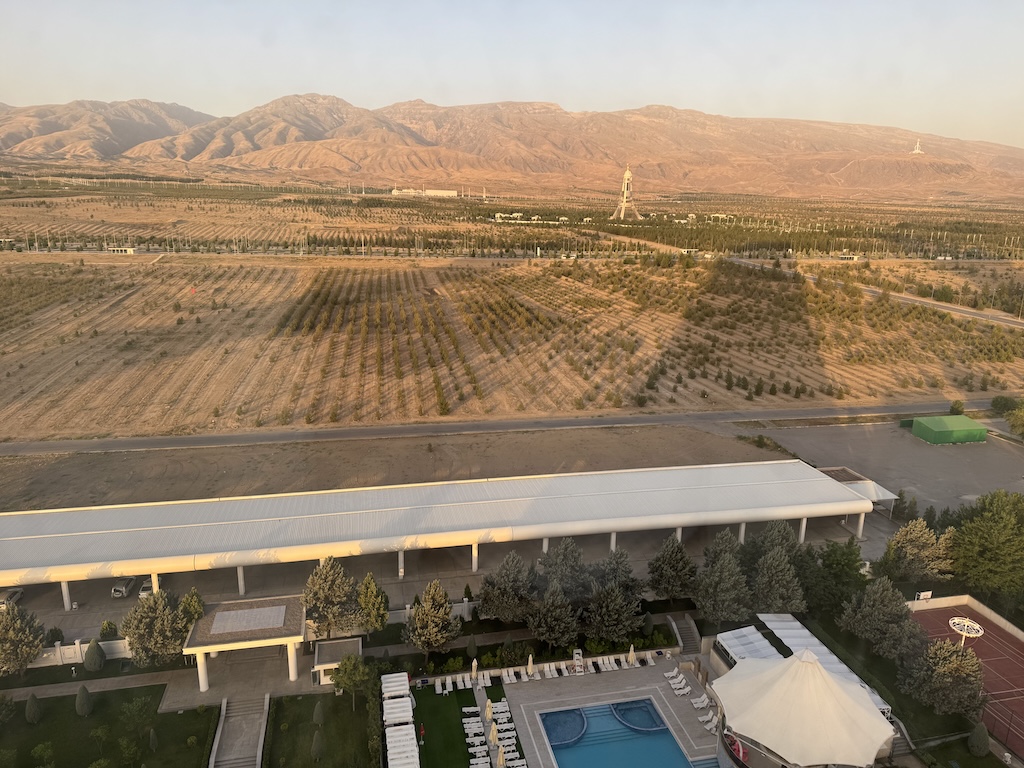
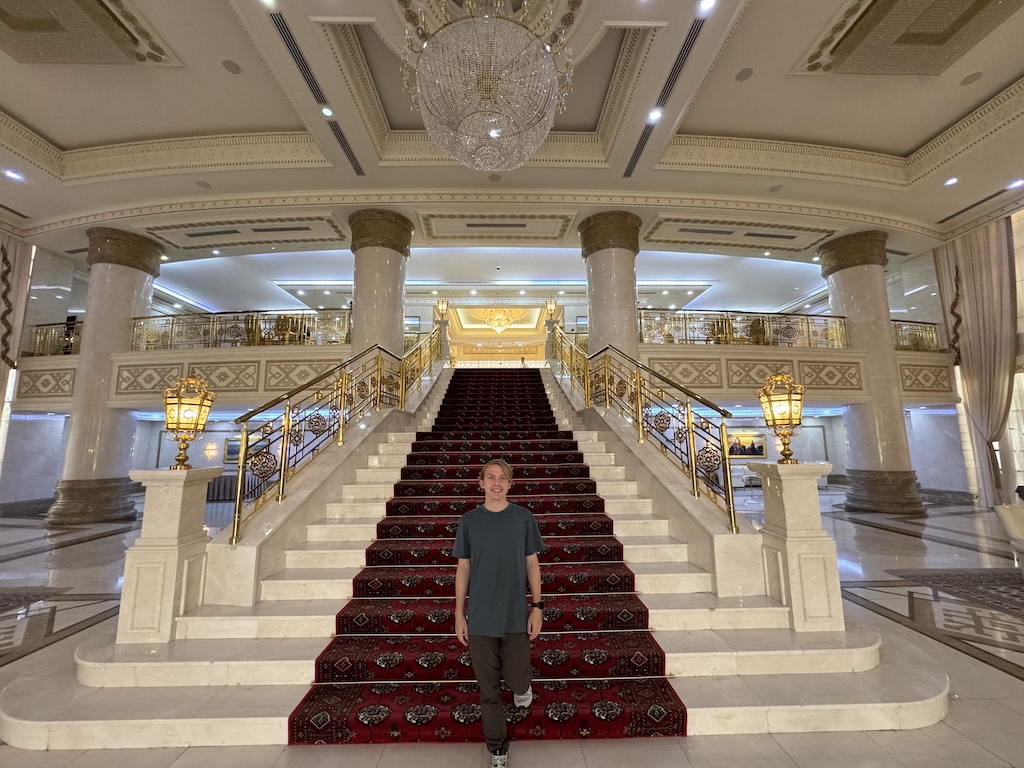
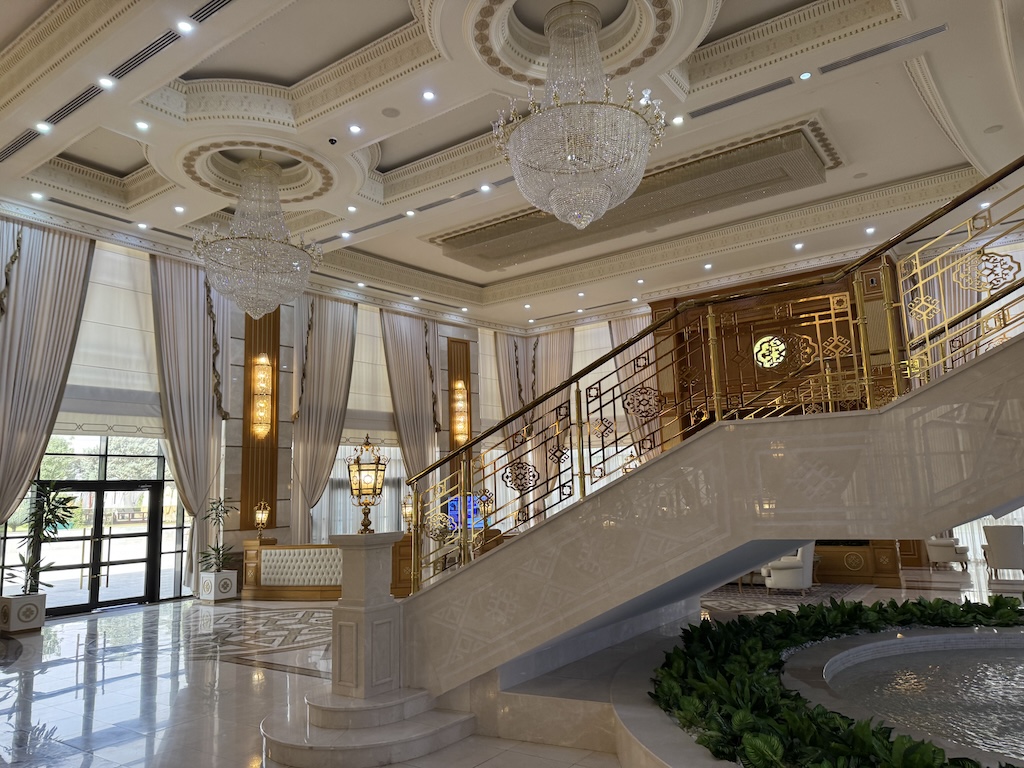
On our second day in Turkmenistan, which we did as part of my son’s graduation trip to the Silk Road, we woke up in the capital, Ashgabat, ready to see the surrounding area. The actual hotel and its grounds were quite nice. Since Turkmenistan currently requires tourists to be on a guided tour (see our previous post for more details), we were met by our guide and driver.
Around Ashgabat
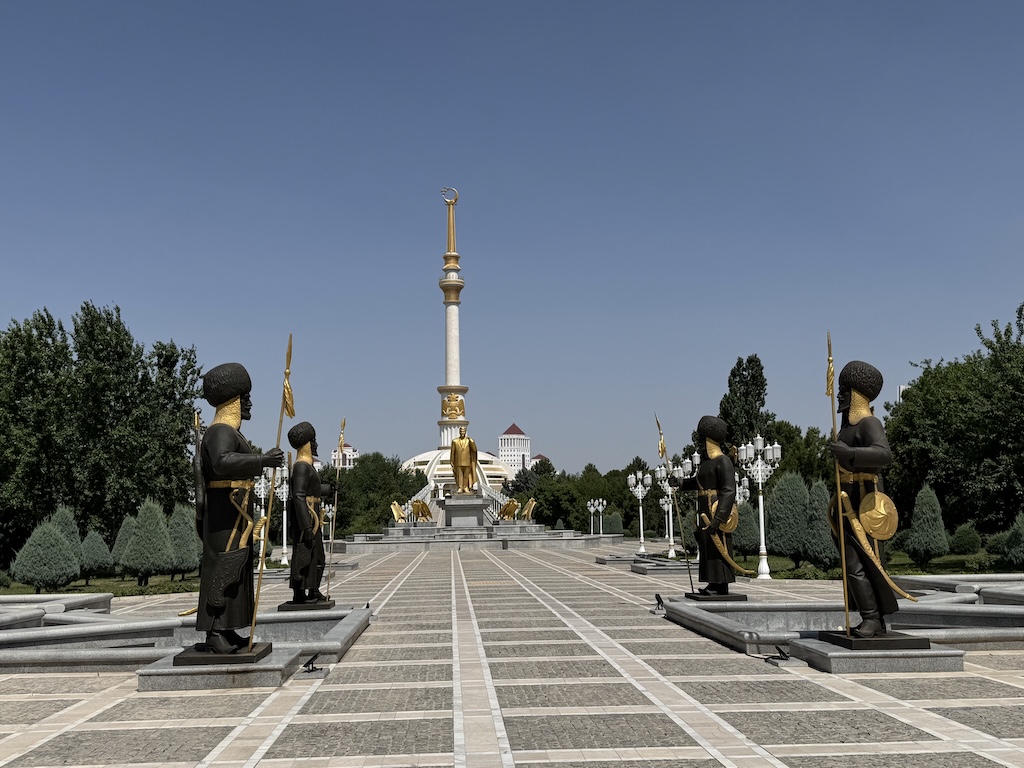
One distinct thing about Ashgabat its vast collection of white marble buildings and monuments. The government has used some of the country’s oil wealth to build these showcase buildings. While it may strike some as eccentric, other world capitals have their showpieces as well. Beyond the white marble buildings, all cars driven in the capital must be white or silver.
Alas, that morning as we were leaving the hotel, a dust storm started blowing in, and it was harder to photograph the buildings well and convey the atmosphere.
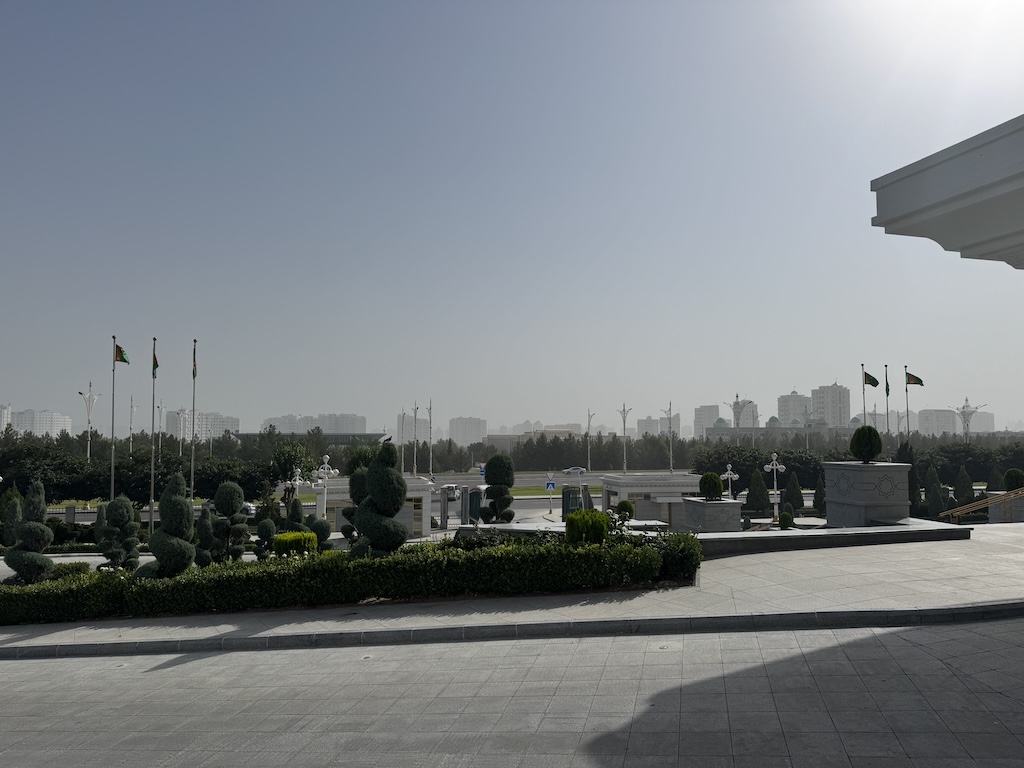
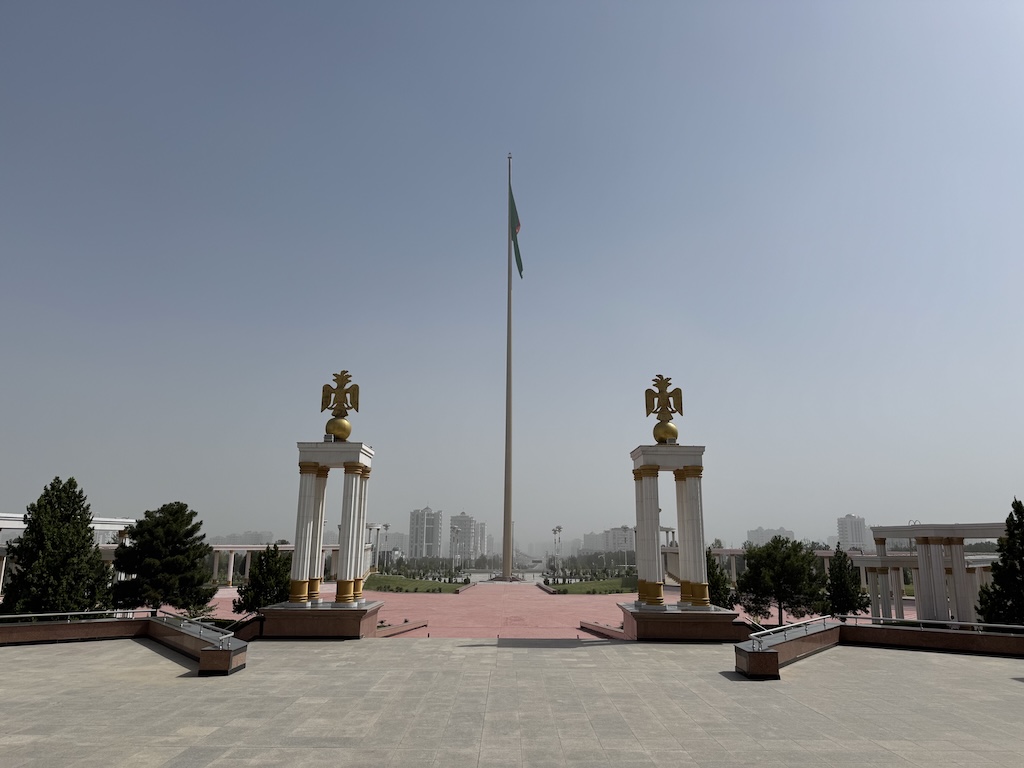
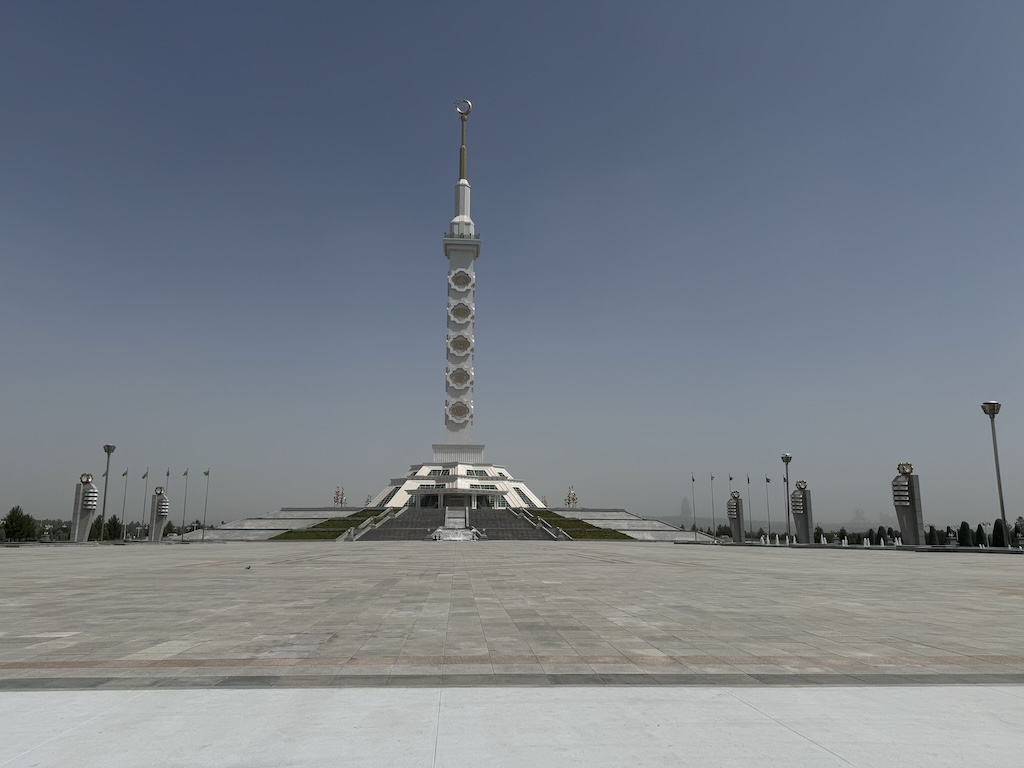
For a few of the government buildings, our guide nicely told us that photography wasn’t allowed, but there weren’t very many in this category. I think the oddest government ministry we heard about was the “Ministry of Carpets.” We also learned that there used to be a government “Ministry of Horses” until they renamed it to the “Horse Association” (horses were historically very important in their culture).
State Museum of Turkmenistan
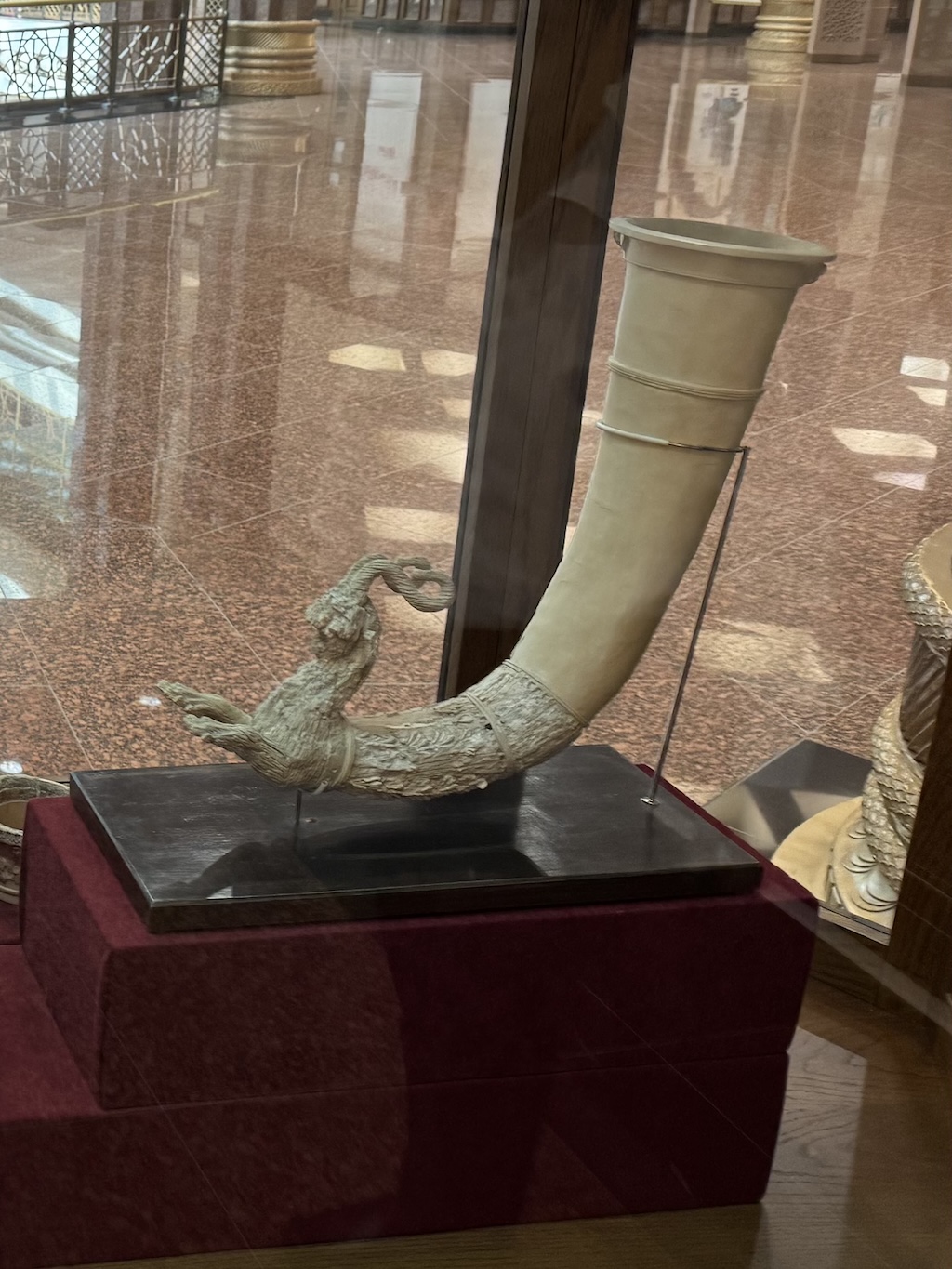
Our first visit was the State Museum of Turkmenistan. We were given a guided tour in English by one of the museum staff. It was an interesting tour, which encompassed some ancient artifacts (like an elephant tusk used to hold wine), a huge rug, and photos of their leader, which are fairly common around the country.
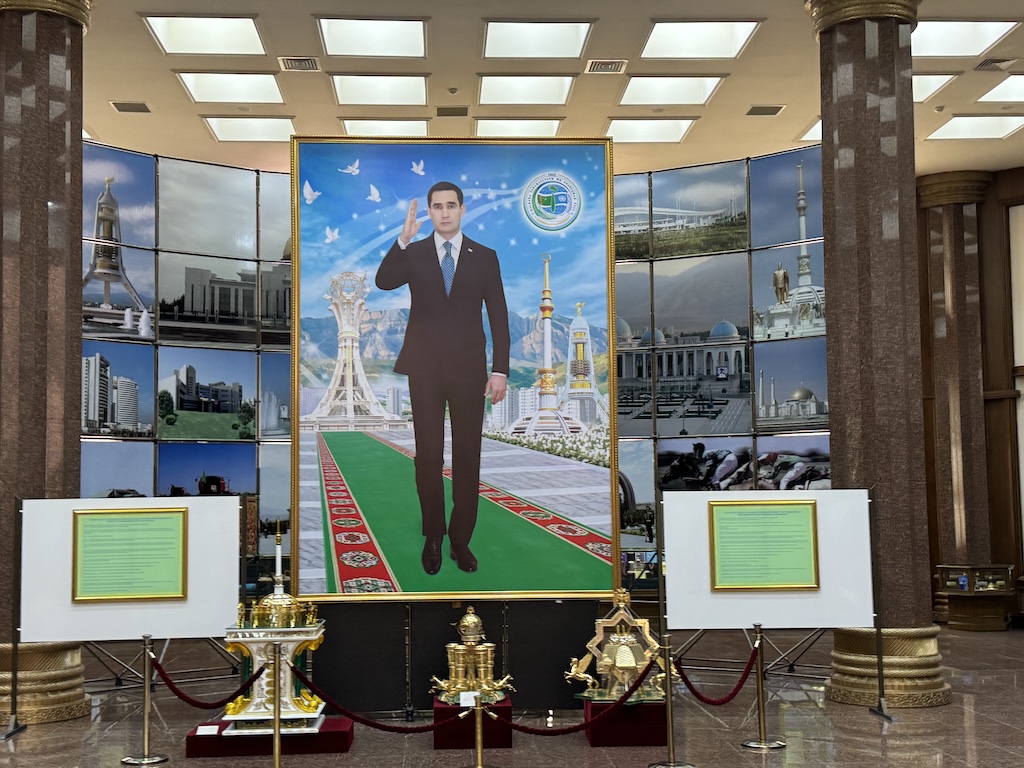
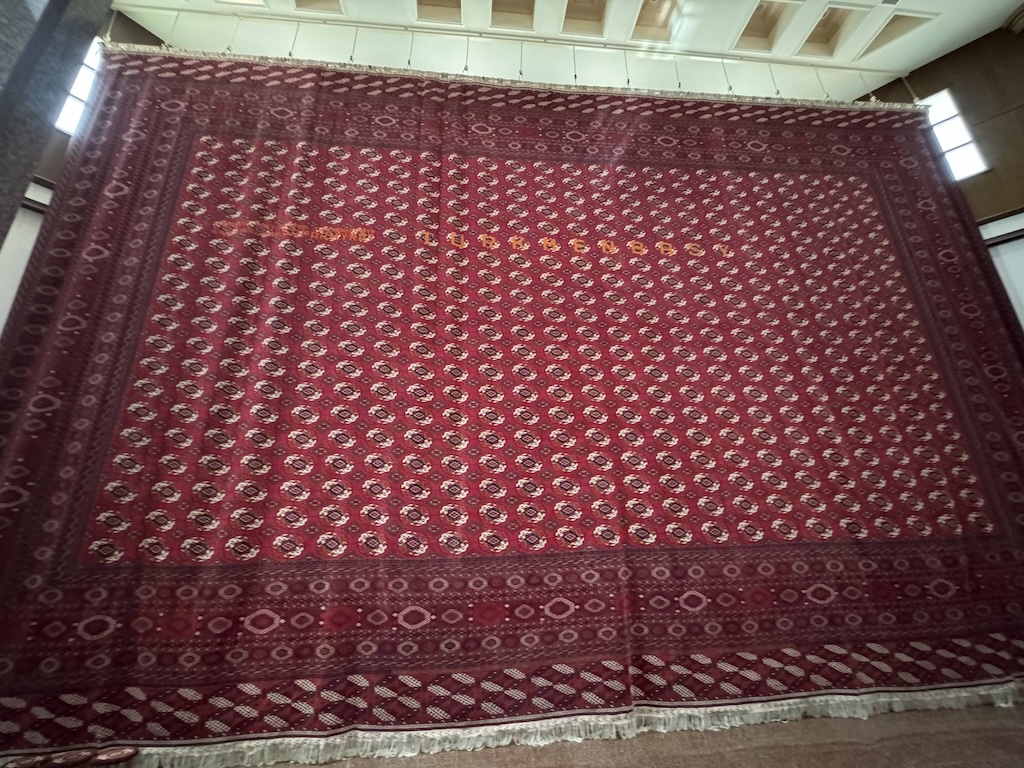
One thing that was impressed on us is that after independence in the 90’s, the Turkmen people had to discover their national identity. During Soviet times, the Turkmen were mostly been told by the Soviets that they had been nomadic people with no real history. The post-independence leaders dug deeper and realized that they did have a rich history, and helped forge a more distinct national identity for the people.
The Ferris Wheel
One random stop we made around the city was at the “world’s largest indoor ferris wheel.” My son James’ eyes just lit up when he saw it. Our guide was a genuinely nice guy; he saw James’ interest, and asked the driver to pull around back so we could ride it. We were the only ones in the building besides the staff; I suspect it’s mostly used at night when it’s cooler and the city is lit up. It was fun and we got a view of the city.

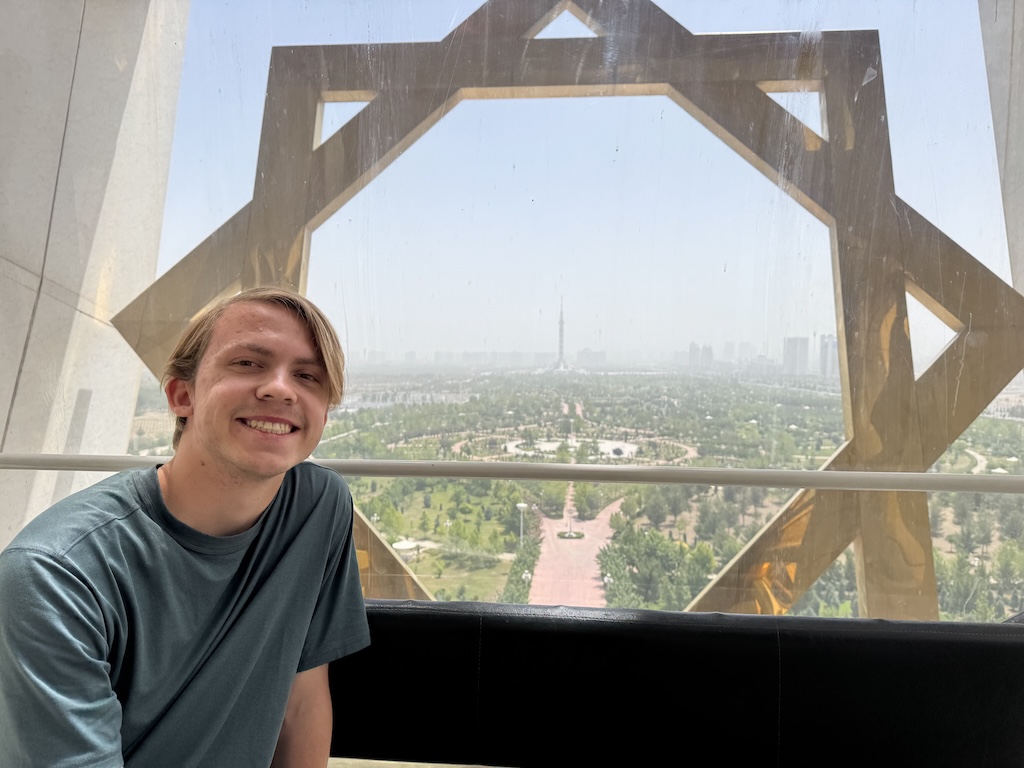
One thing that you can see from the picture background above is that, even though though Ashgabat is a very hot, desert city, the government has been planting lots of trees all over to try create cooler and less dusty micro-climate effects.
The Ancient City of Parthaunisa
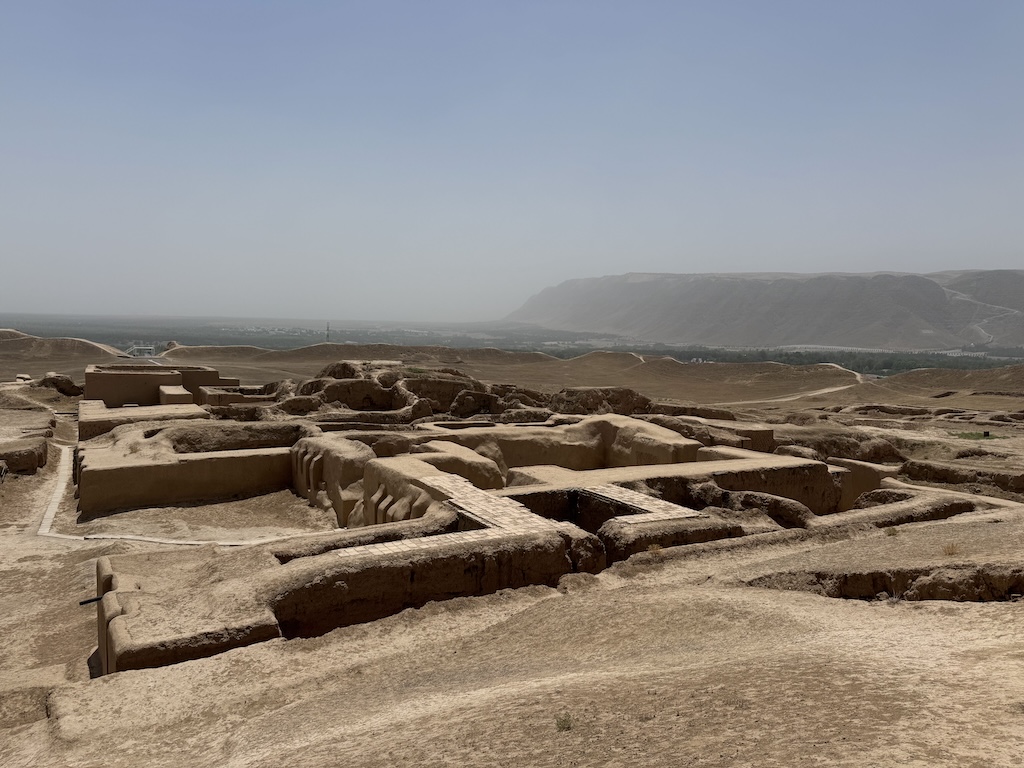
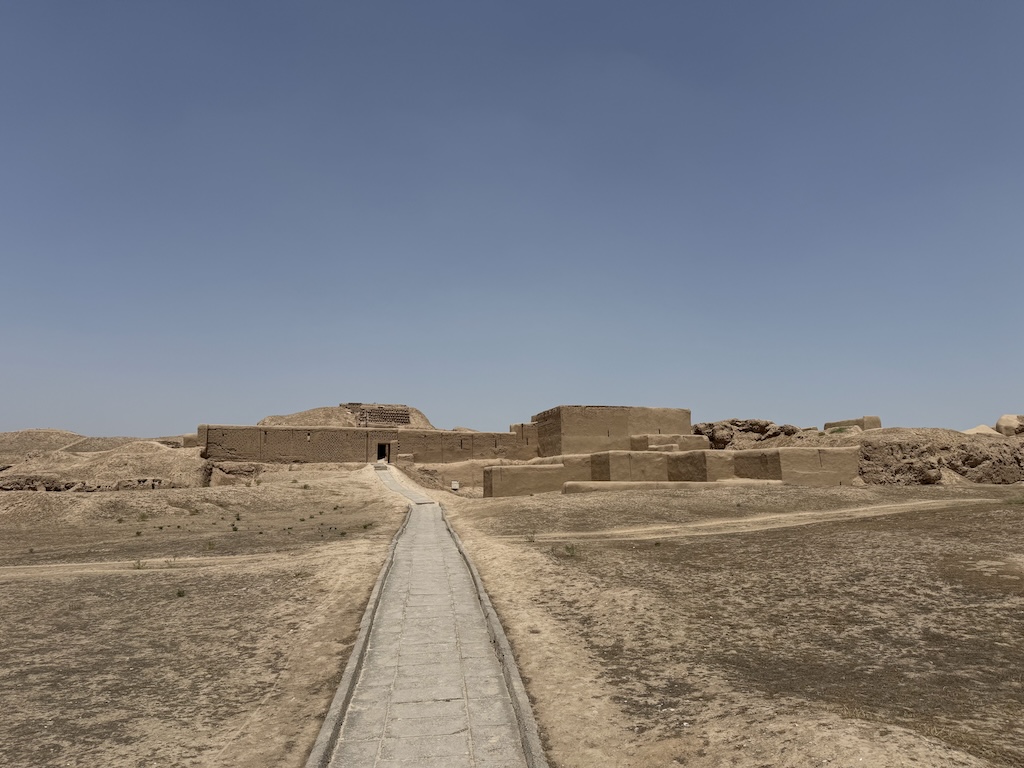
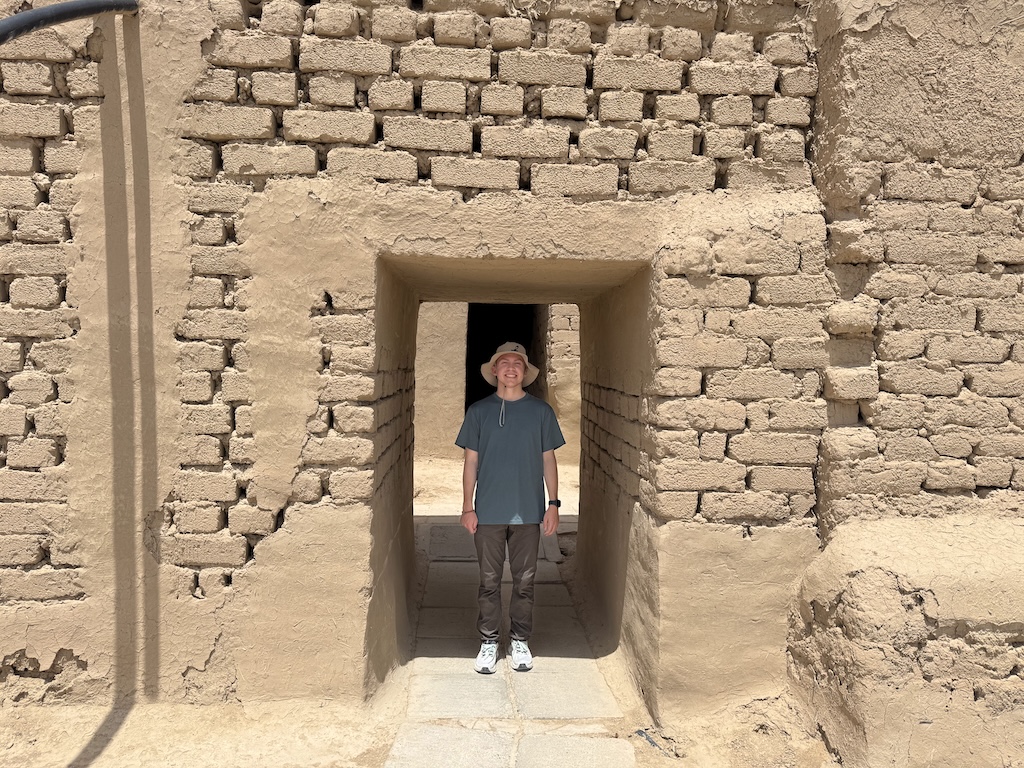
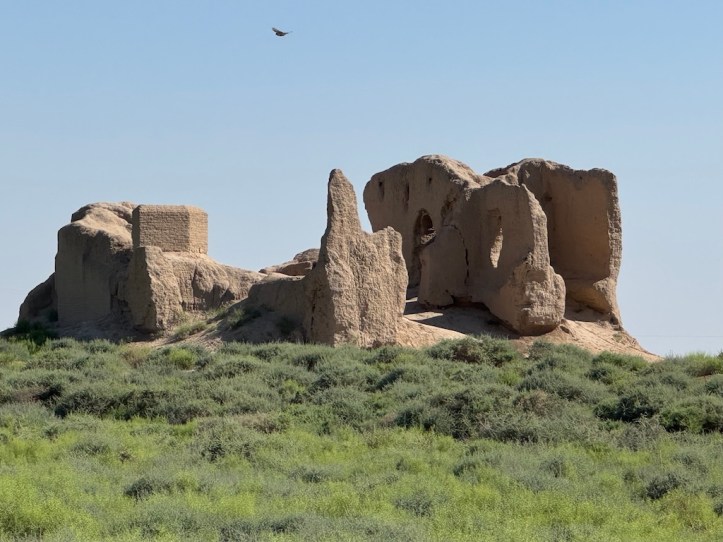
After seeing the basics of the city center, we drove to the outskirts of the city, where there are the ancient ruins of Parthaunisa. The ruins were well-restored, and it was an interesting tour. In the distance, you can see the mountains that delineate the border with Iran.
After that, we did quickly try to pick up a snack to bide time for lunch, but realized that it made more sense to wait until we got closer to the city.
Mosques
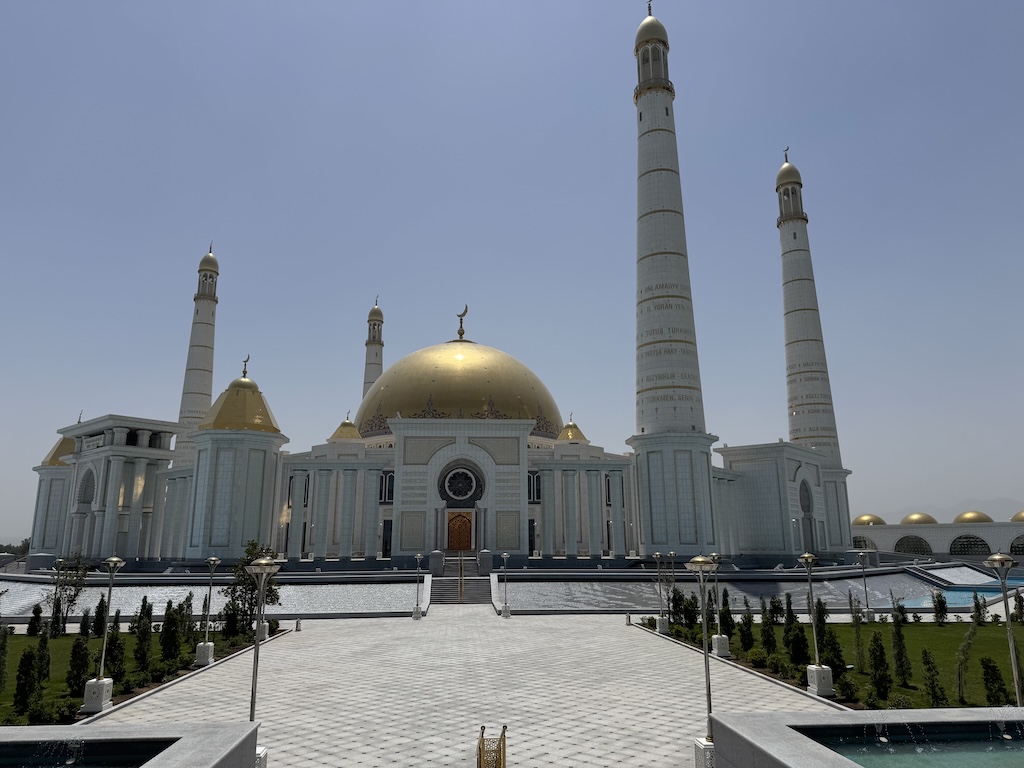
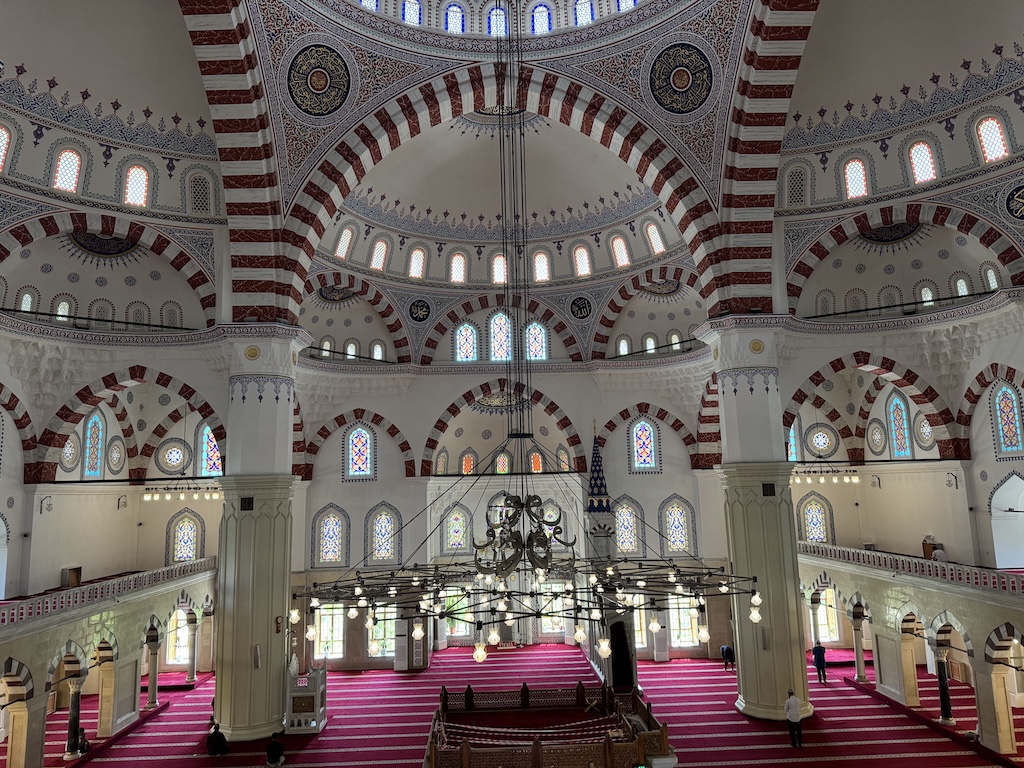
From there, we saw the Türkmenbaşy Ruhy Mosque, just west of the city, which was the biggest mosque in Central Asia when it was completed in 2004. Our guide mentioned that, at the time, the Saudis offered to pay for it on condition that it would be staffed with the Saudis’ [radical] Wahhabi mullahs. He felt that the Turkmen government had been wise to pass on this offer; in countries that have accepted these offers, it has led to radicalization.
Next door was a mausoleum for the first President Niyazov, with tombs for him and his family, including some killed in a large earthquake in 1948. No photos there, though. We saw the changing of the guard, though, which happened at 1pm.
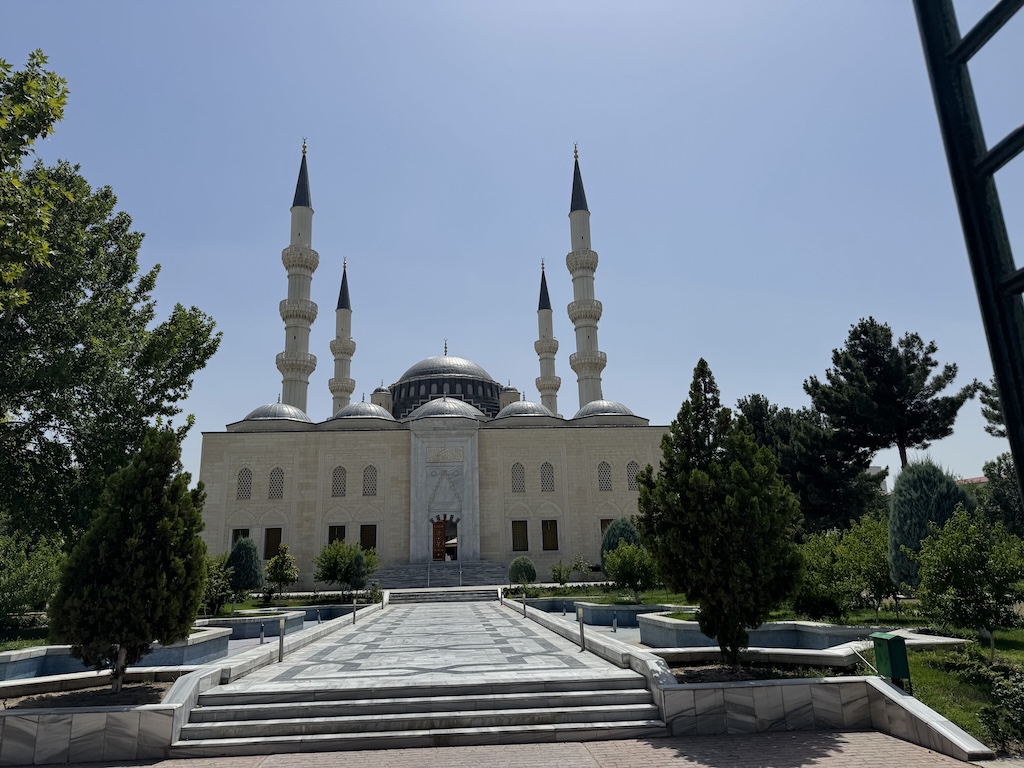
After lunch (out of order, grouped here for consistency), we visited the Ertugrul Gazi Mosque in the city center. We have both mosques pictured below.
Lunch time / Market / Finishing Ashgabat
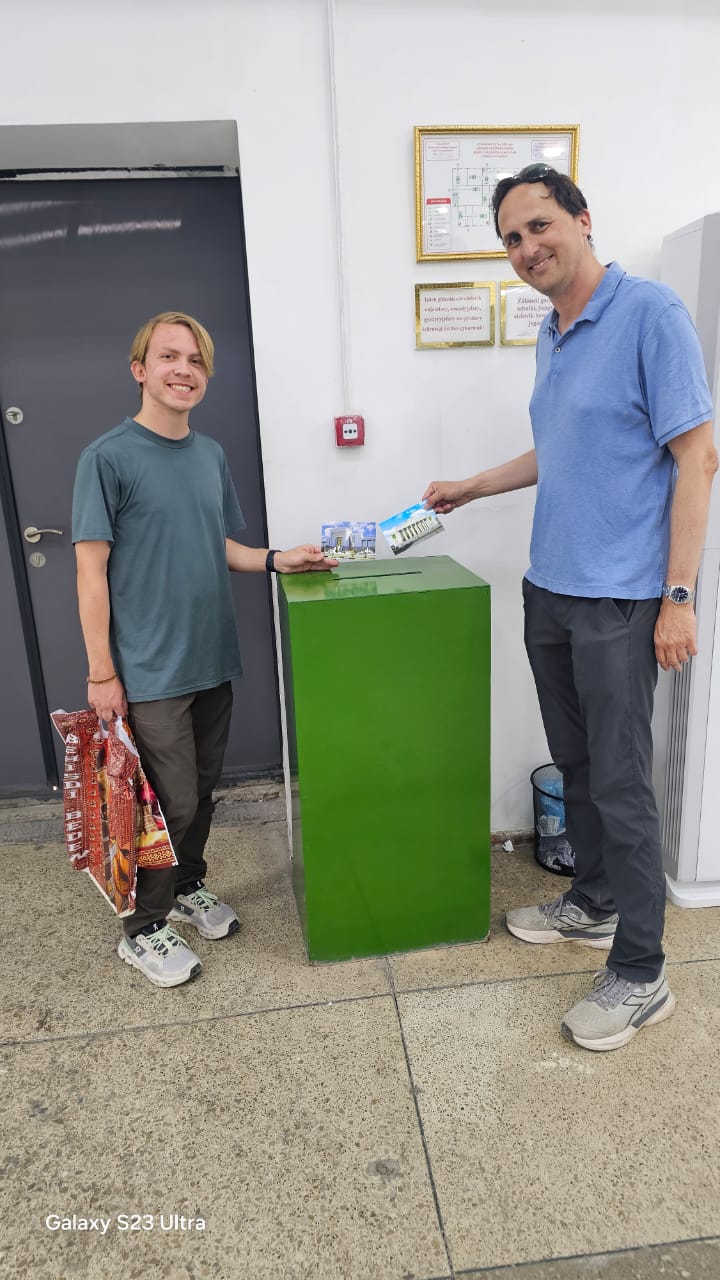
We had a late lunch, where we enjoyed shawarma sandwiches. In addition, we went to the nearby market, where we bought a few souvenirs, and some a couple of postcards. We wrote the postcards – the only ones of our trip (how often does one get a postcard from Turkmenistan?), and our guide took our photo dropping them in the mailbox.
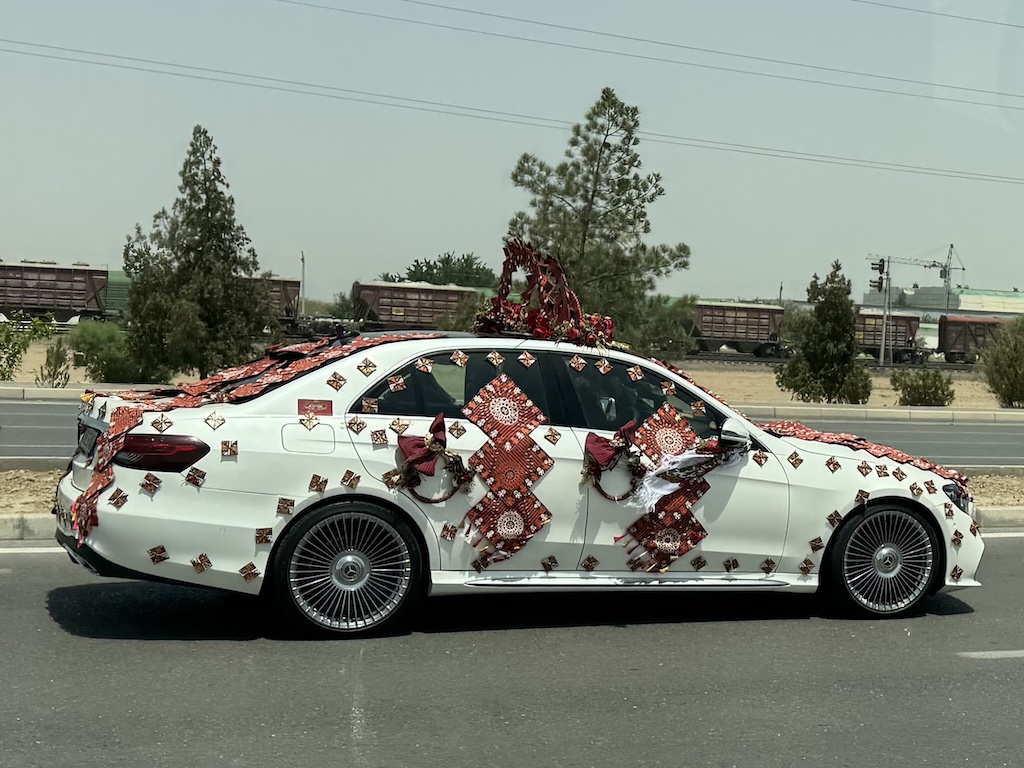
While we were driving around town, we learned that it was common to decorate one’s car for events like a wedding or graduation – below is an example of such a decorated car.
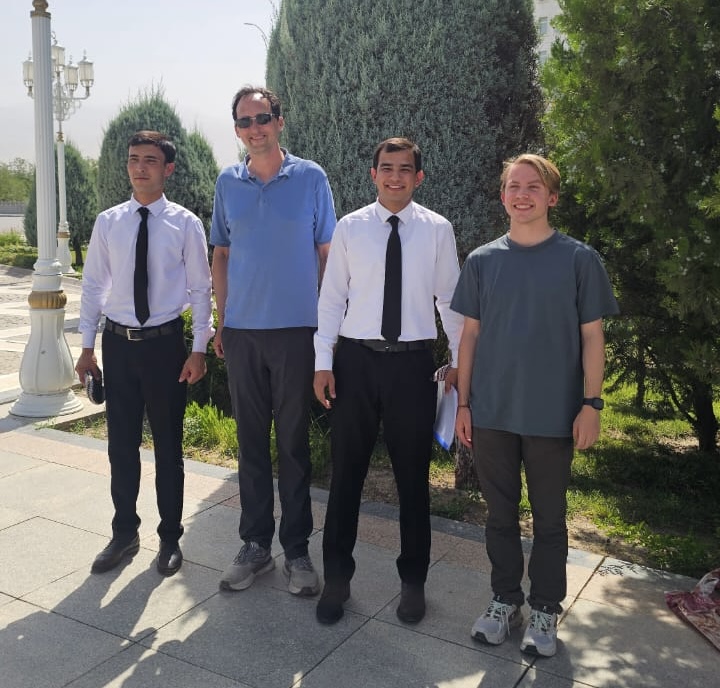
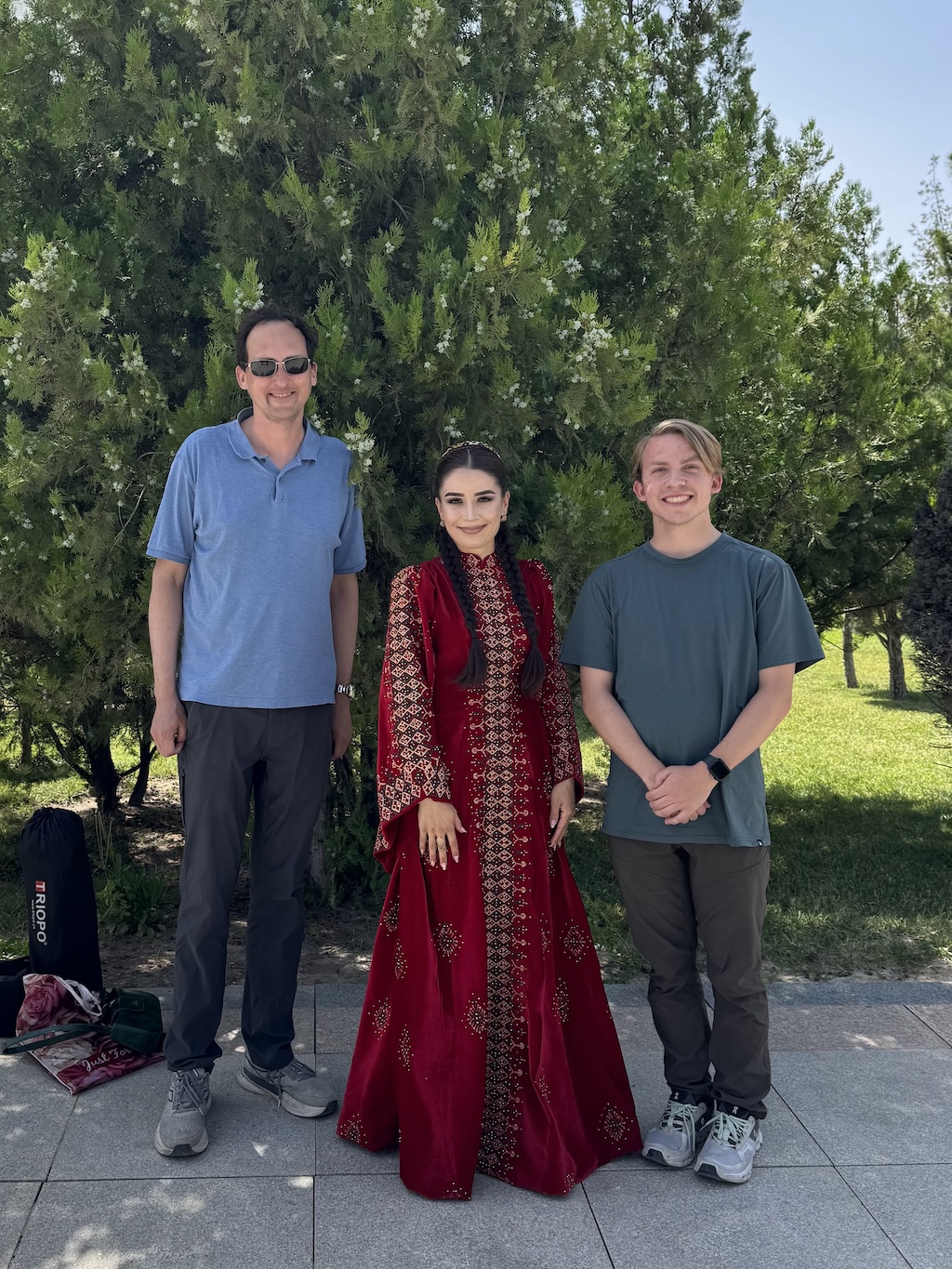
As we were concluding our time in Ashgabat (I believe the plan was to leave town roughly 4pm), we went to a monument where it’s common for folks to get photos. There were some men and women there who had just finished university and were getting photographed in their school uniform attire. This was maybe a little odd, but our guide encouraged us to have our pictures taken with them and talk with them, so we did. Anyway.
On to the Darvaza Gas Crater
As we got ready to leave Ashgabat, we switched vehicles from a van to a 4×4, and got a different driver. It was explained to us that the roads to the Darvaza Gas Crater were very rough, and that the pot holes were big enough that it would make sense to off-road in parts. Wonderful.
What is the Darvaza Gas Crater? The background is that it’s a large crater which emits natural gas, that the Soviets accidentally set on fire in the 1970’s when trying to drill there. It’s been burning ever since, though recently, the government has been trying to divert some of the gas underground so that they can sell it rather than just let it burn.
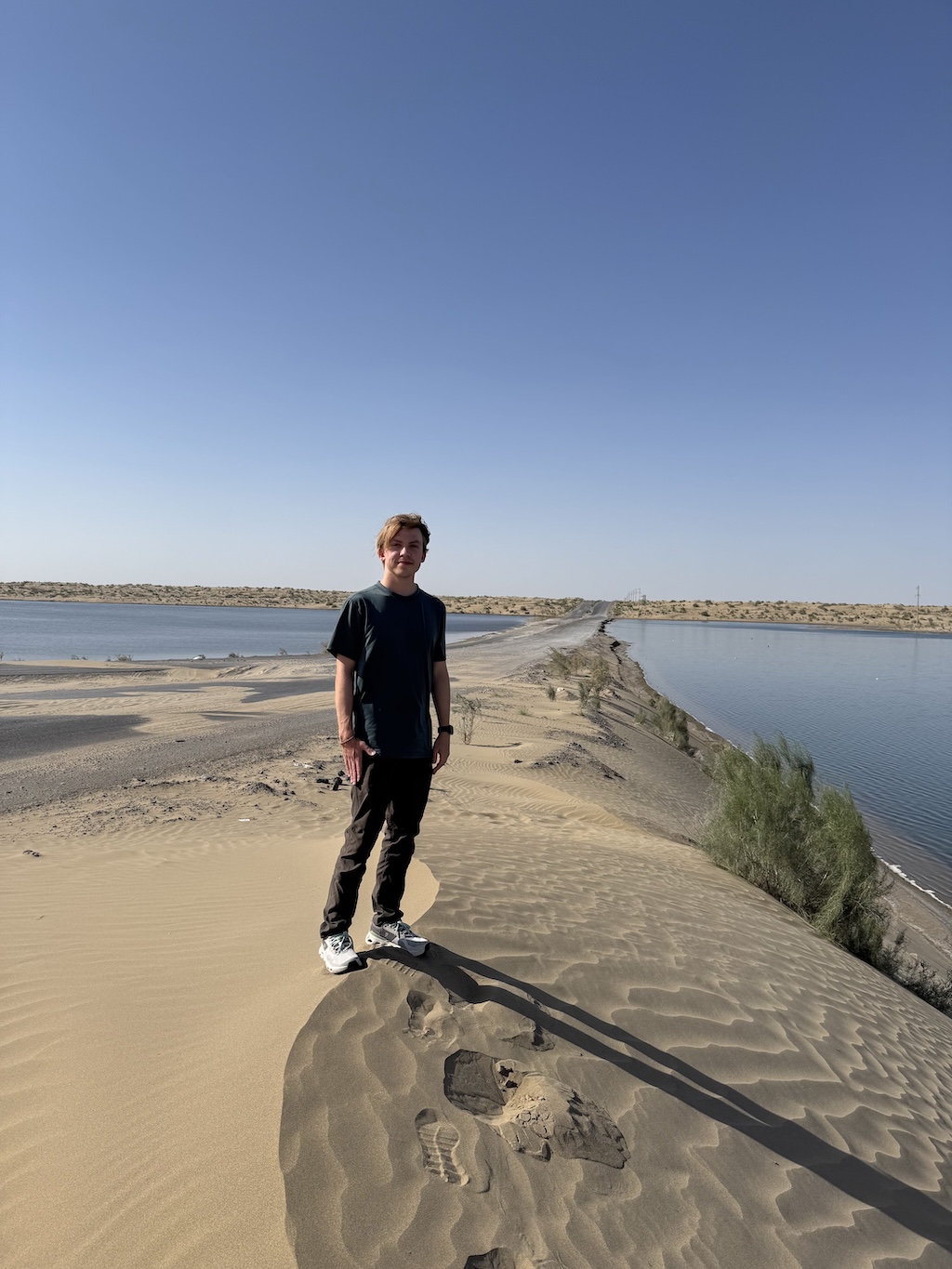
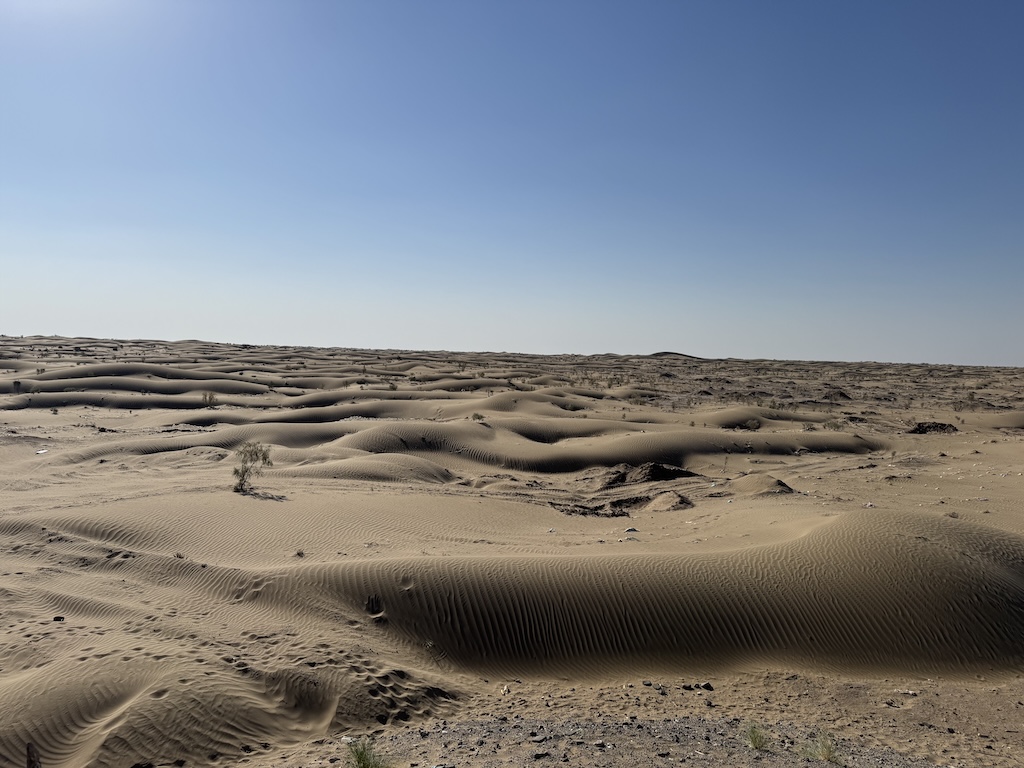
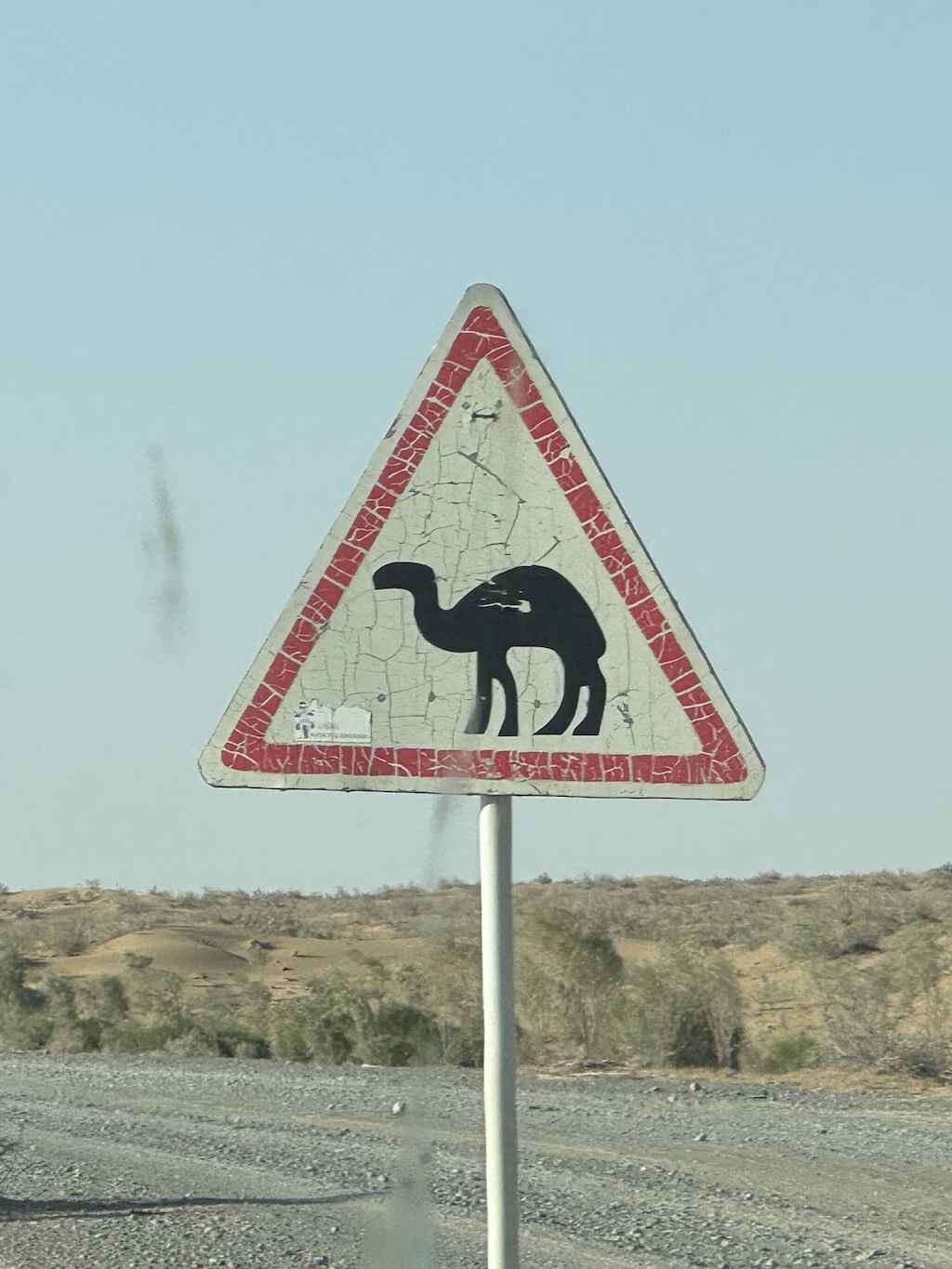
Our guide told us that our driver was very skilled, and knew the road so well, that he could safely do in 4 hours who might take many drivers 6 hours. It was correct that the road was quite rough, an inexperienced driver would be a hazard to themselves and others. We saw plenty of shredded tires and even dented wheels along the route, sitting under the intense desert heat. Also, with the road conditions, it would be crazy to drive at night.
It took us until just before 8pm to get to the Darvaza Gas Crater, which we’ll write up in a separate, final post for Turkmenistan.
More From Our Blog
Keep reading our travel blog for more adventures in Central Asia:




 Adventures of the 4 JLs