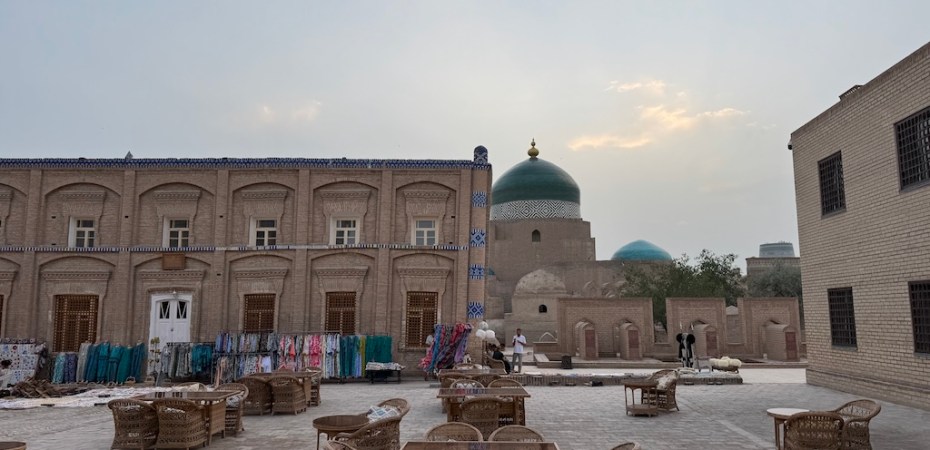
During our tour of the “5 Stans” in Central Asia in June and portion through Uzbekistan, the final city of our trip was Khiva. This 2,500 year old city was one of our favorites – its Old City is compact and easy to navigate by foot. And, it’s very well-preserved and beautiful, giving a nice glimpse into an ancient Silk Road era city.
Logistically, we spent one day exploring Khiva, largely with a guide and entirely on foot, having arrived the previous late afternoon from Turkmenistan. For the record, this city would have been straightforward to see independently. Our guide did add to the experience in terms of background and context – and one interesting aspect is that she had been giving tours of Khiva since 1984, when it was part of the Soviet Union.
Old City
We started the day by walking first to the city walls from our hotel. And then to an old Madrassa (religious school) that had been turned into a boutique hotel during Soviet times. From there, she gave us a rundown on the history of Khiva.
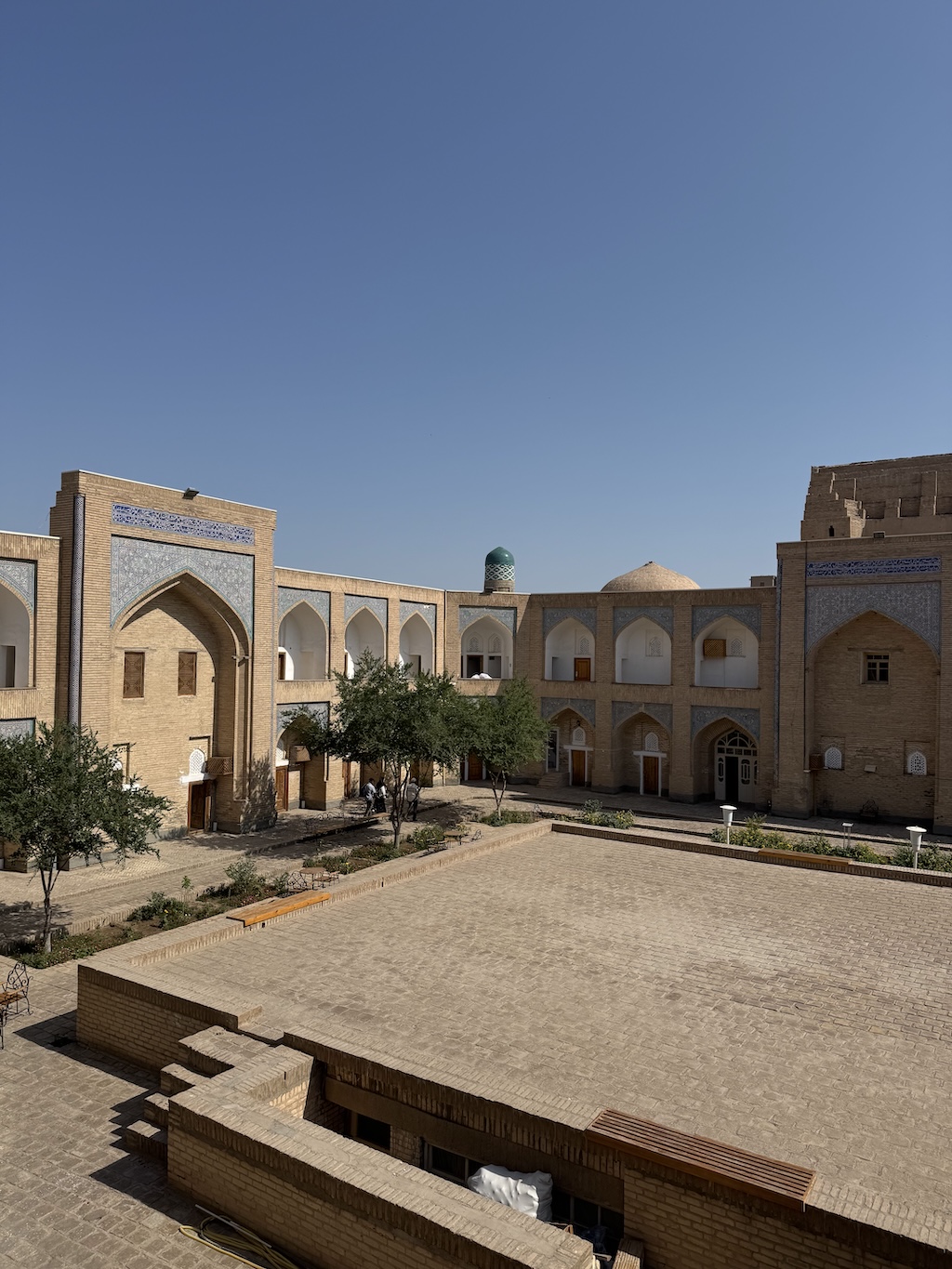
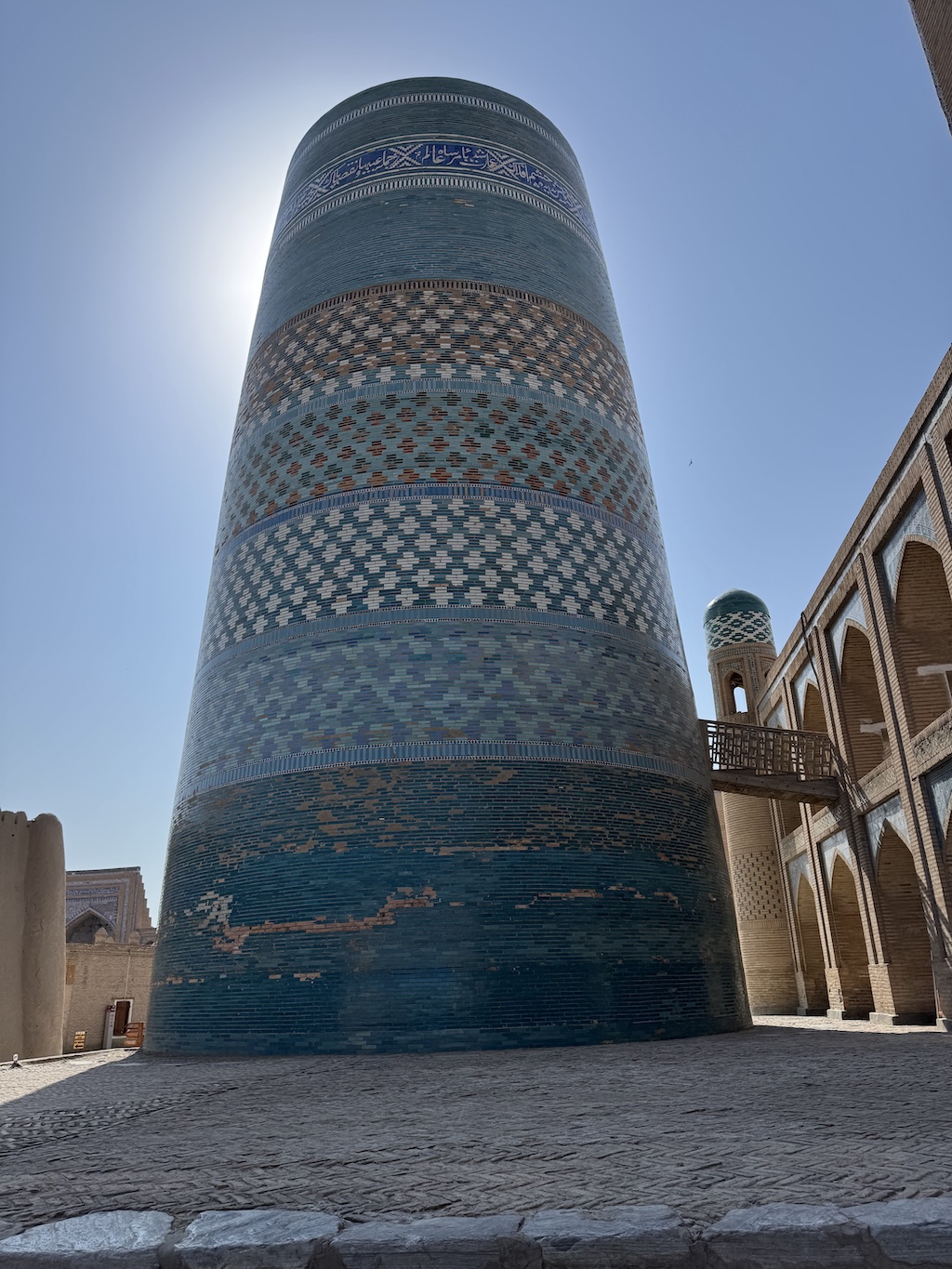
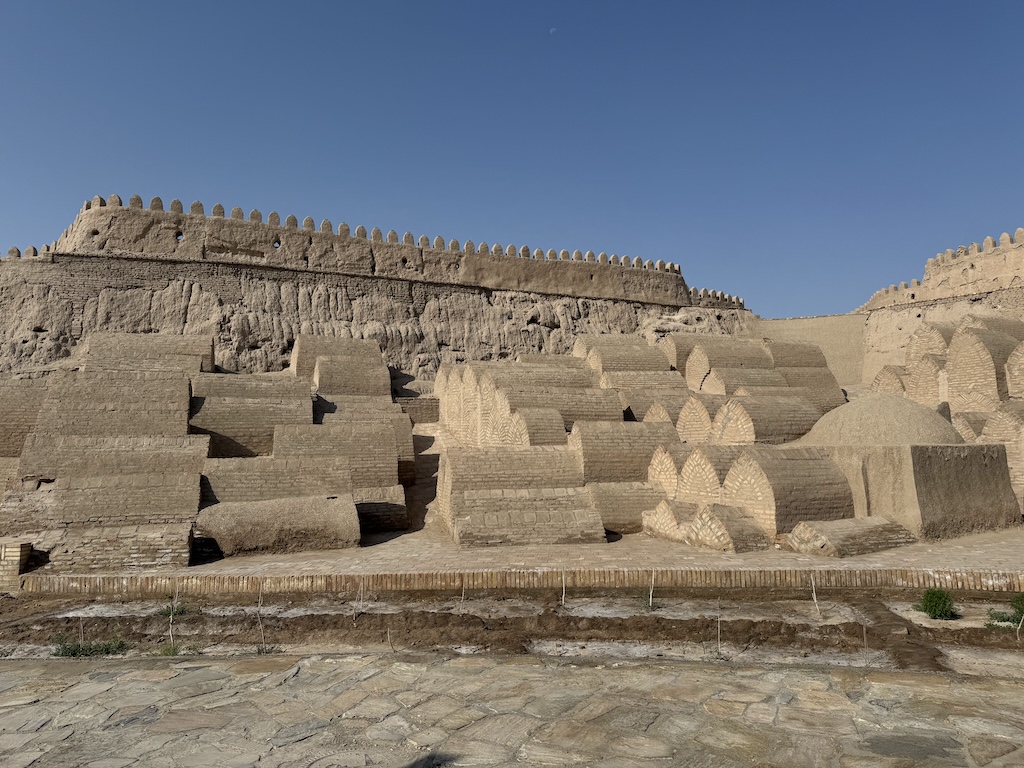
Not to echo the history here, since the wikipedia article does it better, but one thing I came away with then and during the week is how transitory empires can be – every few hundred years, they had new rulers, whether they were the Mongols, the Arabs, the Persians, the Soviets, or many more. While absorbing influence from their conquerors, they also seemed to mostly shrug and go along with life, in their now-2,500 year old city.
One thing I realized after the fact was that we got absorbed enough with the surroundings that our notes and memories for the day were on the thin side, besides the outline from our pictures. That said, we thoroughly enjoyed exploring.
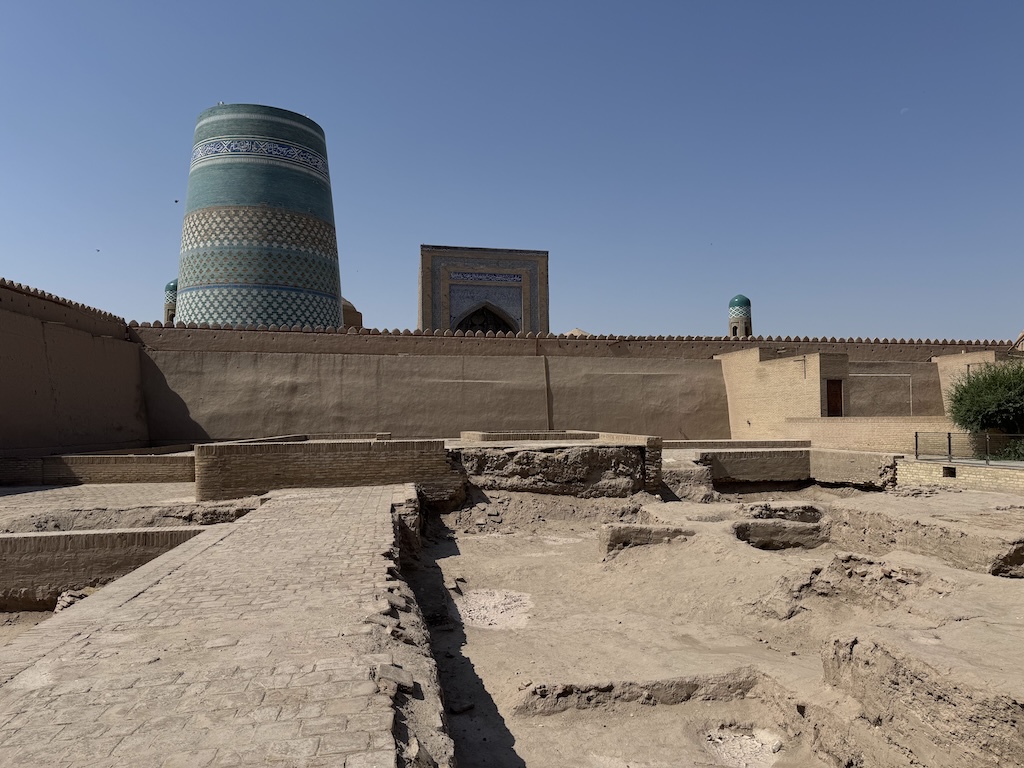
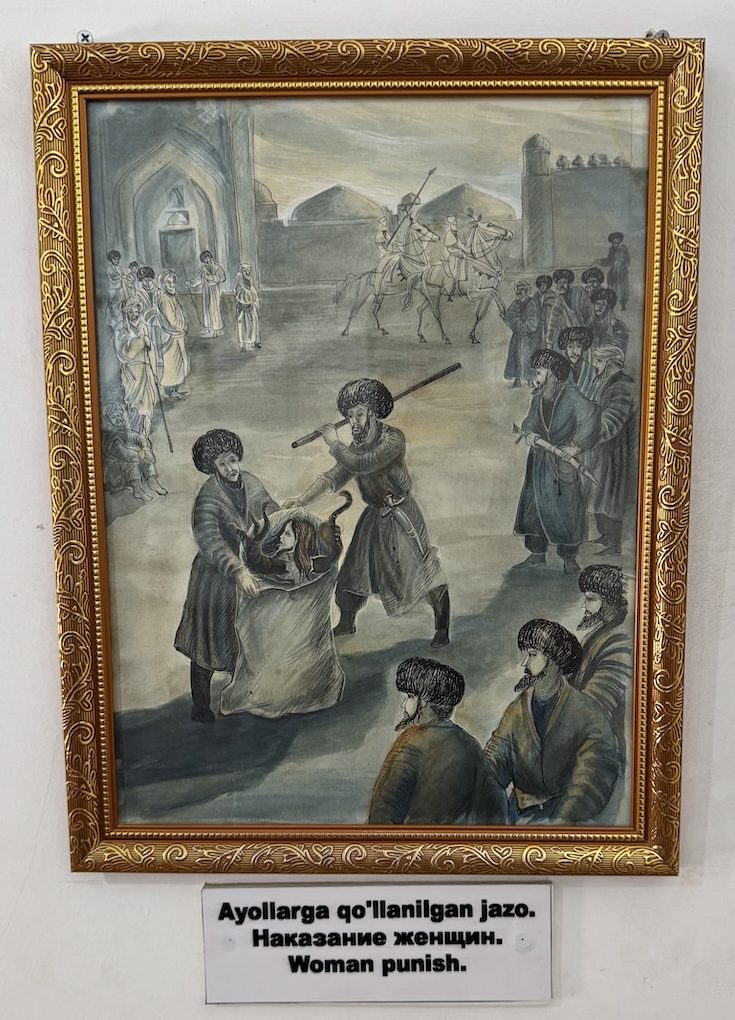
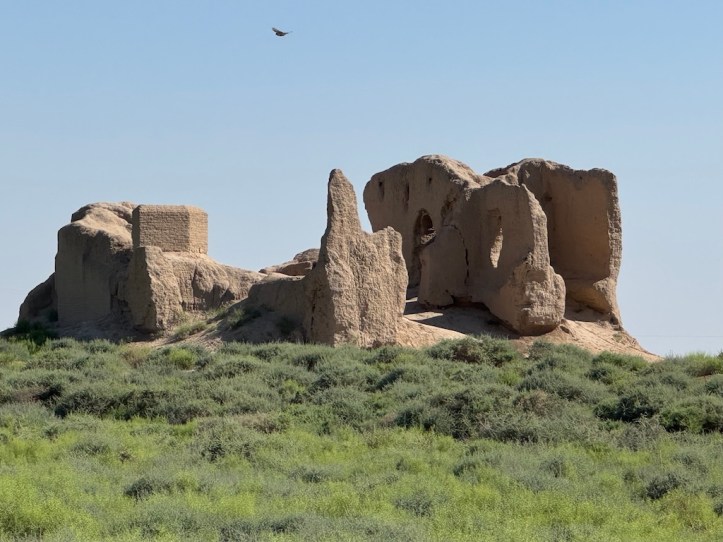
Going to the Kunya Ark area, we saw some ruins and also some old madrassa buildings. We learned that nearby in the square was where criminals were punished in ancient times, and sounded like they didn’t mess around (in the painting below you can see that unfaithful women were put inside a bag full of cats and beaten with sticks).
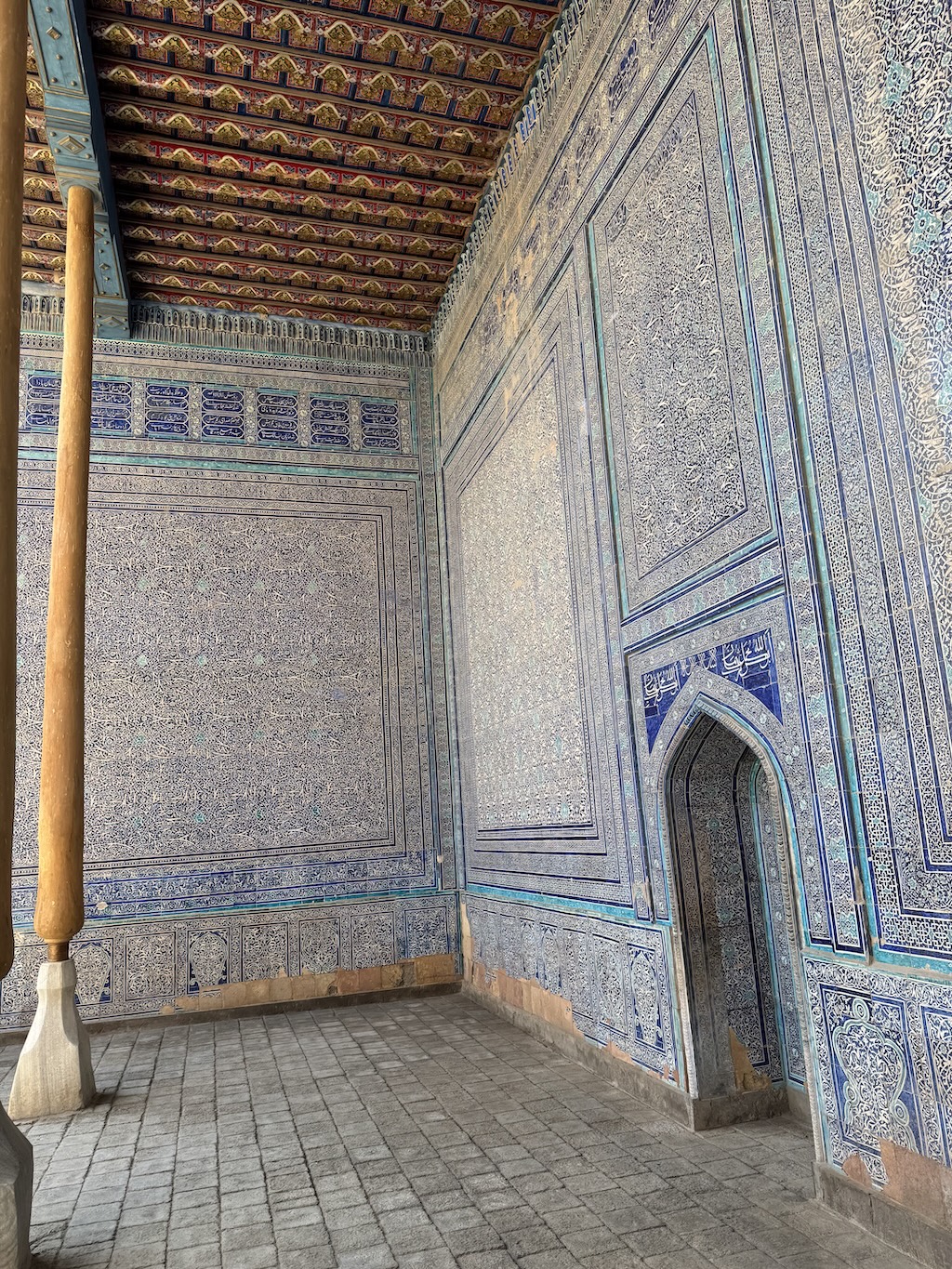
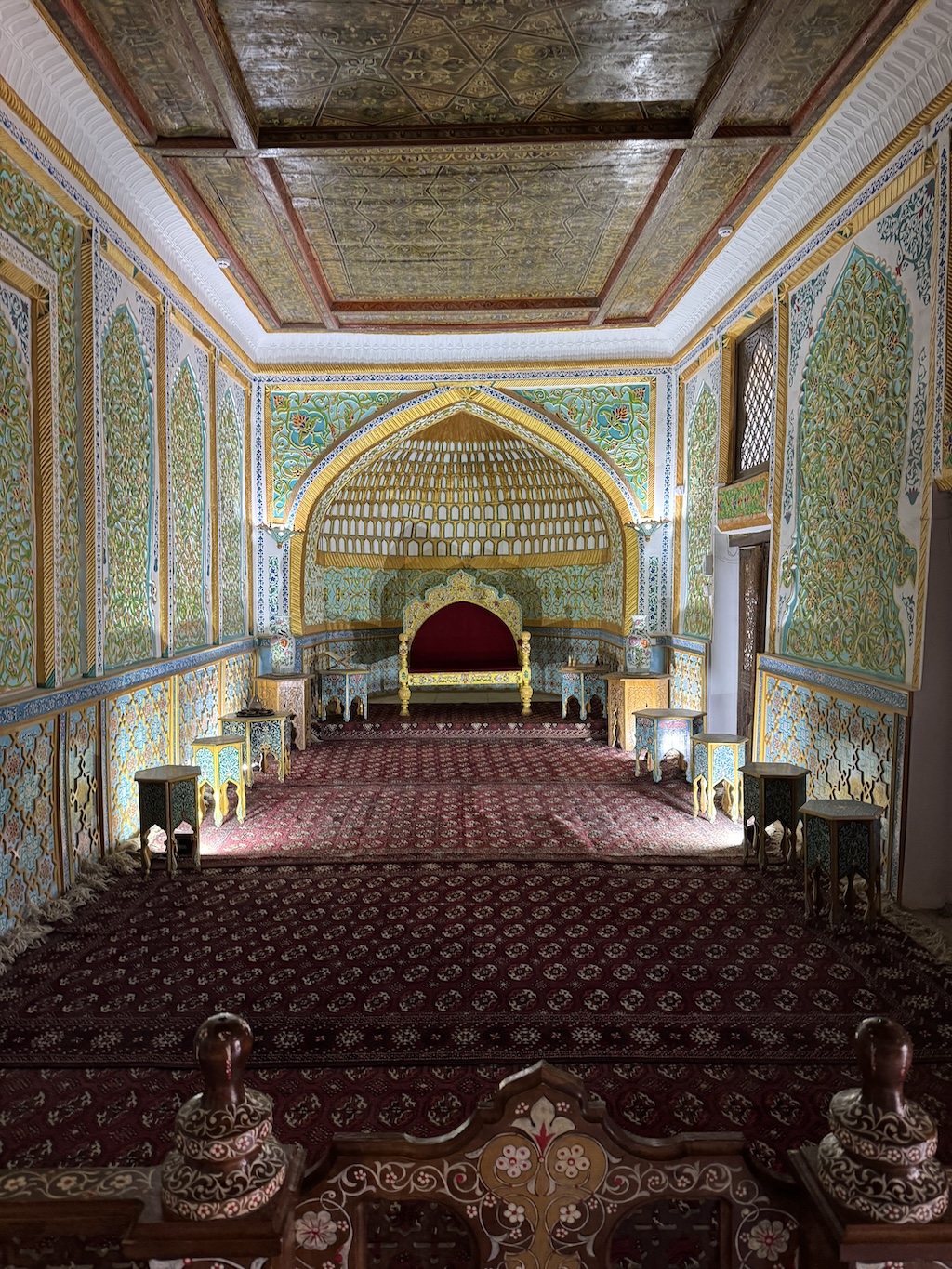
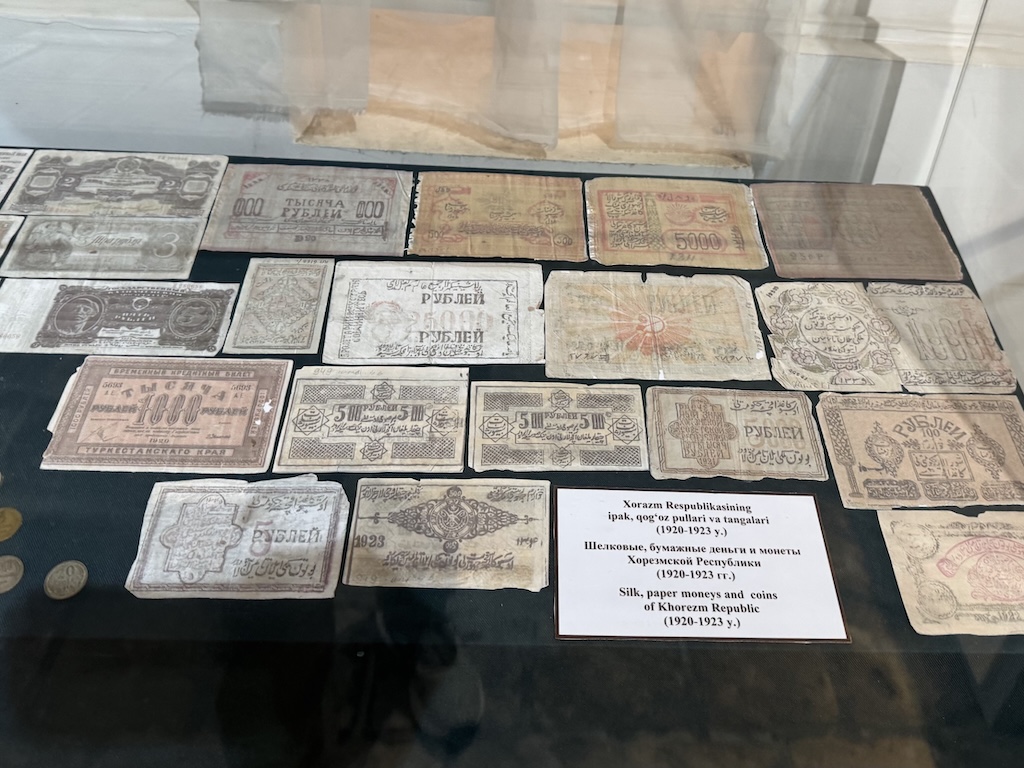
We carried on and went to a museum with old money printed on silk used in the region, as well as sample royal living quarter interiors from the earlier times.
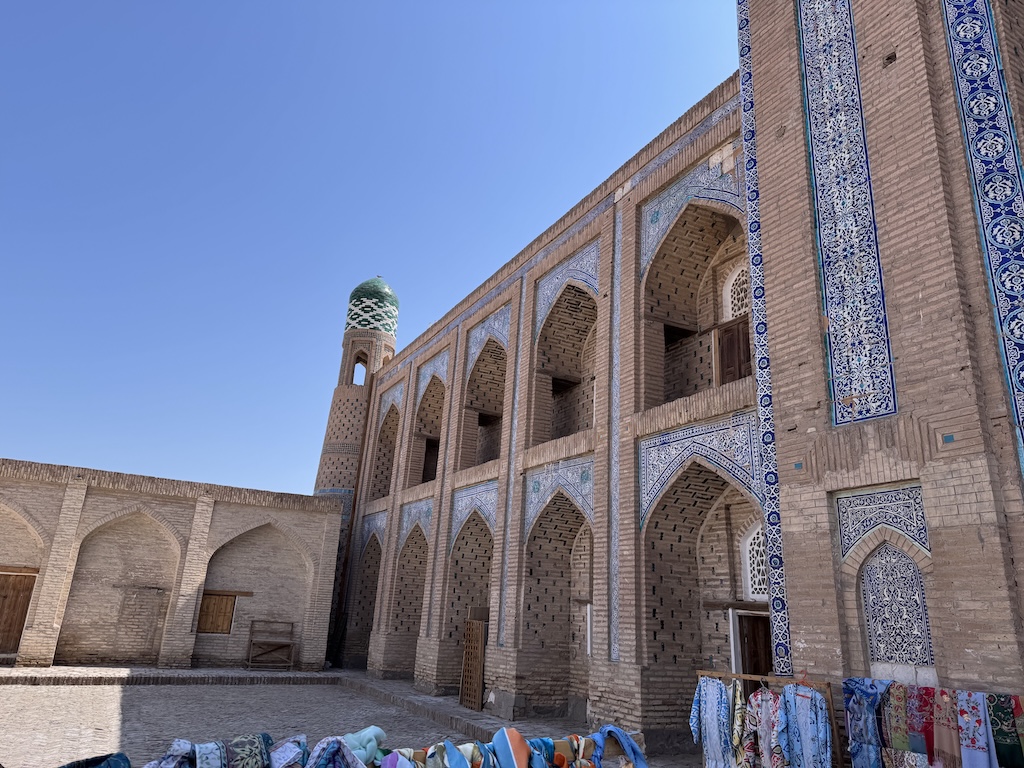
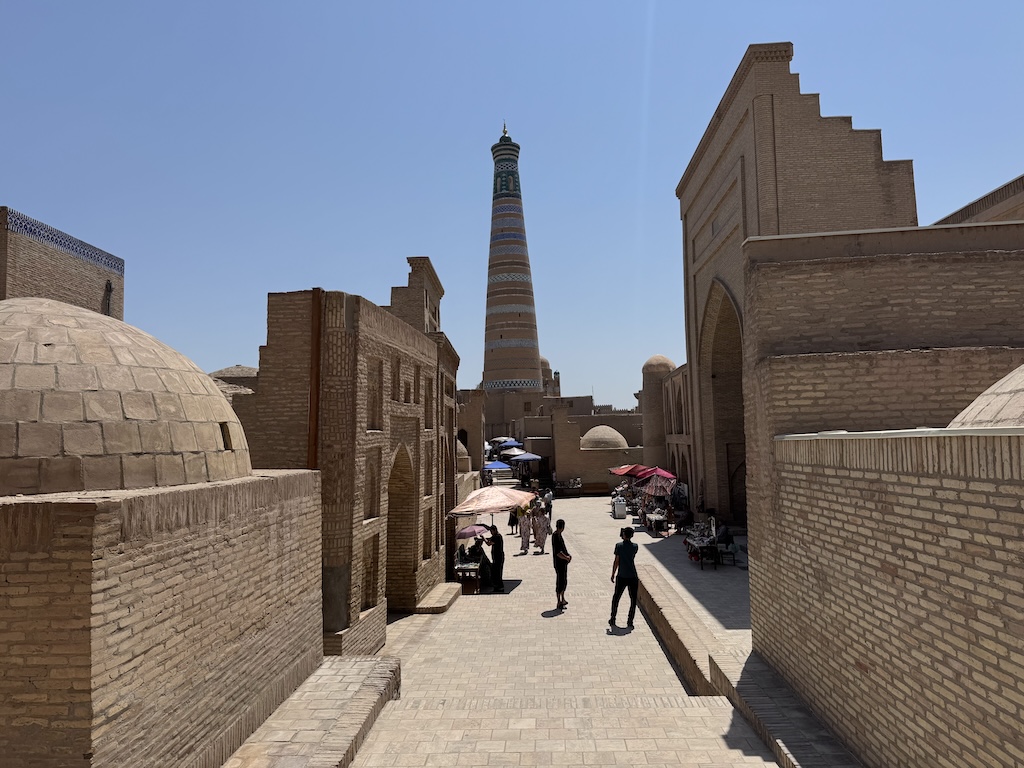
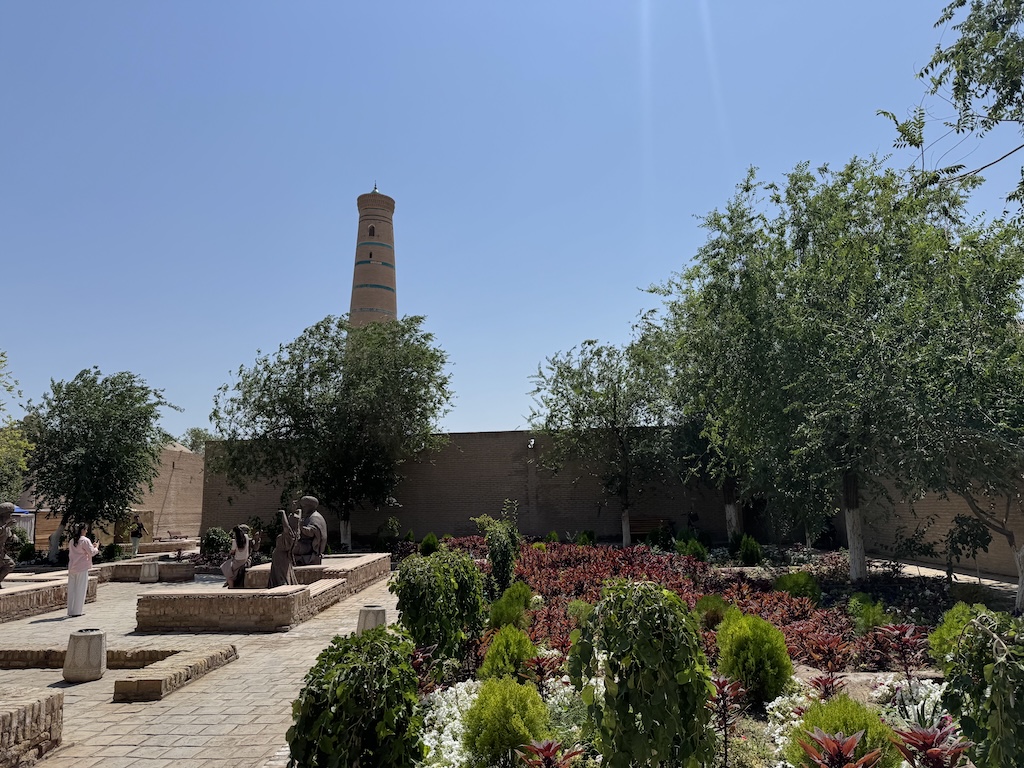
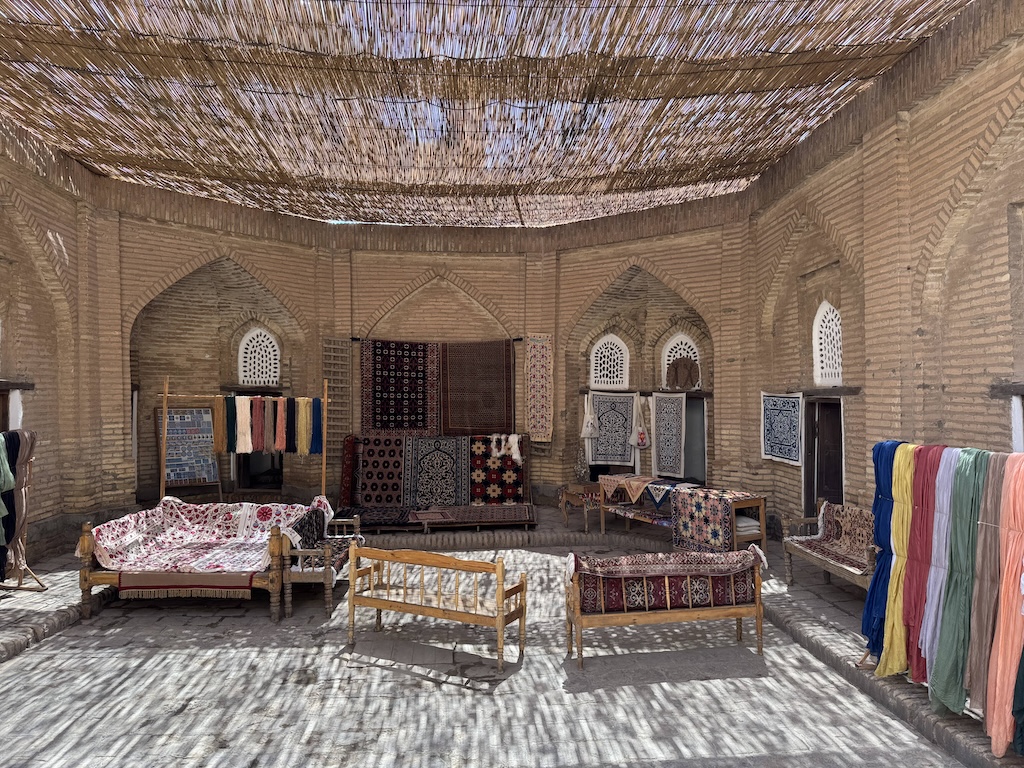
We saw different mosques and mausoleums, saw carpets for sale, and bought camel wool socks for my youngest. It was a great place to wander.
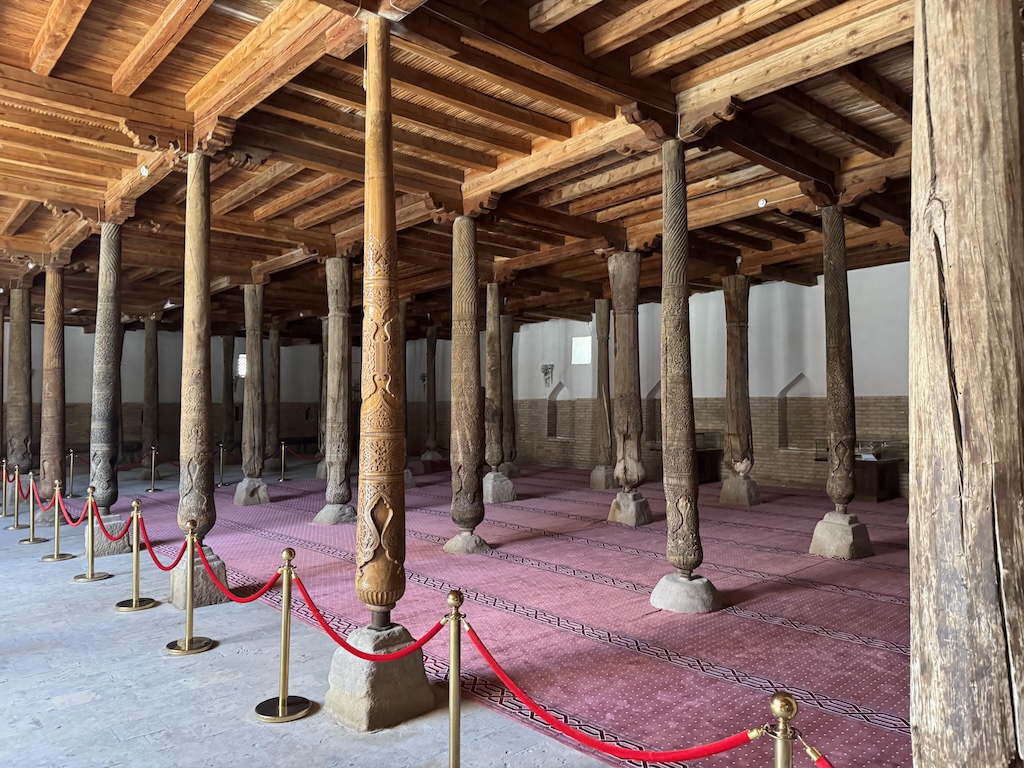
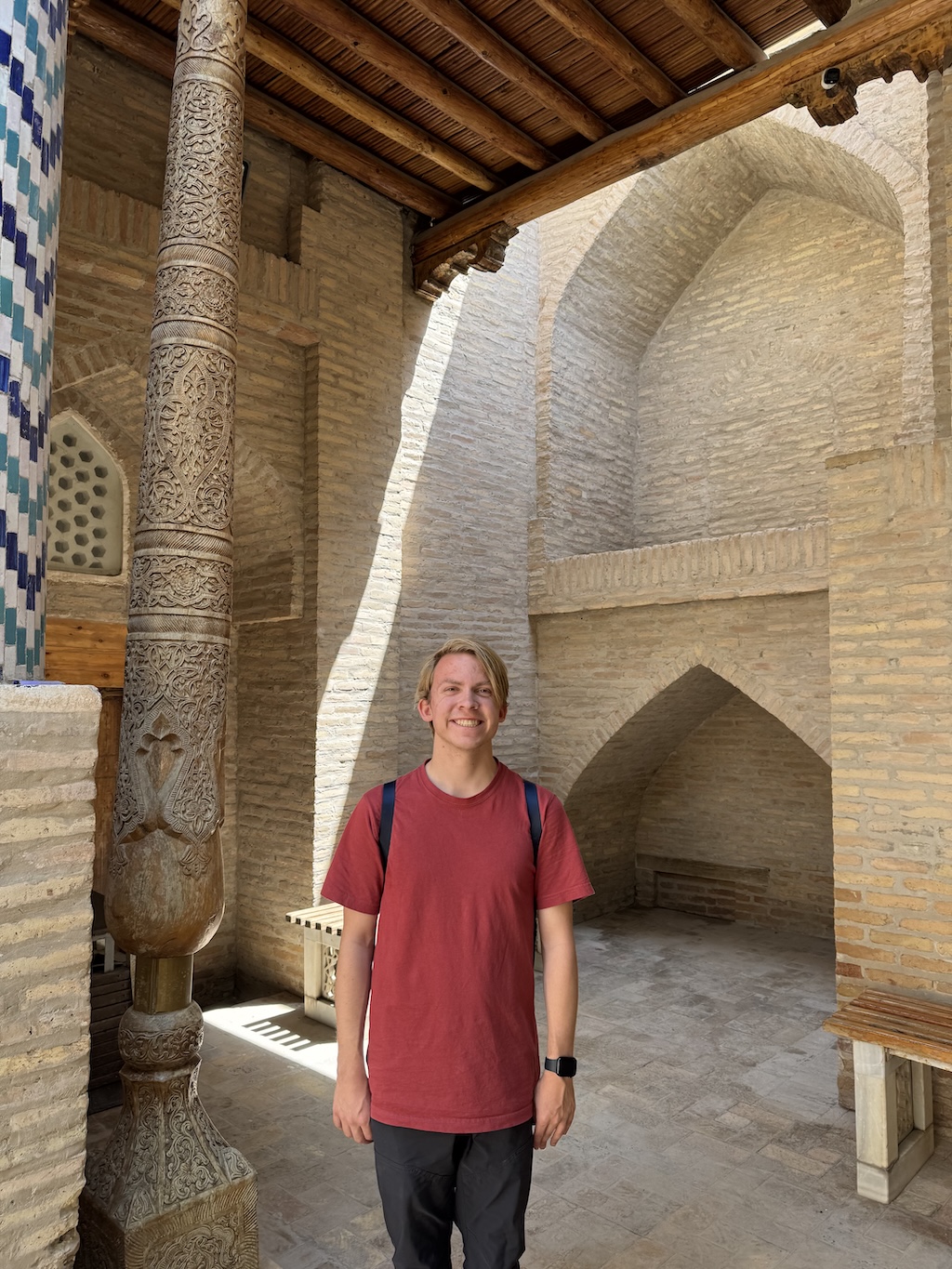
The Juma Mosque (with the wood beams below; it is supported by 212 wood beams, even if only a handful are original) is one of the major monuments in the Old City.
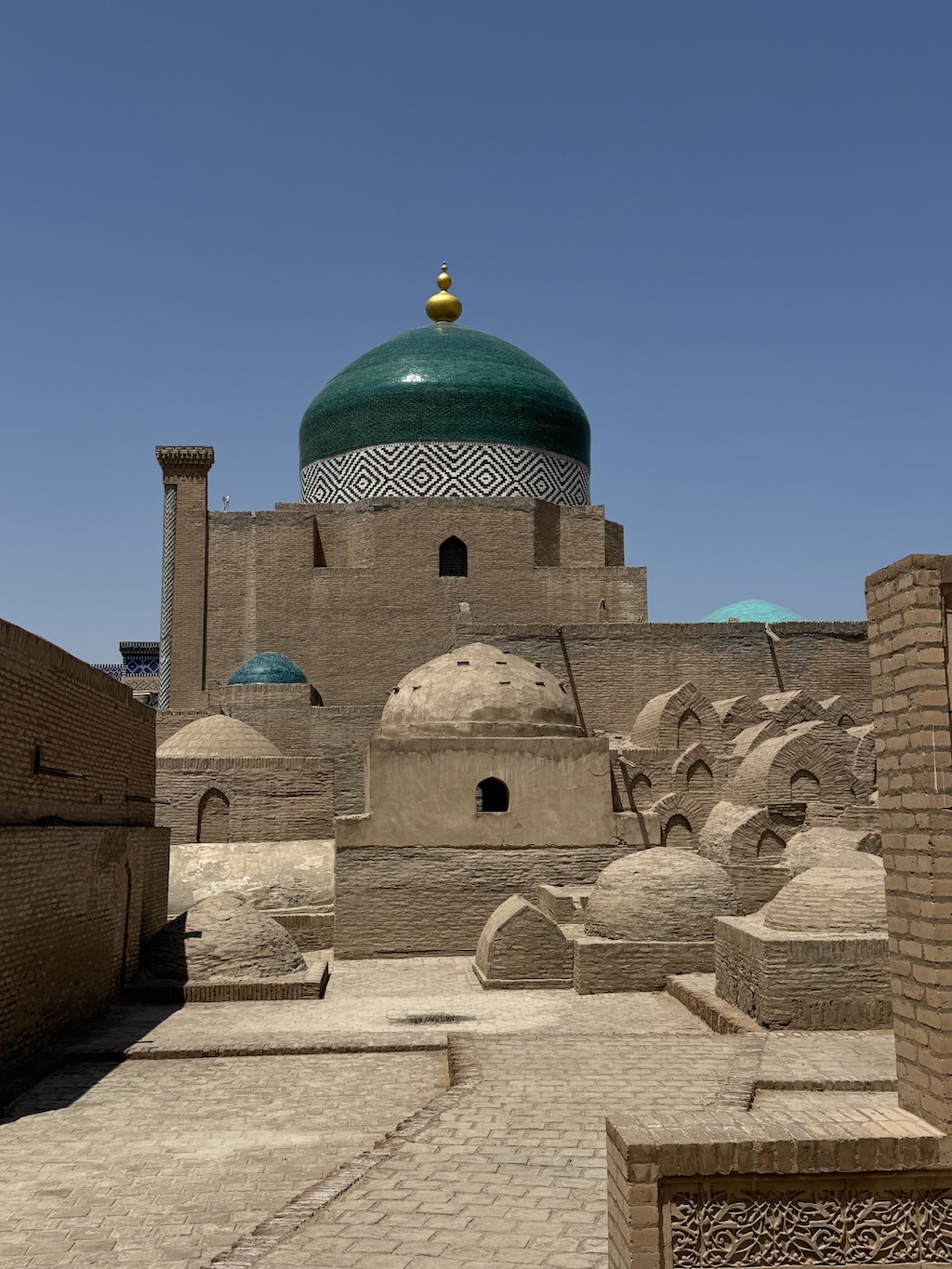
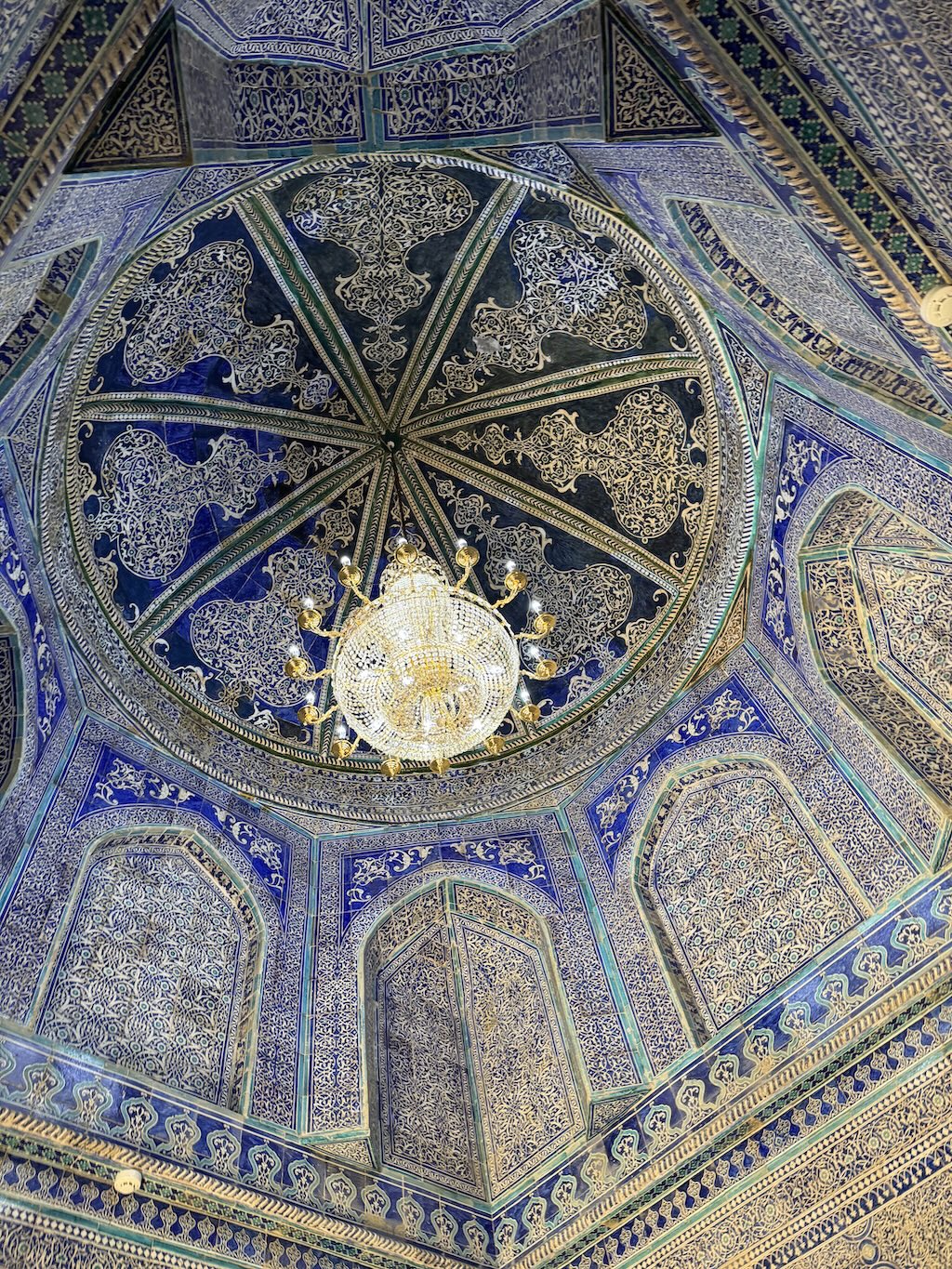
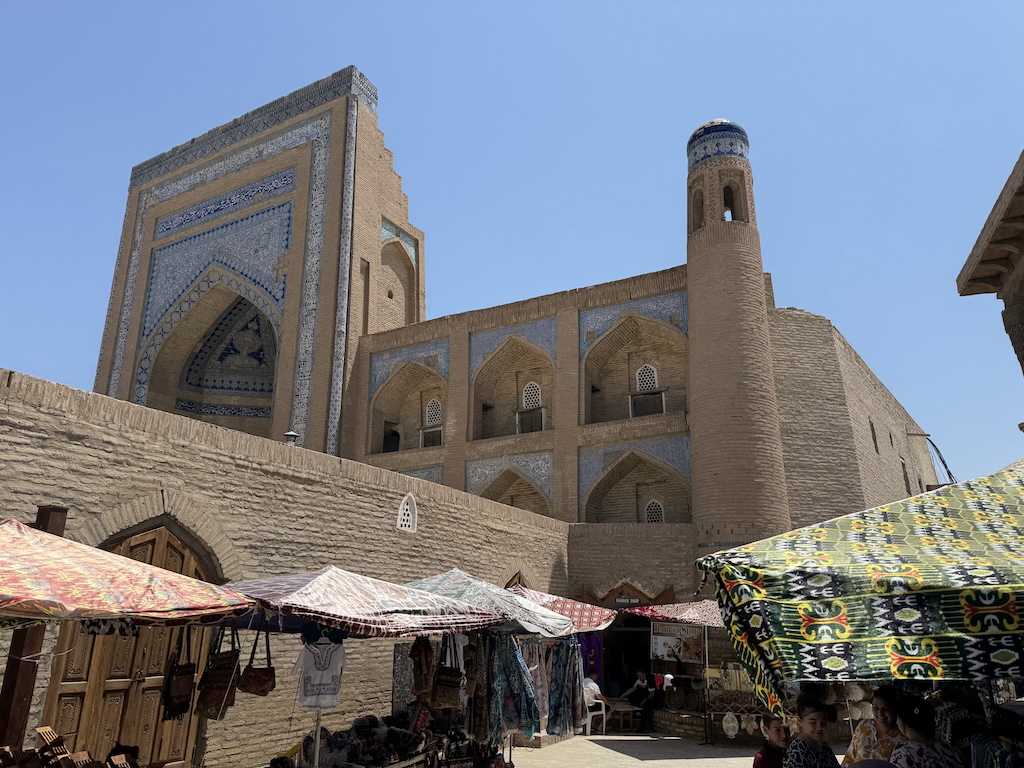
As time went on, we spent a while exploring the different royal quarters. Part of that included learning about the cut-throat nature of the harem. The harem members had to live together, but were motivated to sabotage each other.
Also, apparently, women of the time wore nearly all their wealth in gold, all the time, partly because they could be divorced at any time (by the husband saying the word “divorce” aloud three times). If they were divorced, the women were not allowed to go retrieve any belongings not on their person. But with their gold wealth on their person, they wouldn’t be destitute.
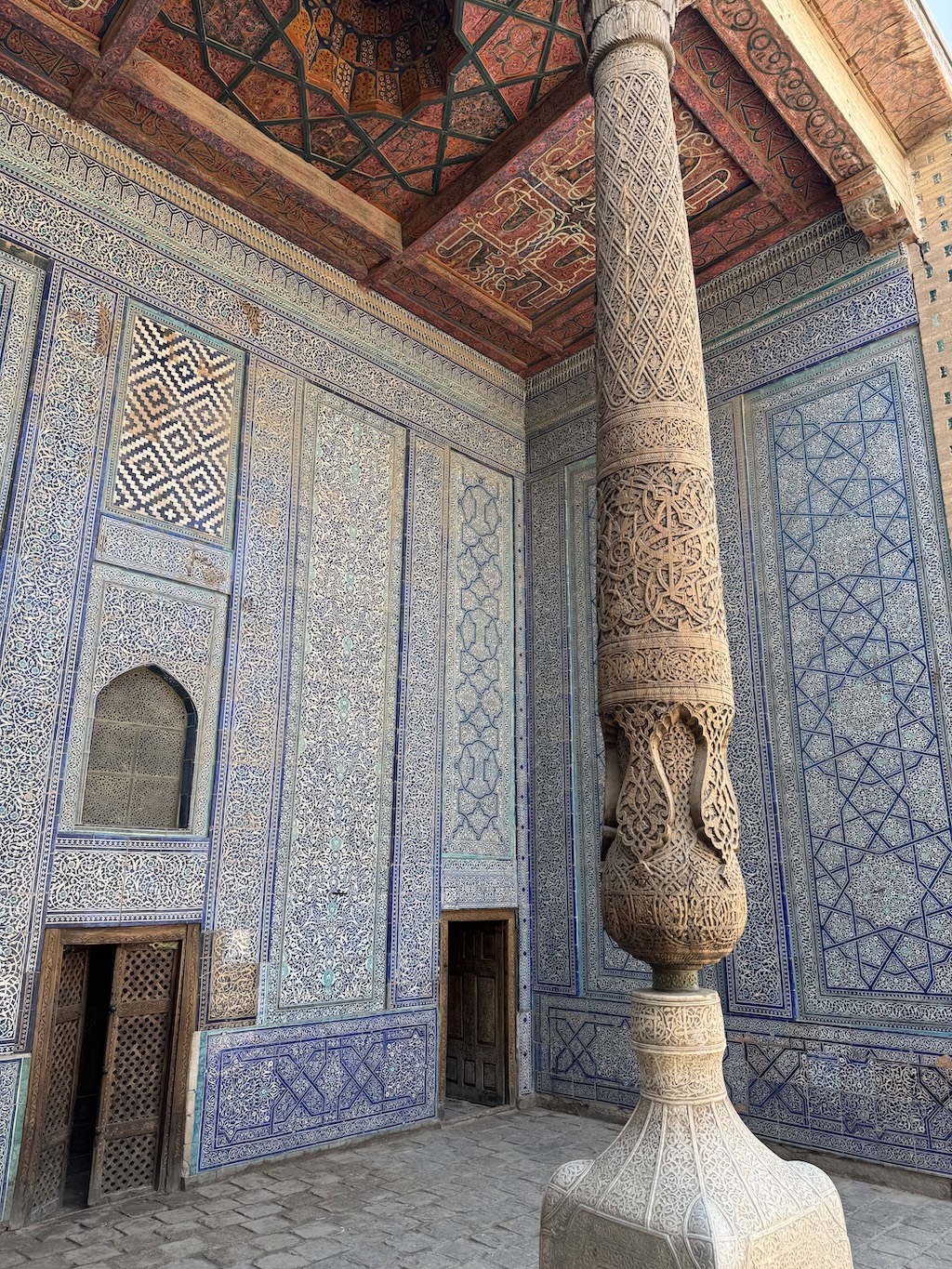
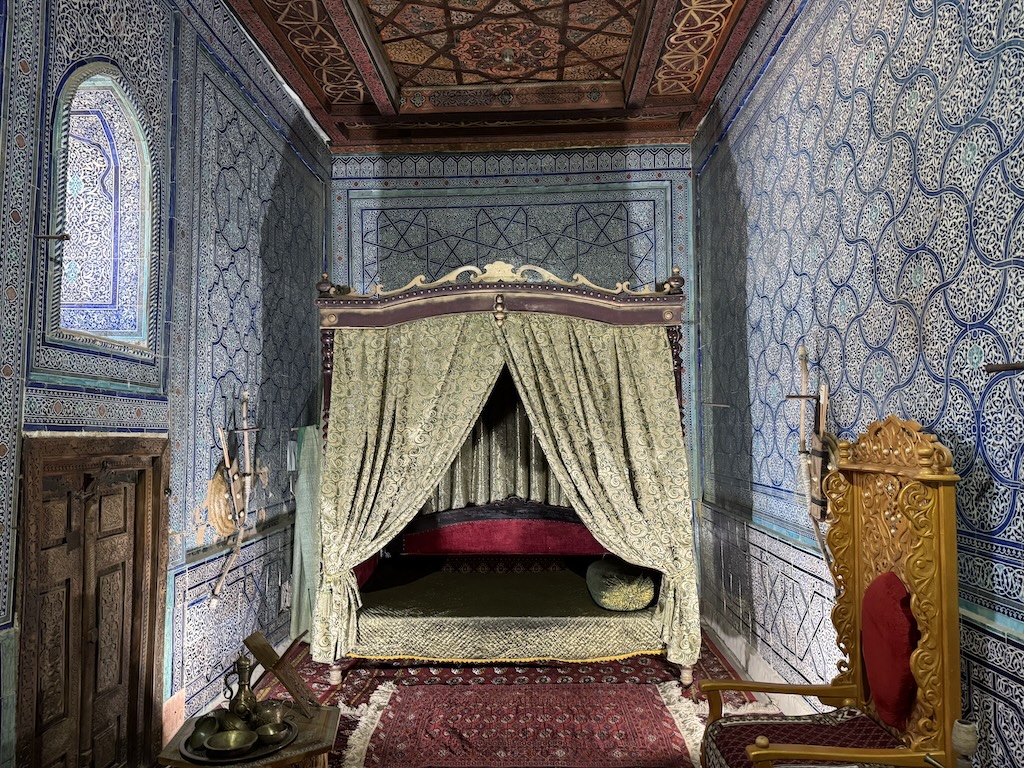
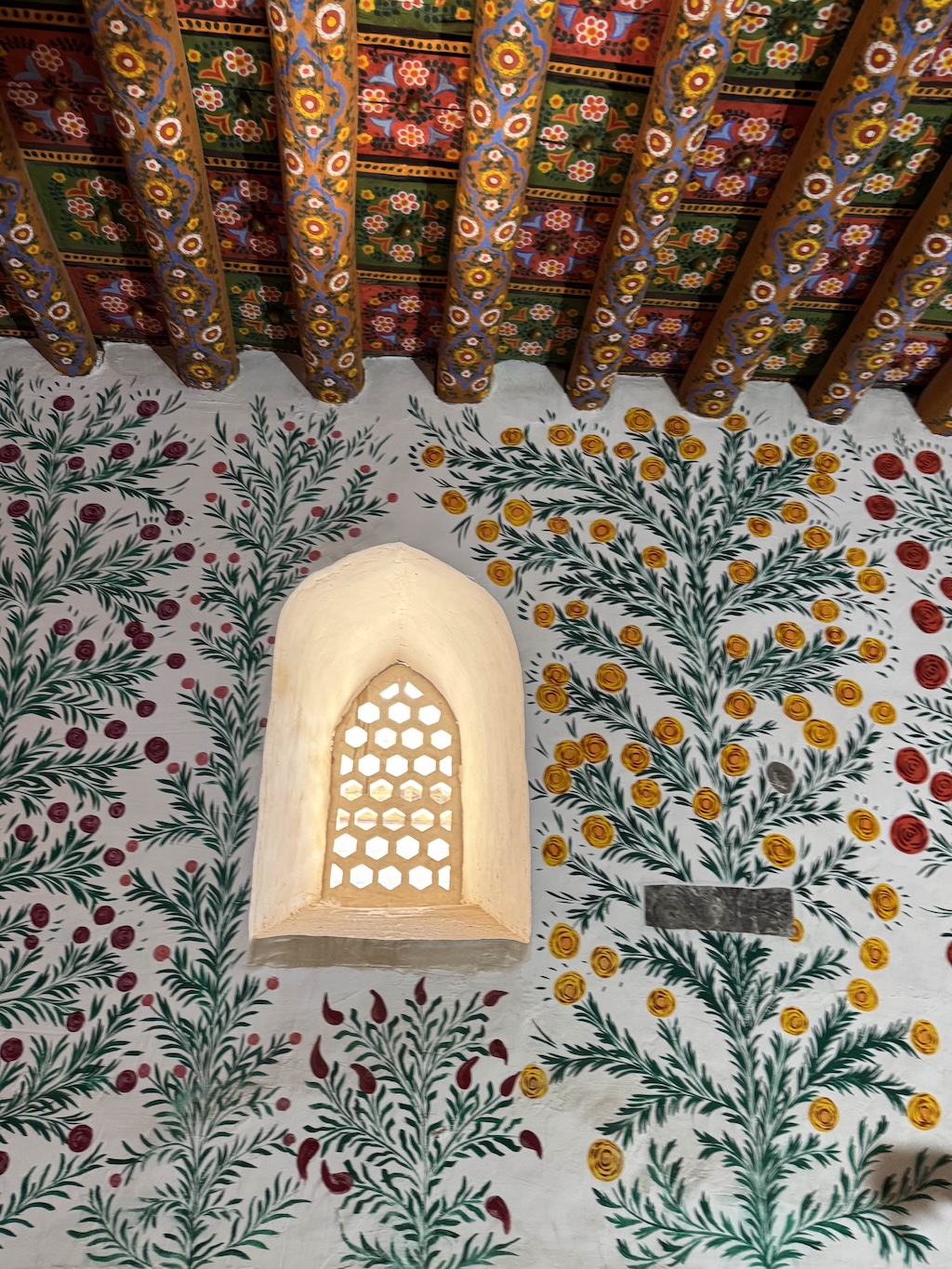
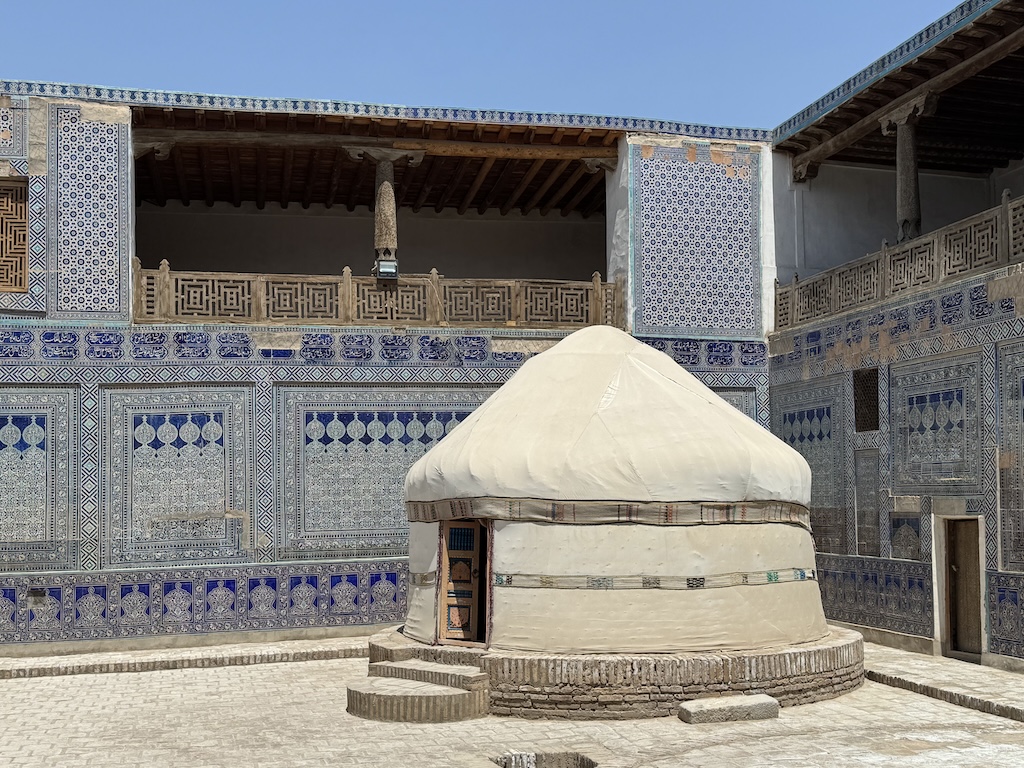
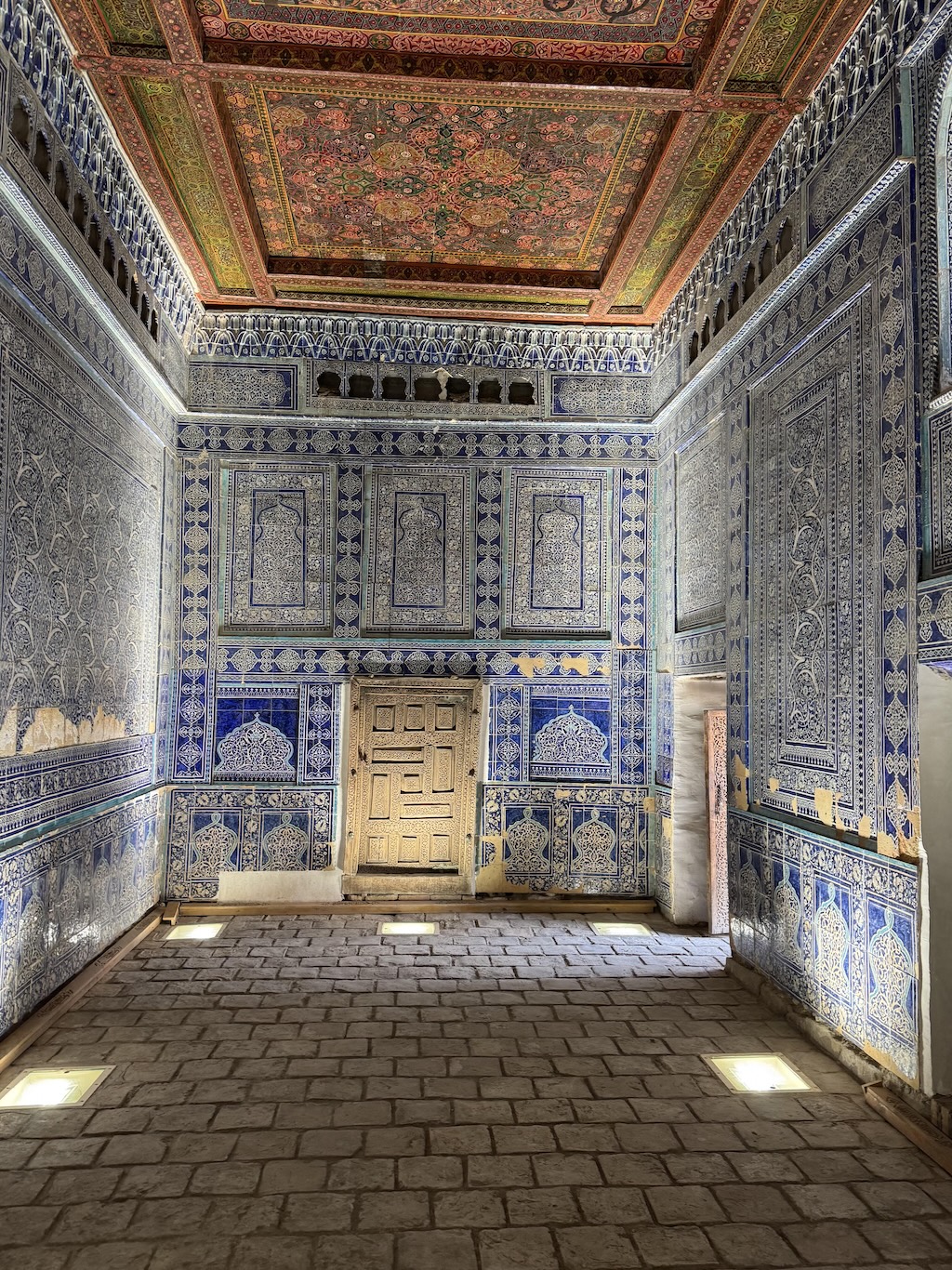
By this point, it was 2pm. After 5 hours with our guide, our guided tour portion was over, and we really enjoyed an informative tour of this beautiful city.
After saying goodbye to our guide, we had a late lunch at a recommended cafe. After lunch, James really wanted to climb the minaret. One thing we learned that week is that climbing a Central Asia minaret can be precarious. Climbing the stairs in more like climbing a ladder, with both arms and legs. Naturally no handrails, and much scarier on the way down.
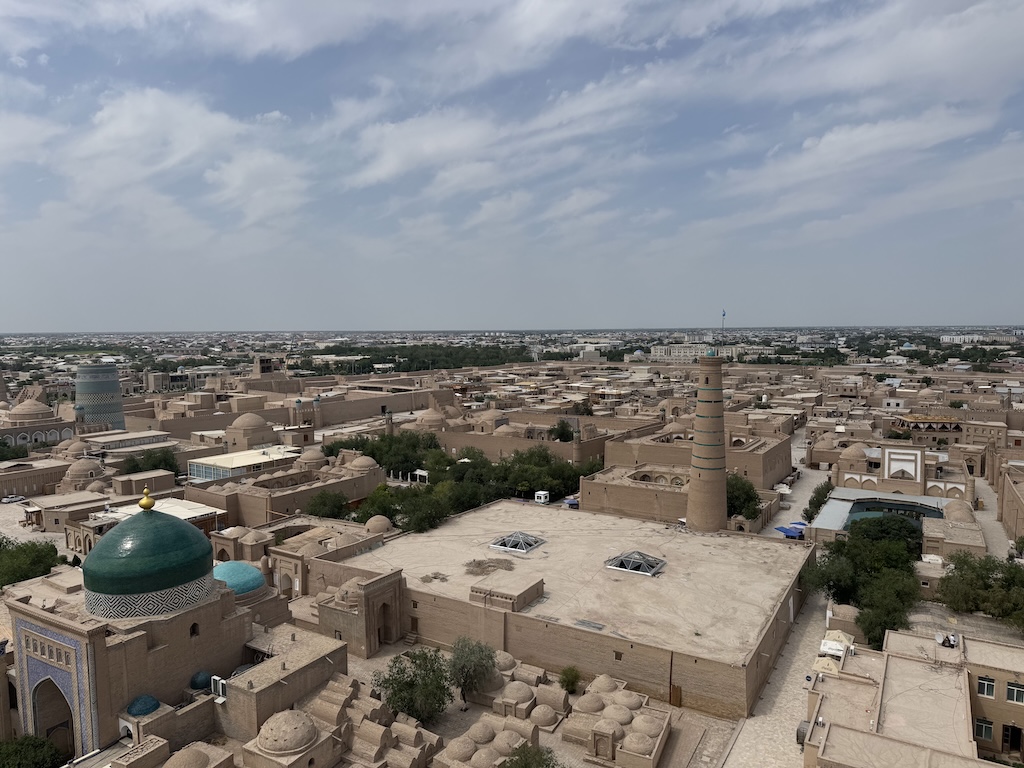
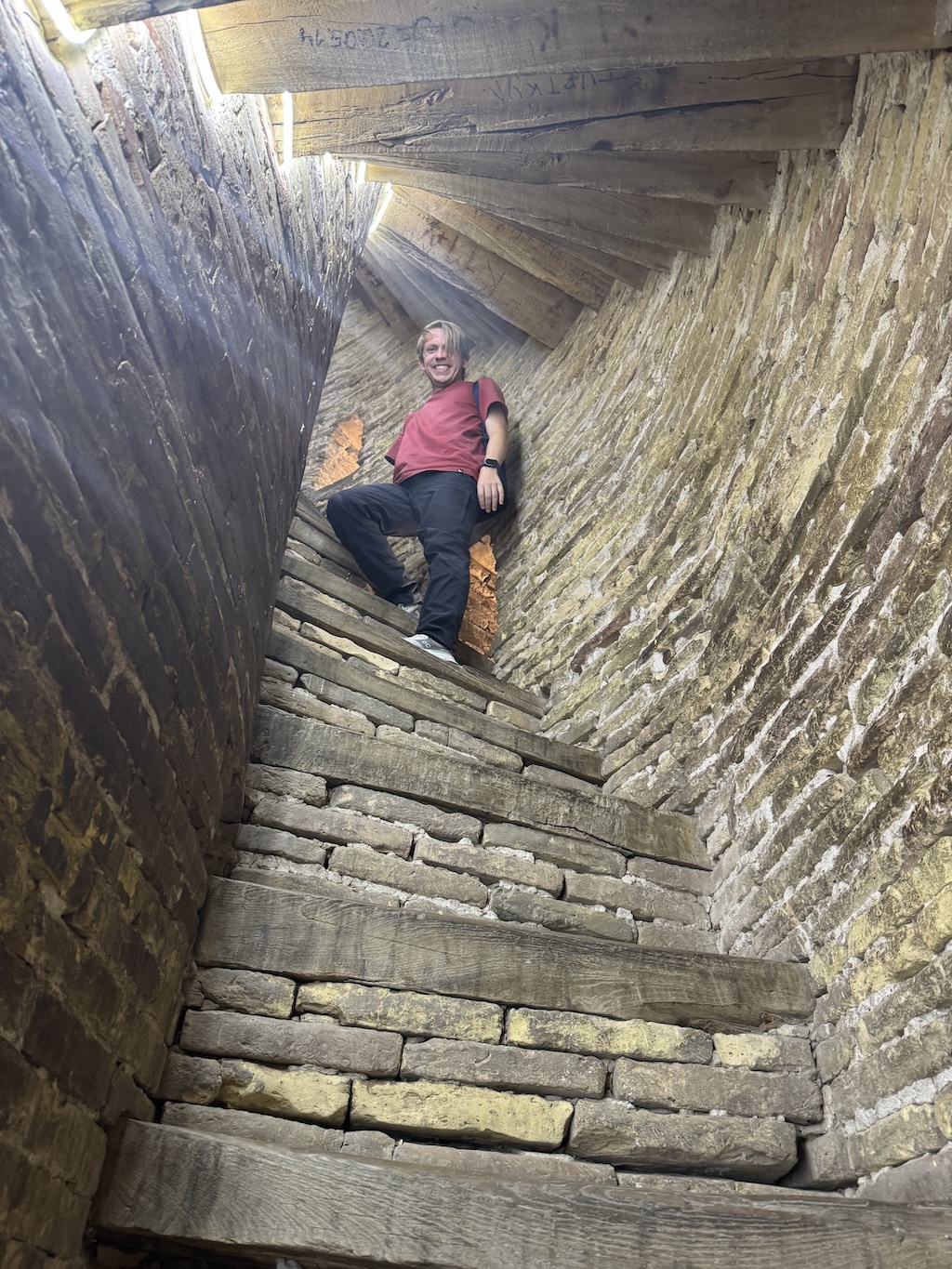
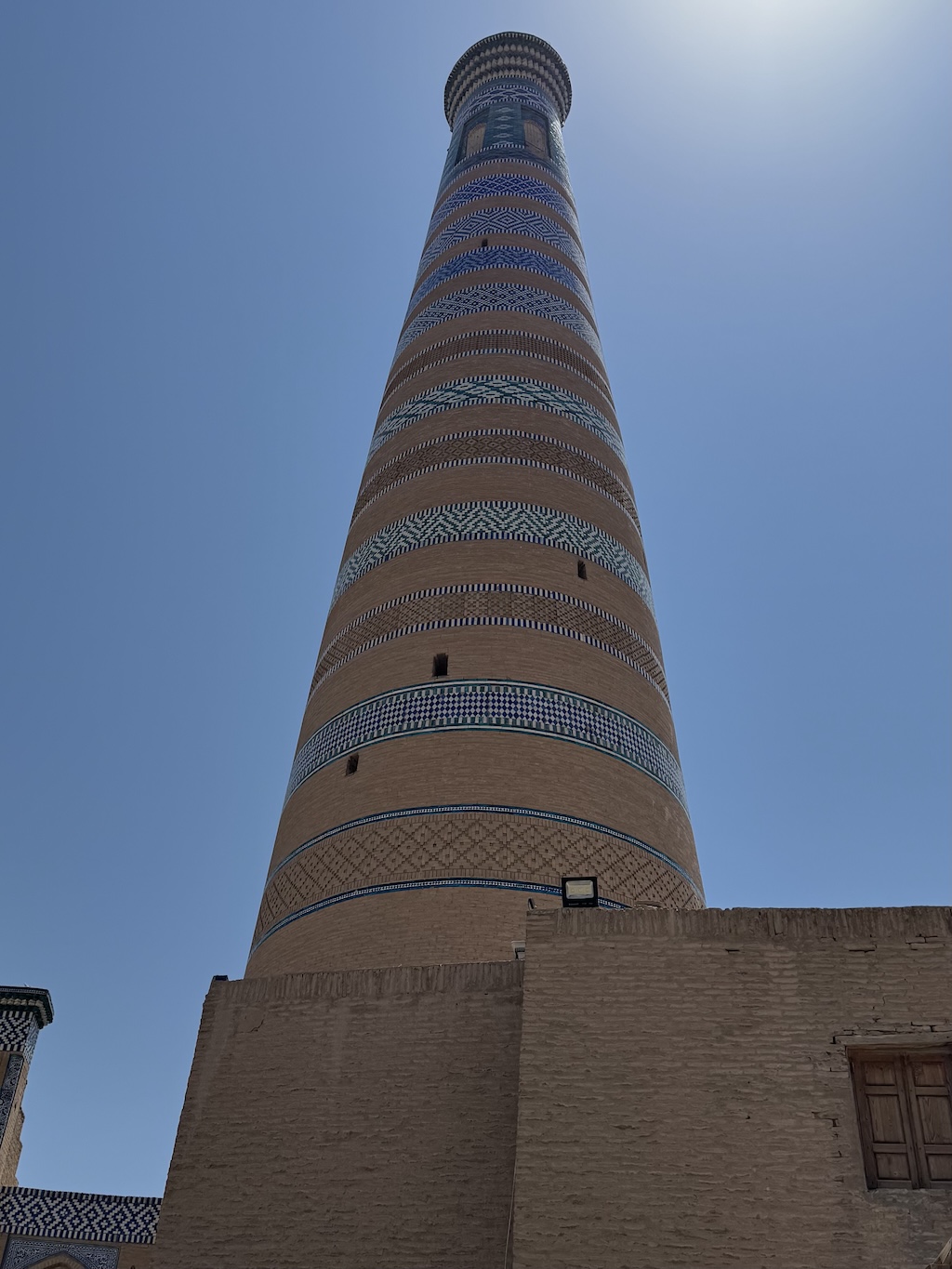
Still, we had a great view of the city at the top of the minaret, at 45 meters high. Also, we had the view entirely to ourselves; perhaps this was because it was later in the day, but maybe also because others didn’t have a teenage son convincing them to make the precarious trek up.
At that point, we wandered around Khiva for a bit more. As it was getting hotter, we decided to go back to our hotel, where we’d paid for late checkout. We rested for a bit, and then caught our ride to the airport in Urgench for an evening flight. A turboprop airplane took us back to the capital, Tashkent, where we spent the night. The next day, we had our international flight from Tashkent, on to Xi’an, China.
More From Our Blog
Keep reading our travel blog for more adventures in Central Asia:




 Adventures of the 4 JLs