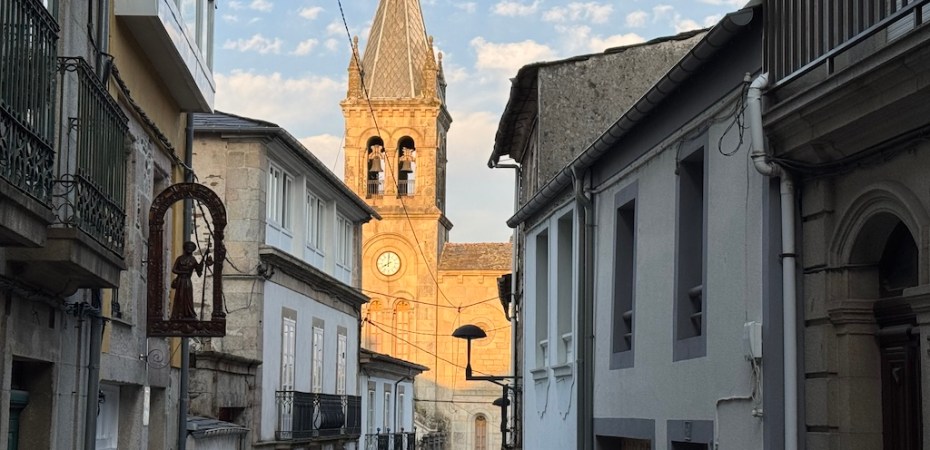
Last August, after dropping my oldest off at college, I decided to do my first trek on the Camino de Santiago. Not wanting to overdo things, I opted for a 5 day section from Sarria to the end in Santiago. This 115km section was just over the 100km threshold to earn my “Compostela” completion certificate at the end. Here, I write up getting to my starting point in Sarria, stopping in Madrid.
The Plan
Since Sarria is only 115km from Santiago and Santiago has an airport (SCQ), one common approach is to fly into Santiago and take a bus for 2 hours to Sarria (train is possible too, but it takes longer because it’s not direct). I considered that option. But instead, I decided to:
- Fly into Madrid: I’d never been to Madrid before, and wanted to see what I could there. With a red-eye from Boston landing at 10:30am, I’d have much of a day to explore Madrid, while trying to distract myself from jet lag.
- Take the high speed train to Sarria: it’s about a 4 hour train ride through the countryside, with a change in Ourense. I booked a seat at the 10am train the next morning after arriving in Madrid.
- Settle into Sarria on arrival: it’s admittedly a smallish town (13,000 people), but it was cute. When doing the Camino, my schedule was to start hiking at 8am and finish by 2-3pm. With the train to Sarria arriving around 2pm, it helped me get my bearings and settle into that schedule.
Madrid
Not having been to Madrid before, I enjoyed spending a good chunk of the day getting an overview of this capital city. I was able to see many highlights in that period of time.
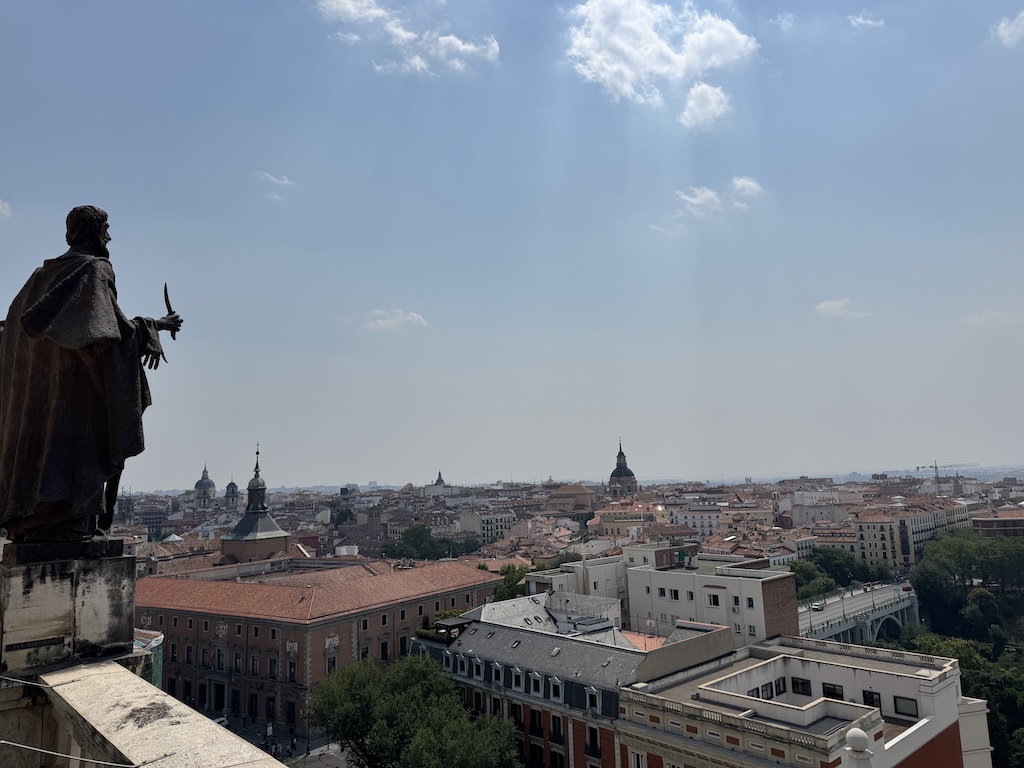
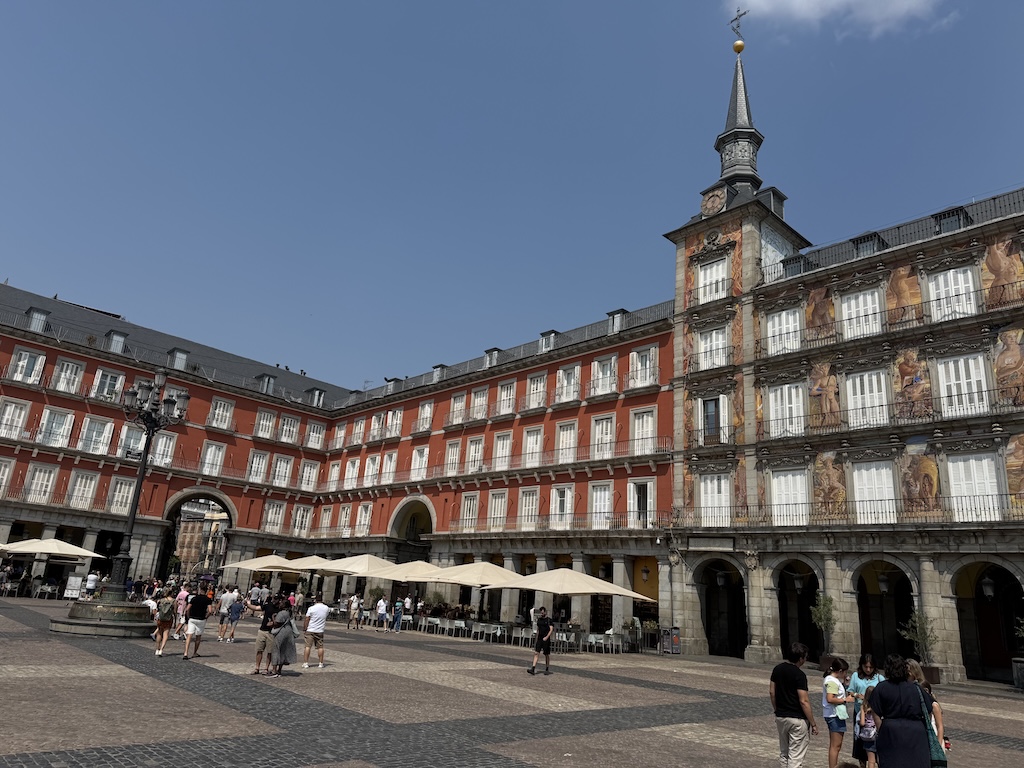
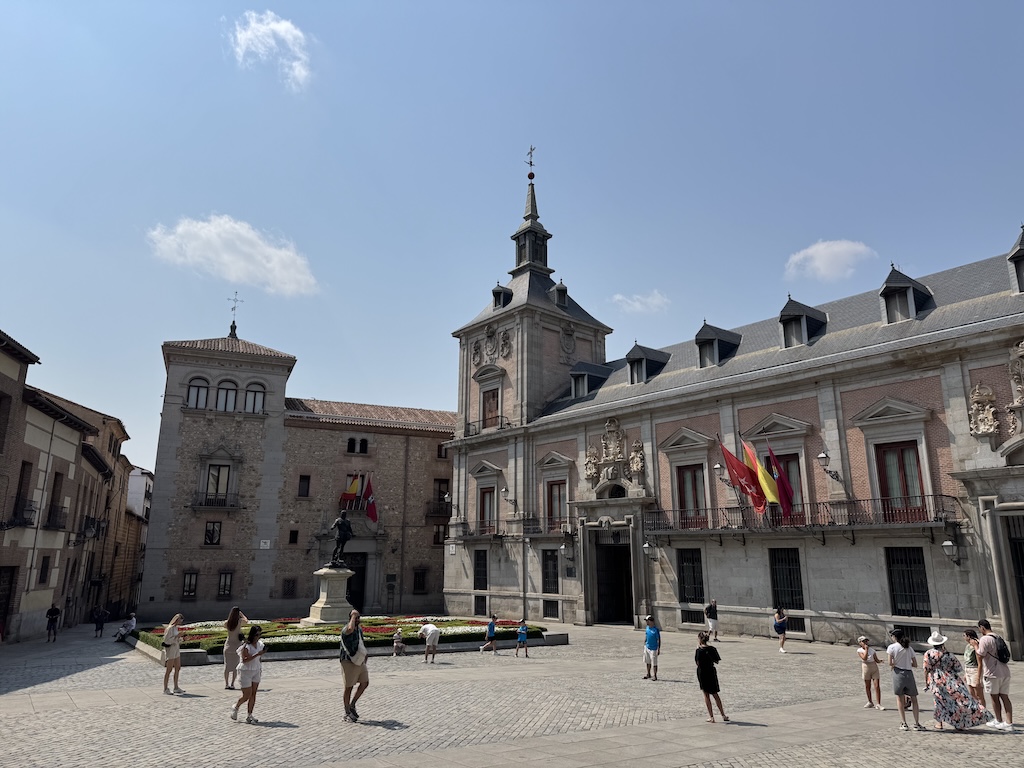
In practice, my flight arriving at 10:30am meant that I got to my hotel a little after noon. Given a limited amount of time, I stayed fairly central on Gran Via, a few blocks off the Puerta del Sol square. My main plans for the afternoon were:
- To do the “Rick Steve’s walk” to see the historic core, including squares like the Puerta del Sol, Plaza de Mayor, the Mercado, etc
- As part of that walk, tour the main cathedral and palace.
- Visit the Prado Museum and neighboring El Retiro park.
- Otherwise stay active to keep my mind off jet lag.
Normally, in getting to town at noon, one would want to each lunch right away, but Spain has late meal times – lunch typically starts at 2pm and dinner is more like 9pm. Meal times took some getting used to, but in the scheme of things, a smaller time difference than jet lag.
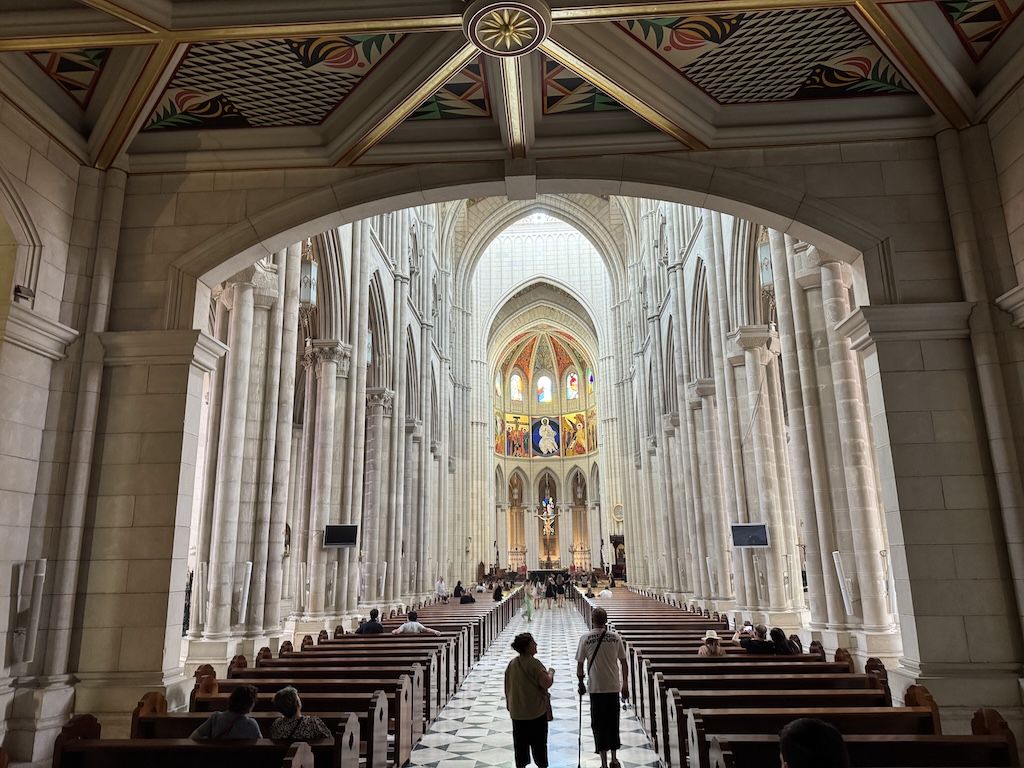
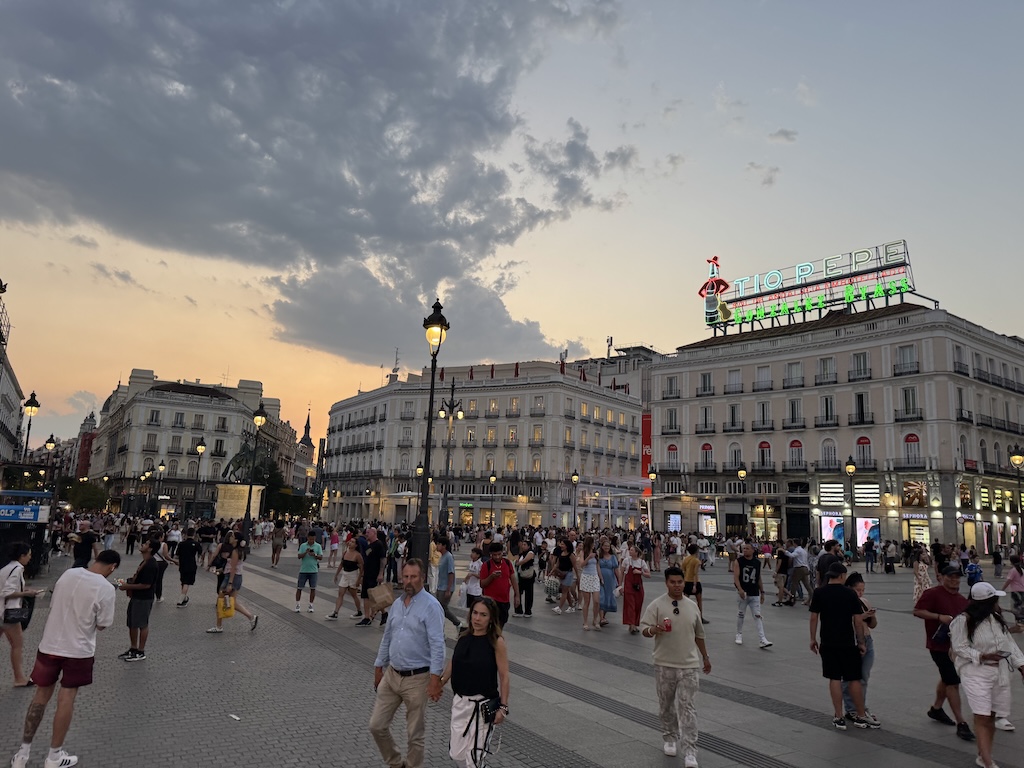
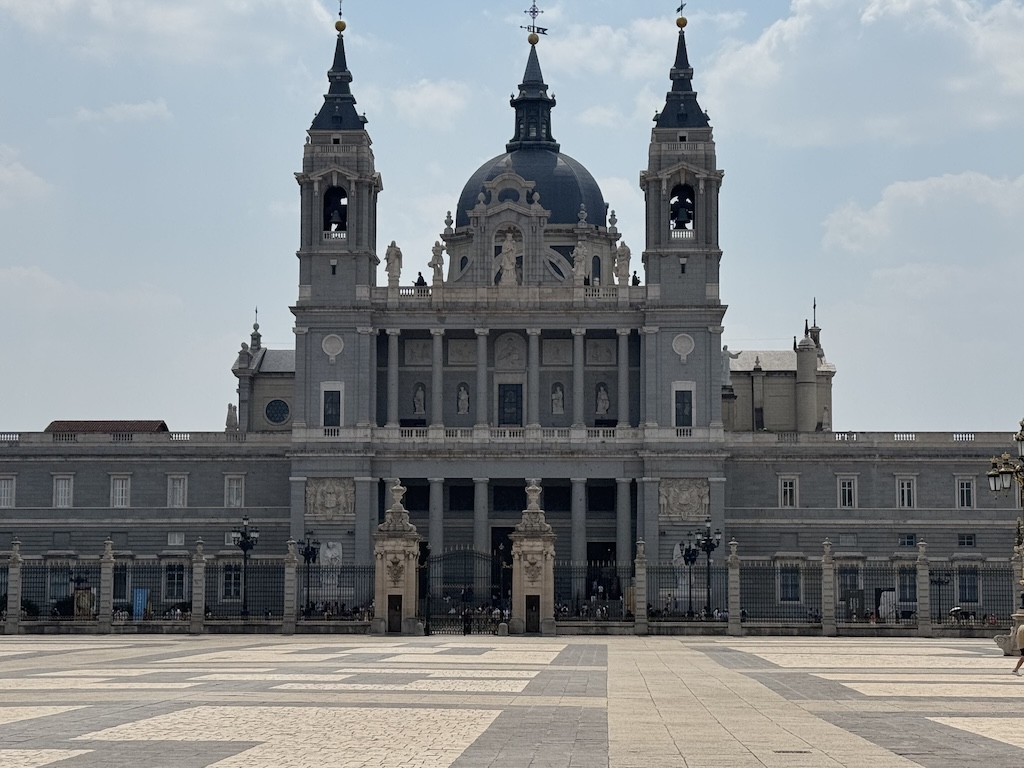
In any case, I started the walk through the main squares – saw the Puerta del Sol, the Plaza de Mayor, and the Mercado. I almost got a bite to eat at the Mercado, but deferred. It wasn’t too far until I made my way to the area with the cathedral and palace, which are next to each other. The cathedral had some nice views of the surrounding city from the top.
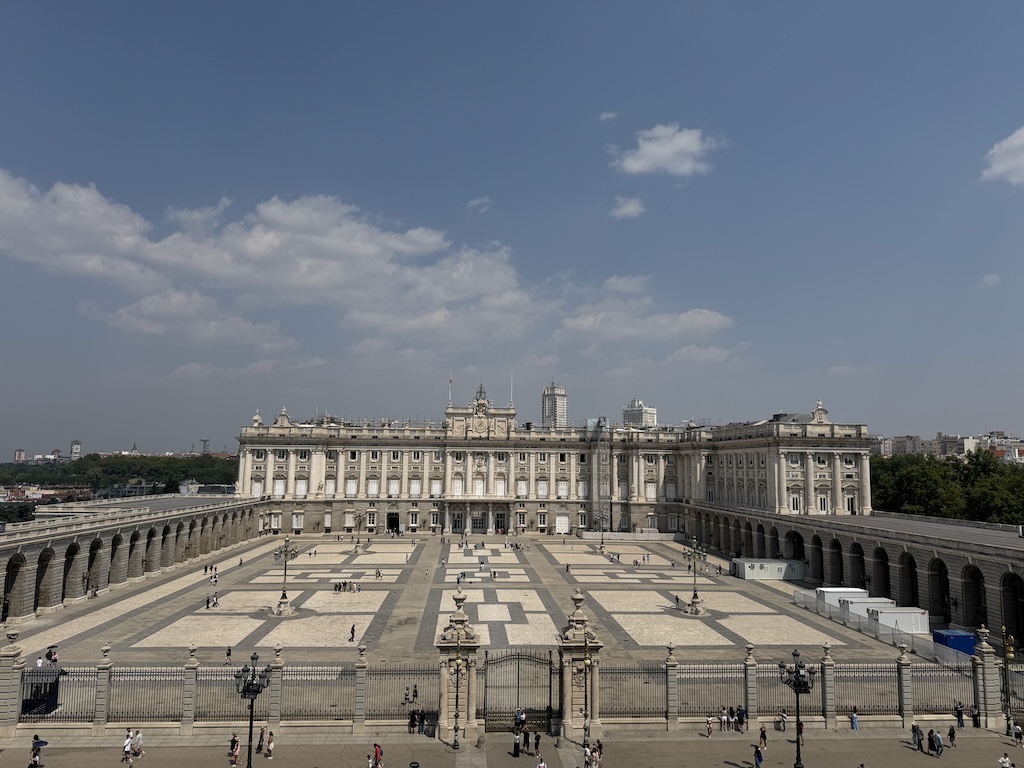
After touring the cathedral, I visited the palace. It is possible to get advance timed tickets, and apparently it’s advisable to do so during peak periods. That said, I did not get tickets in advance, though fortunately, the lines for this were reasonable on the day that I visited.
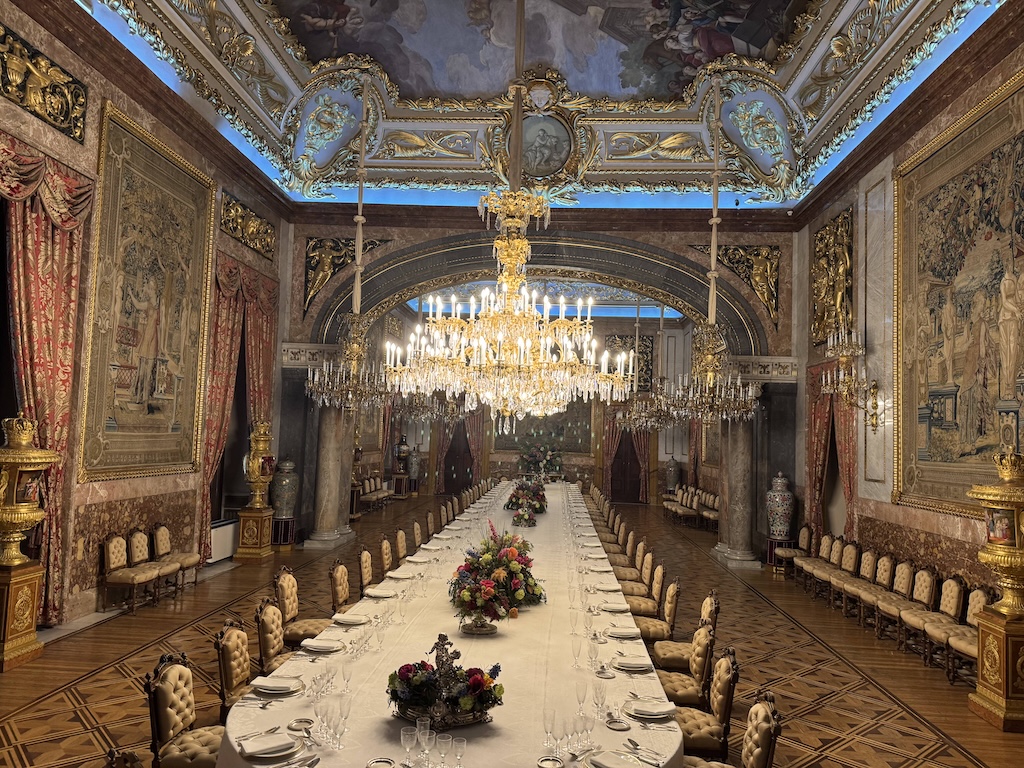
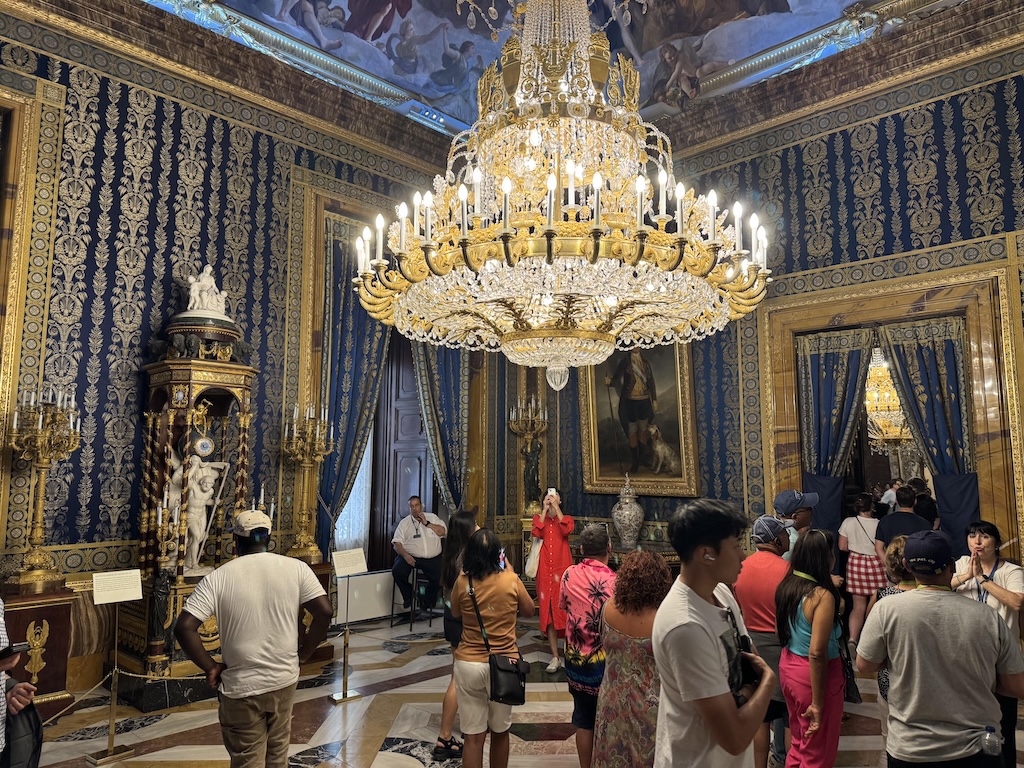

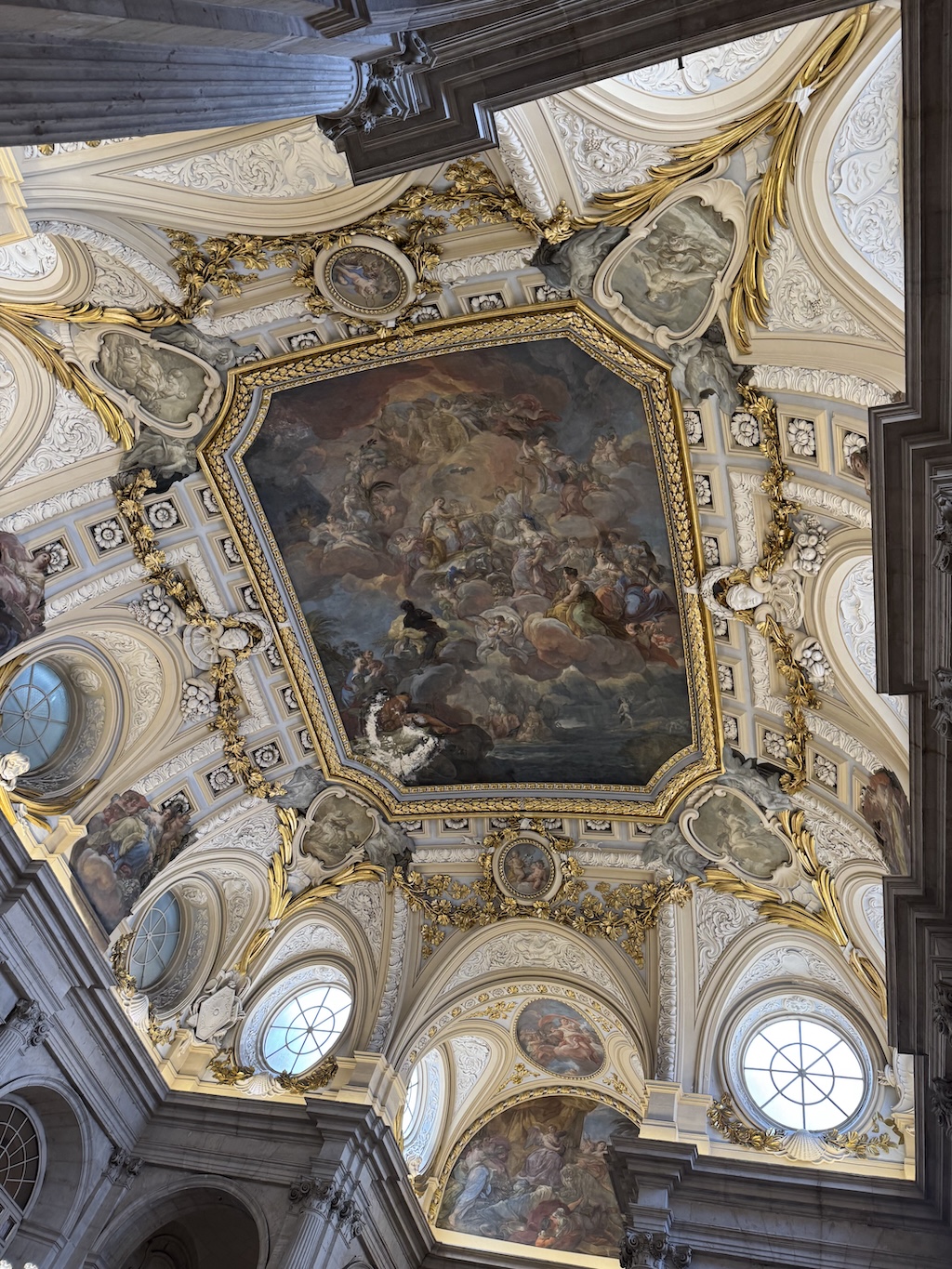
The palace was well worth visiting. It was on the crowded side, but I enjoyed seeing the different tastefully ornate rooms and articles.
I continued to walk around the area outside the palace, seeing the view of the surrounding city and walking around the nearby Plaza de Oriente.
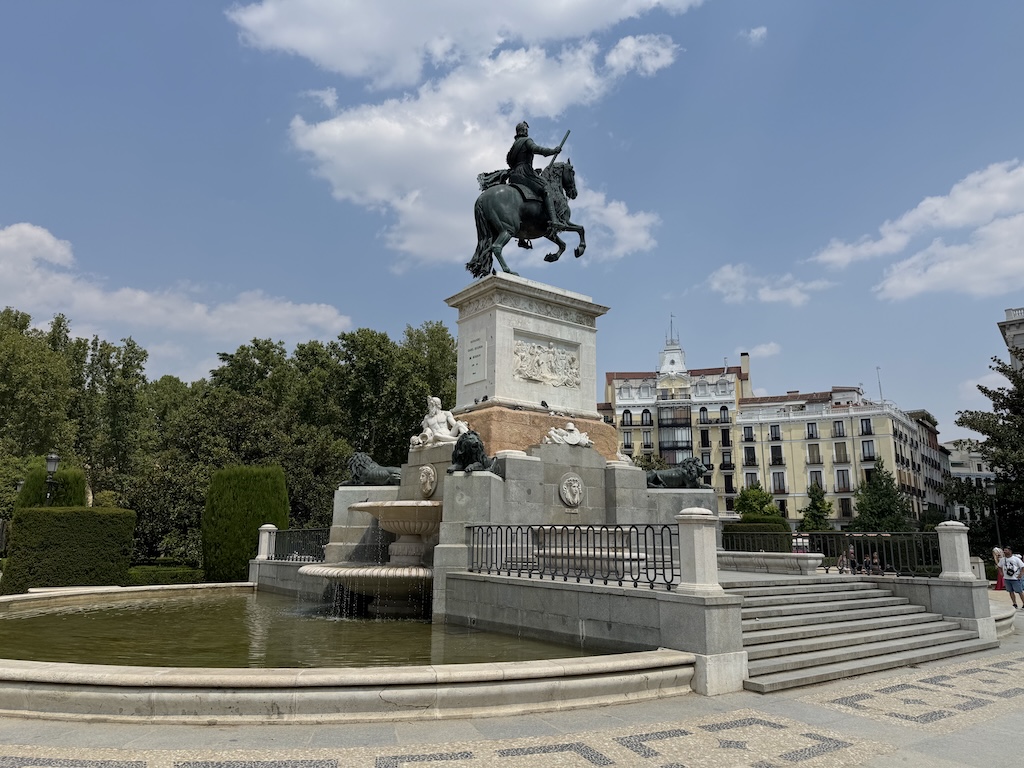
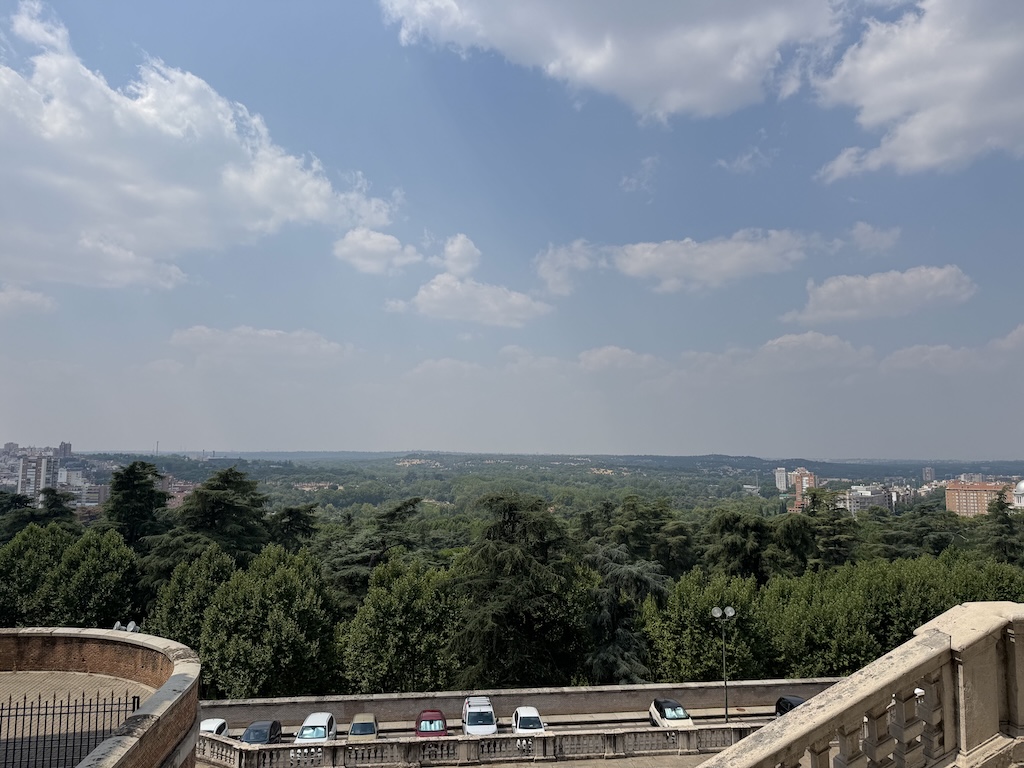
Continuing on, I got a quick lunch, after which I made my way towards the Prado Museum, where I had bought an advance timed ticket. Like at the palace, the timed tickets didn’t seem so necessary the day that I went – mid-afternoon, midweek in late August.
I didn’t get any pictures around the Prado, but I did enjoy the visit inside. After that, I went to the park El Retiro immediately behind the museum. The park was a great place on a sunny day to wander around.
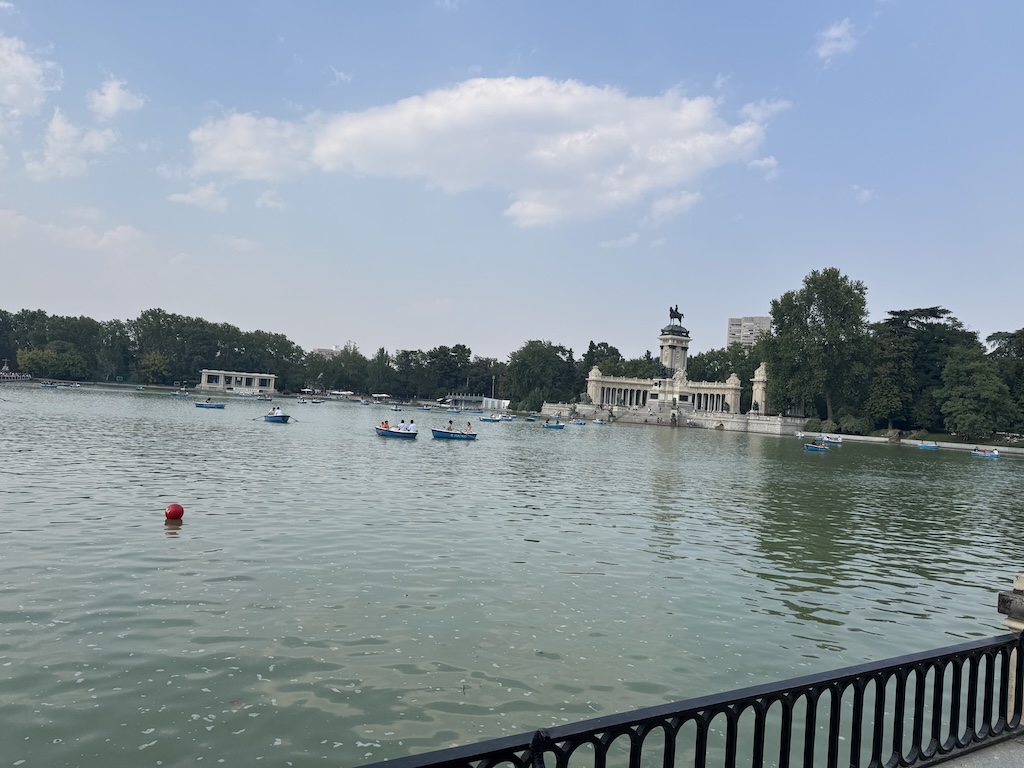
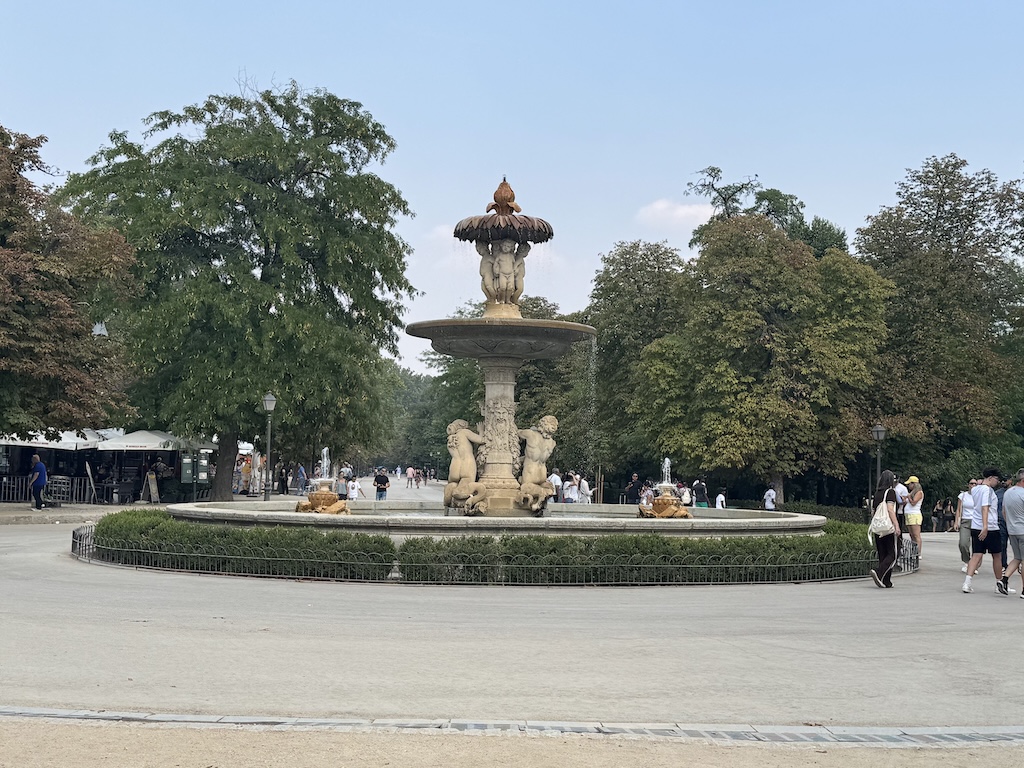
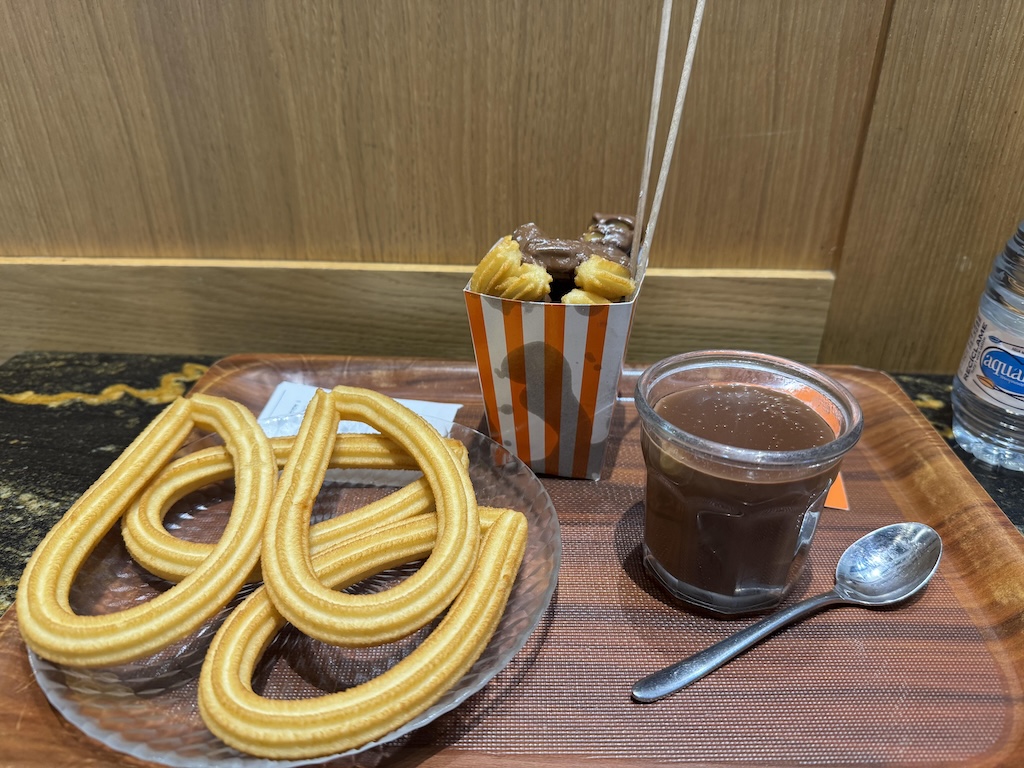
I did rest briefly in the hotel, and then spent some more time in the main areas of the Puerta del Sol as the sun was going down. There were tons of people out in the evening. I was too tired for a proper dinner at Spanish dinner hours, so I ended up getting churros and chocolate, which was a delicious substitute.
Train to Sarria
The next morning, I took the metro to the train station, in time for my 10am train. The train was smooth and fast as any European high speed train. I changed trains in Ourense, and the second train was a more regional train, arriving just after 2pm.
My hotel in Sarria was a few blocks from the train station. One thing that my hotel gave me at check in was a booklet to get stamped along the route. The booklets ended up being fairly interesting – the various hotels, cafes, chapels, and random people along the way will stamp the booklets. (The random people often did it for tips, but it could be quite elaborate). To get the completion certificate, you need to get at least 2 per day. It ended up being a nice snapshot of everything you passed by along the Camino.
At that point, I went down the street to get a lunch, since 2:30pm is part of a normal Spanish lunchtime. One thing that I did notice was that “siesta hours” are a real thing in Northern Spain – many of the small shops were closed roughly 2:30-4:30pm. Similarly, by 4pm, the restaurants that were lively at 2-3pm for lunch were closed.
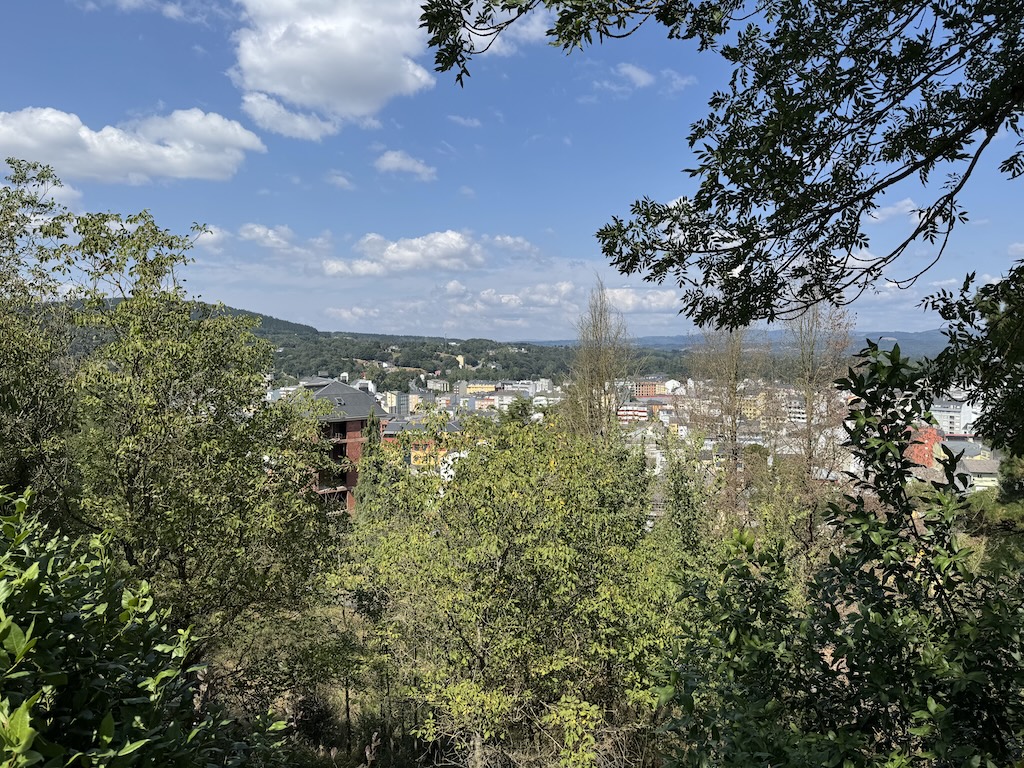
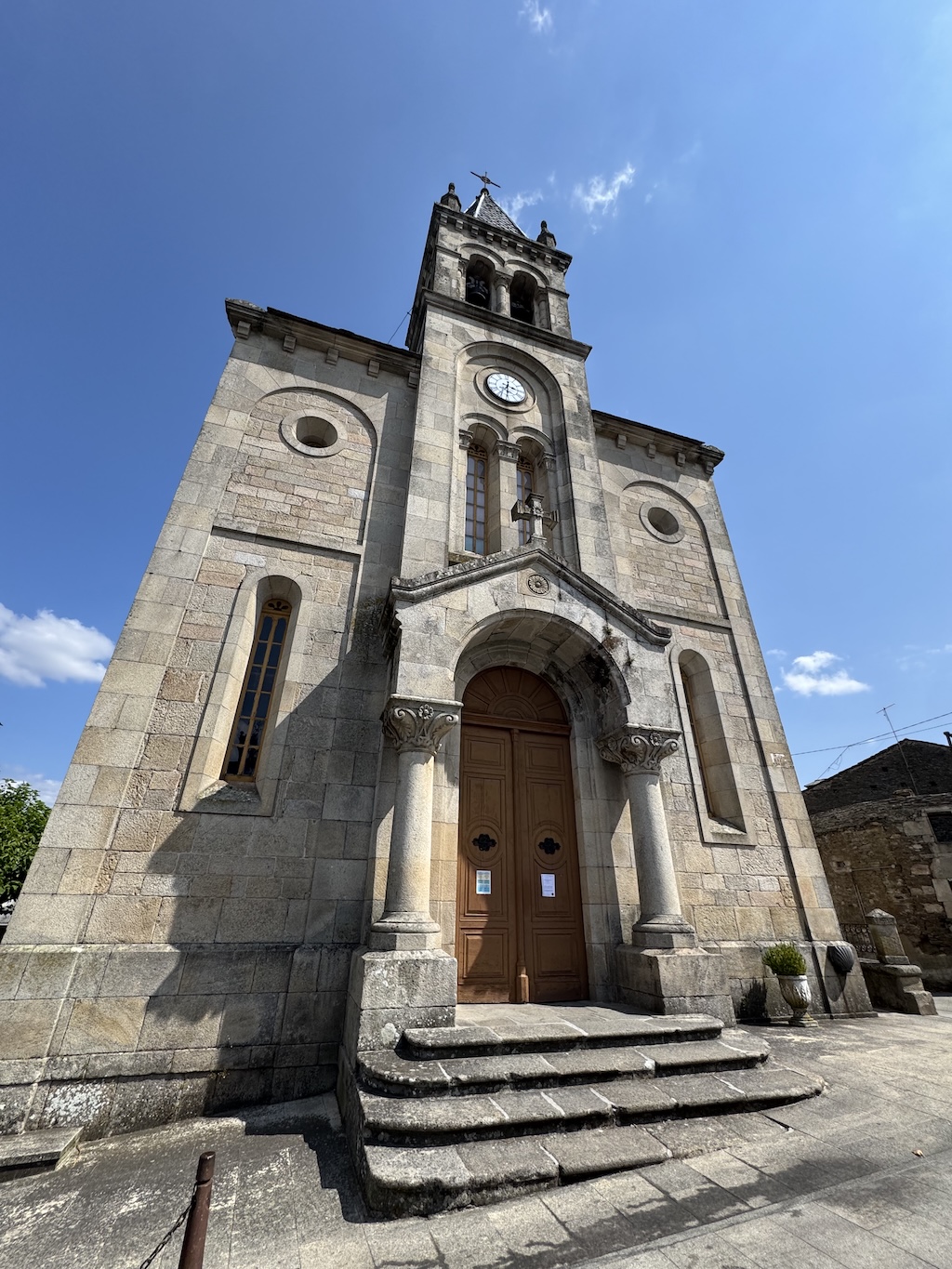
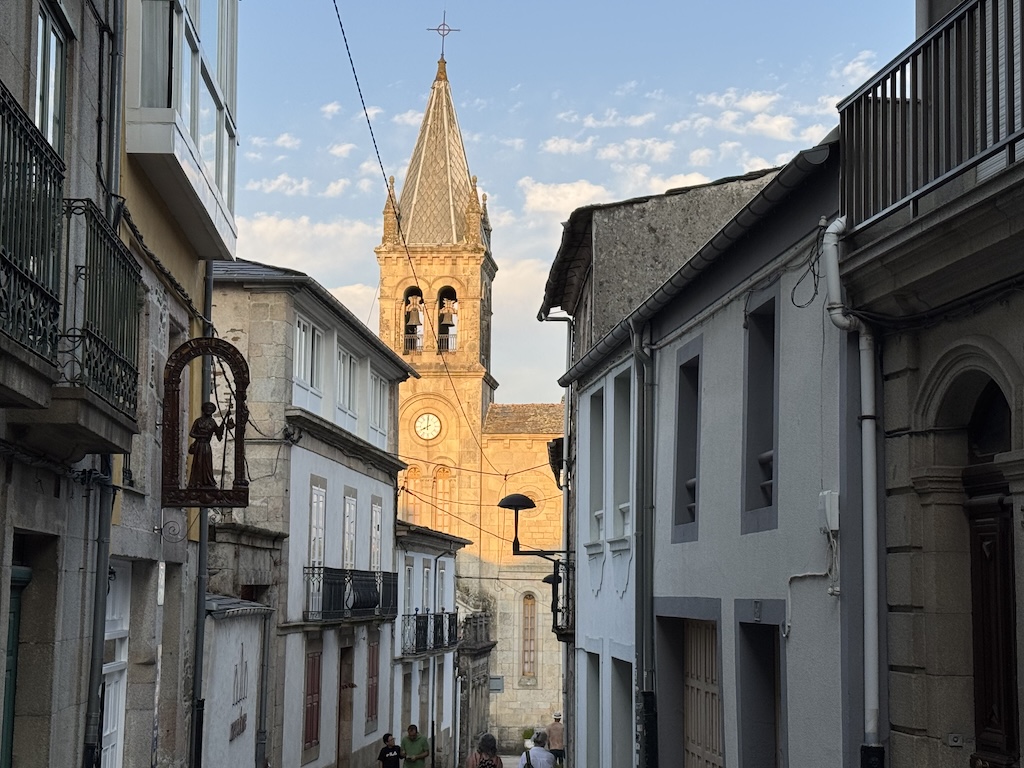
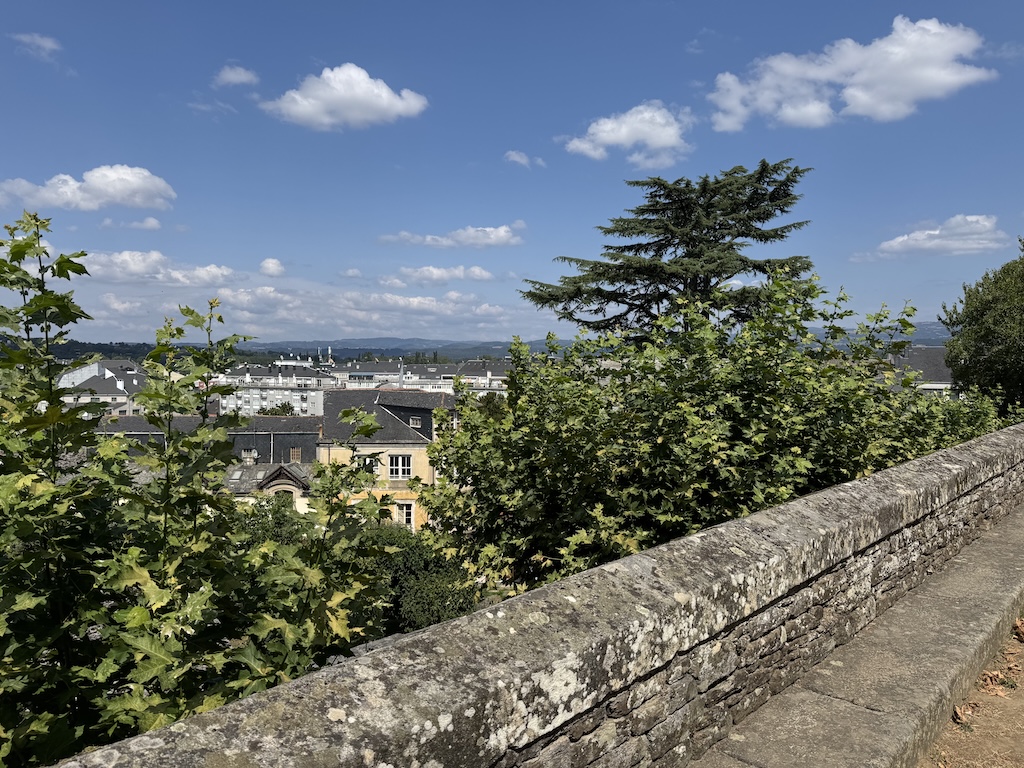
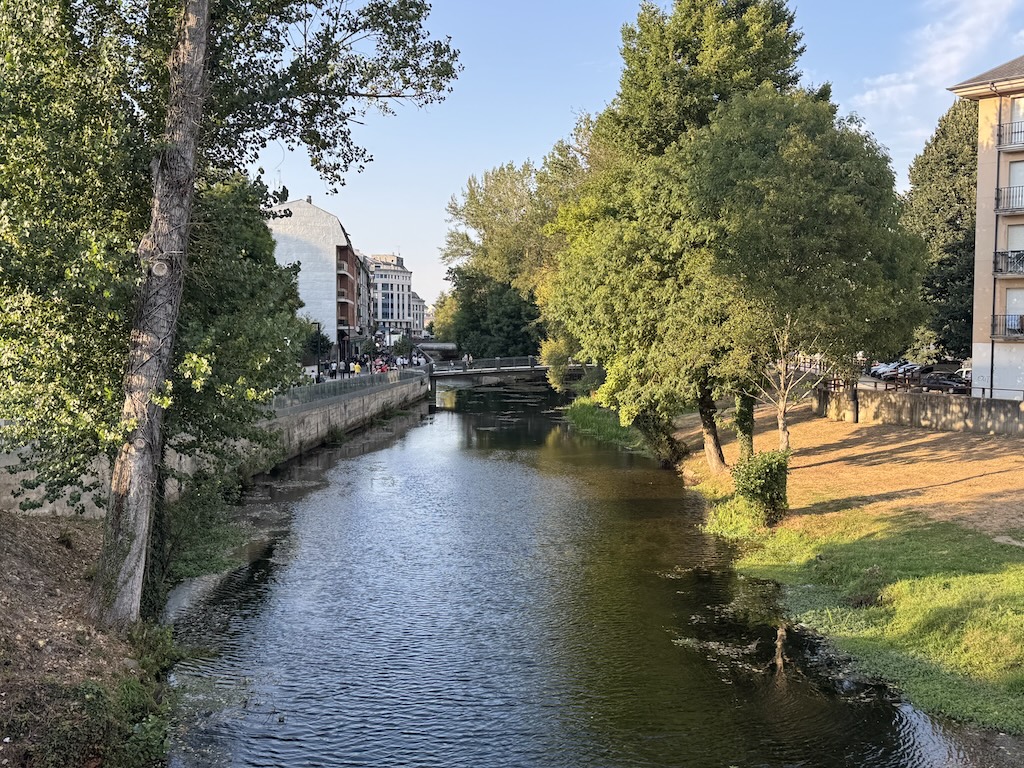
Later that afternoon after lunch, I spent some time wandering around Sarria. For a town of 13,000 people, it was quite nice – green vistas, beautiful stone churches, Old World charm. I wandered down a few km of the Camino trail through and by the town, from the riverside area with the restaurants.
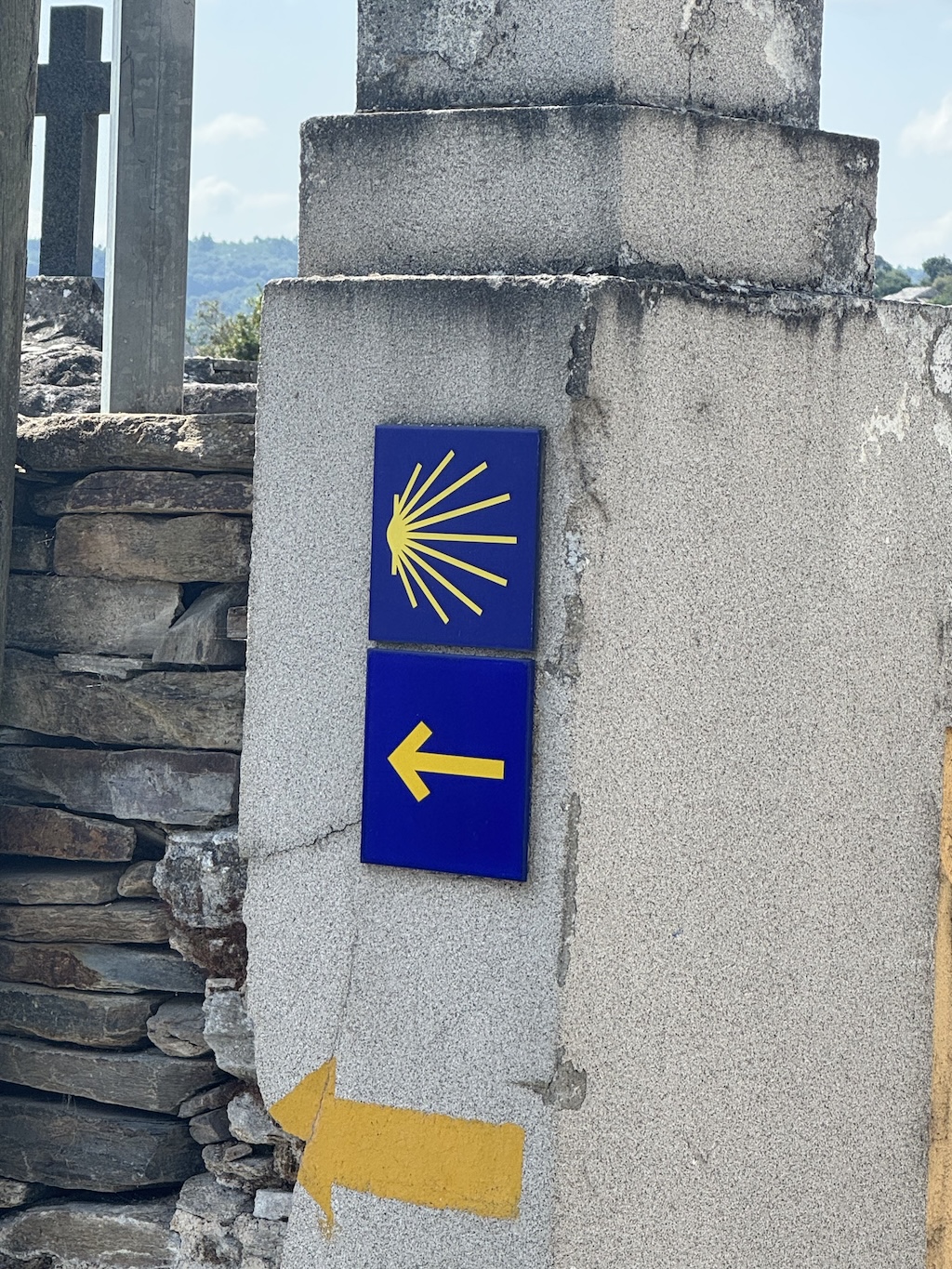
It actually took me a few minutes to orient myself to the start of the trail – my Buen Camino phone app helped me with that; but once there, it’s fairly easy to follow the abundant blue and yellow shell-like signs.
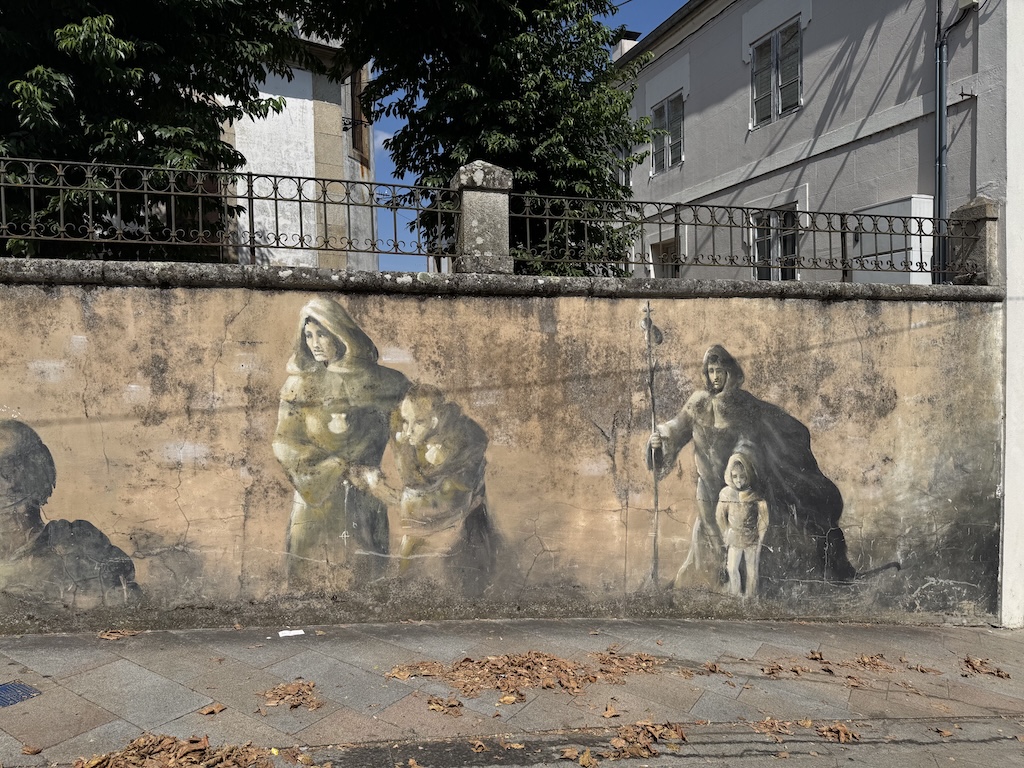
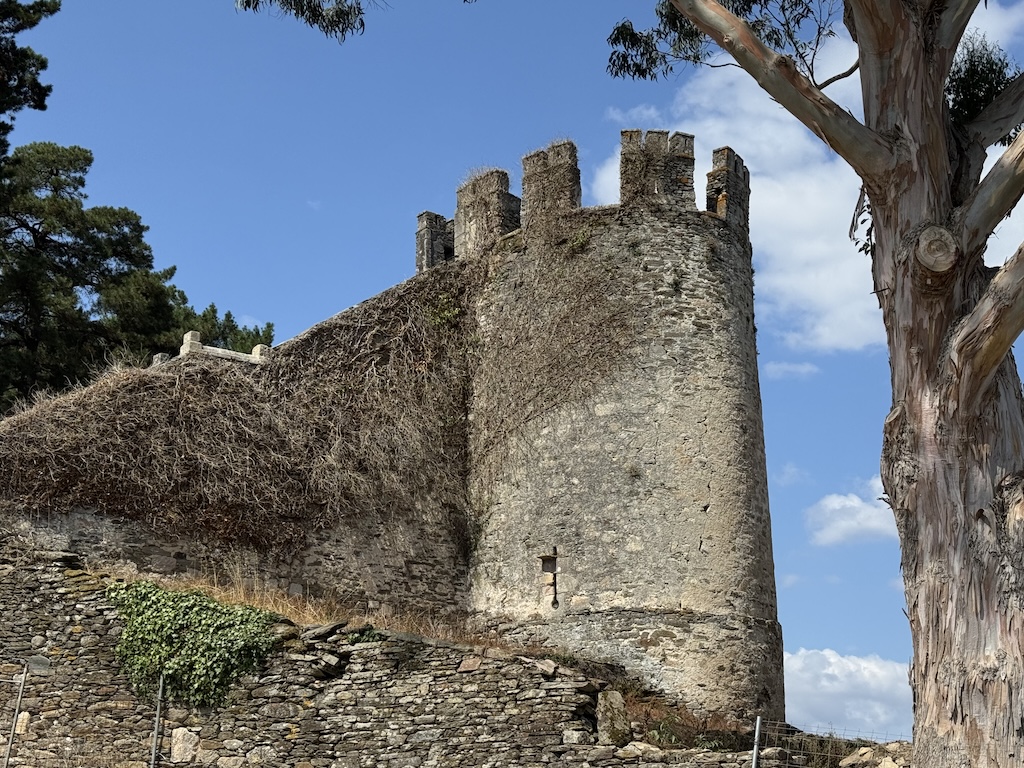
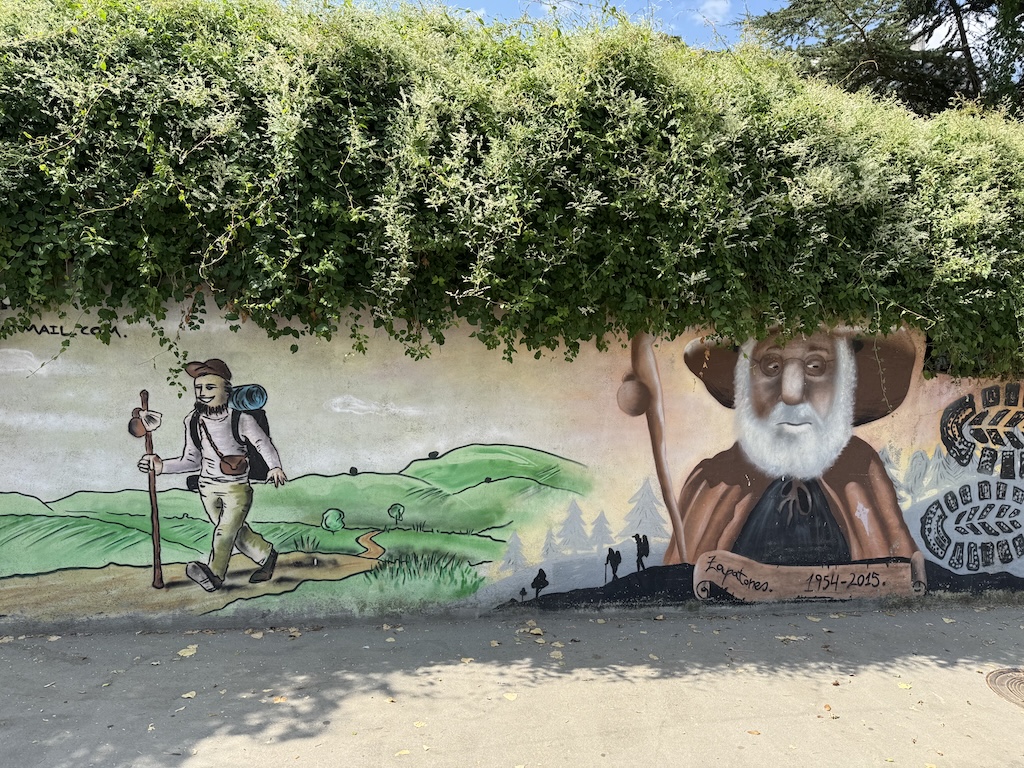
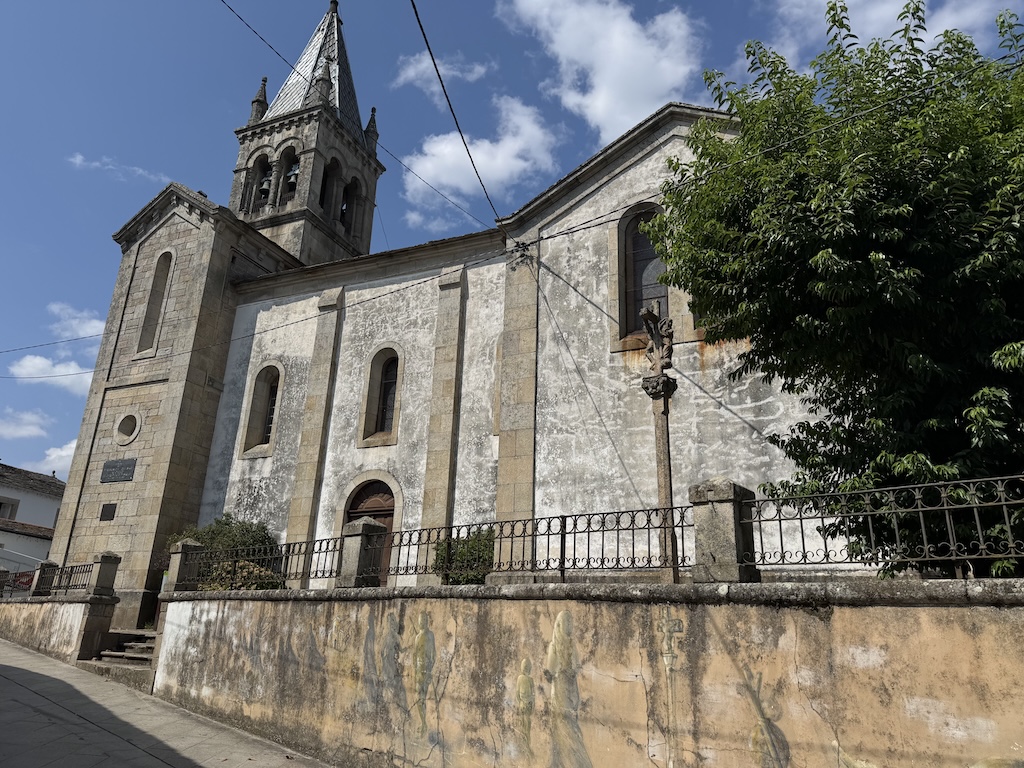
Later that evening, I got some dinner, and generally – I enjoyed seeing this cute rural town. It was a foretaste for a lot of other very neat towns and sites that I would see along the 115km walk I had planned to Santiago.
More From Our Blog
Keep reading our travel blog for more adventures on the Camino de Santiago:


 Adventures of the 4 JLs