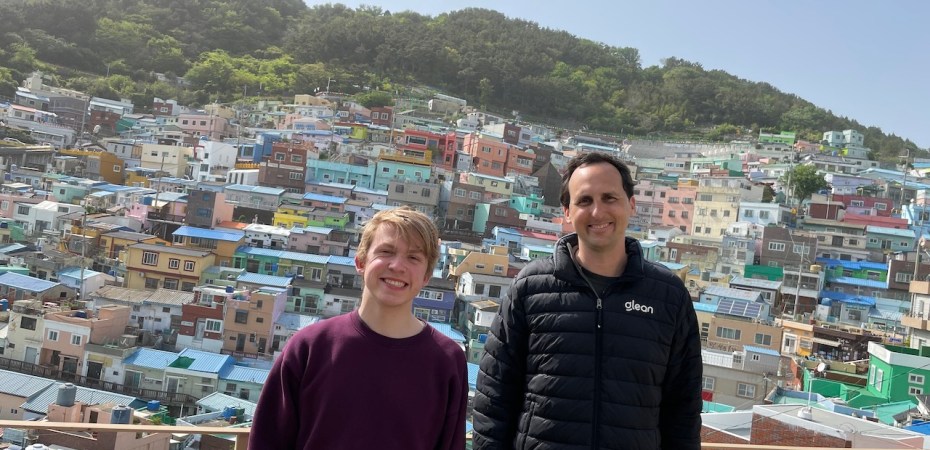
Busan is a vibrant coastal city in South Korea – it’s the second largest metro area there, located at the southern tip of the country. Beyond cultural attractions and beaches, it’s a nice “second metro area” to visit in Korea, and it was a nice surprise for us during our visit.
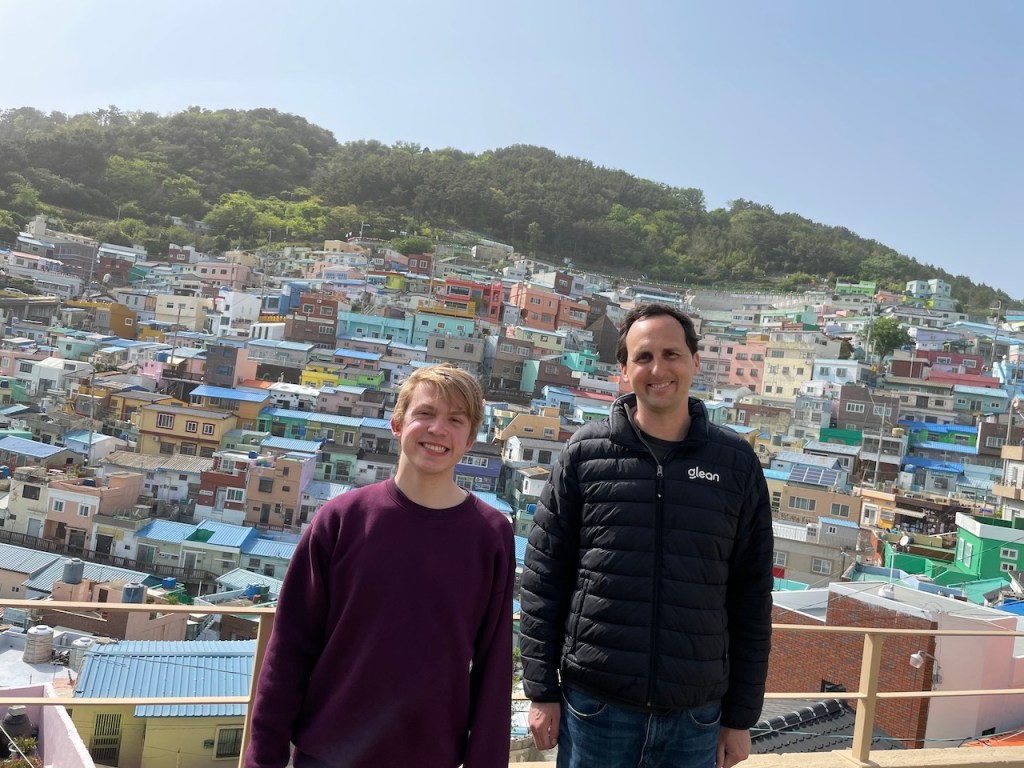
While doing our original trip planning, we had thought about spending a couple of days here, but once we realized how much there was to do in Seoul, we ended up booking 7 nights in Seoul with the option of doing a few day trips.
In the end, we decided to take a somewhat ambitious day trip to Busan. (This is partly because Jennifer and John had to skip the trip last minute, and James and I went into hyper-“explorer mode”). We were glad we went there, but in our typical fashion, it was quite exhausting and probably should have spent at least a couple of days there. That said, with trips constrained by school, family, and work schedules, sometimes we choose to do things that are fun, but perhaps less than ideal. There are always tradeoffs!
Busan Tour Itinerary
The main sites in Busan are spread over a fairly wide area, so with only one day, we decided to book a private tour that would quickly and efficiently take us from place to place. If you have limited time in Busan, we definitely recommend this option!
Our particular itinerary included:
- Haedong Yonggungsa Temple
- Nurimaru APEC House area
- Haeundae Beach
- Haeundae Beach Train
- Songdo Beach
- Gamcheon Culture Village
- Jagalchi Fish Market
- BIFF Square
I think group tours+transit would have worked fine to see the city if we had a couple days there. But for a single day, a private tour seemed to be necessary given how far apart some of the sites were. For instance, most Busan itineraries include the Yonggungsa Temple and the Gamcheon Culture Village (both which are headliner sites), but if you look at the distances, they’re about 2 hours apart on public transit, and probably a solid hour by taxi.
We found our particular private guide/tour on Viator; they had good reviews, so we went with it. I suspect we would have had more options more than 4 days in advance, but we liked our guide.
Train to Busan
Busan is roughly a 2.5 hour train ride from Seoul on the high speed KTX trains.
We woke up at 5am for our 6:03am train, and after a few hiccups, made it to the Seoul train station. As it turns out, the Uber App was not working, Kakao Taxi wouldn’t work without a local credit card, and the regular taxis really didn’t want the short fare to the KTX station. Eventually, we found a taxi driver that took pity on us and drove us to the train station.
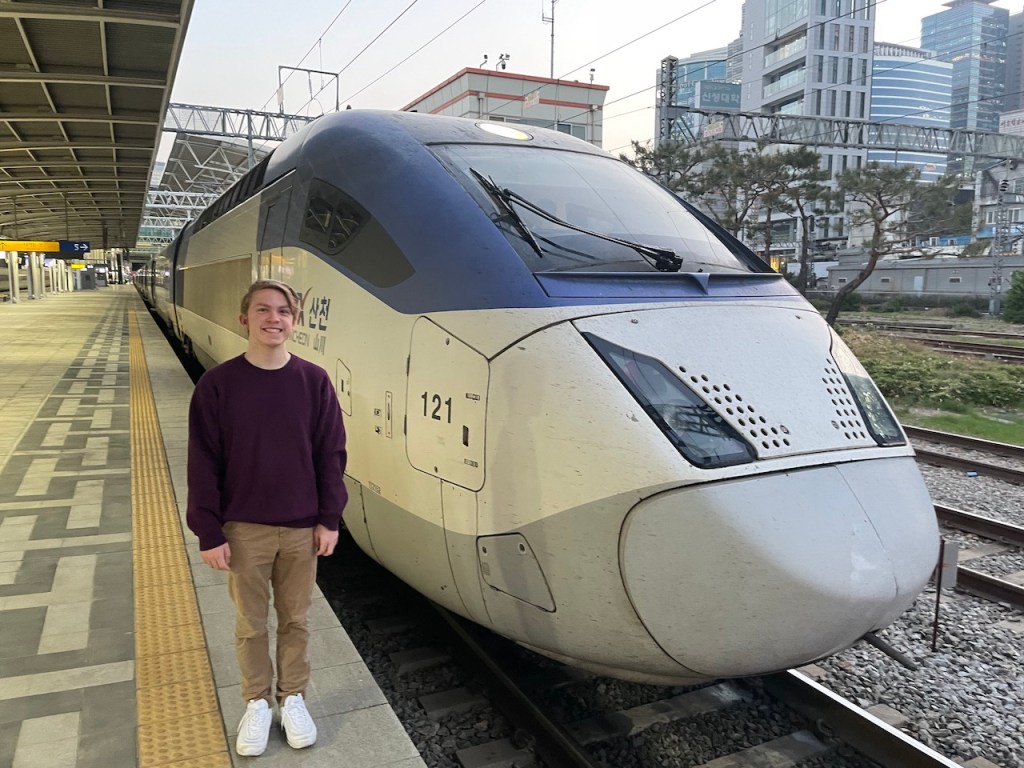
When we mentioned Busan prior to the trip, our 14 year old had us watch the horror movie Train to Busan, where zombies take over the train, but fortunately the trip was smooth.
Upon arrival to Busan, we were met by our tour guide, and were on our way by 9am.
Haedong Yonggungsa Temple
Our first stop was the Haedong Yonggungsa Temple, one of the most impressive temples in Busan, located on the northeastern coast of the city.
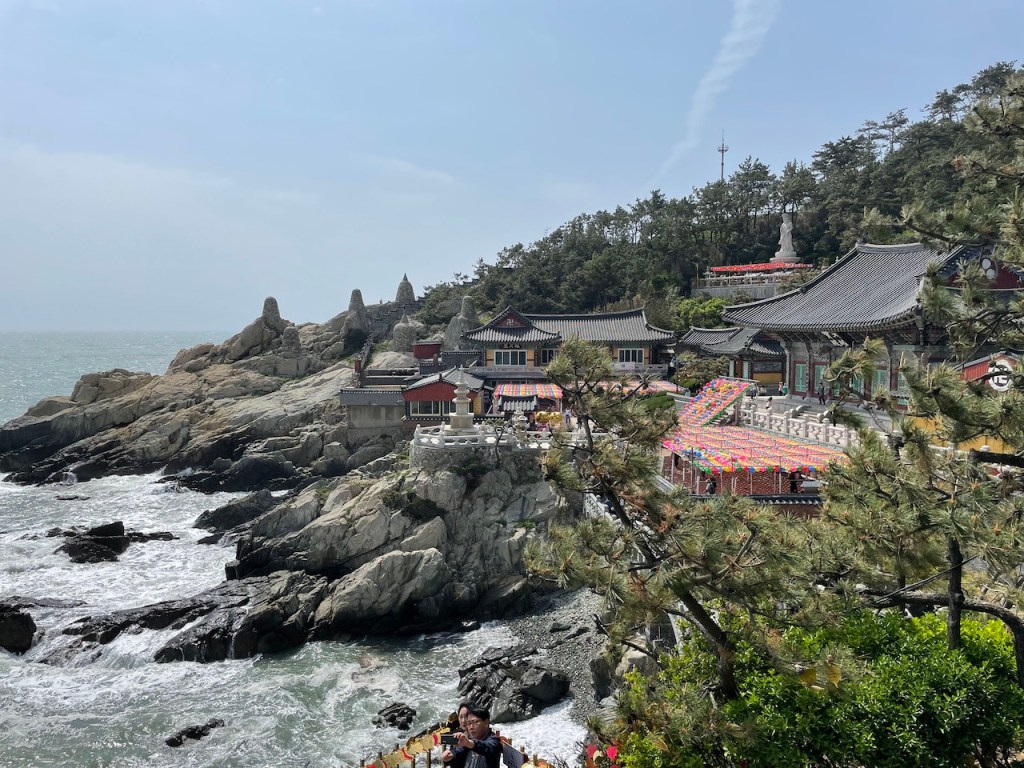
It was interesting to learn that many of the Buddhist temples were built in somewhat remote mountain regions because the people were fleeing from the shamanists, who were persecuting them.
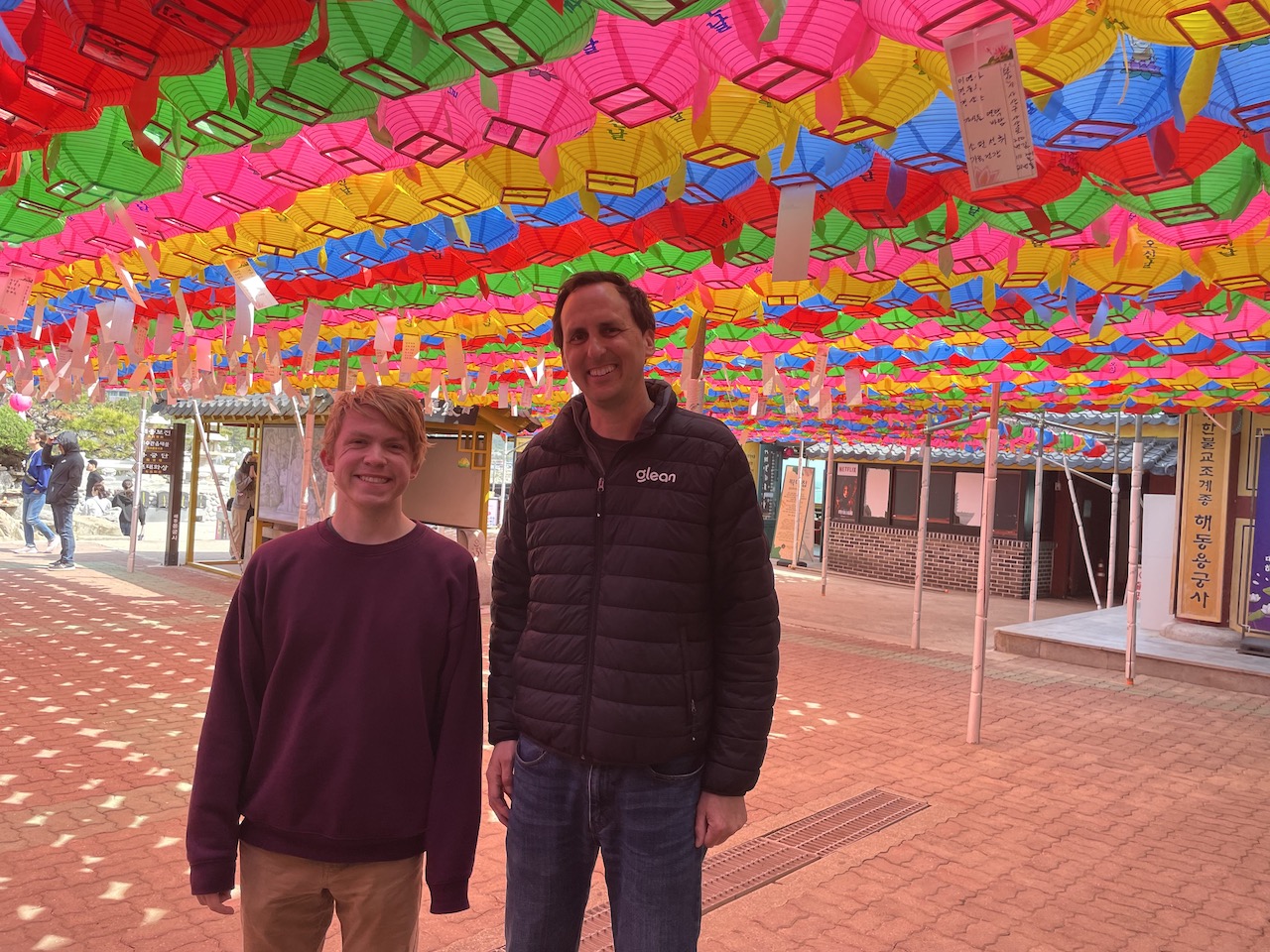

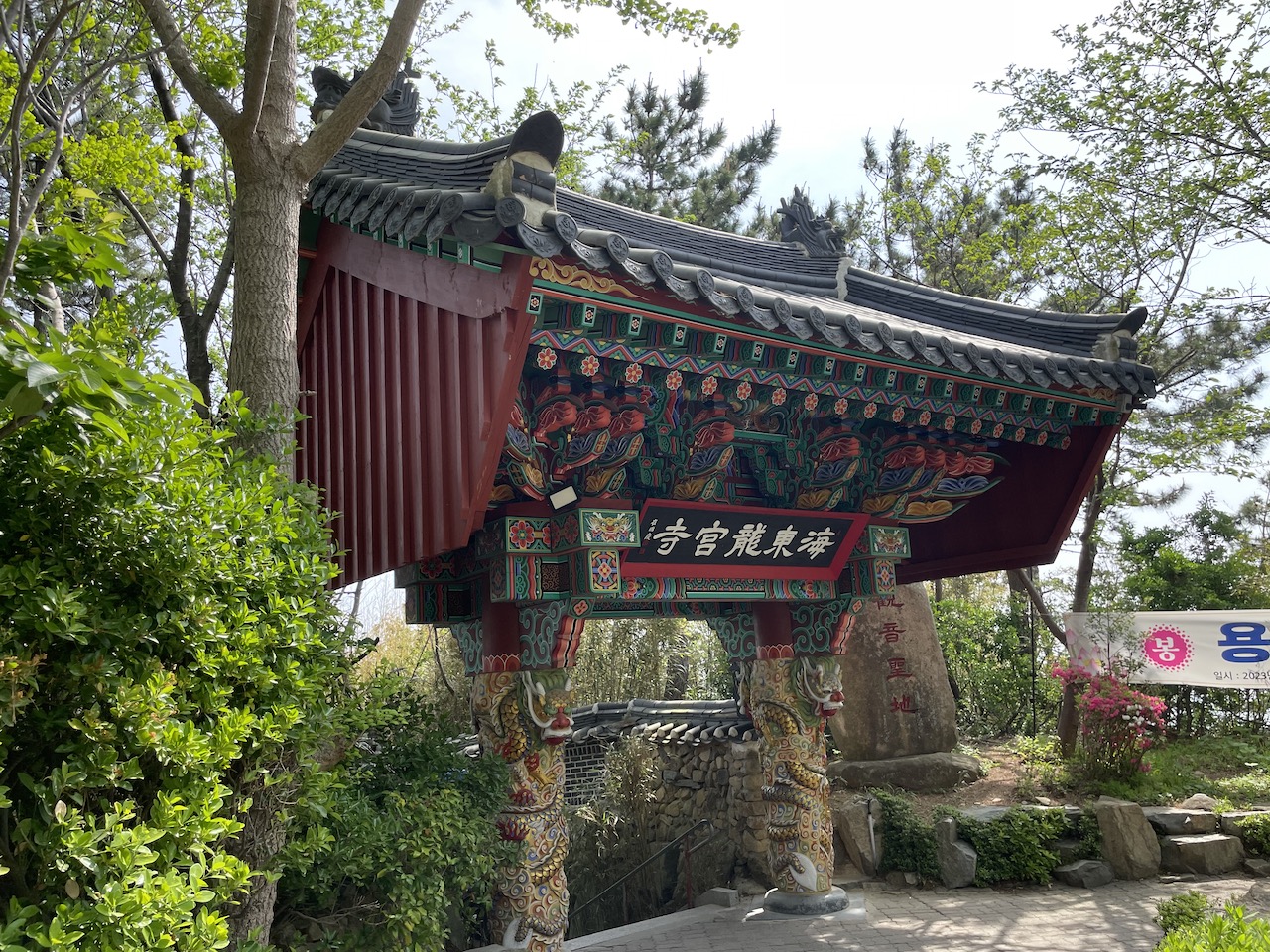
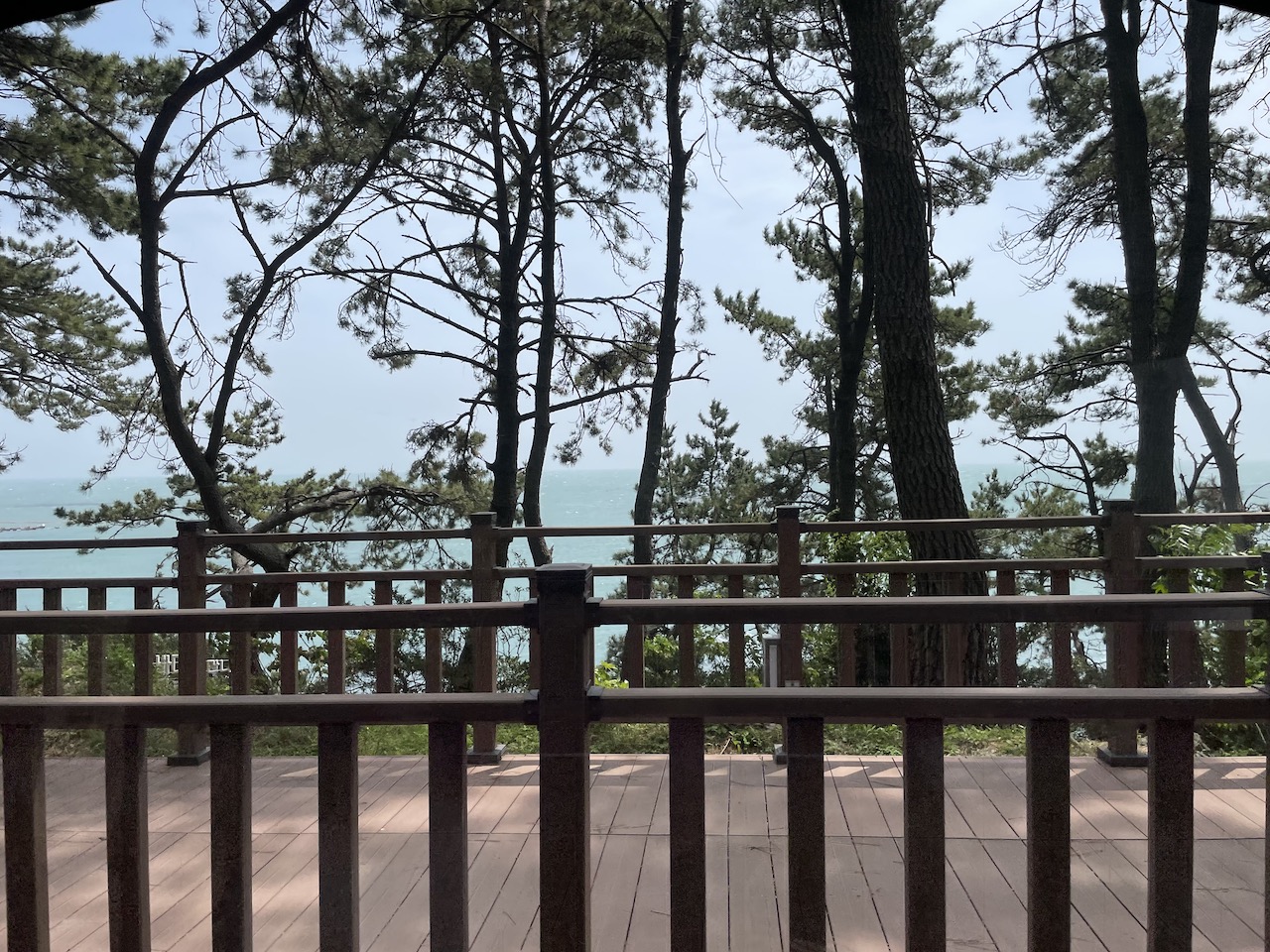
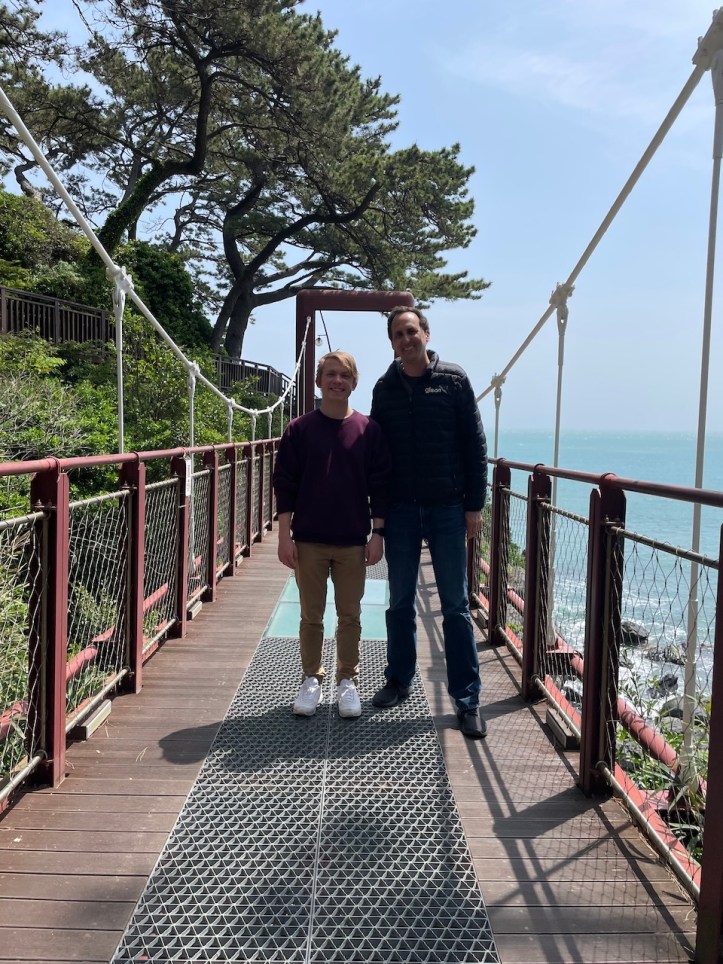
There were a lot of pine trees and our guide told us that the Korean people really like pine trees because they represent resilience. Even though the vegetation is a little different, the area reminded us a lot of the Costal Recreation Trail in Pacific Grove.
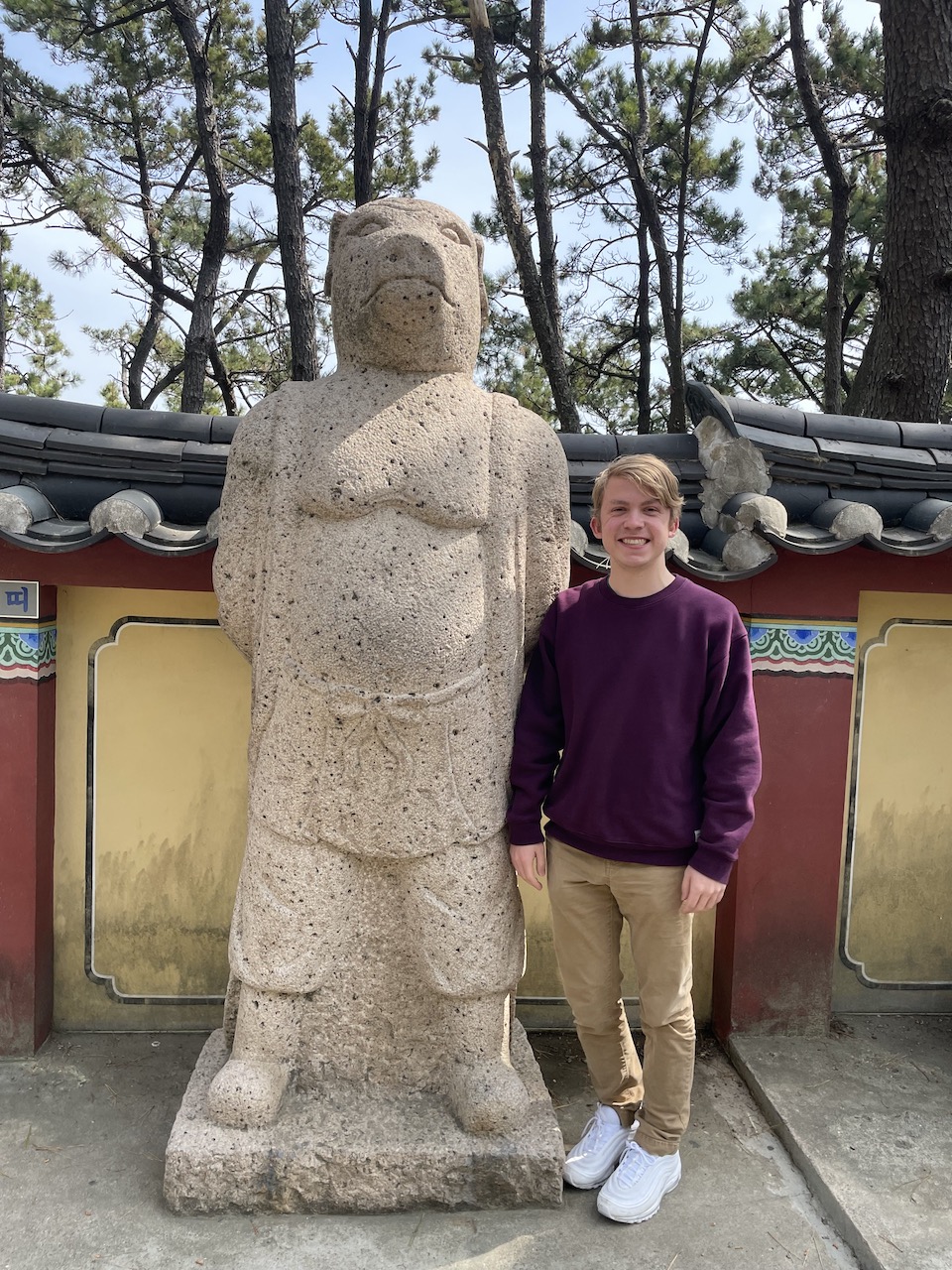
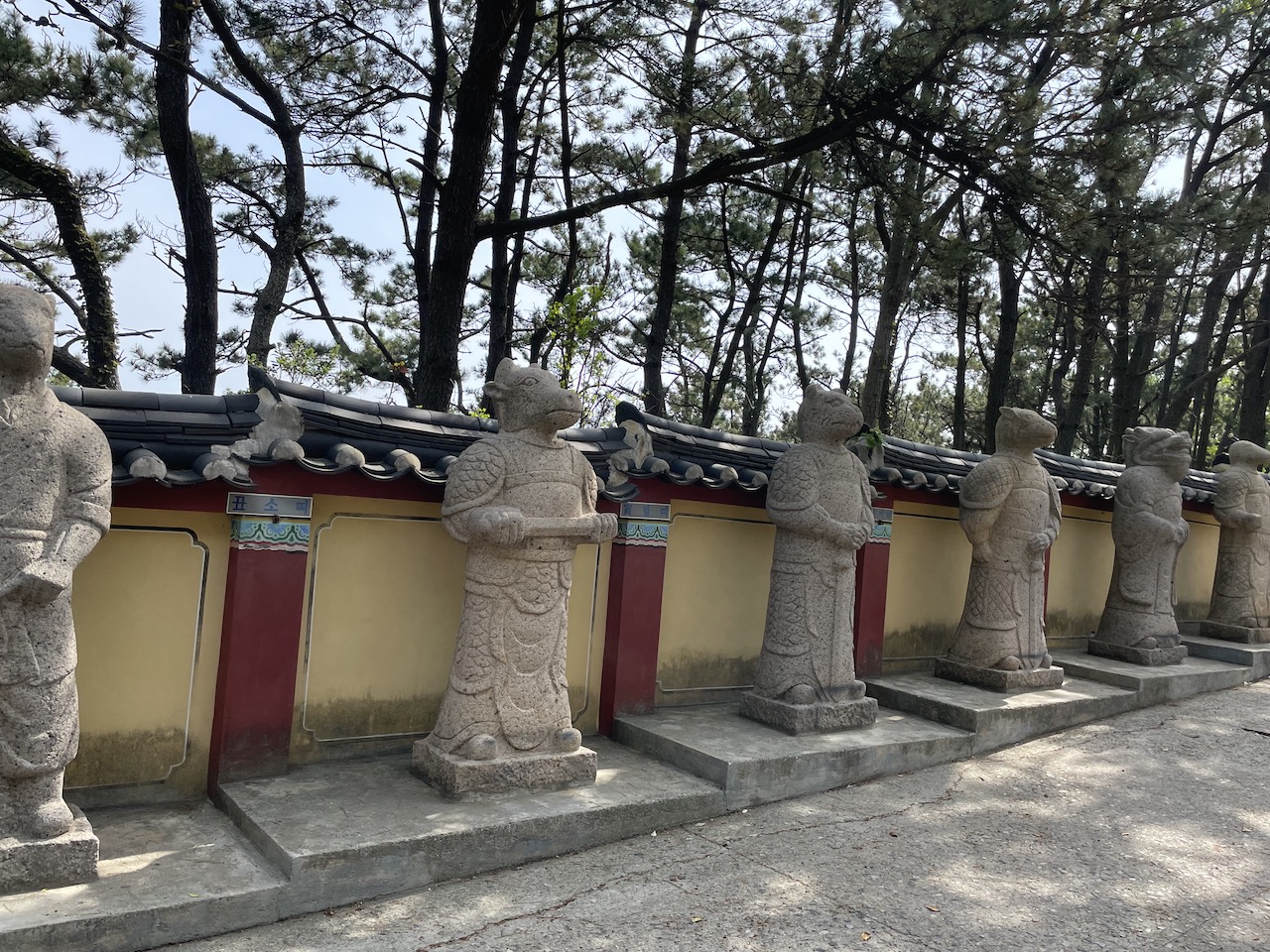
Random aside: we do often like seeing temples and other religious sites when traveling since they can be an interesting lens to help understand the host culture, and they’re often quite elaborate sites! At the same time, we have our own religious convictions, and draw a line at not directly participating/praying/etc in ways that are at odds with our beliefs. That said, we have also enjoyed (and remember very well) the times where things have worked out that we’ve been able to participate in worship services during overseas travels.
APEC Conference Center Area
Getting back in the car, our next stop was the park by the Nurimaru APEC House Conference center area, which was down the trail from the Haeundae Beach, and the site of a APEC conference with world leaders in 2005.

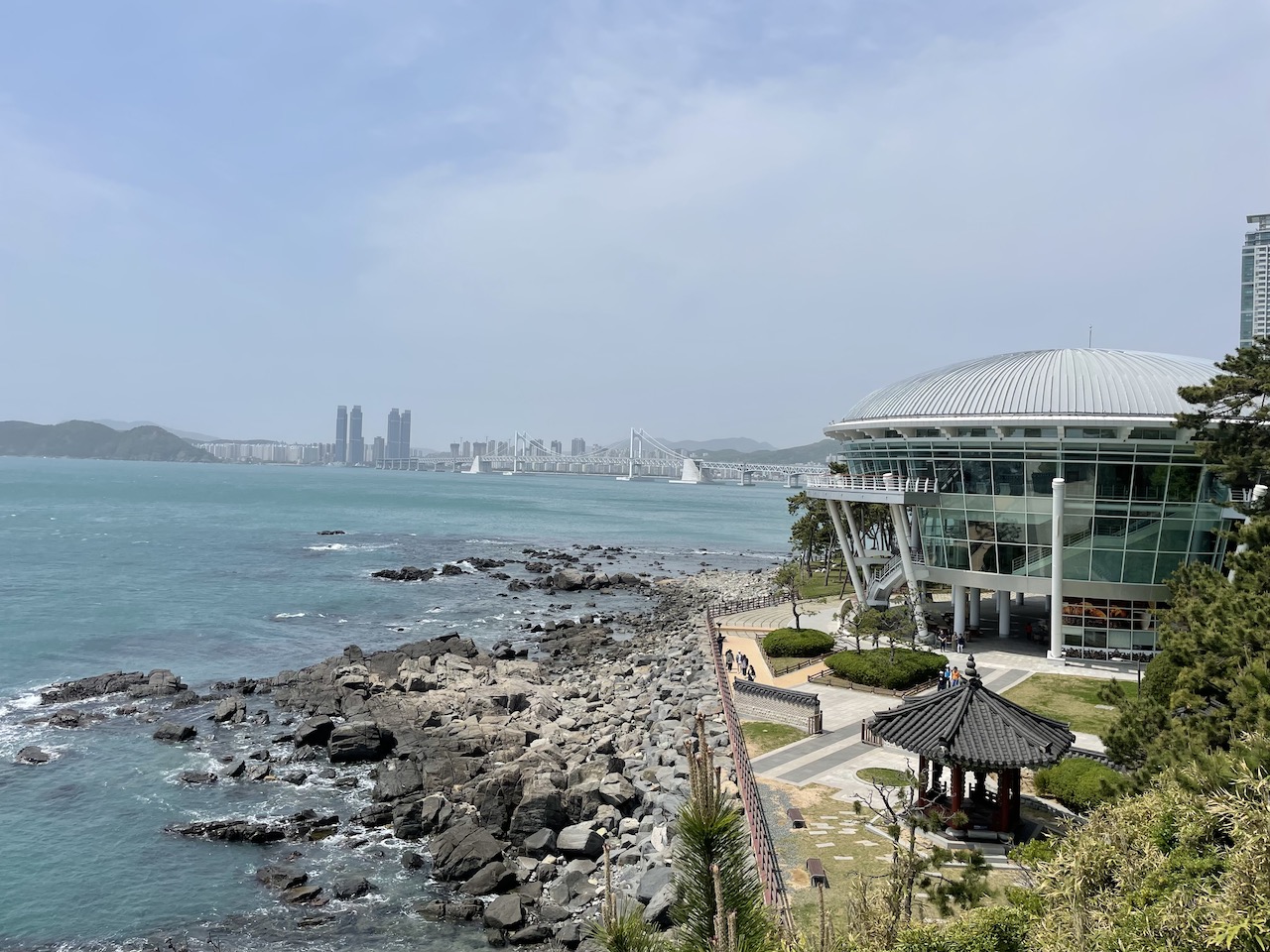
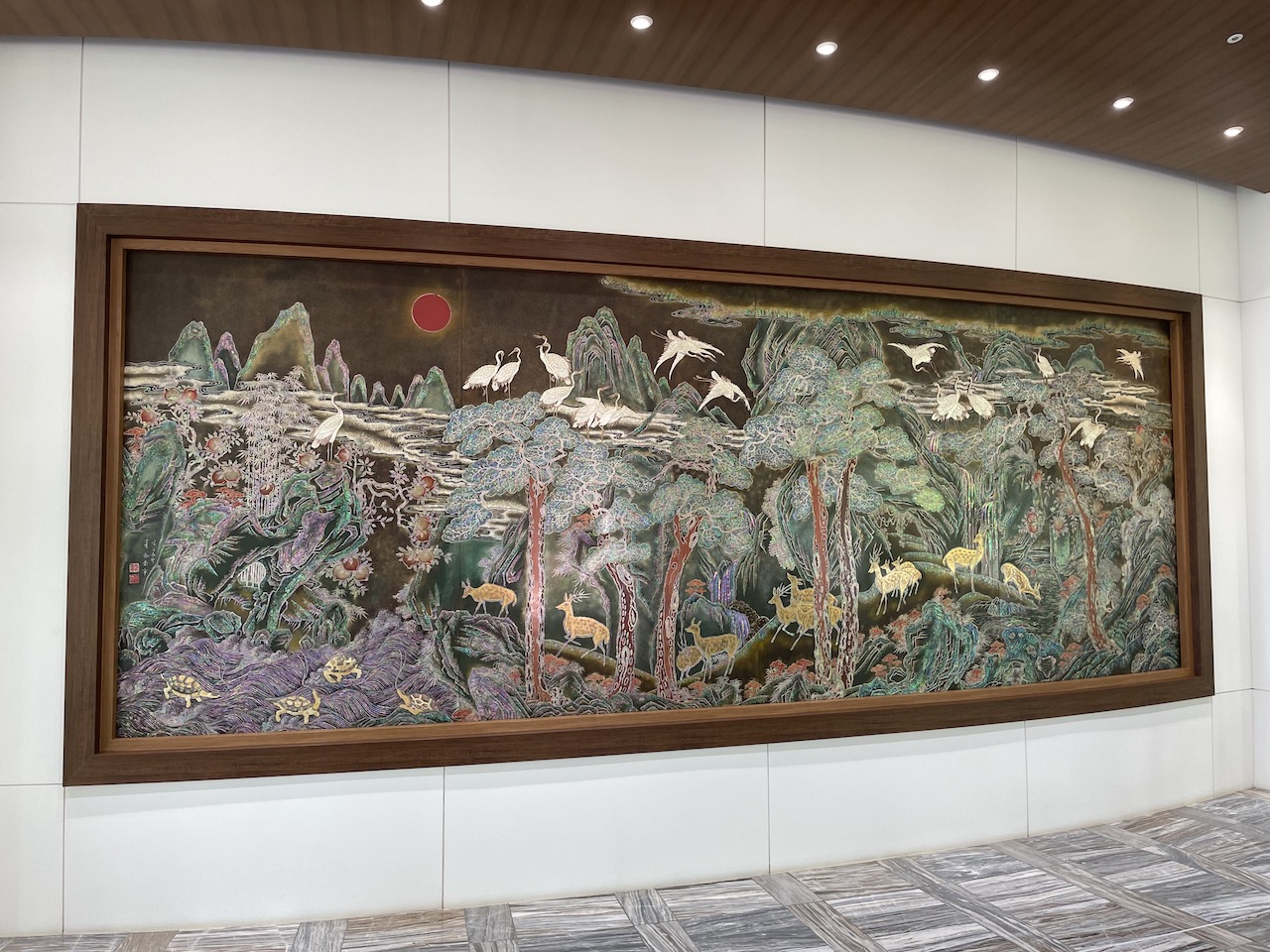
We weren’t sure what to expect, but there were some nice exhibits and a beautiful walk down the coast along the trail to Haeundae Beach.
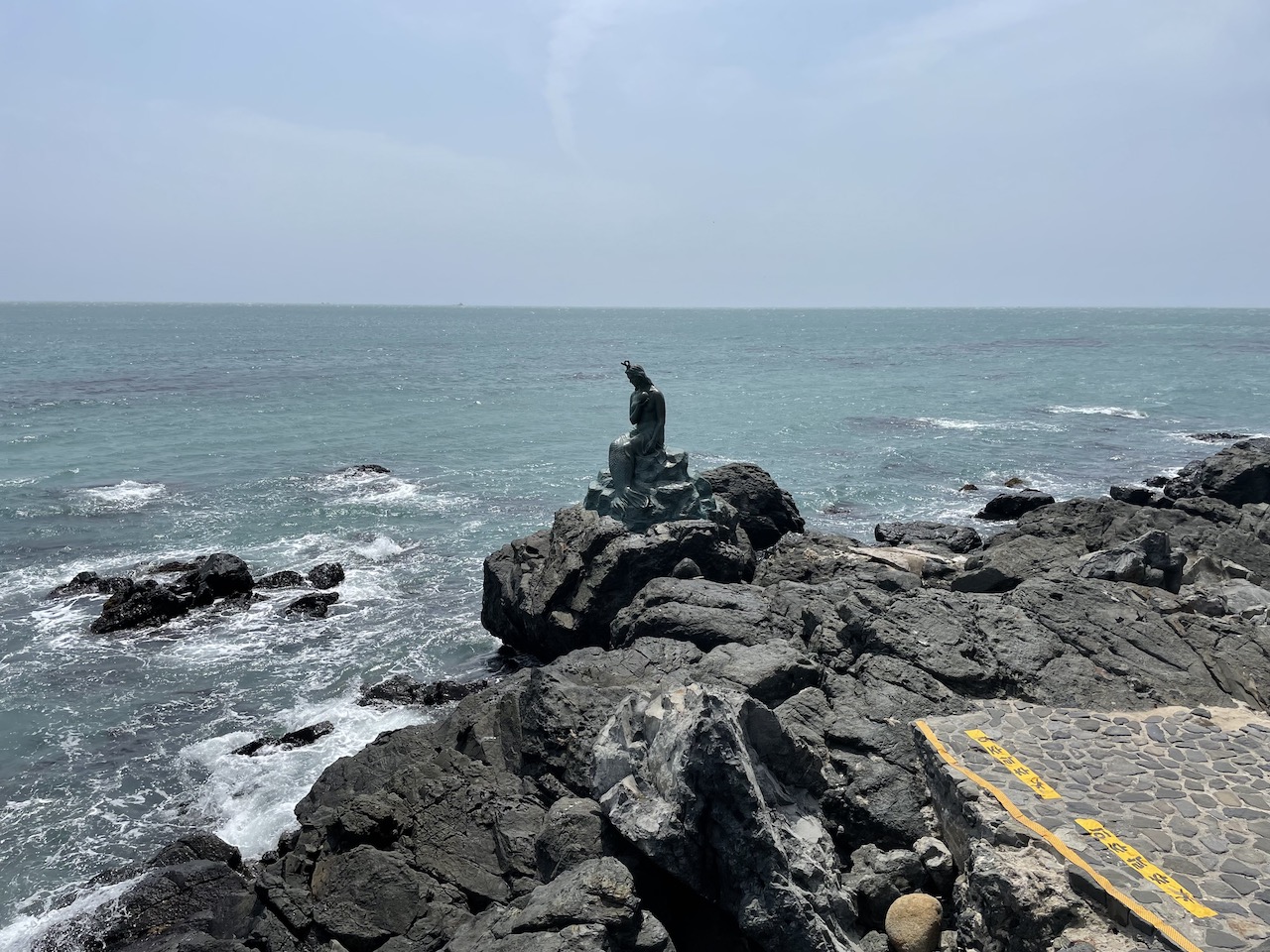
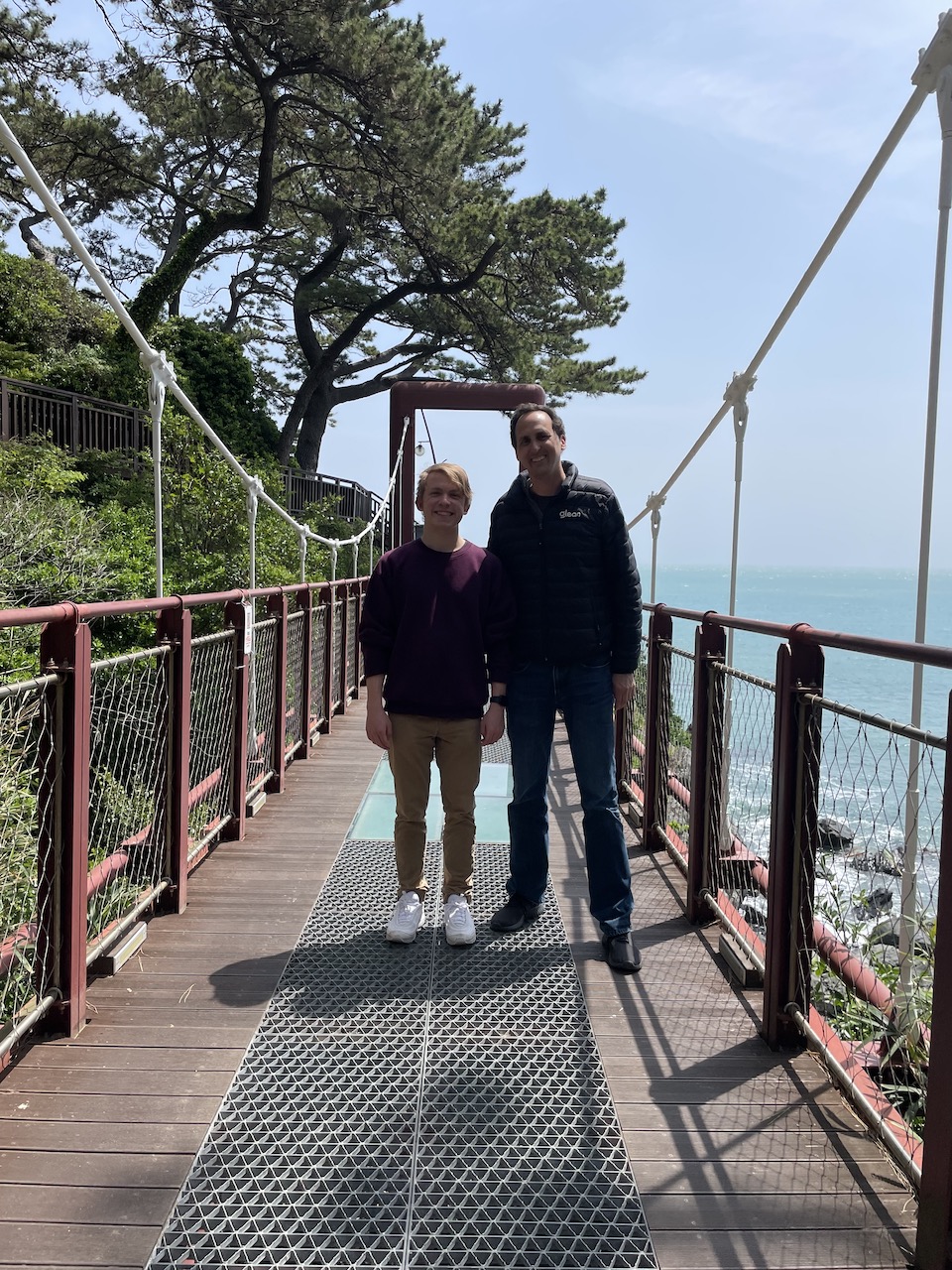
Google Maps only has public transportation directions in Korea (I believe related to local licensing restrictions), but the maps throughout this blog post will give you an idea of distances and why we chose to take a tour rather than navigate this on our own. If you choose to tour this city on your own and need driving or walking directions, consider using the Naver Map App.
Haeundae Beach
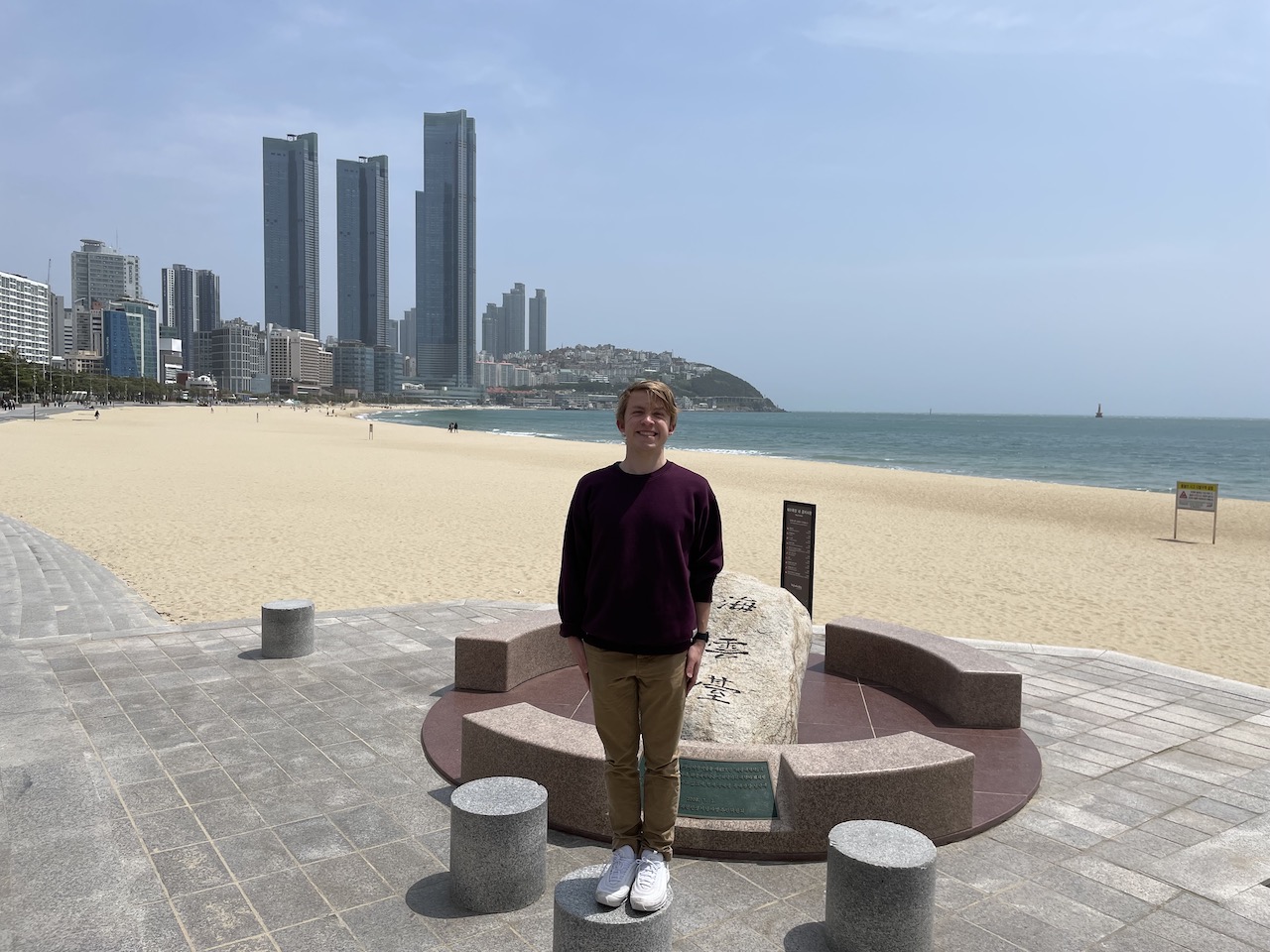
From here, we walked down to Haeundae Beach and enjoyed looking at the water.
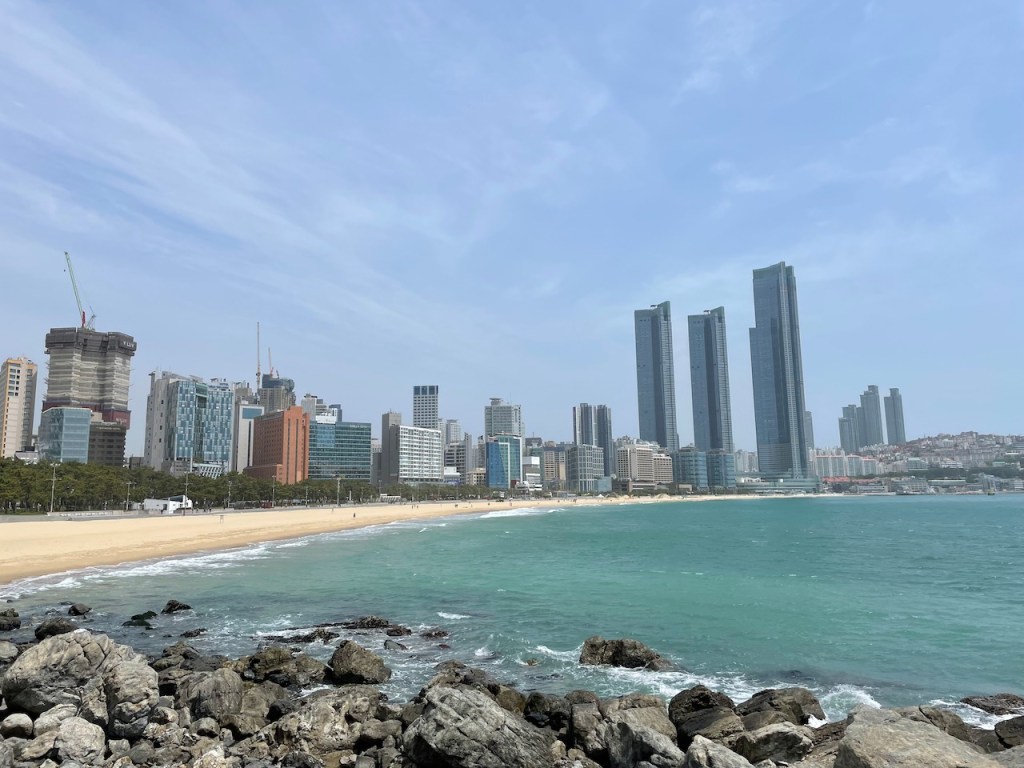
If it were warmer and we had more time, it would have made a very pleasant place to spend an afternoon.
Haeundae Beach Train
Our guide then put us on the scenic Haeundae Beach Train and told us to take it one stop, where she would meet us with the car. The seats all faced the ocean, and it was a nice short scenic trip.
Lunch and Songdo Beach
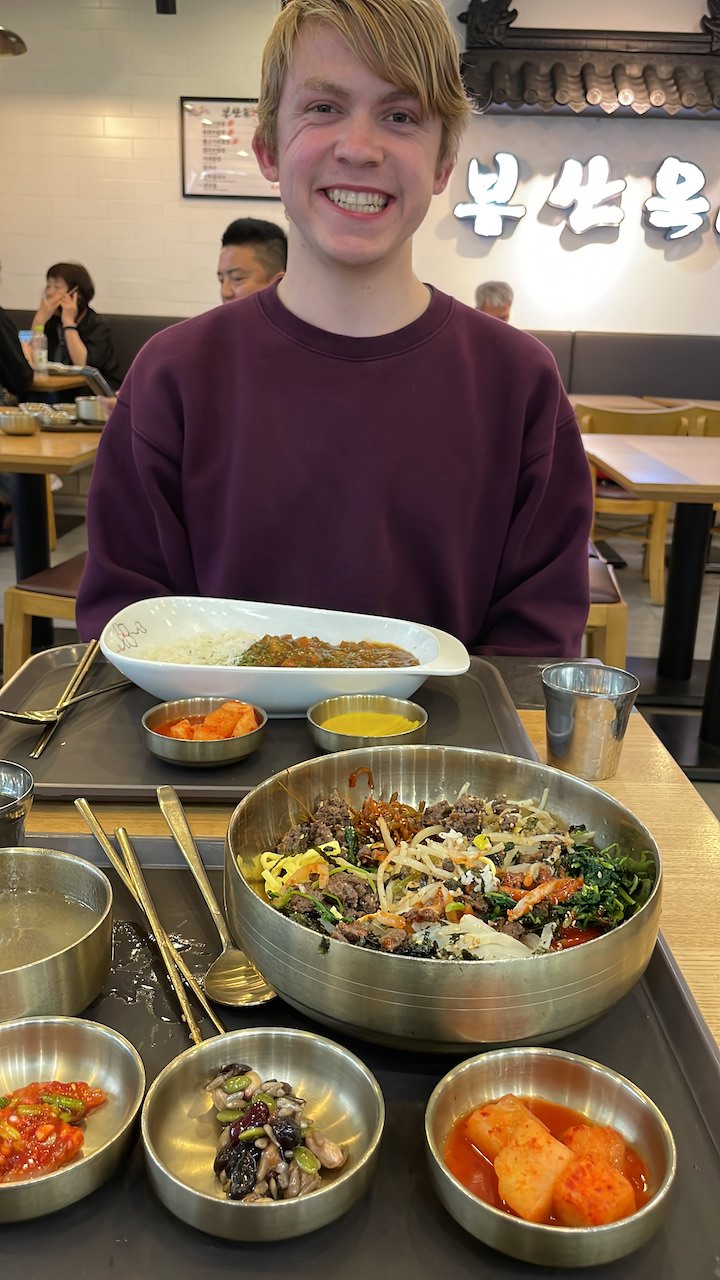
After the train ride, our guide preordered us some nice Bibimbap and dropped us off for lunch. Both tasty and an efficient use of time
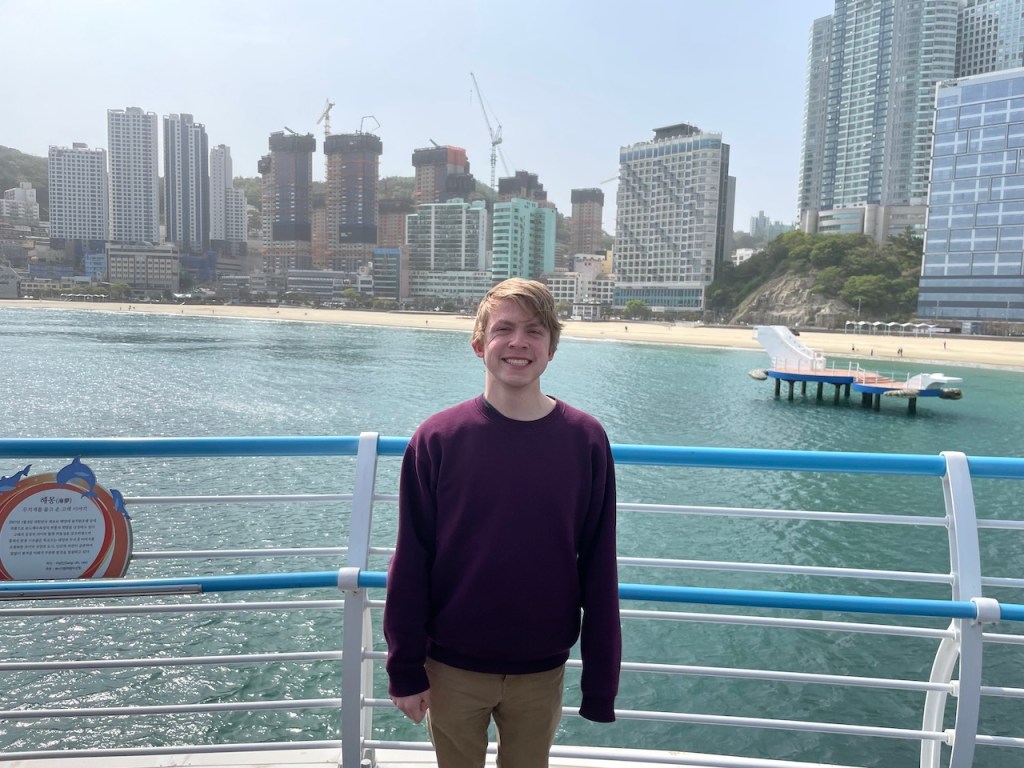
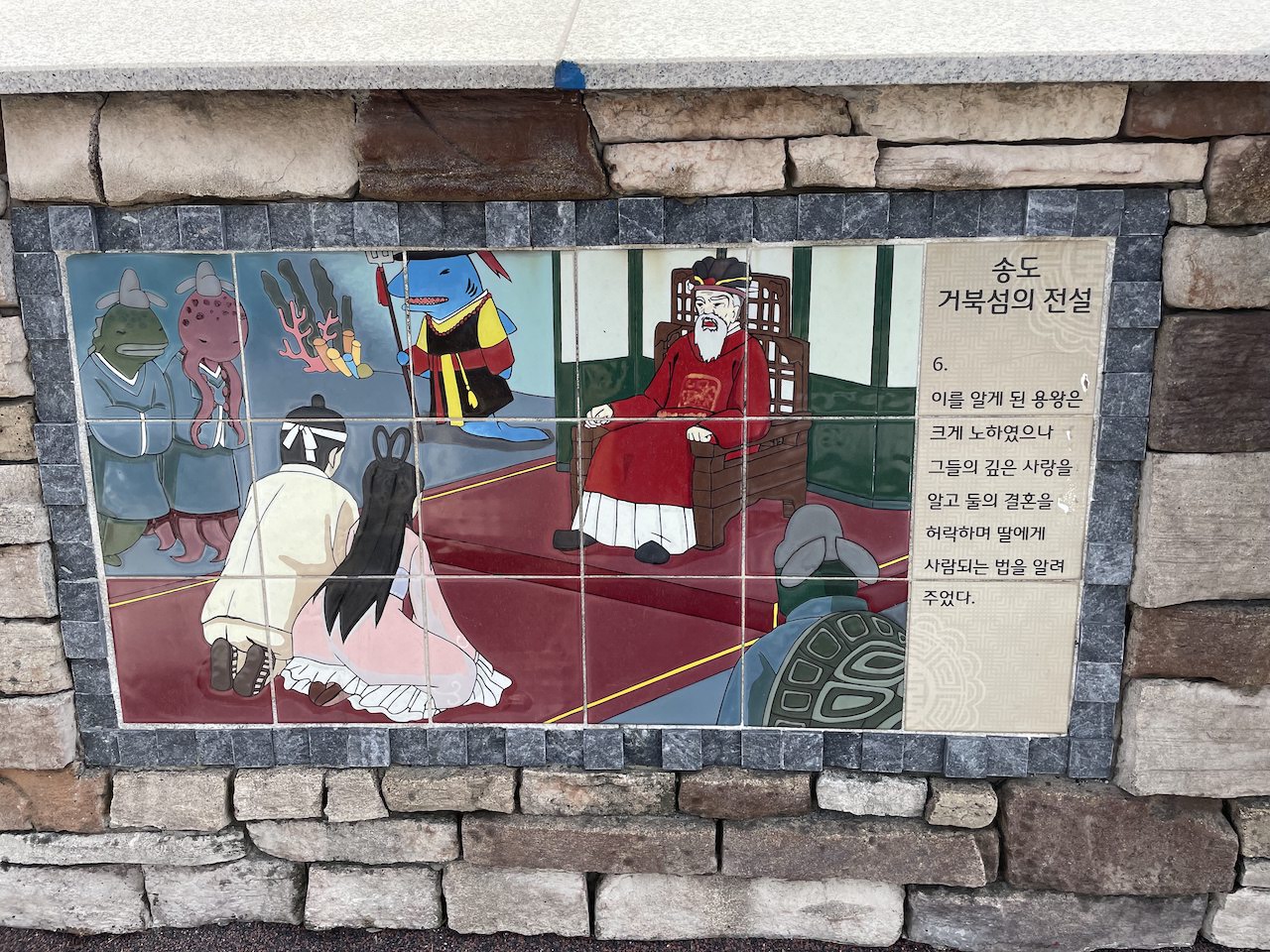
Afterwards, we drove to Songdo Beach and took a short walk.

Gamcheon Culture Village
Our next stop was the Gamcheon Culture Village, which was originally a refugee camp during the Korean War, but has more recently become a trendy place to visit.
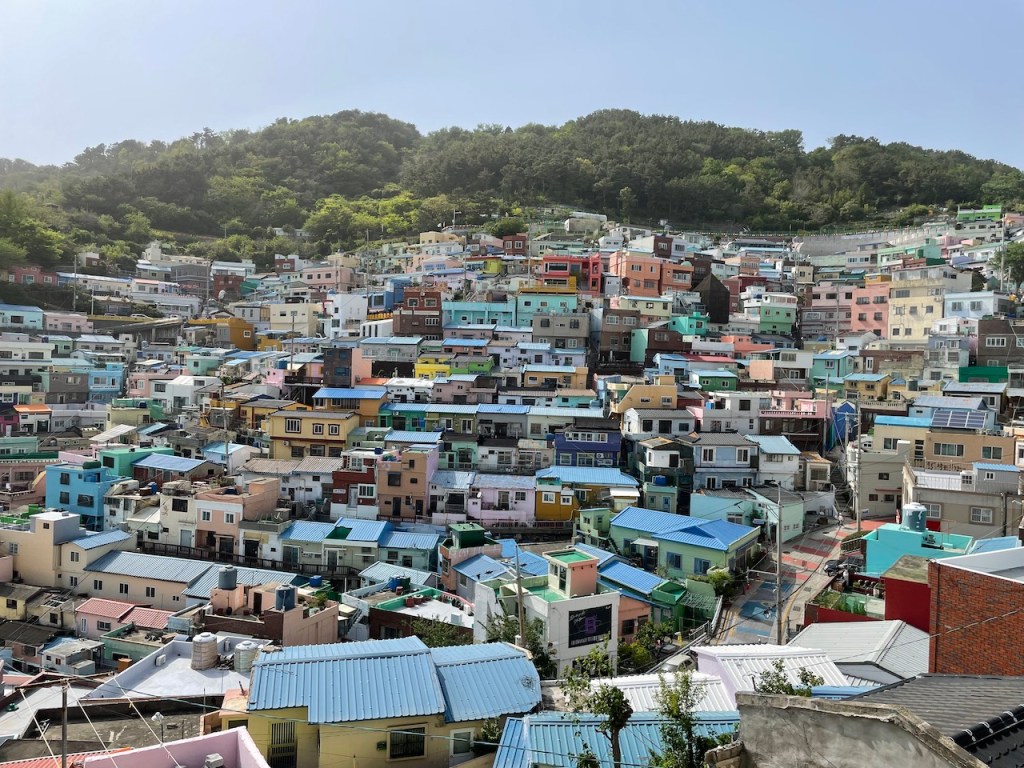
During the Korean War, Busan (spelled “Pusan” in the old romanization in my high school textbooks) effectively became the interim capital of the south, as most of the peninsula was overrun by the north. As a result, many war refugees fled to Busan. Looking for a place to put make-shift homes, many refugees built a camp in the hills.
The caveat is that there were Japanese graves from the occupation in those hills, which they simply built on top of. there are places (see below) where one can see these graves:
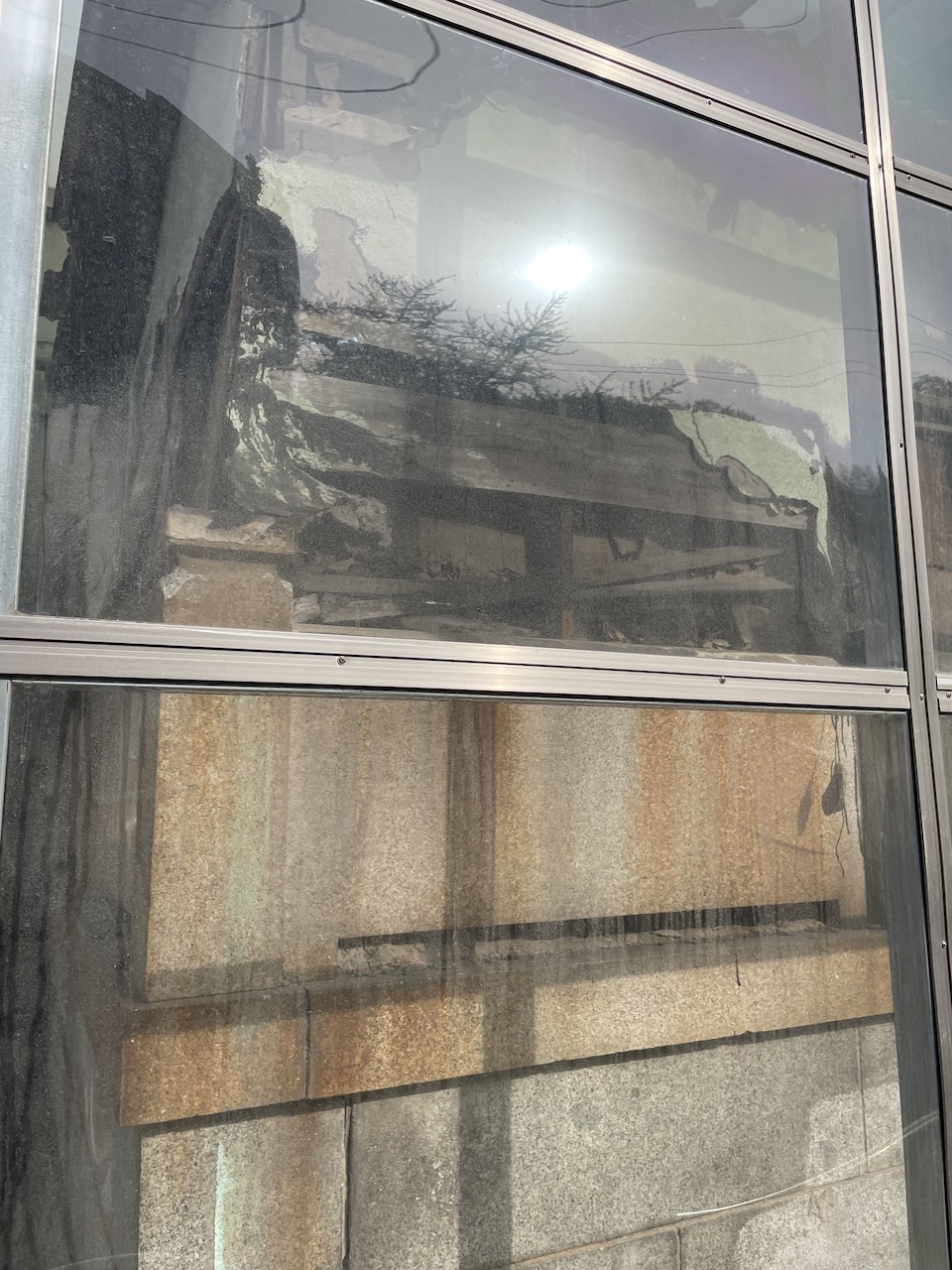
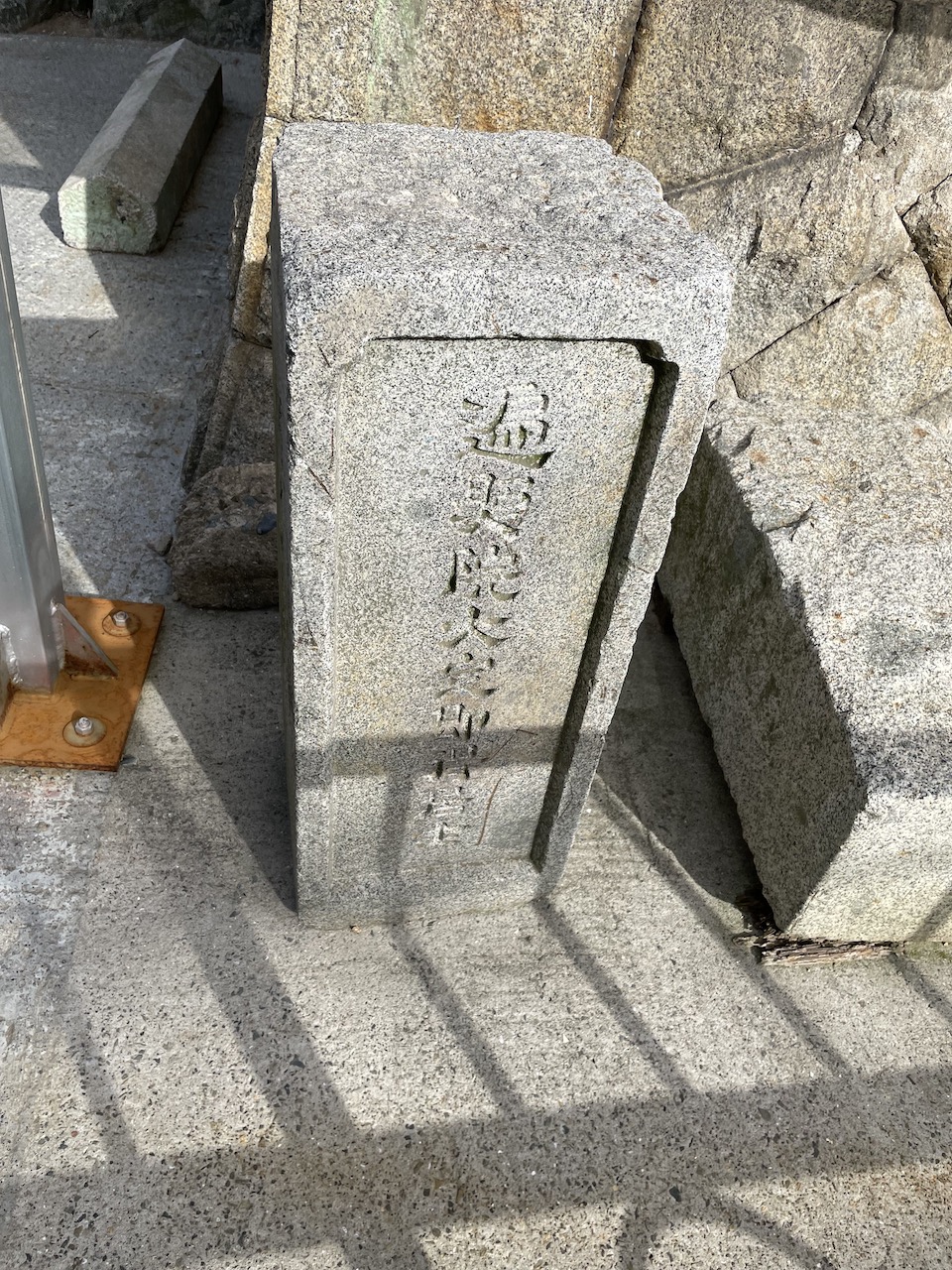
There is more background in history of the Gamcheon Culture Village and the Ami-dong Tombstone Culture Village. Historically, many of the settlers ended up getting jobs at the nearby shipping port area, though in those days it was a long walk home up the hill.
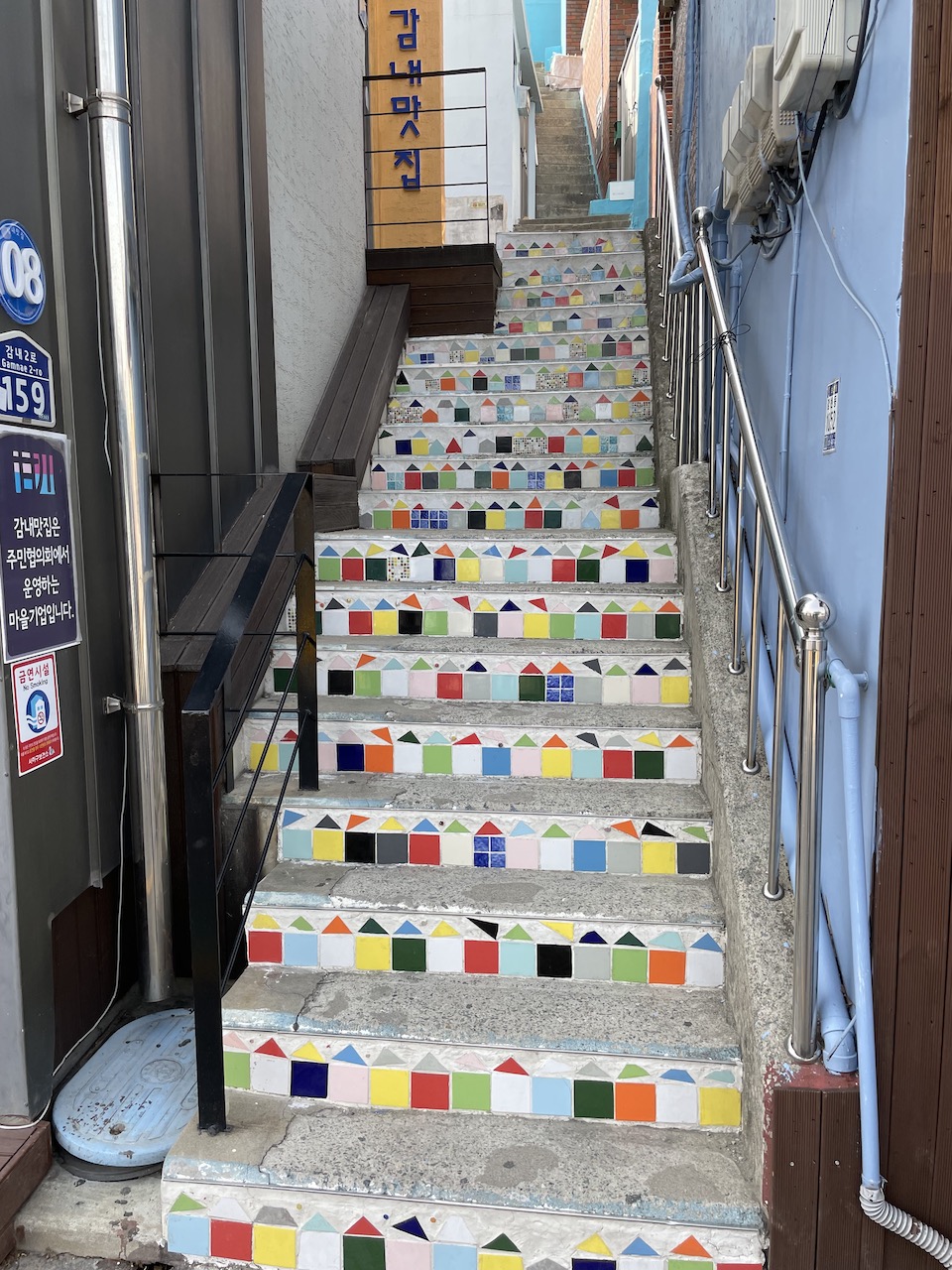
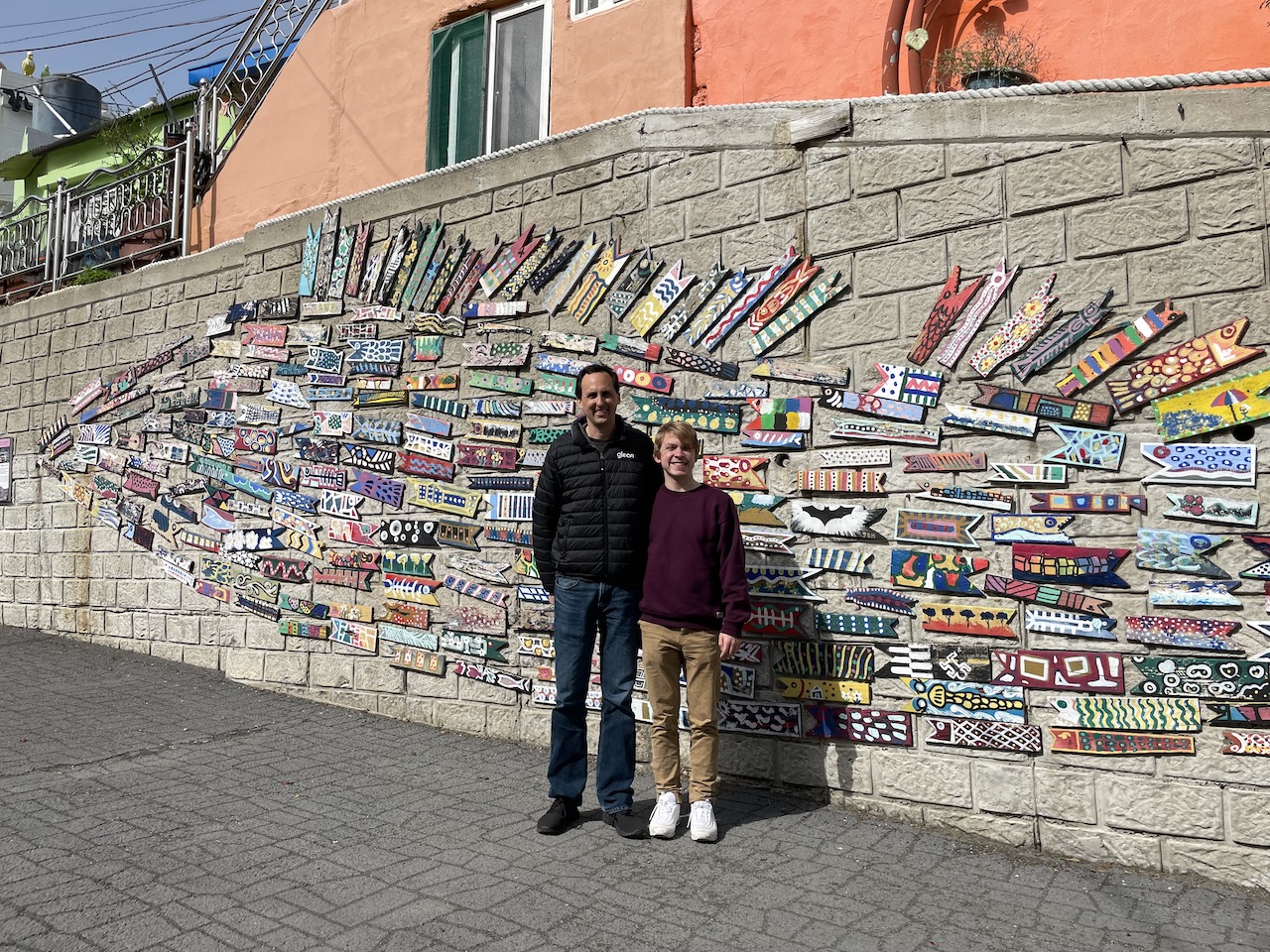
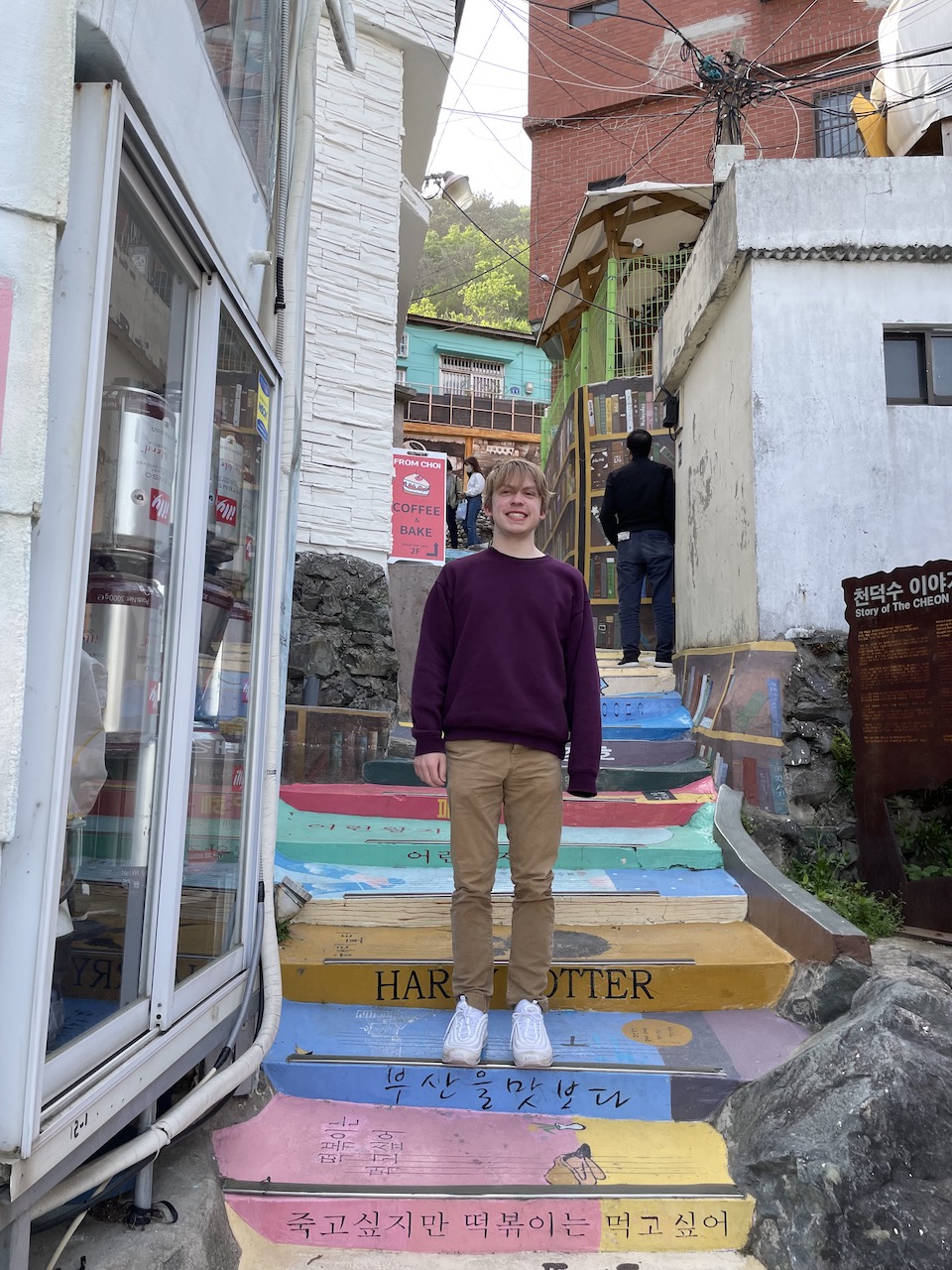
We spent some time wandering around and enjoying the artwork, stopping at one point to get some ice cream on a stick, covered with toasted marshmallow.
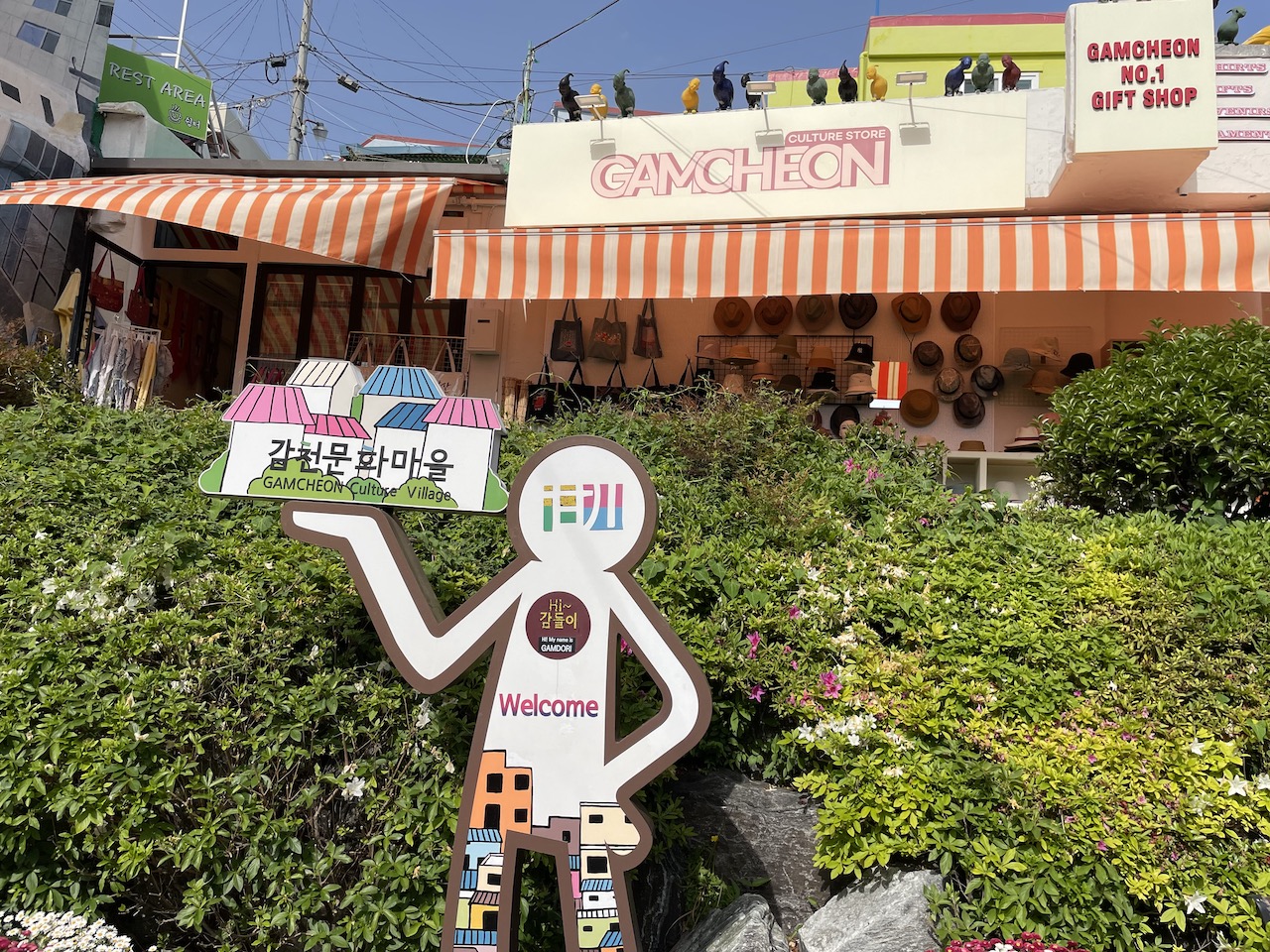

The Gamcheon Culture Village is a very unique destination with a very unique history.
Jagalchi Fish Market
The Jagalchi Fish Market was a short drive away and fun to wander around for a few minutes.
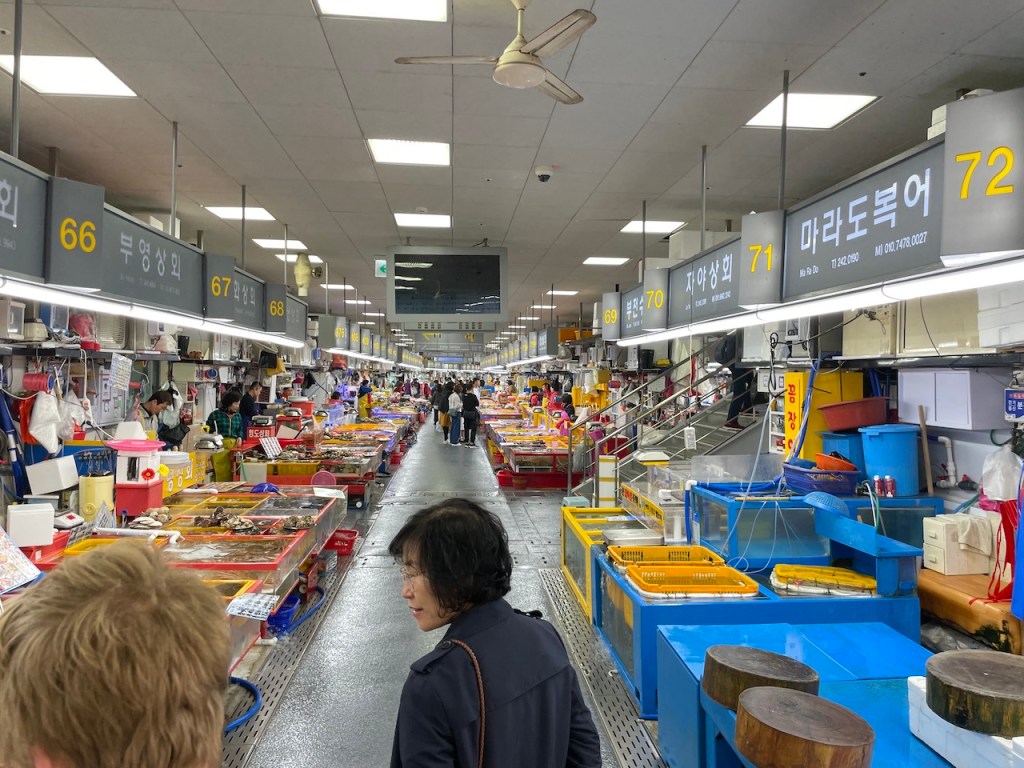
There were halls and halls with seemingly every sort of fish. Upstairs, there were some fish restaurants, which might have been nice to visit if we had more time.
BIFF Square
We then took a short walk to BIFF (Busan International Film Festival) Square for some shopping.
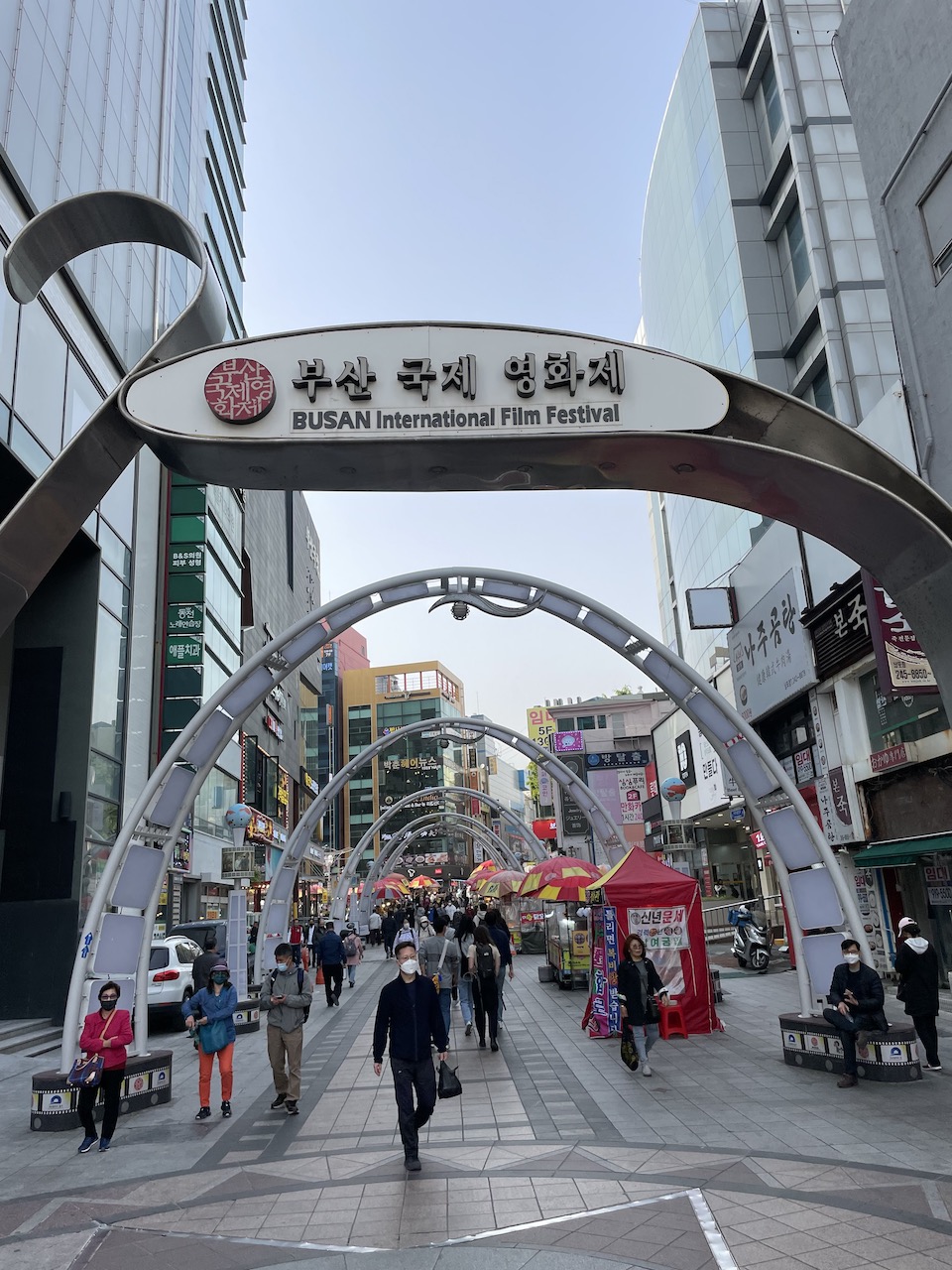

We did come away with the impression that this would be a good shopping place – and that the quality would be pretty decent for the money. That said, we didn’t have too much time left either – at that point, it was maybe 5:30pm, and we had a 7pm train back to Seoul. After wandering a bit more, our guide got us back to the train station around 6pm.
Back to Seoul
After going to the train station and getting our bearings, we enjoyed a nice dinner while we waited for our train. Who knew that train station food could be so tasty? (As a bonus, the meals cost less than greasy Big Mac meals back home)
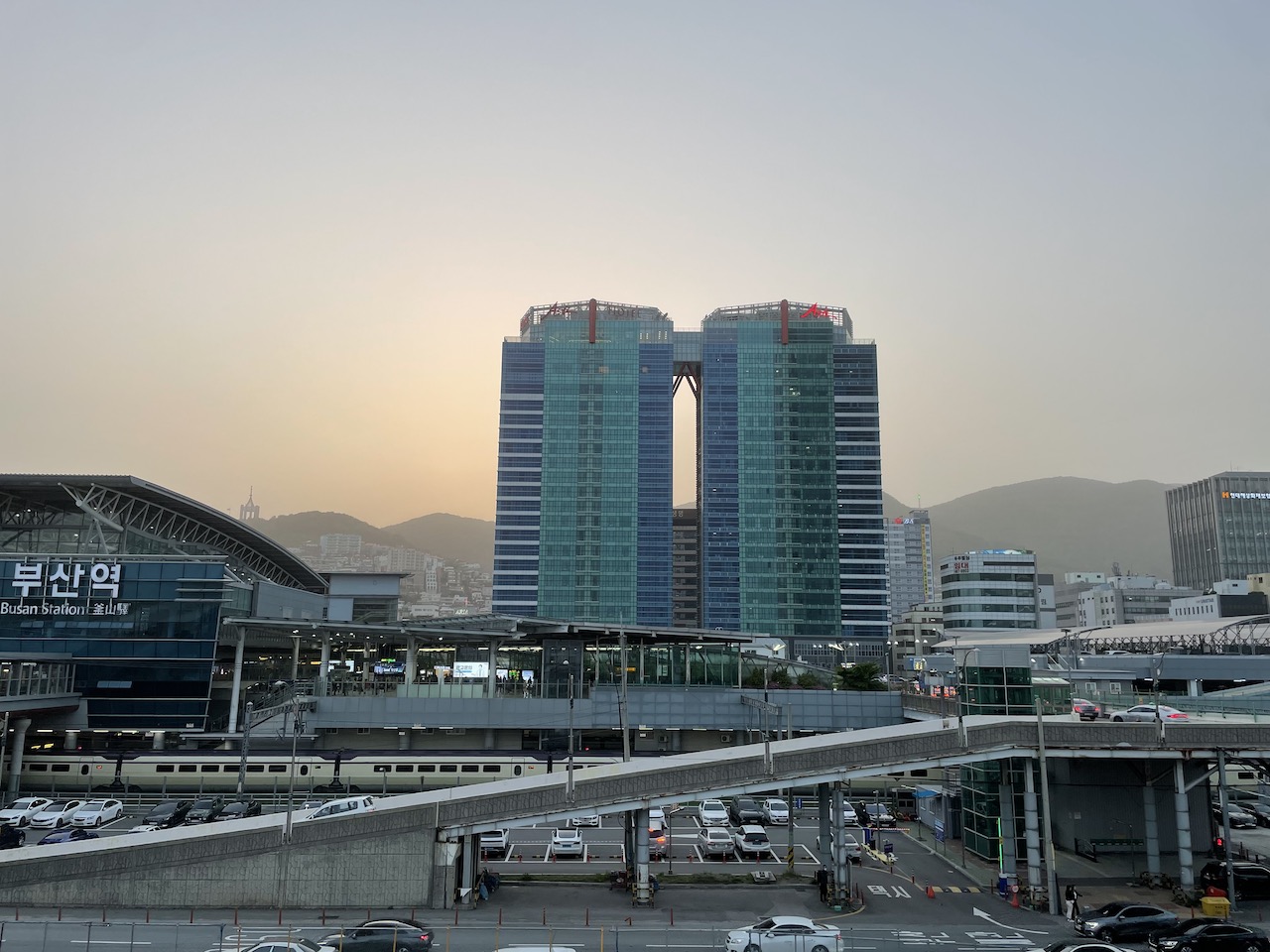
James slept the entire ride back to Seoul, while I dozed a bit.
What a fun, but exhausting day trip to Busan.
More From Adventures of the 4JLs
Keep reading our travel blog for more adventures in Korea:




 Adventures of the 4 JLs