
After many kids graduate high school, they might want to go to the beach or Disney. Our oldest decided that after graduation, he wanted to see the Silk Road. It wasn’t just a casual suggestion, he’d actually been reading about some of these places for years. He’d taken 4 years of Chinese in high school. He read up about the architecture of Ashgabat, Uzbek dishes like Plov, and ancient cities like Samarkand.
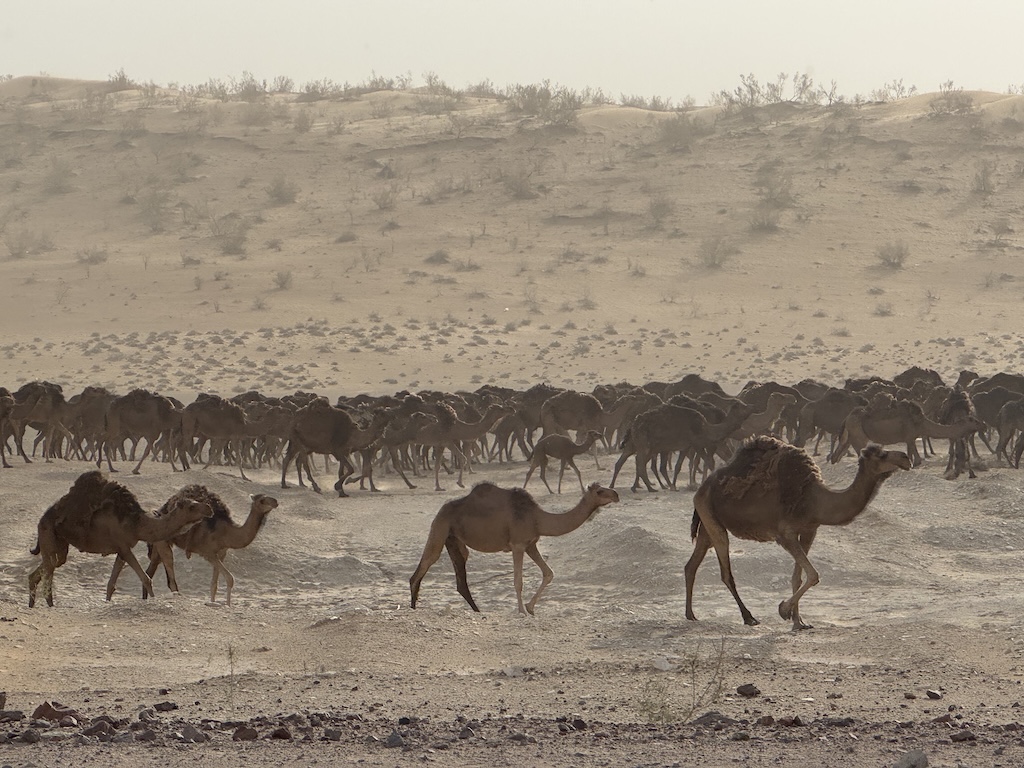
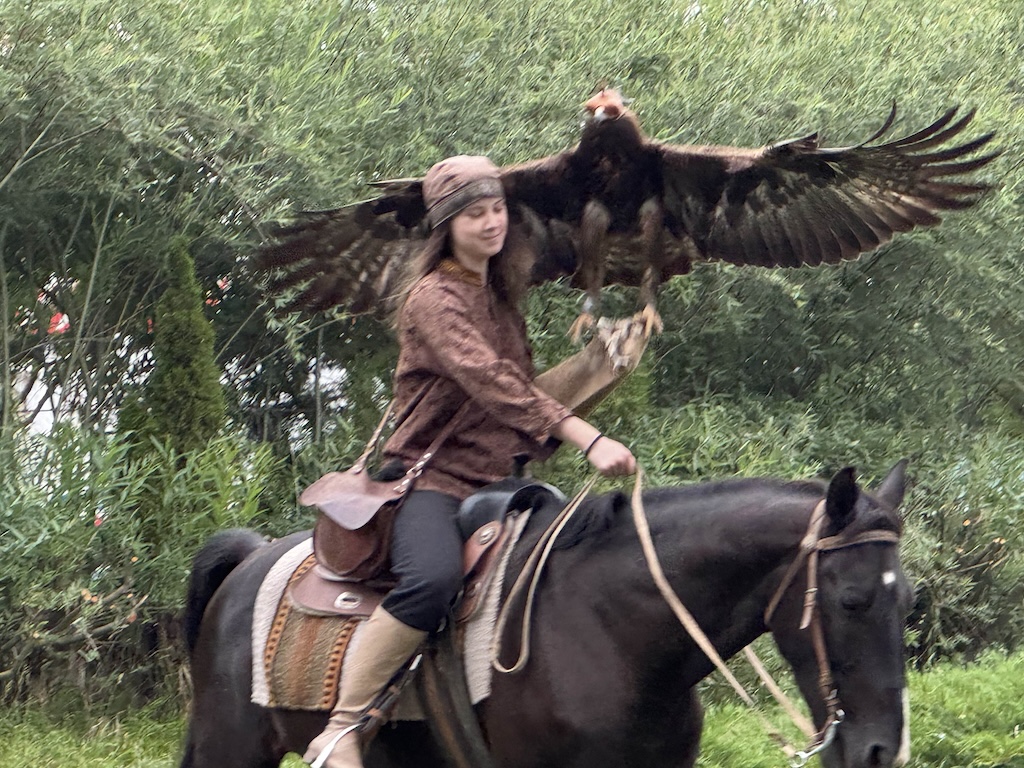

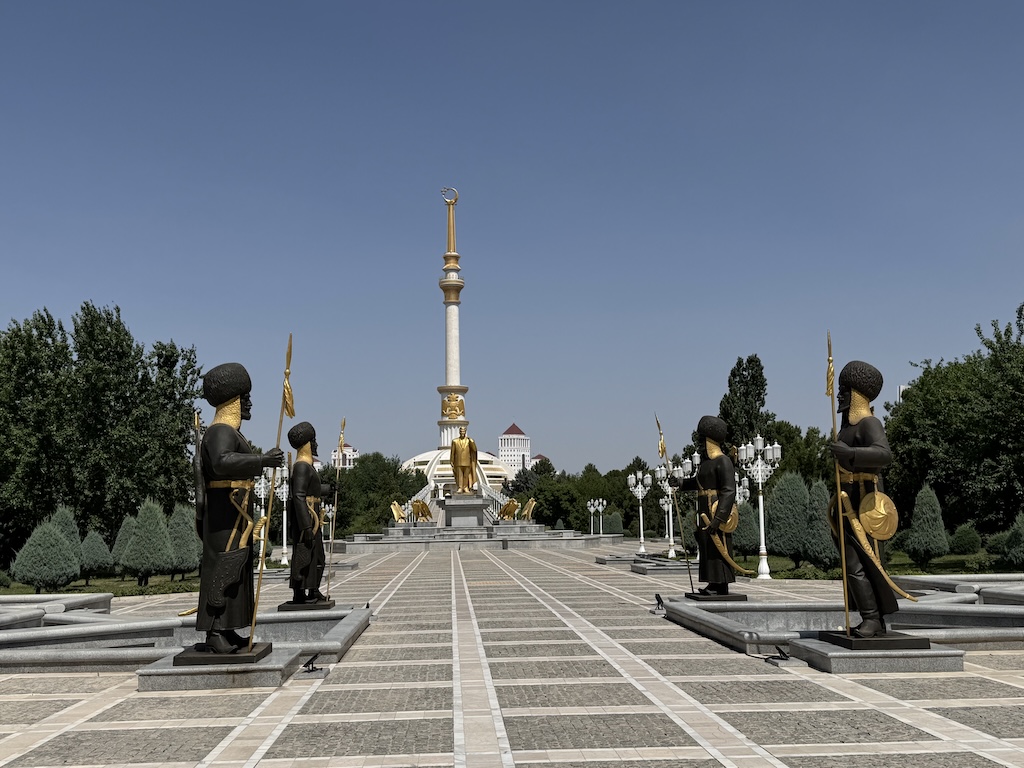


During the actual trip, we saw herds of camels in the desert, visited mountain peaks, and explored ancient cities – both ruins and continuously populated ones. We learned something about a corner of the world that has been inhabited for thousands of years, whose control bounced between many big names of history like Alexander the Great, Genghis Khan, the Turks, the Persians, the Arabs, the Soviets, as well as locals like Timur. And were traversed by ancient silk traders and explorers like of Marco Polo.

The ancient Silk Road ran roughly between Turkey and China, going through places like modern-day Uzbekistan, Kyrgyzstan, Turkmenistan, as well as others like Iran, Iraq, and Syria. While some of those places are quite inadvisable to visit these days, many of them are very safe. In our case, we went to the “5 Stans” of Central Asia – Uzbekistan, Kazakhstan, Kyrgyzstan, Tajikistan, and Turkmenistan.
Thoughts about the Different Stans
Some quick thoughts about the countries, having just done the trip:
- Uzbekistan is the most-visited of the Central Asian countries, with famous ancient cities like Samarkand, Khiva and Bukhara. It has long developed culture and the most developed tourist infrastructure (e.g. high speed rail). If folks go to one country in the region, Uzbekistan has many highlights and makes the most sense.
- Kazakhstan – we only saw Almaty, and for only 2 days at the beginning of the trip, but liked it more than we expected. Almaty is near the mountains, has some interesting Soviet architecture blended with a modern city. I don’t intend to super hype it, but enjoyed it.
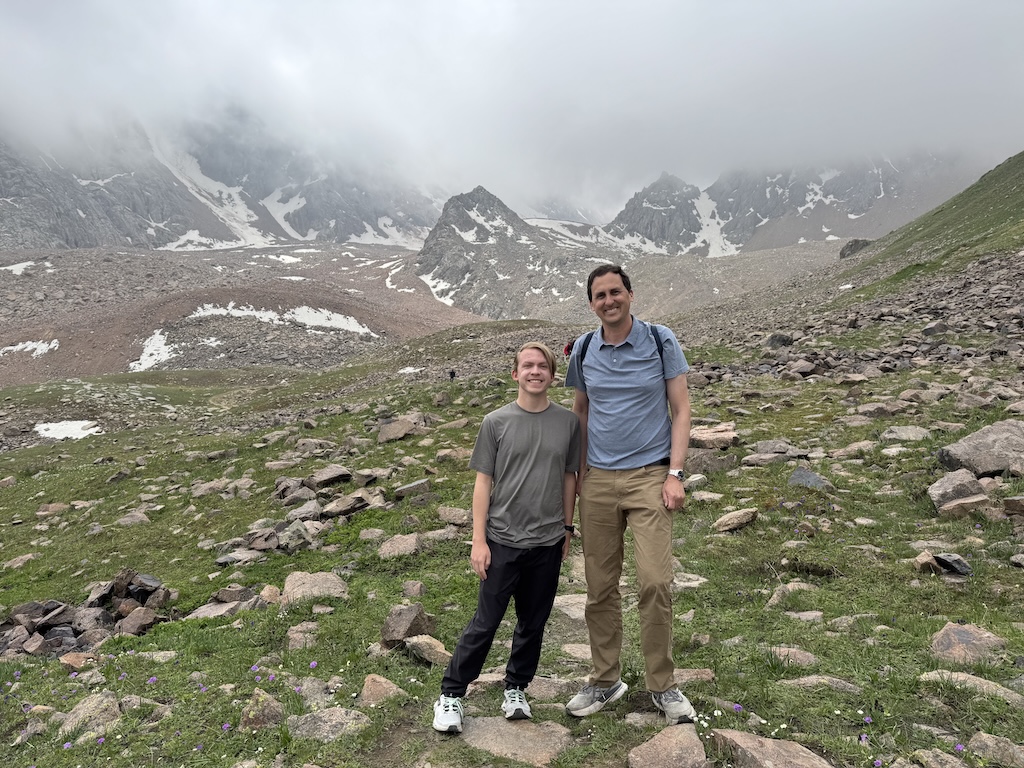
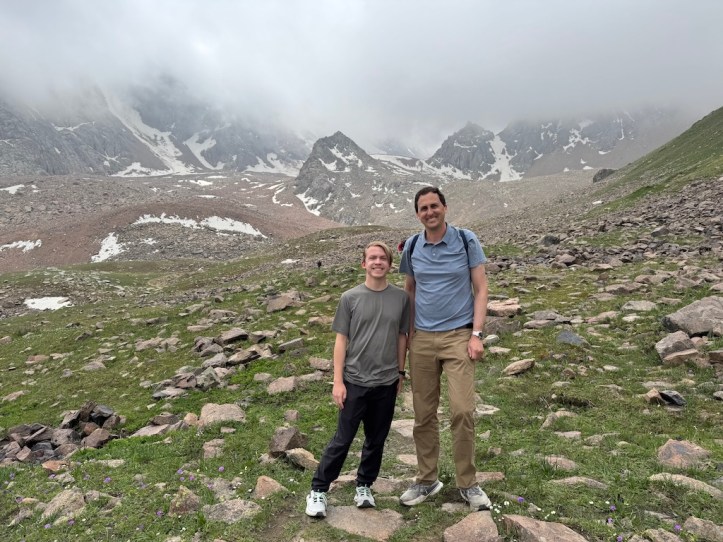
- Kyrgyzstan and Tajikistan are mostly visited for their mountains and nature (though Bishkek, Kyrgyzstan is a fairly good showcase of vintage Soviet architecture). To us, they were interesting to visit once for not too long. Many of their visitors are from nearby countries to visit their nature sites.
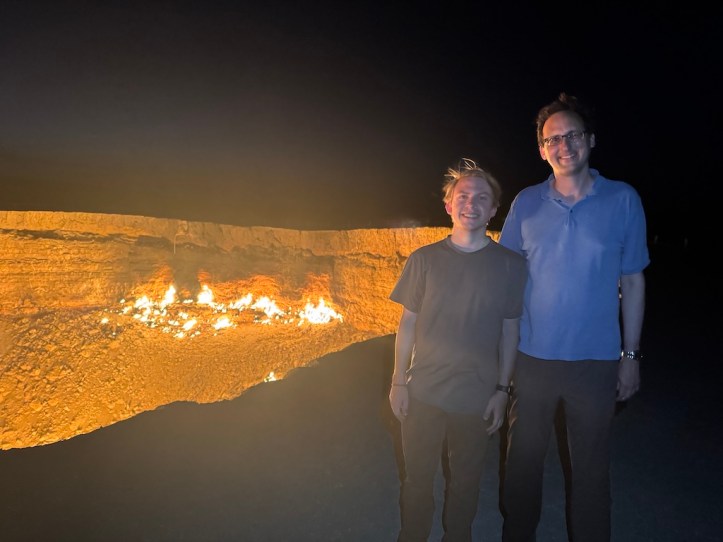
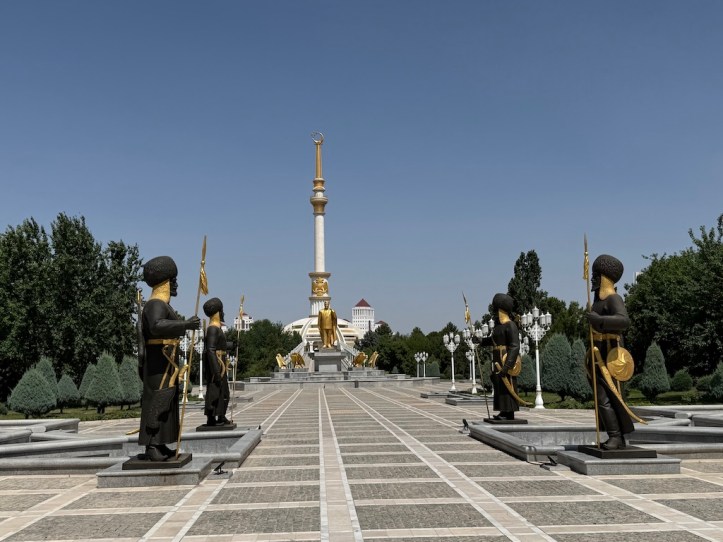
- Turkmenistan – this relatively closed country is the most obscure. In 2019, the country had less than 15,000 visitors, and requires a visa and guide to visit. Due to its relative closed-ness, it sometimes has the (cheeky but inaccurate IMO) “North Korea of Central Asia” nickname. With its eccentric architecture and monuments, and sites like its gas crater, my son was particularly fascinated by this one.
Admittedly, we’d note that as a western tourist, there are other places to visit before Central Asia. This isn’t to knock Central Asia at all, but simply that as an English-speaking traveler, there are places that are easier to get around, with easier access to cultural treasures. As an example, for ancient cities, Egypt or Turkey are easier to visit. (Or for that matter, places like Italy or Greece). For Asia in general, perhaps see China first. Also, keep mind mind that, while there is plenty to see, many moveable cultural artifacts in this region were hauled off to European museums in previous centuries.

Things we thought about when planning
We started researching our June trip in the previous November, and started making our plans in February. We bought our guide books, looked at Youtube videos, and surfed blogs.
Independent vs Guided Travel: This might feel like “cheating,” but we hired a tour company to handle many of the logistics for this trip. We typically are fairly independent travelers, but in some other developing countries with a real language barrier (e.g. India and Egypt), we’ve also hired guides in the past, and felt better for doing so. In this part of the world, the price for guides can be relatively modest, and can save time, give context, and avoid expensive mistakes.
In this regard, if we had focused on, say, just Uzbekistan (and maybe just added Almaty), and been somewhat looser on our time allowance, I think it could have been reasonably practical for us to do the trip independently.
But even if we could do the trip independently, we chose not to, to be more time efficient, to deal with the language barrier, and get better historic context. The main options for guided travel seemed to be:
- Group tour. If you do this, potentially consider Intrepid (or similar) that specialize in smaller groups to more adventurous destinations. (We also observed some “old people’s tours” in e.g. Uzbekistan, where people seemed to be parked at the carpet shop and taken to super kitsch restaurants. If you’re not 70, be selective and potentially avoid those).
- Private tour: these were not as marginally expensive vs. a group tour as you might expect, given the wages in this part of the world (see the per-capita GDP of places like Tajikistan). We ended up booking via an Uzbek agency that we found via TripAdvisor (Advantour) who subcontracted out the non-Uzbek portions. This is not a sponsored link, but we felt they did a great job.
One thing we observed is that our tour guides were (except in Turkmenistan) city-specific, which was probably for the best, as they knew their home city well. Also, the drivers did not cross land borders. When we did land crossings, the driver would drop us off on one side, we would go through on foot (which was for the best, since crossing in a vehicle would probably take hours), and a new driver would meet us on the other side.
Turkmenistan is the one country in the region where a guide is currently fully required from arrival to departure. There are some rumblings about an e-visa being possible in the future, but as of writing the details are not yet known.
Language: the 5 Stans all have distinct languages, but Russian is widely understood as a common language. Knowing some basic Russian travel phrases is helpful if you’re on your own. Some younger folks do speak English, but not as widely as in Europe.
Safety: These 5 Central Asian countries felt fairly safe in the scheme of things. While physically close to the Middle East, these post-Soviet states are quite distinct. Check yourself, but as of writing, the US Department of State’s Travel advisory lists several of them with its most safe rating. They largely have long-serving leaders, and like many countries in the region, they simply don’t tolerate much petty crime.
Weather: The most pleasant weather for the region seemed to be April/May and then October, though this could vary depending on if you were spending time near the mountains (in which case April would be somewhat cool) or the desert (June was kind of hot). Though, as in our case, you sometimes have constraints like the school schedule that you need to work around.
What we did
In the end, we worked with a Uzbek travel agency to piece together an itinerary that touched on the “5 Stans” over a 2 week itinerary. And then we added on roughly a week in China, on our own, at the end.
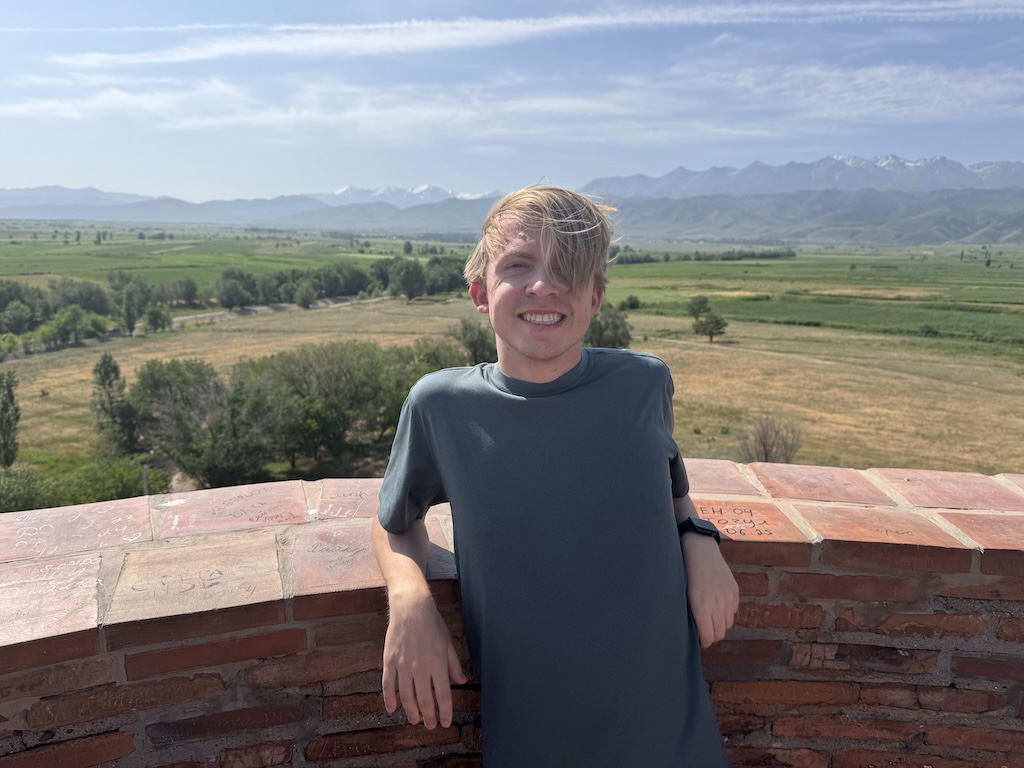


Caveat: It was a fairly busy itinerary – there is a significant long stretch where every night is in a different city, which can get exhausting. We knew this going in, and know how we handle a busy itinerary, and were happy with it. But for instance, if we could have spent 3-4 weeks on the same itinerary (and maybe moved it to April instead of June), it would have been more relaxed.
In any case, our rough itinerary for Central Asia looked something like the following:
- Day 1-2: Almaty, Kazakhstan: we arrived late on Day 0, and spent Day 1 on our own, as we dealt with jet lag and explored the center. We spent Day 2 with a guide, who also took us up to the nearby mountains and around the city.
- Day 3-4: Kyrgyzstan: we were driven to Bishkek, spent Day 3 there exploring the city with the guide. On Day 4, we went to the Burana Tower, saw some nearby ruins and mountains. We took a flight to Tashkent, Uzbekistan that evening.
- Day 5: Tashkent, Uzbekistan: we had a day tour of Tashkent. In the evening, we took a high speed rail to Samarkand.
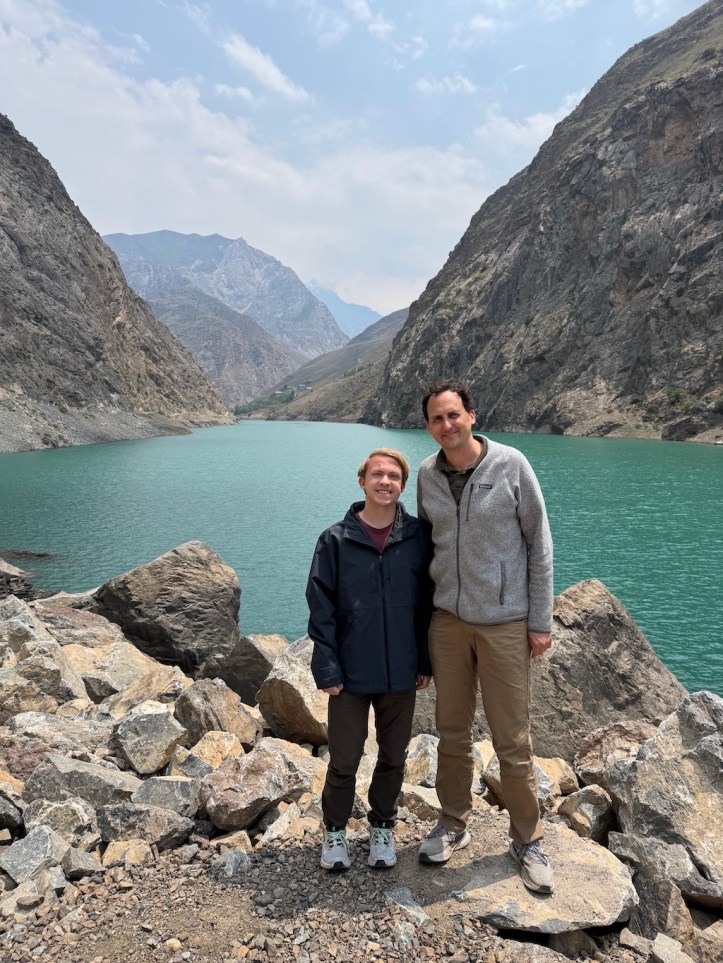
- Day 6-7 Tajikistan: From Samarkand, we were driven to the Seven Lakes area of Tajikistan. We saw ancient Penjikent ruins, explored modern day Penjikent, and some 5000 year old ruins the next day. We were driven back to Samarkand.
- Day 8: Samarkand, Uzbekistan: we had a day tour of Samarkand. In the late evening, we took high speed rail to Bukhara.
- Day 9: Bukhara, Uzbekistan: we had a day tour of Bukhara.
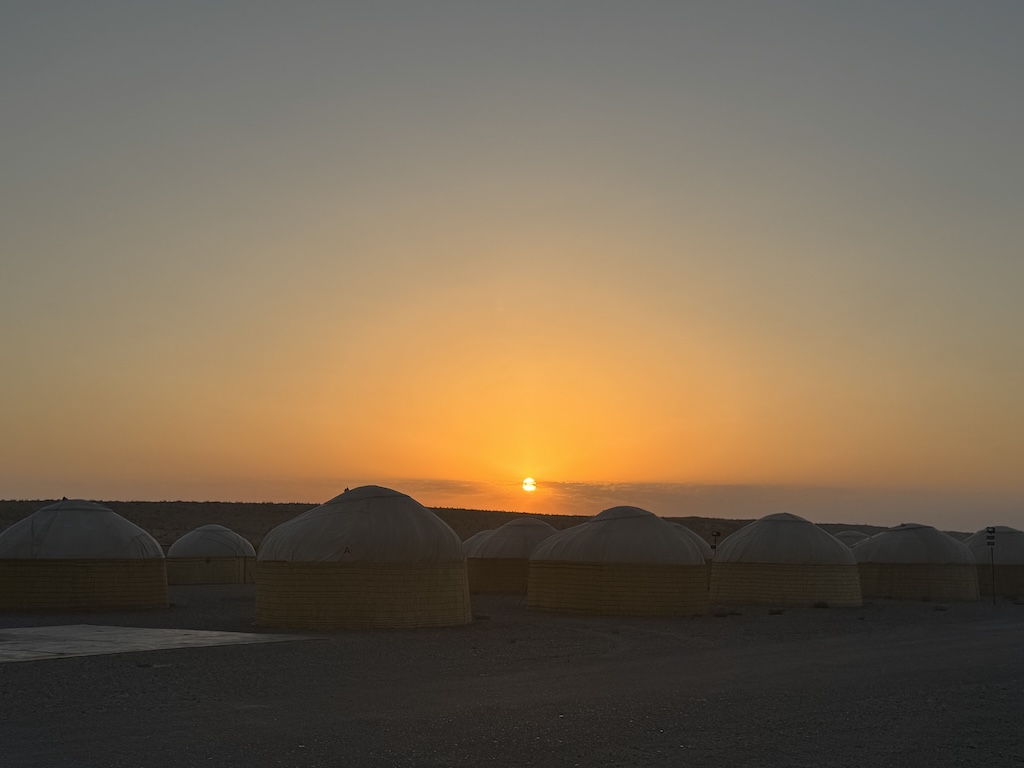
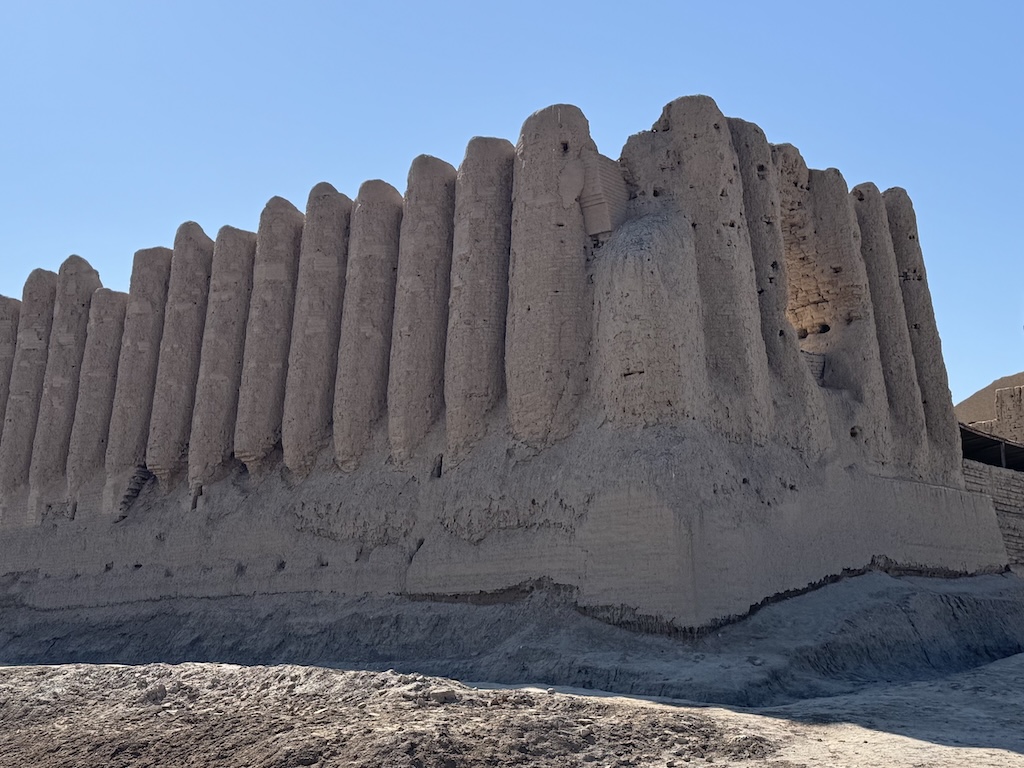
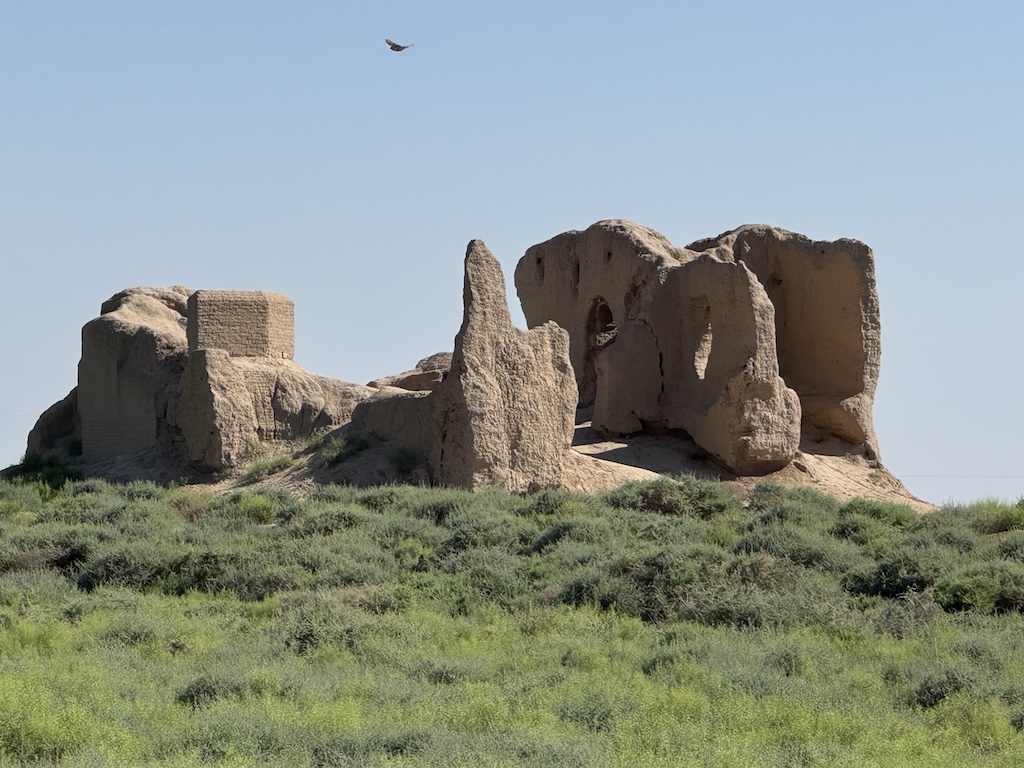
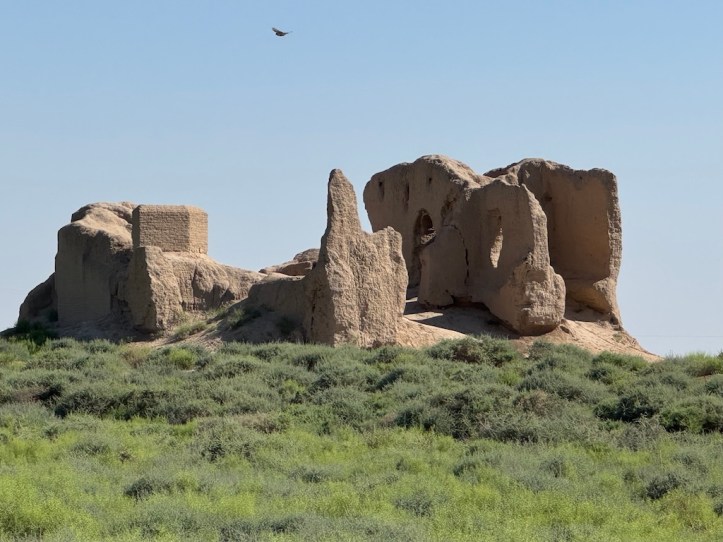
- Day 10-12: Turkmenistan: we were driven to the border, went to Merv where we toured ruins, and flew to Ashgabat that evening. The next day, we explored Ashgabat, and the surrounding areas and ruins. In the late afternoon, we took a 4×4 to the Darvaza gas crater, saw it in the evening, and stayed in a yurt camp nearby. The next day, we crossed out of Turkmenistan and ended up in Khiva, Uzbekistan.
- Day 13: Khiva, Uzbekistan: We had a day tour of Khiva. In the evening, we flew back to Tashkent, Uzbekistan.
- Day 14: Tashkent, Uzbekistan to Xi’an, China. We took a flight out of the region to China (on our own), arriving late evening.
- Day 15-16: Xi’an, China: saw the Terracotta Warriors and Xi’an City. Took an evening flight to Shanghai.
- Day 17-20: Shanghai, China: 3 full days in Shanghai, then the long flight home.
Days 15-20, we effectively booked on our own, rather than with the Uzbek agency.
I expect that the timing above too aggressive for independent travel; if you have a day in a city with a guide, you can see a lot more of the highlights than you can on your own.
Our favorites and thoughts overall:
Writing this a few weeks after getting back, here are our lingering favorites and highlights:
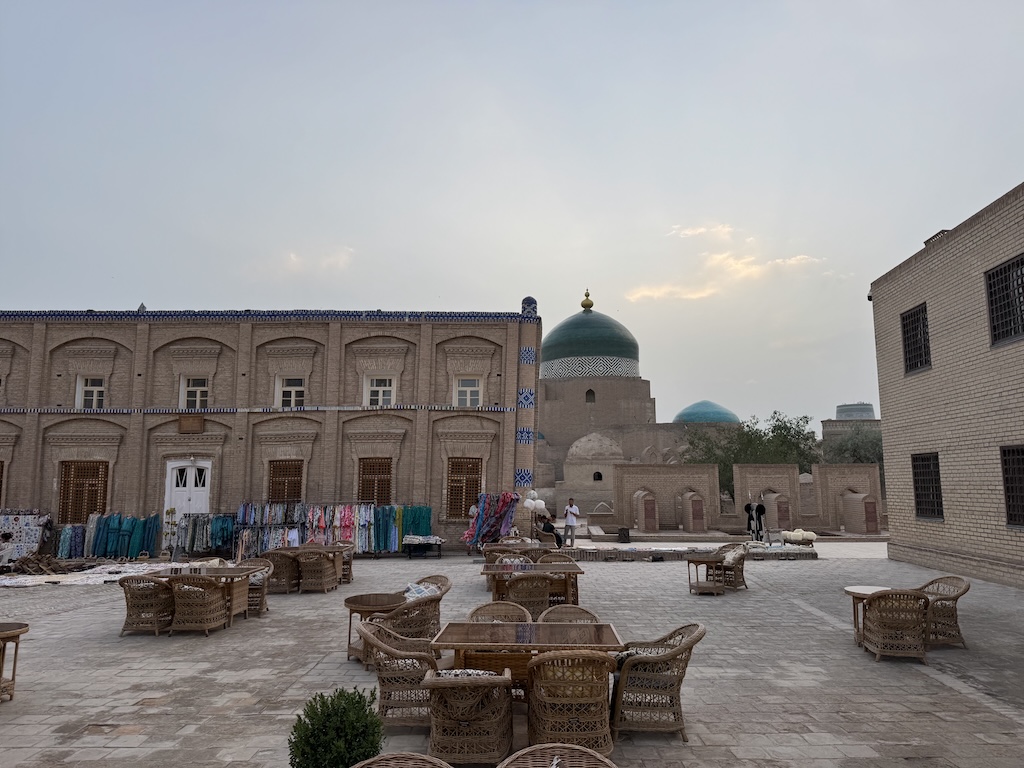
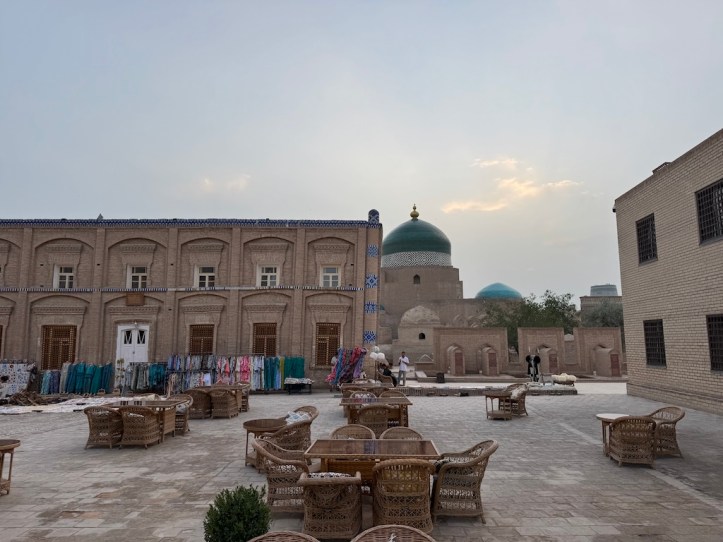
- In Uzbekistan, we really liked Samarkand and Khiva. Lots of interesting old architecture and cultural treasures, plus both generally fun cities to hang around. Khiva felt slightly “Disney-ish” in the sense that the old city is really compact and well-restored, while Samarkand is somewhat larger. They both embody the Central Asia vibe well.
- Xi’an, China wasn’t in Central Asia, but it was great to see the famous Terracotta Warriors.
- Turkmenistan was really fascinating, especially as a fairly closed country. We were looking forward to visiting, and glad that we did. We don’t necessarily see the need to return anytime soon, but it was definitely different.
- We liked the seeing the lingering Soviet architecture in Almaty (Kazakhstan) and Bishkek (Kyrgyzstan). Almaty in general we liked quite a bit, though could have just been our specific experience.
- Many of the inhabited places were not as hot and closer to the mountains than I expected. While there are deserts, many cities are not too far from mountains, so that the mountain rivers irrigate the crops in the valleys.
- Food-wise, it’s not necessarily a foodie destination, but the produce like fresh apricots, cherries, melons, and tomatoes were very good. Similar with the fresh bread cooked in clay ovens. The ubiquitous Plov (slow cooked rice & meat) was tasty, though on the heavy side.
- The region in general is quite affordable; meals and souvenirs were a good value. Actually getting there from the west requires a lot of transportation, but slow-traveling the area would be quite reasonable cost-wise.
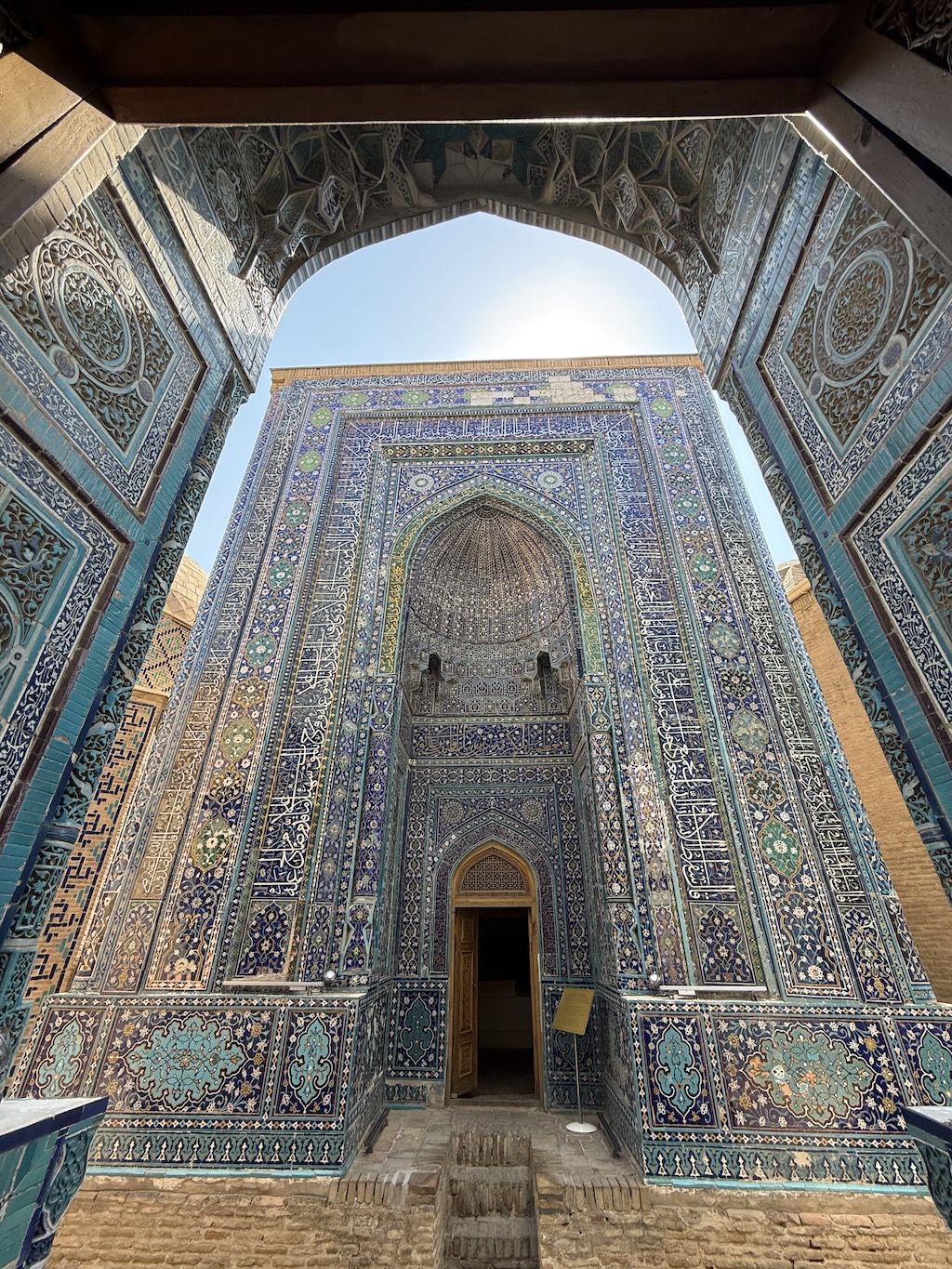
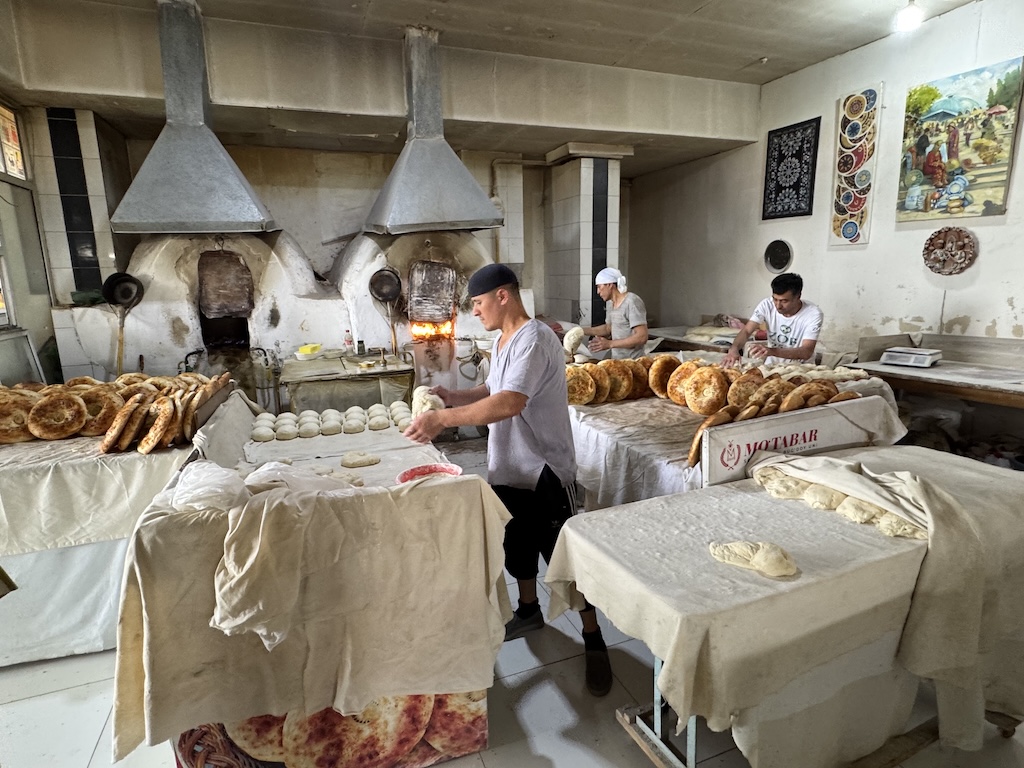
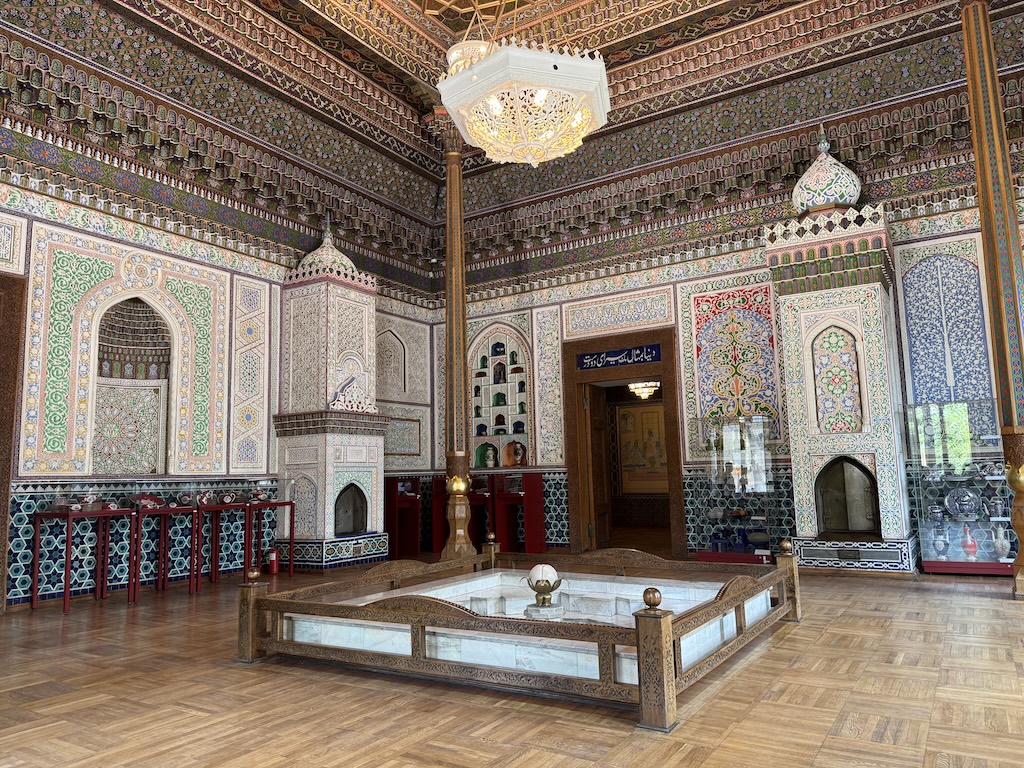

For completeness, here are some low-lights that come to mind:
- The dirt mountain roads in Tajikistan were crazy bumpy. Similar with the road to the Darvaza Gas Crater in Turkmenistan. We’re glad that we saw those locations, but we were bouncing around a lot.
- I got some form of heat exhaustion in Bukhara. I thought I was drinking enough water, but apparently not. It was definitely one of the hotter cities. I also came down with a fever in Shanghai and was in bed for a day; this sometimes happens, but glad this didn’t happen during the tightly scheduled part of the trip.
- Bishkek was quite smoggy during our visit. This doesn’t affect you so much if you’re just there for a day or two, but there are “developing country issues” like this in the region.
- Bring some Immodium. For instance, sampling the (delicious) melons in the market (vs at a restaurant) may not have been a wise choice.
When all was said and done, we had a lot of fun on the trip! We felt like had a lot of the opportunity in that time to explore and learn about the region. We’re looking forward to writing up some of the experience in followup blog posts.
More From Our Blog
Keep reading our travel blog for more adventures in Central Asia and China:





 Adventures of the 4 JLs
I love that your kid wanted to go to the Silk Road after high school! Bloody fantastic! I used advantour for Uzbekistan last year and had the best time! I want to go back and see the rest of the stans now!
LikeLiked by 1 person