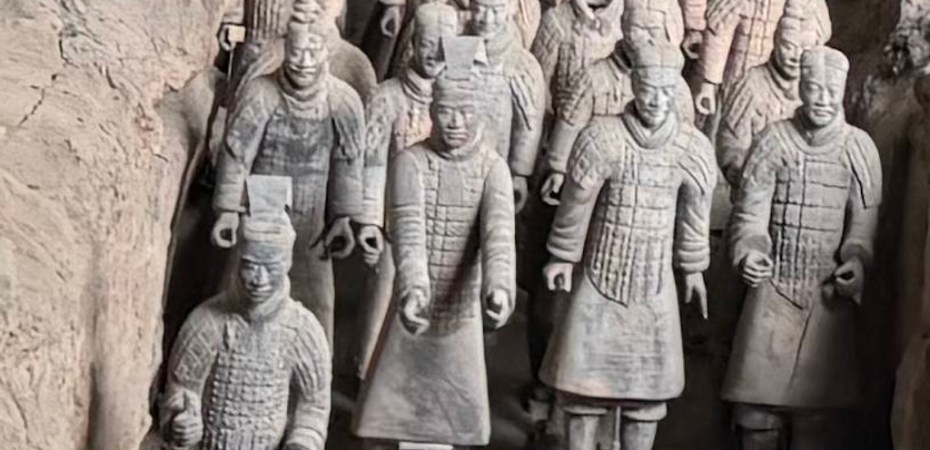
One sight I’ve wanted to see for years is the famous Terracotta Warriors in Xi’an, China.
Discovered in the 1970’s by some farmers digging a well, this 2,200 year old creation boasts an army of 8,000 detailed, life-sized soldiers made of clay, commissioned by the first emperor who unified China. The Terracotta Army wikipedia article gives a fairly good summary, though one thing that surprised me is that the soldiers are all intricately different, arguably patterned off of real life soldiers in that famous army. Over 80 master artists (assisted by tons of helper staff) signed the different pieces.
Our oldest just graduated from high school, and had taken 4 years of Chinese classes. Some kids, when they graduate, want to go to the beach. Ours liked the idea of going to China and the Silk Road. We made sure that Xi’an was one of our stops.
Getting there
Typically, a trip to Xi’an is part of a longer trip to China. Xi’an is roughly a 2.5 hour flight from either Beijing or Shanghai, or about 6 hours by high speed train. Xi’an is not a small town, but rather a city of more than 10 million people, was an ancient capital of China, and a decent place to spent a day or two aside from the Terracotta Army.
Visa policies to enter China vary quite a bit; as of 2025, US citizens require a visa to enter China, but this requirement can be waived for a 10 day stay if transiting to another country after. Other nationalities, including many EU countries, can stay 30 days visa free. Research this carefully on your own, especially as it has been fairly dynamic.
The actual archeological site is roughly a 45 minute drive from the Xi’an city center. Depending on your adventure level and budget, there are buses that go there, group tours you can join, or in our case, we booked a private day tour, which was reasonably priced given costs in that part of the world. (This is not a sponsored link, we got our day tour via China Xian Tour, and were happy with it).
Seeing the Warriors
We had tickets reserved in advance, and mostly used our passports to get in the actual site. One thing that we realized quickly was that the site can be quite busy with domestic Chinese tourists wanting to discover their own history.
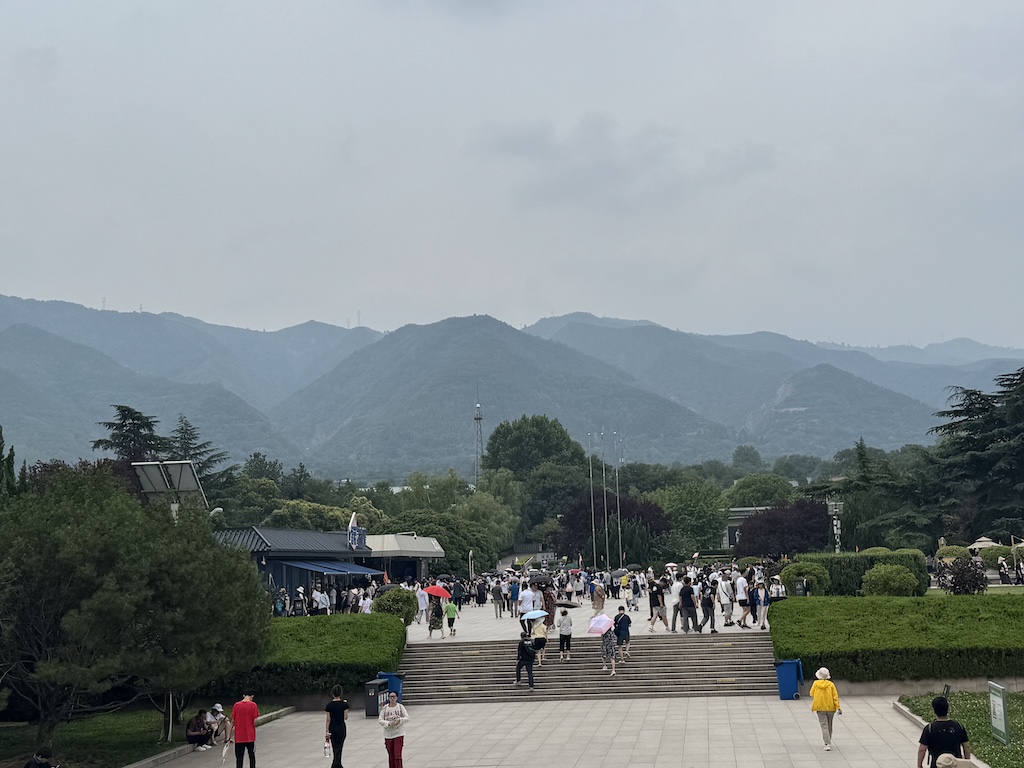
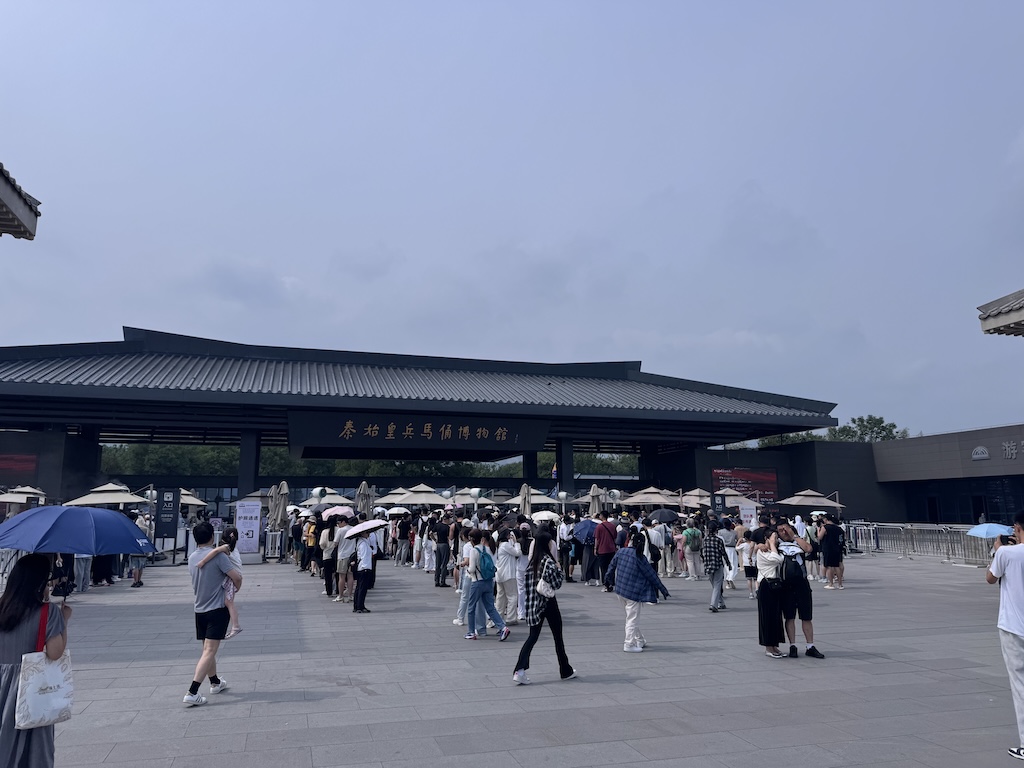

The archeological sites are mostly spread across 3 different halls, with the first being the largest. There’s also a large indoor museum. The sites are covered and (recently) air conditioned.
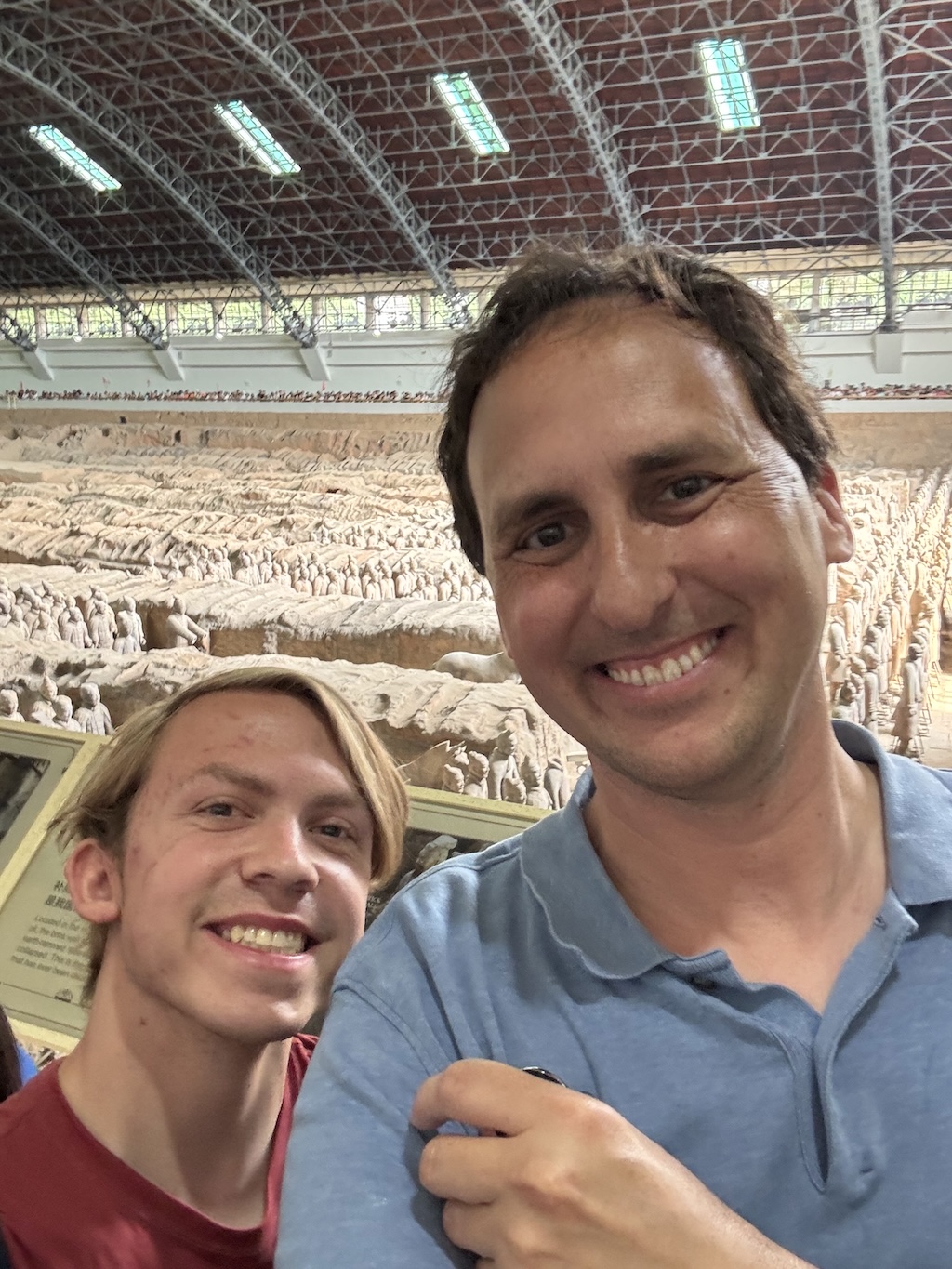
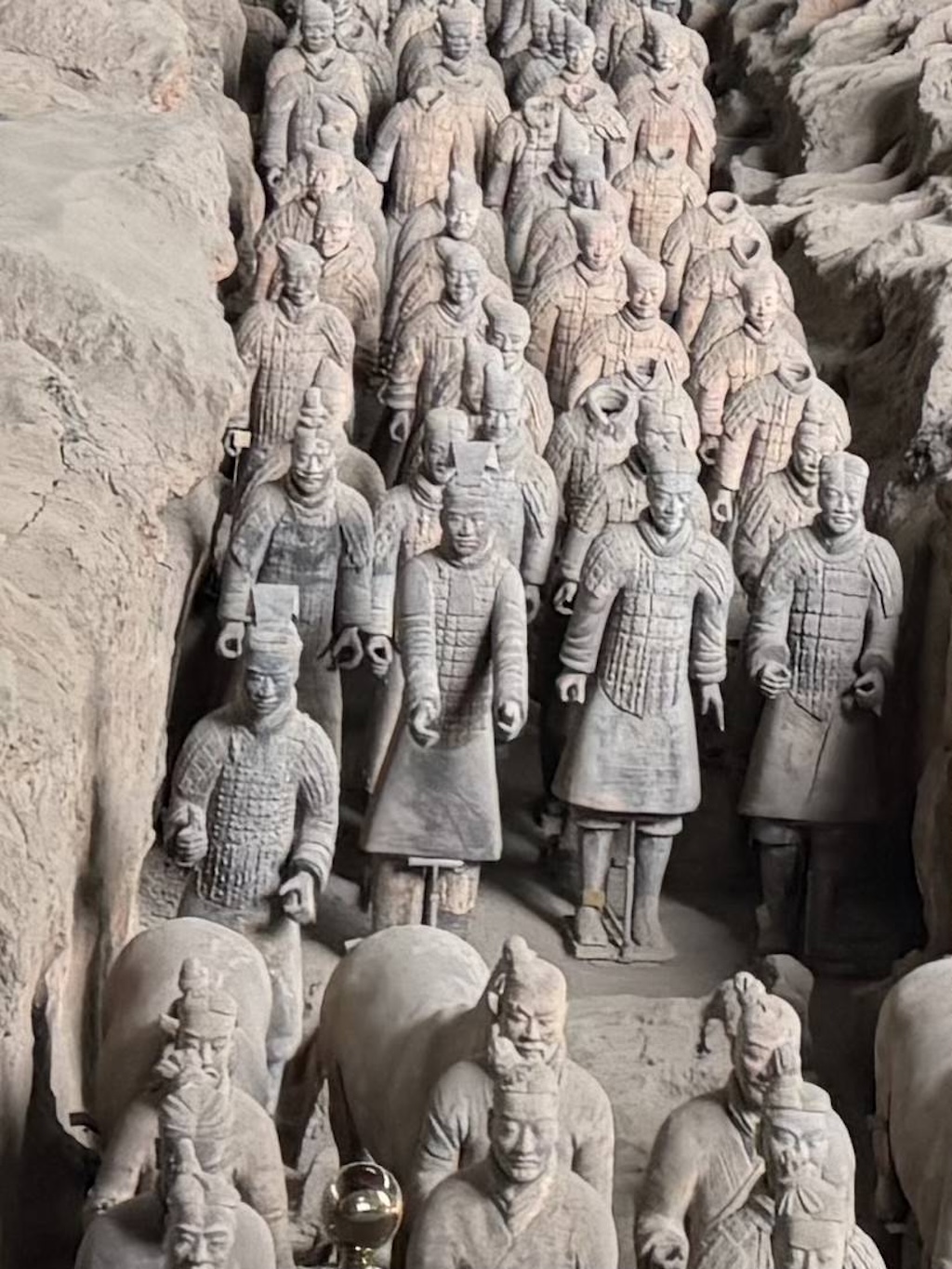
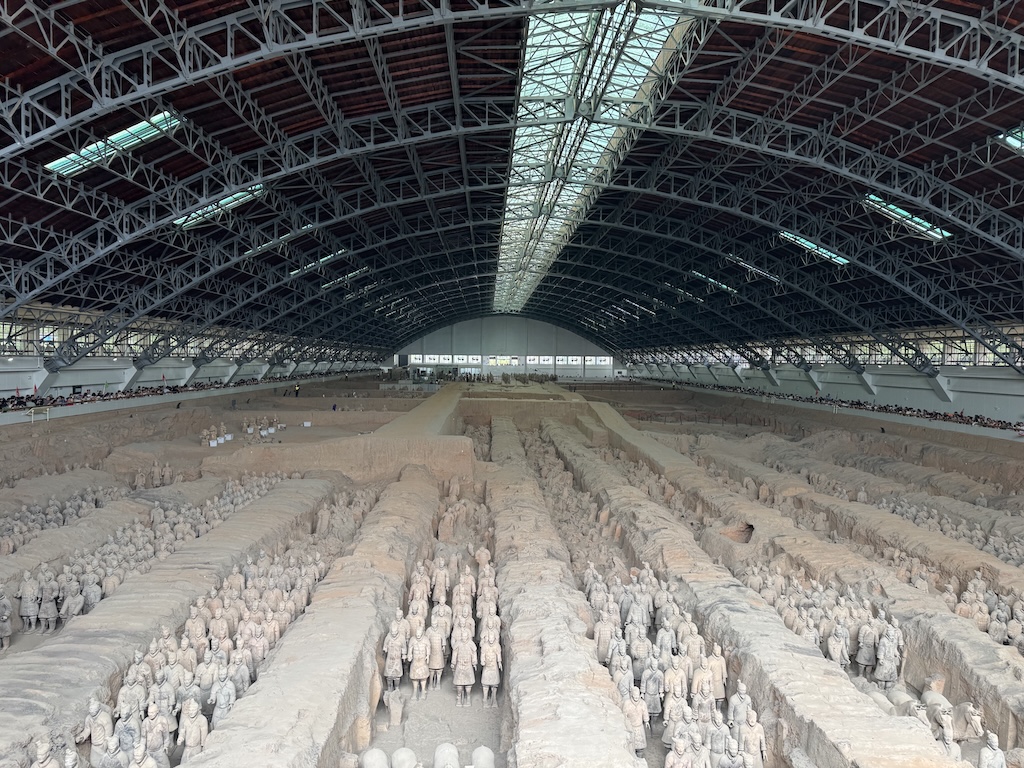
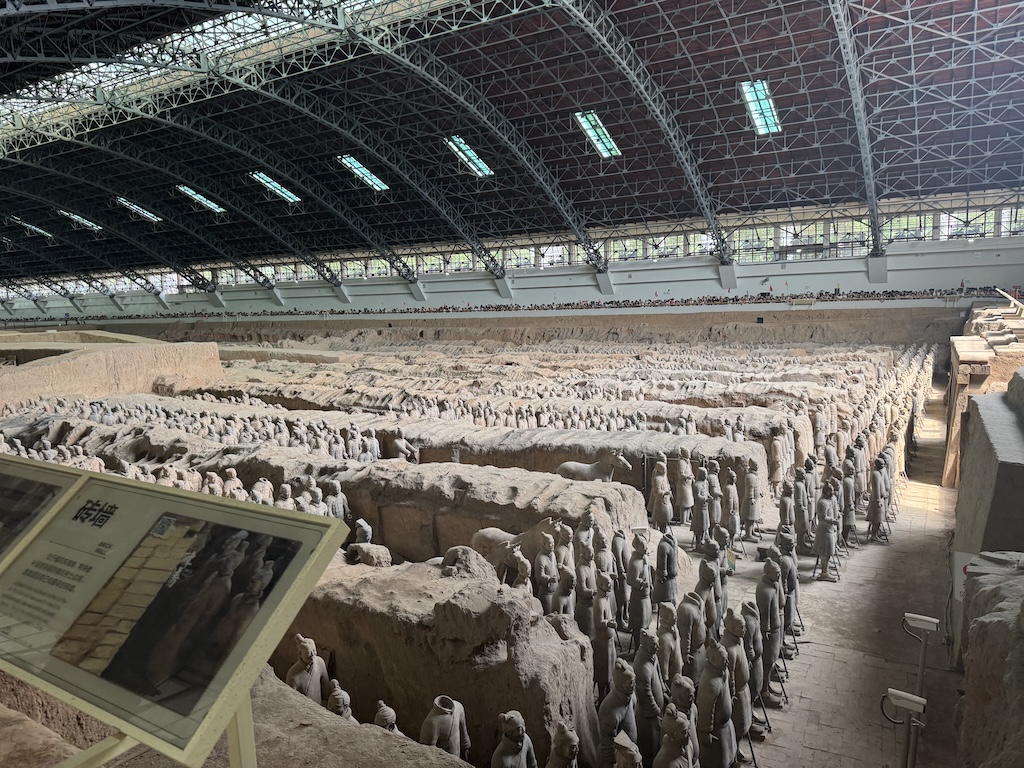
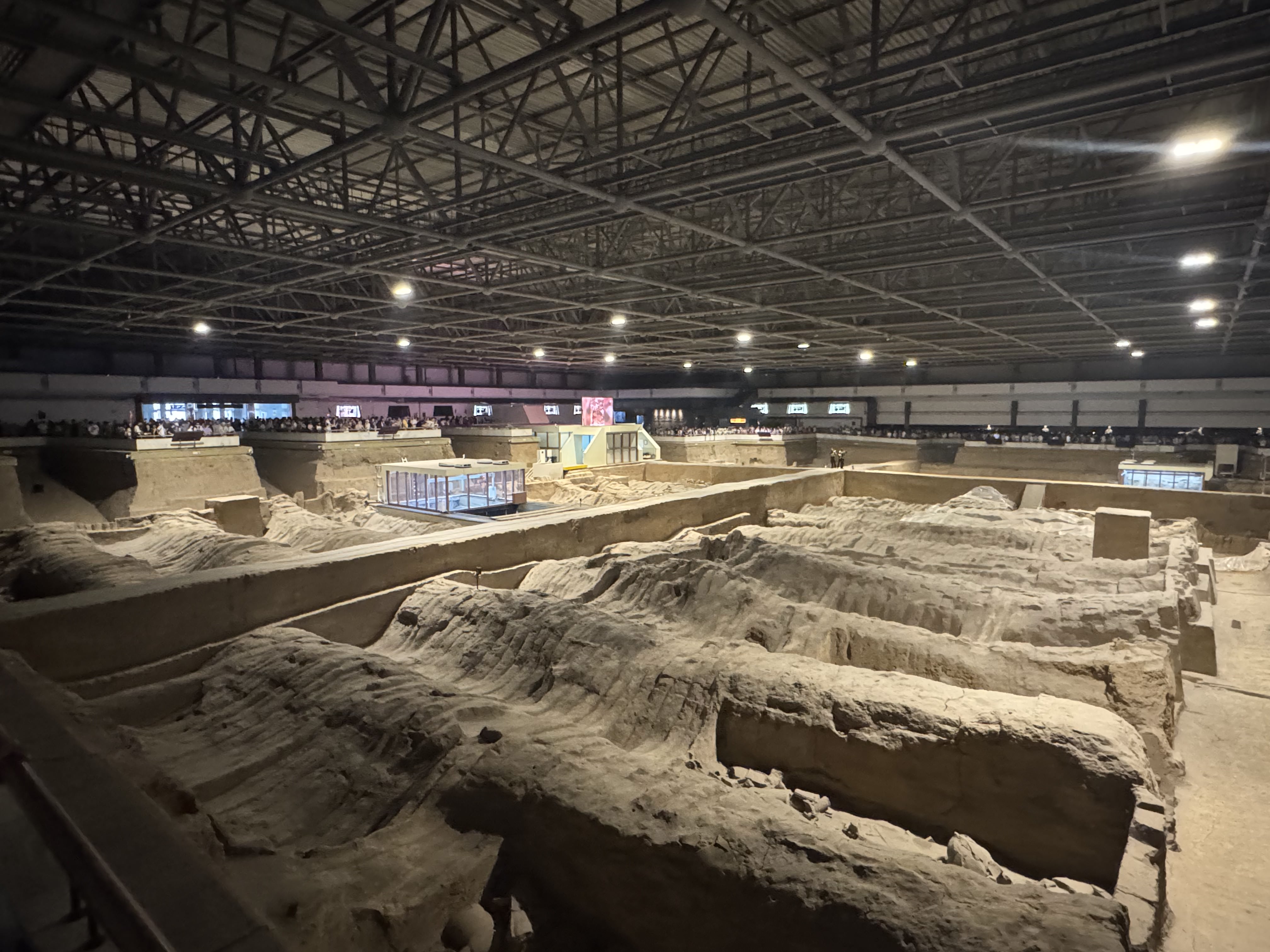
Going into the first hall, we immediately saw the famous view that everybody photographs. It’s quite immense in size, and when you look closely, you see the different facial expressions, poses, and different roles of the soldiers:
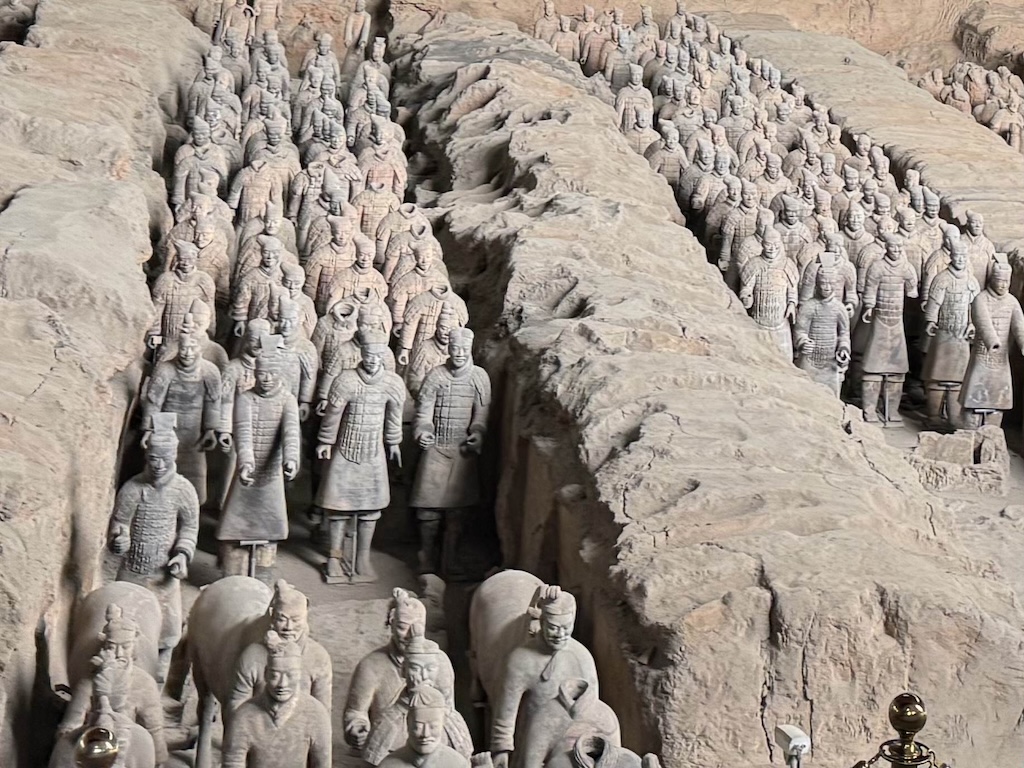
Note too that the entire perimeter is relatively crowded, though less so further from the entrance. There are guards to help maintain crowd flow and safety.
Along the way we heard the back story that Emperor Qin Shi Huang (Qin or “Chin” from where we get “China” in English) first unified China 2,200 years ago. He has a large burial mount area nearby, complete with rivers of mercury and assorted booby traps to defer grave robbers.
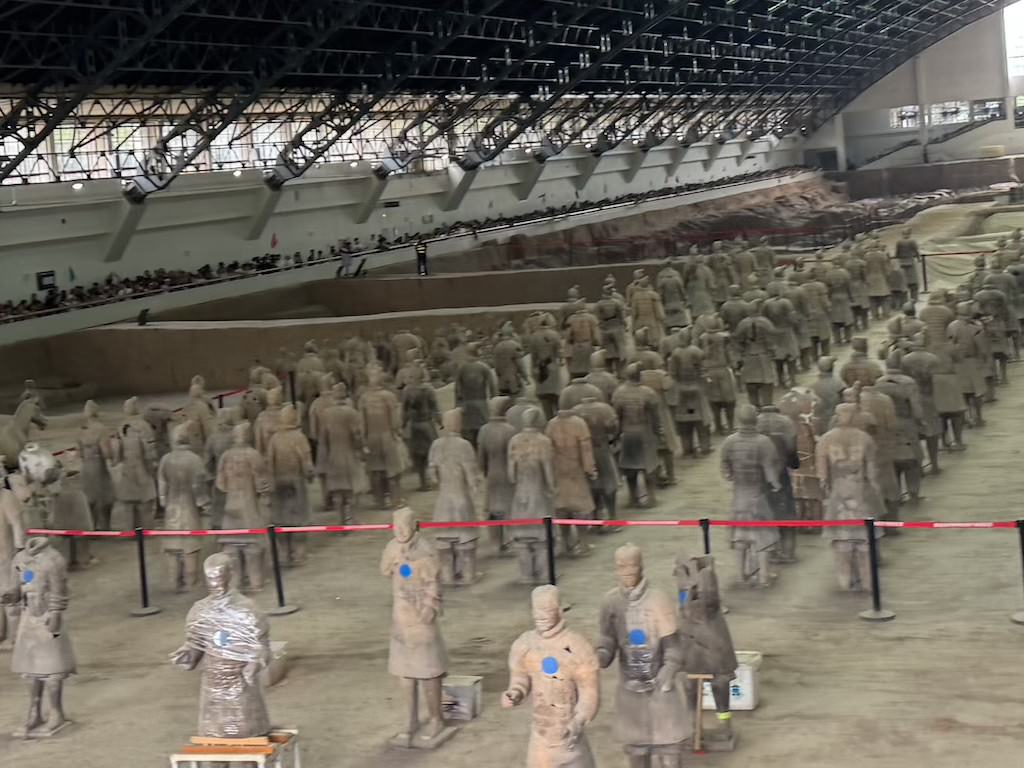
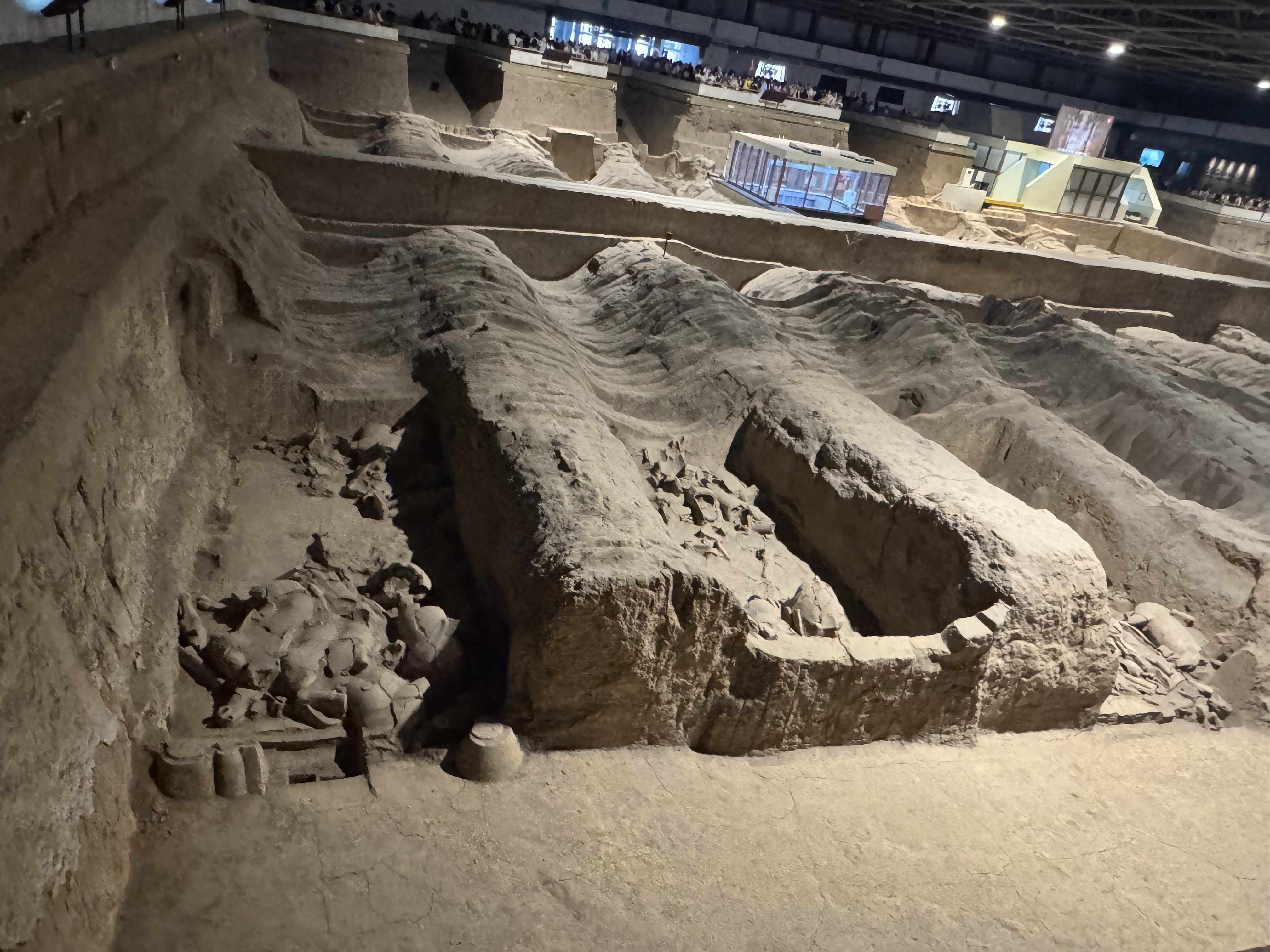
I thought the view from the sides in the main hall were pretty nice too, though some further back were further under renovation:
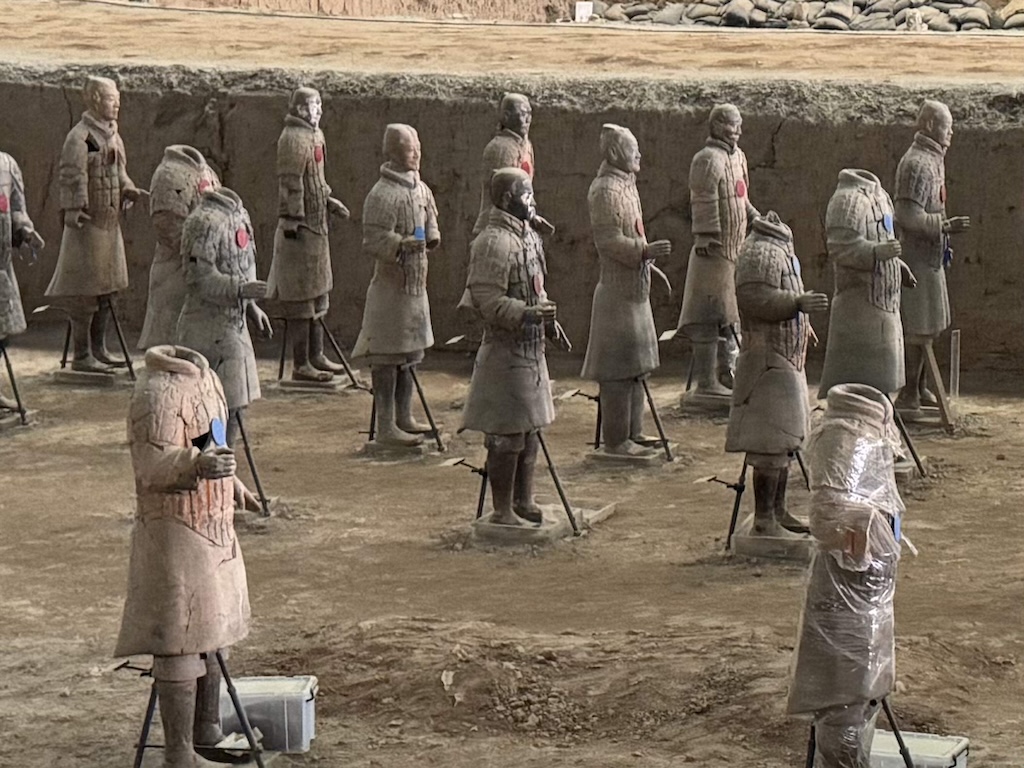
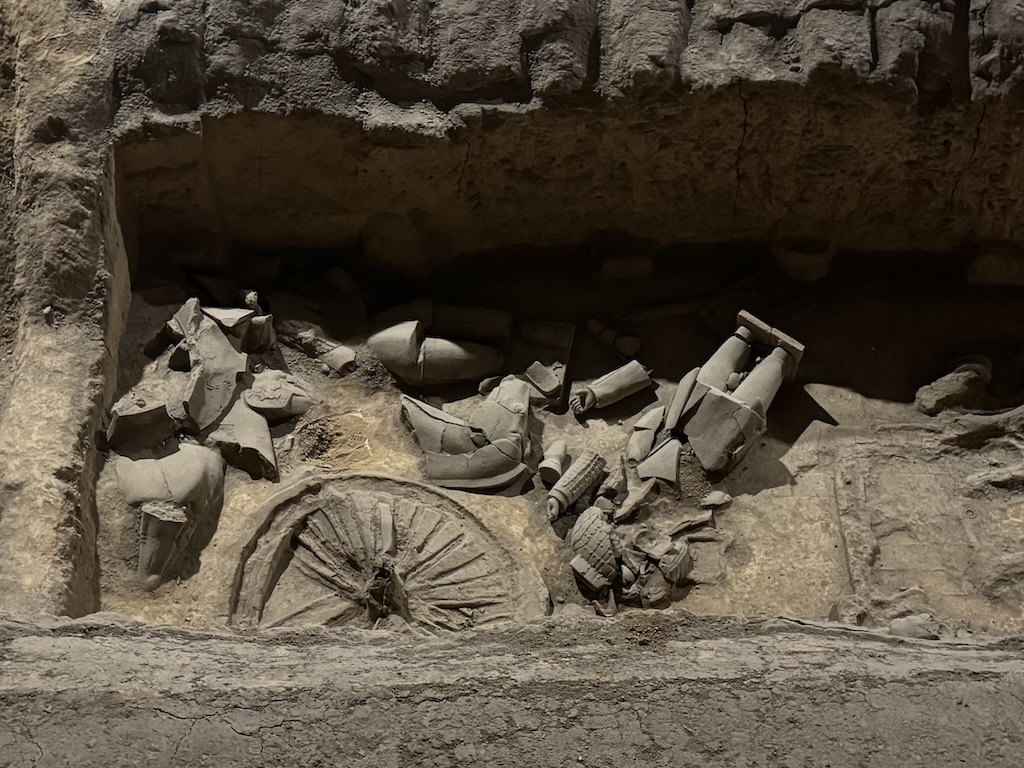
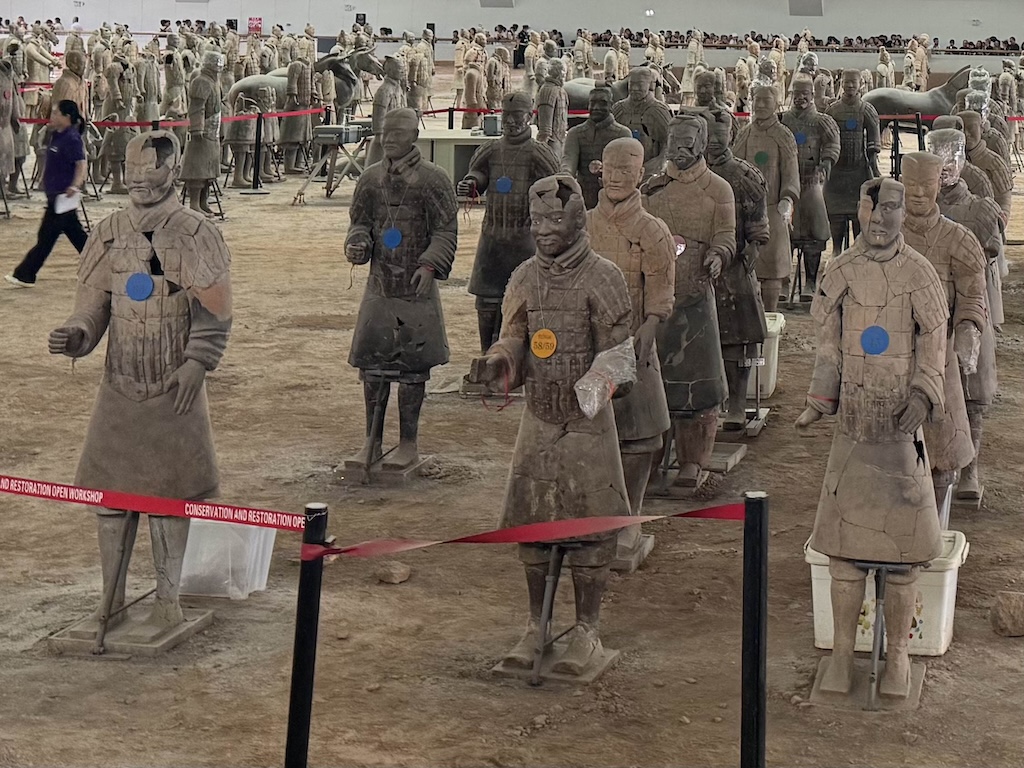
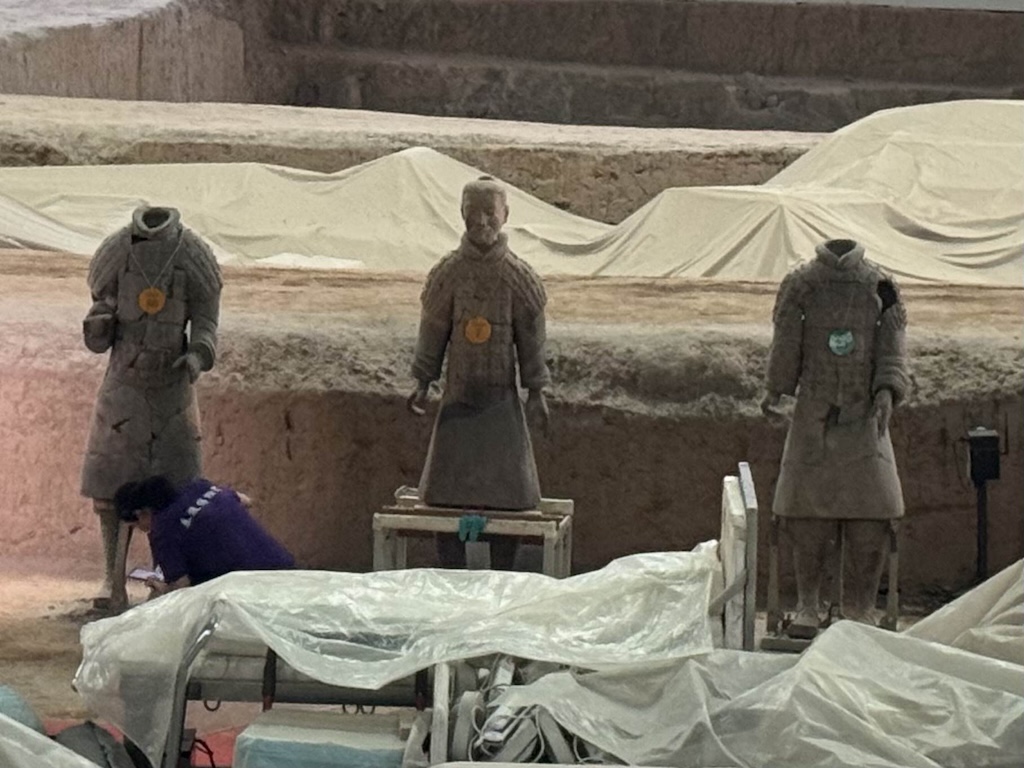
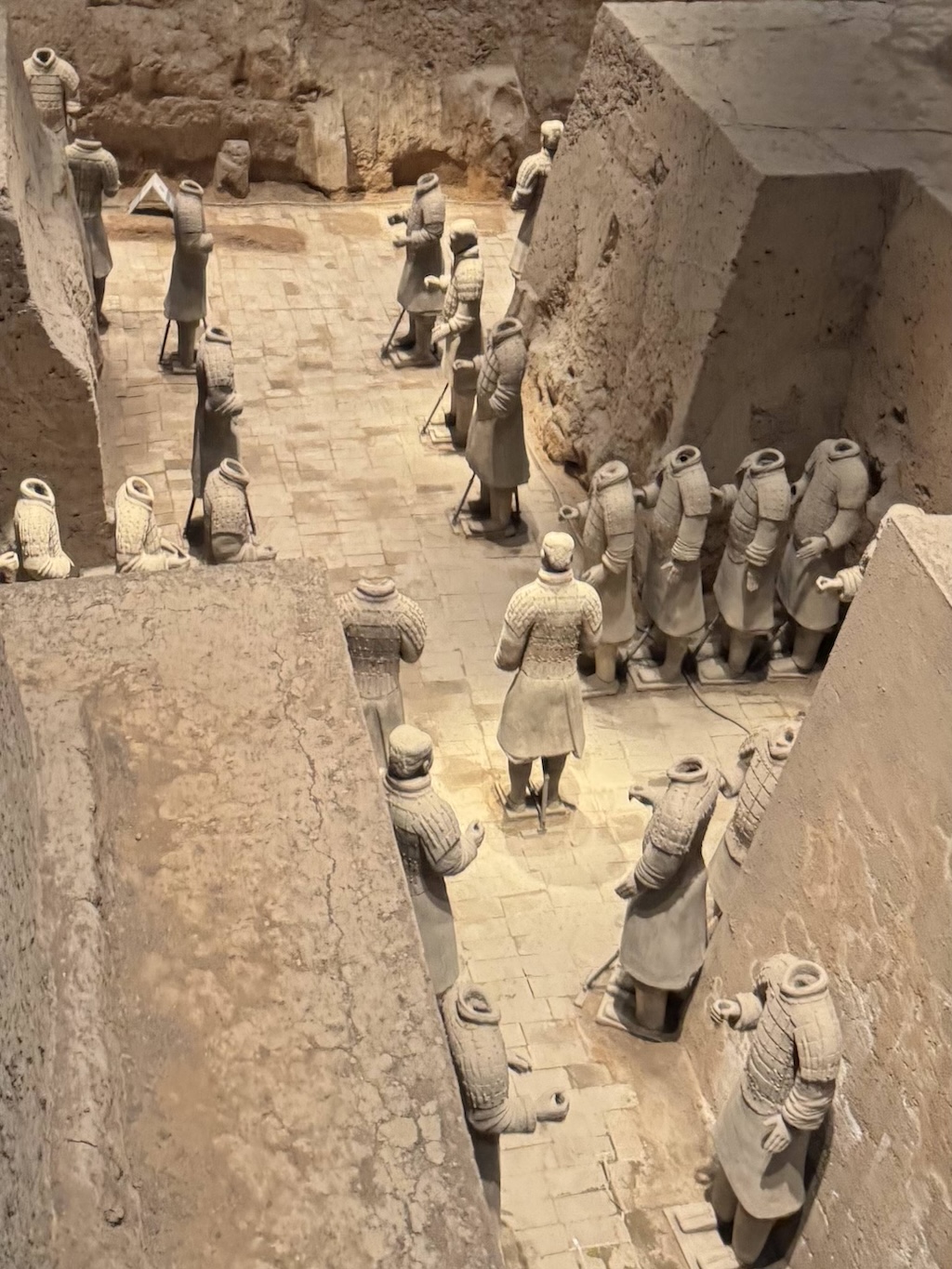
On that note: I didn’t fully realize that most of the warrior pieces were found broken in shards. They have been pieced back together by teams of archeologists, now with the help of computers, some of which is still ongoing and can take 6 months for a single statue. Our guide told us that they nickname the spot for ongoing work their “ICU”:
Halls 2 and 3
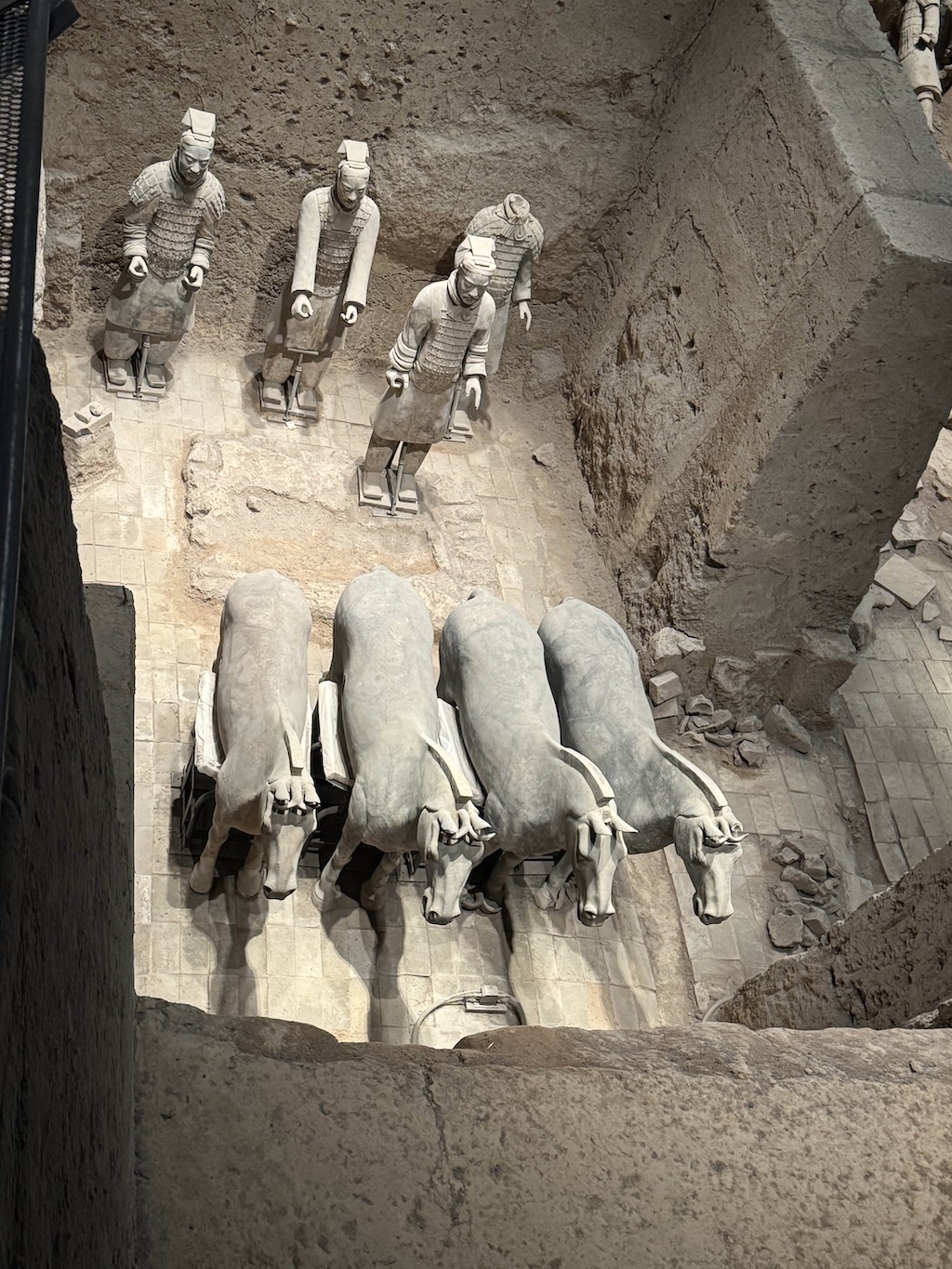
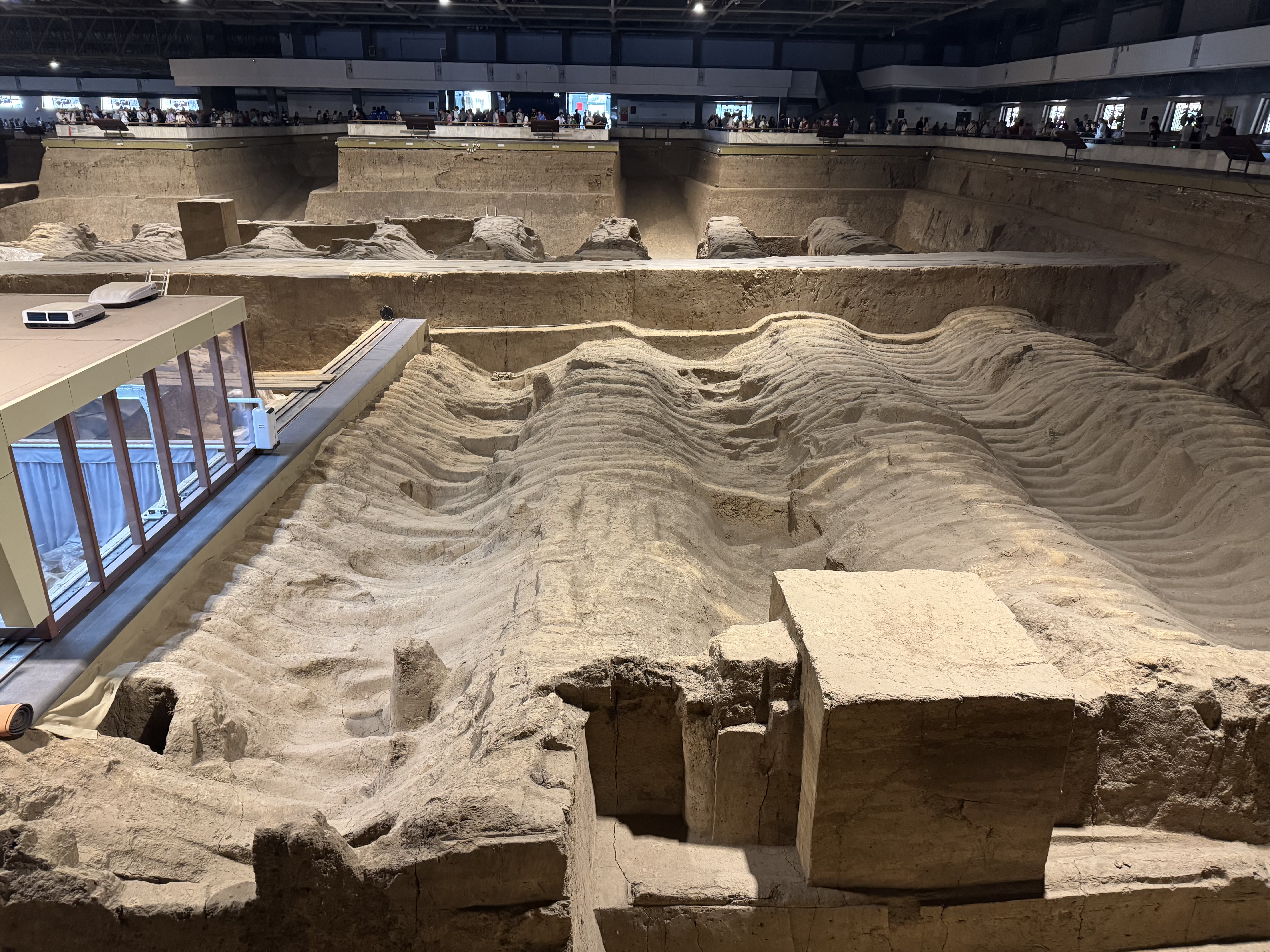
We then neared the end of the largest first archeological hall and walked into the other two smaller halls.
They were perhaps not as stunning as the main hall, but they were less crowded, and our guide was able to show us some of the detail in the pieces, e.g. the horsemen or the various ranks of the officers. We were told numbers of the high-level officers, the mid-level officers, the cavalry, the archers, etc. I had sort of assumed that they would all been foot soldiers, but it seems like the goal was to depict all facets of the famous army that was used to unify China.
The Museum Area
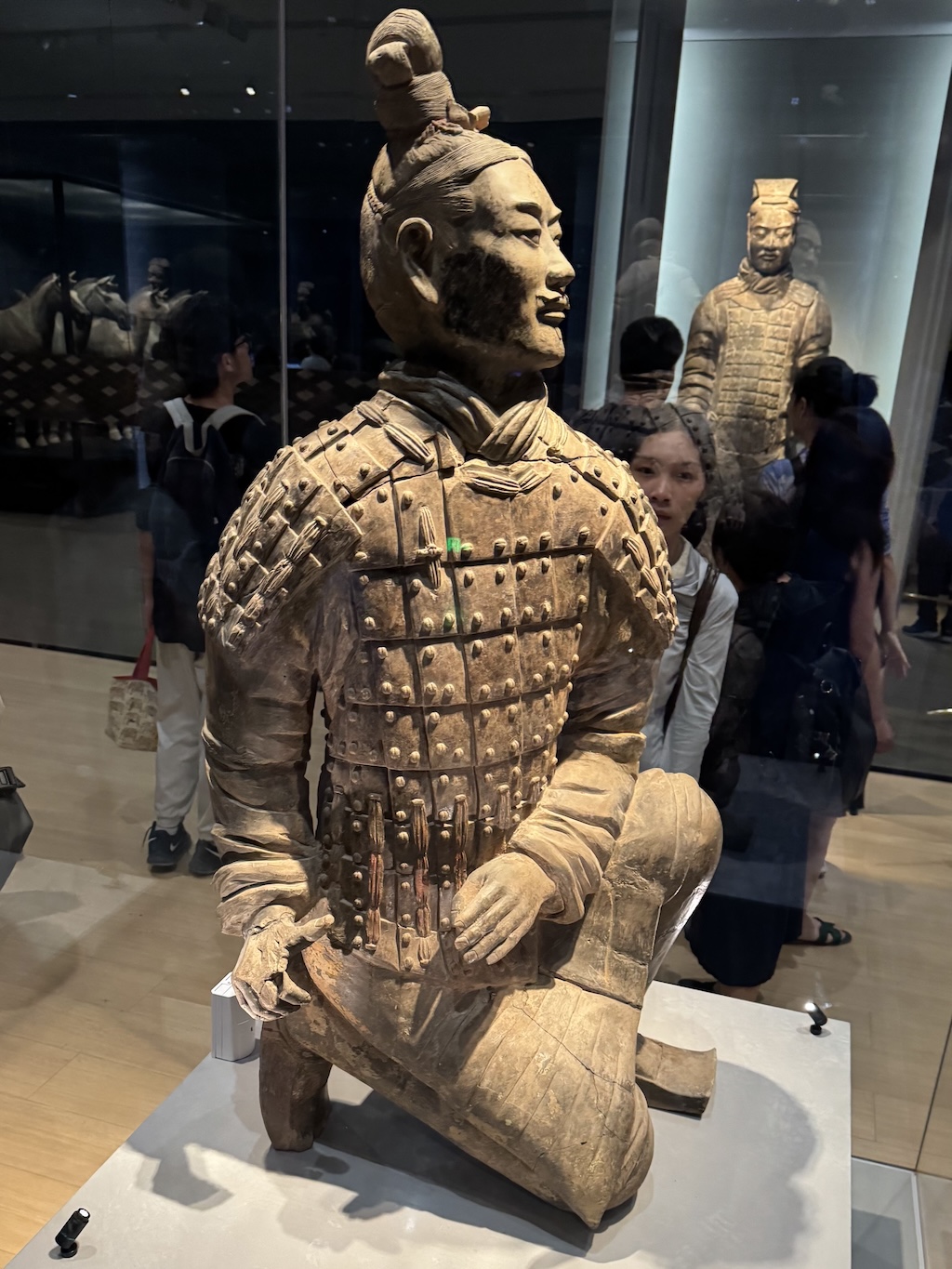
After that, we went into the indoor museum which had some representative examples of pieces in different roles in the army, and better showed us the level of detail that the artists had gone to. Our guide pointed out things like the detail in the fingernails, or the stitch marks on different warriors, as well as details about their facial expressions.
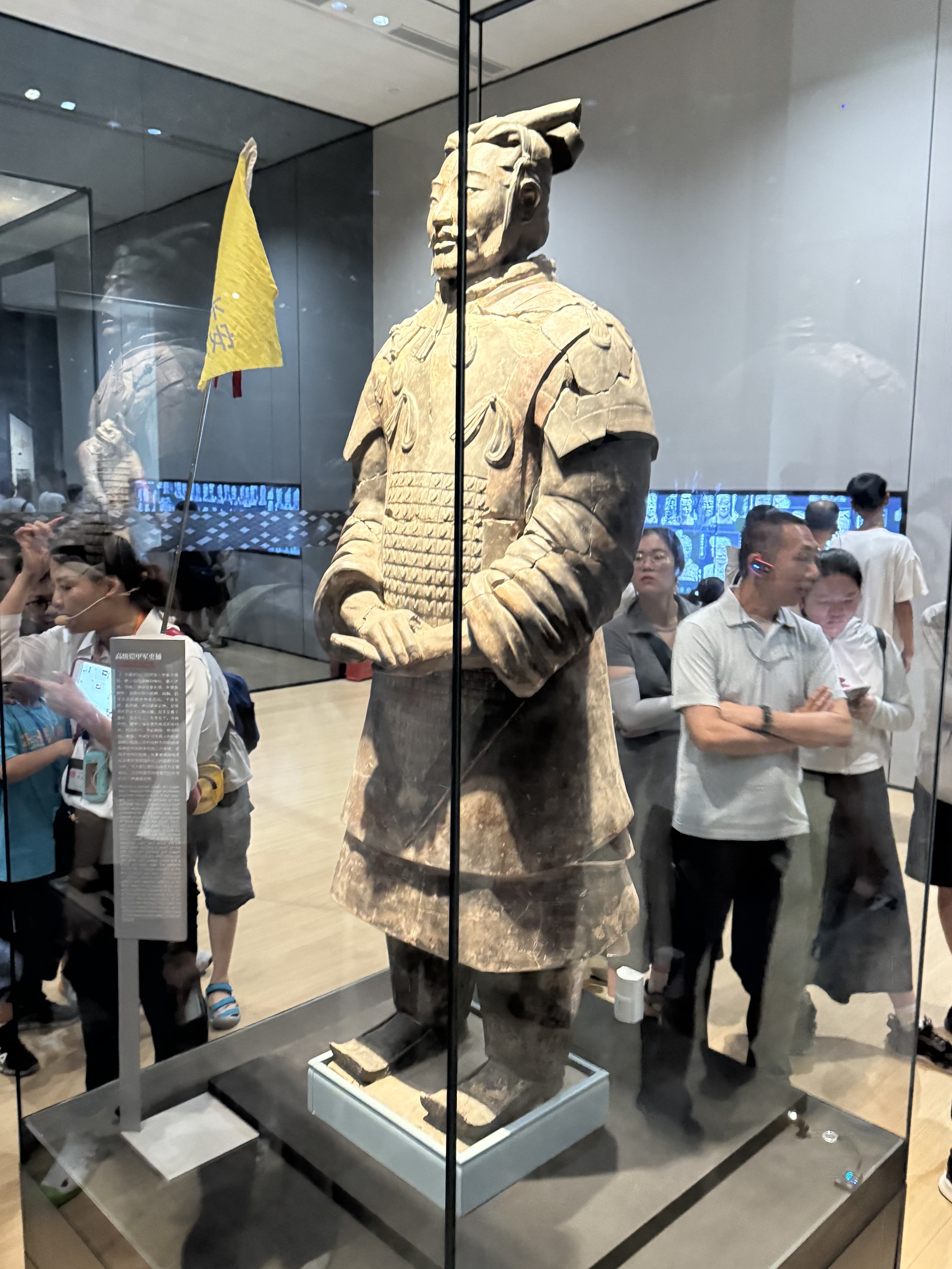
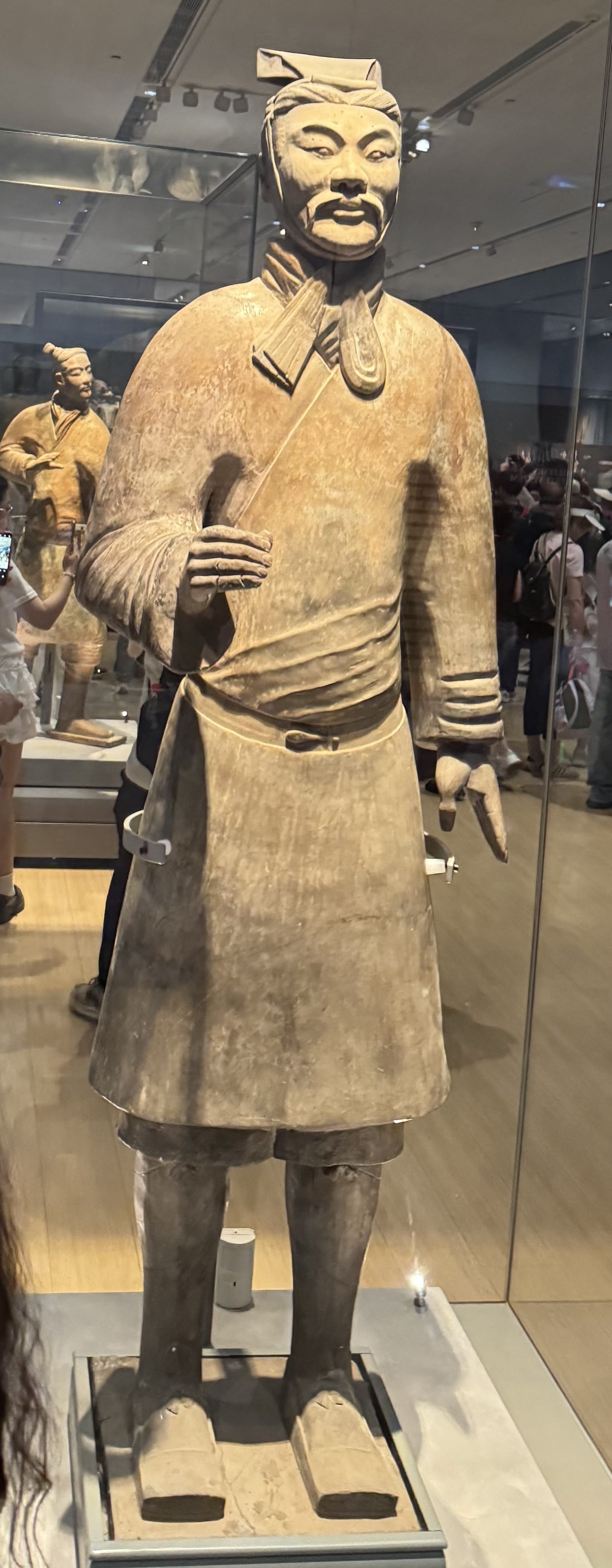
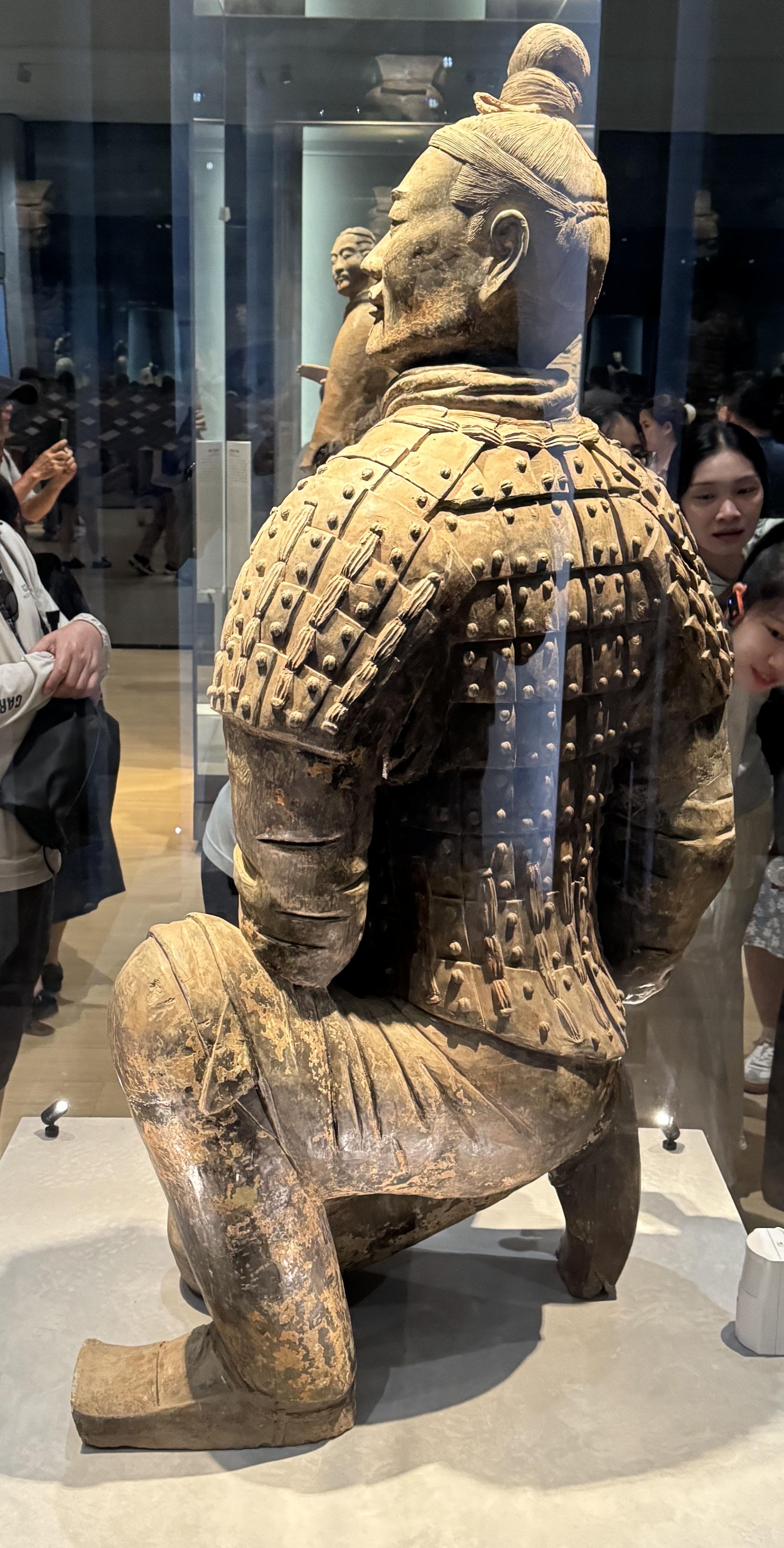
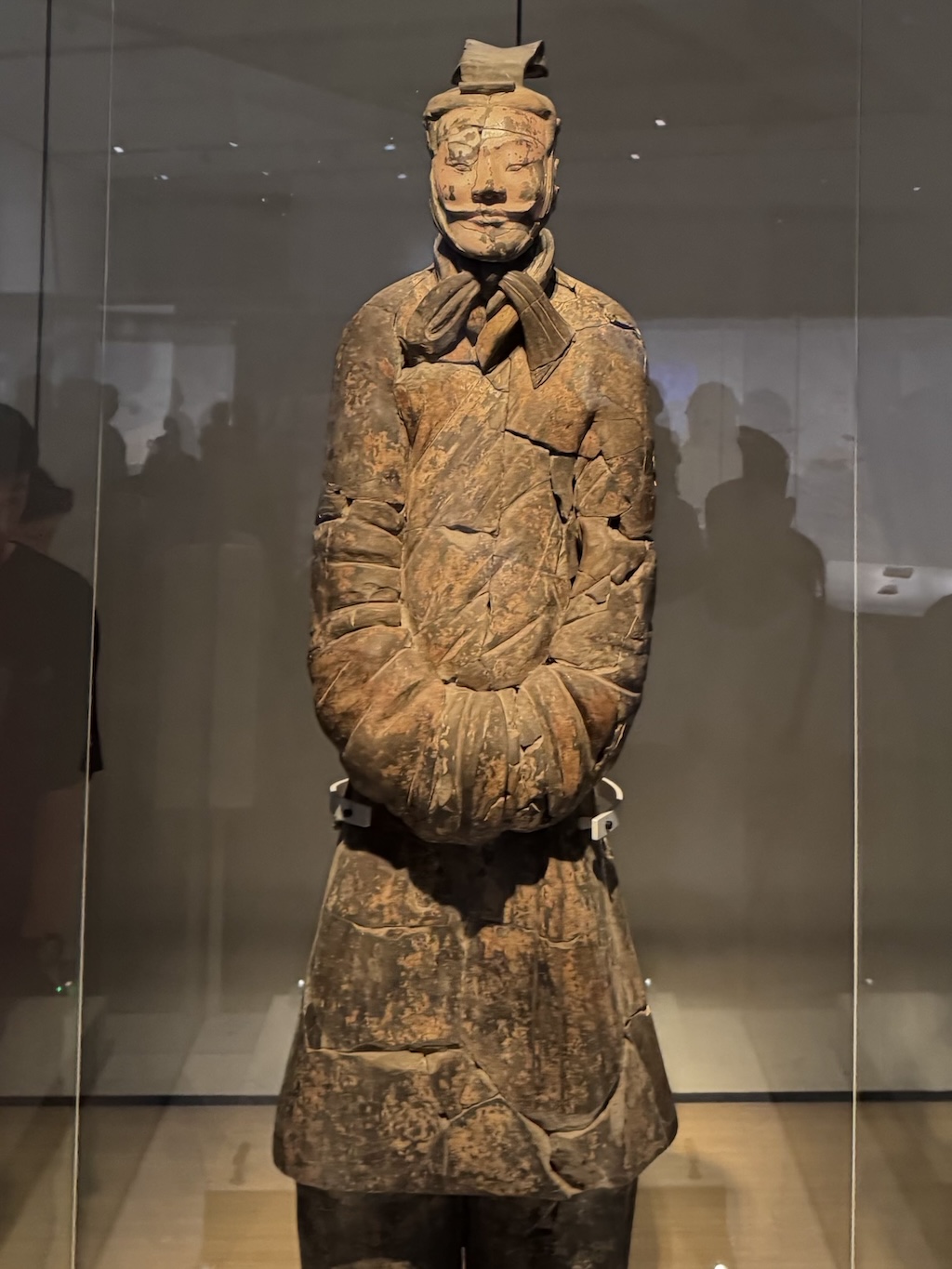
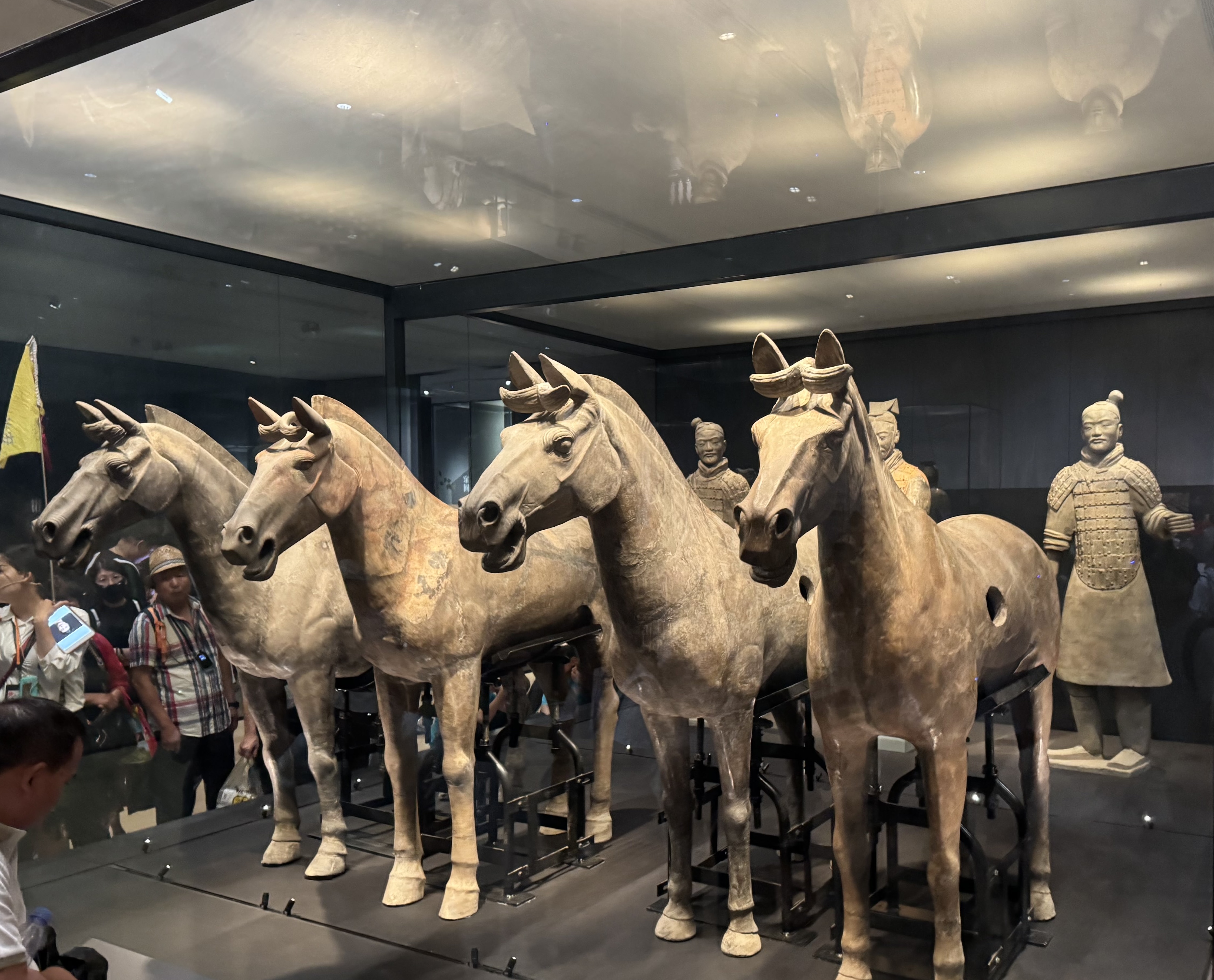
One of the more famous pieces is the General, over 6 feet tall (196cm to be exact) and quite massive. We also liked the archers quite a bit. The pieces themselves typically range from 100-300kg in weight; they’re mostly hollow, but definitely not light.
When the pieces were created, they were created more colorful, but the oxidation process over 2,220 years degraded much of the that.
Leaving & Meeting an original farmer
Eventually, we were done, and we left and wandered into the nearby restaurant and shopping area.
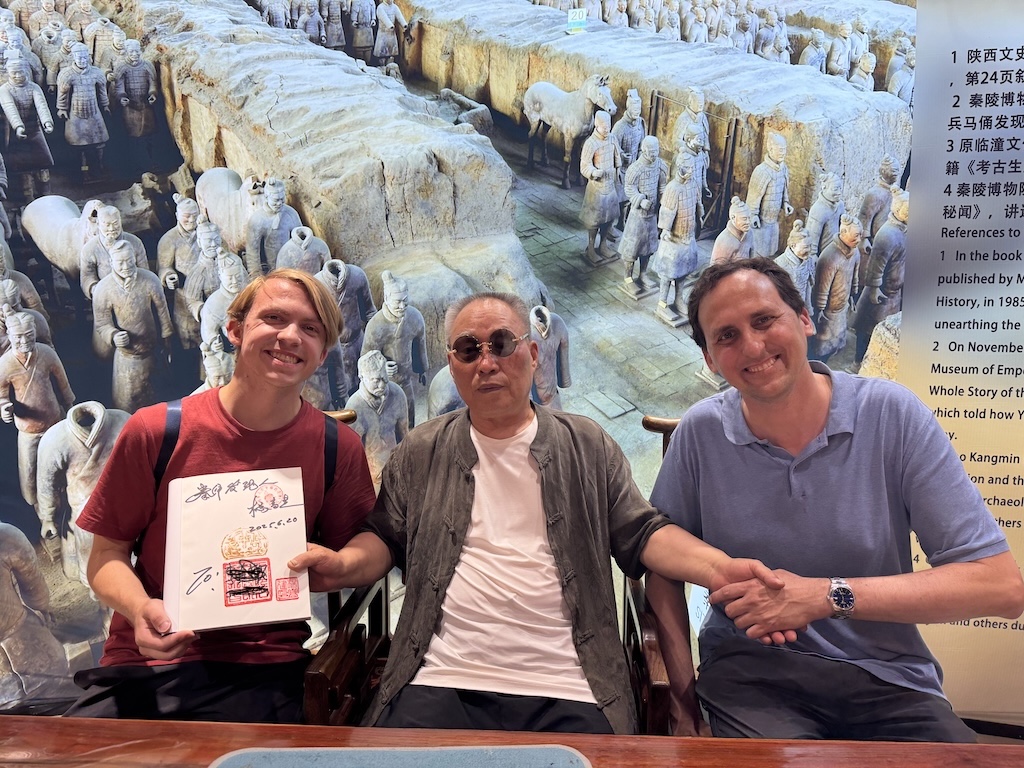
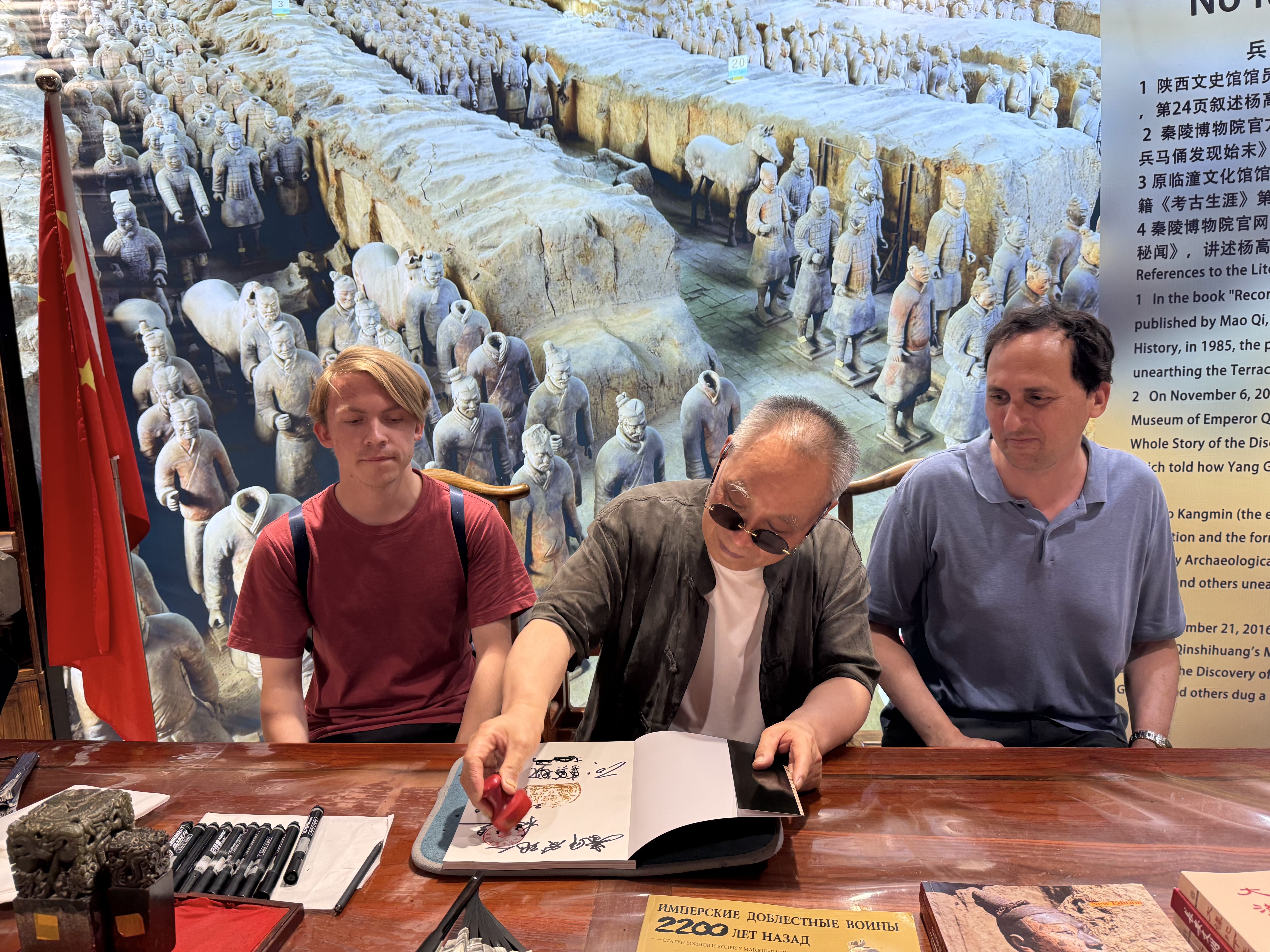
One question people sometimes ask: what happened to the group of farmers who discovered this archeological treasure? Our guide indicated that initially in the 1970’s, they were mostly shafted. But over time as the profile of this site grew, their stature grew as well. On our way out, we were introduced to one of the original farmers who is still alive, but these days mostly sells/signs books and smiles for photos (see our photo with him below). Our guide indicated that as a result, he’s done reasonably well for himself, which is good to hear.
Don’t miss this exciting destination on your next trip to China!
More From Our Blog
Keep reading our travel blog for more adventures in China:


 Adventures of the 4 JLs